Catholic Living
Love Before the Wedding: A Clear Catholic Look at Chastity and Intimacy
A pastoral look at pre marital sex, Catholic teaching, and the hard but hopeful call to holiness in relationships.
Site Admin | July 26, 2025 | 97 views
Few topics touch both the conscience and the heart as deeply as pre marital sex. Many people do not approach the question with rebellion so much as with confusion, affection, fear, or the hope that physical closeness will secure a future together. The Catholic Church does not dismiss those motives. It takes them seriously. At the same time, Catholic teaching is clear: sexual intimacy belongs within marriage, where a man and a woman give themselves to each other in a total, faithful, and public covenant before God.
This is part of what the Church means by the dignity of the human person. Sex is not treated as a mere private pleasure or as a casual proof of affection. It is a bodily act with moral meaning. It speaks a language of total self gift, and that language belongs properly to marriage. When it is separated from marriage, something important is obscured: the promise that the body is making is not yet fully true in law, covenant, and life.
What the Church is actually saying
In mainstream Catholic teaching, pre marital sex is objectively sinful because it reserves to marriage an act that is ordered toward the mutual good of spouses and the generation of life. The Church is not trying to shame desire or deny the beauty of attraction. Rather, she teaches that desire needs truth, and love needs form. A relationship can be sincere and still be incomplete in a way that matters morally.
The Catechism teaches that sexual intimacy has its proper place within marriage, where the spouses belong to one another in a lifelong covenant. Outside marriage, sexual activity does not express that full and public gift of self. In other words, the issue is not simply whether two people care for each other. The issue is whether their bodies are speaking a truth their lives have not yet pledged to live.
Scripture is consistent with this moral vision. St. Paul speaks plainly about the call to holiness in the body: 1 Thessalonians 4:3 He also reminds believers that the body matters to God, because the body is meant for the Lord: 1 Corinthians 6:13 For Catholics, these passages are not relics of an old sexual ethic. They are invitations to a larger freedom, one rooted in grace rather than impulse.
Love is never just a feeling in the Catholic moral imagination. It is a willing of the true good of the other, even when that good requires patience, restraint, and sacrifice.
Why the Church treats this matter seriously
It can be tempting to think that if two adults consent, no harm is done. But Catholic moral reasoning asks more than whether a person has given permission. It asks whether the act itself fits the truth of the persons involved. Pre marital sex can create a false unity. It can give the feeling of total self gift while stopping short of the actual promises that make such a gift morally complete.
That is one reason the Church resists reducing sex to chemistry, compatibility, or emotional intensity. Sexual union is powerful because it engages the whole person. It can bind, heal, and strengthen, but it can also confuse and wound when taken outside its rightful setting. Many people know this from experience. Even when there is affection, pre marital sex can leave one or both partners wondering whether they are truly loved, truly safe, or simply physically desired.
The moral teaching is also linked to marriage as a sacrament. In Catholic life, marriage is not merely a legal arrangement or a romantic milestone. It is a covenant that becomes a sign of Christ's faithful love for the Church. Because of that, conjugal intimacy is meant to express a fidelity that has already been publicly and sacramentally pledged. The body is not being asked to tell a story the covenant has not yet begun to tell.
Pastoral reality: people are often carrying more than one burden
It would be unrealistic, and unmerciful, to speak about pre marital sex as though every person approaches it from the same place. Some are in long relationships and feel pressure from friends or family. Some have already been sexually active and feel ashamed. Some are engaged and wonder whether the distinction between engagement and marriage is too formal to matter. Some are trying to live chastely but feel isolated in a culture that treats abstinence as strange.
The Church's teaching does not change because a situation is emotionally complicated, but pastoral care certainly should. A Catholic response should make room for honesty, repentance, and practical help. Shame often leads people to hide from God when they most need to return to Him. But the Lord does not meet sinners with contempt. He meets them with truth, mercy, and a call to conversion.
For someone who has fallen, the first step is not to pretend the matter is unimportant. It is to bring it into the light. Sacramental confession is a place where real sins can be named and real grace can begin again. If a relationship itself is leading consistently toward sin, then repentance may also require a serious decision about boundaries, timing, or even the future of the relationship.
Chastity is not denial of love
One of the biggest misunderstandings about Catholic teaching is that chastity means coldness or repression. In reality, chastity is the integration of sexuality within the whole person. It teaches a man or woman to desire rightly, to wait when waiting is loving, and to see the other not as an object of appetite but as a person to be honored.
That is why chastity can be difficult and beautiful at the same time. It requires self mastery, but self mastery is not the same as self hatred. A couple who chooses to wait is not saying that their love is fake. They are saying that love deserves a form strong enough to hold it truthfully. Waiting can become a school of patience, communication, tenderness, and prayer.
St. Paul gives a vivid and challenging image when he says that the body is a temple of the Holy Spirit: 1 Corinthians 6:19 This verse is often repeated, but it deserves to be heard slowly. If the body is holy ground, then how we use it matters. Catholic morality is not interested in limiting joy. It is interested in protecting the kind of joy that can endure without deceit.
Practical ways to live this teaching in real life
It is one thing to agree with Catholic teaching in principle. It is another to live it on a Thursday night when a relationship feels intense and private. For that reason, practical habits matter. Chastity is not usually won by grand declarations. It is built through small, repeated choices.
- Set clear boundaries early. Do not wait until you are already emotionally entangled to decide what you will and will not do.
- Talk honestly. If you are dating someone seriously, be direct about your desire to follow Christ, even if the conversation feels awkward.
- Avoid isolation. Private settings and endless alone time can weaken resolve, especially when affection and attraction are already strong.
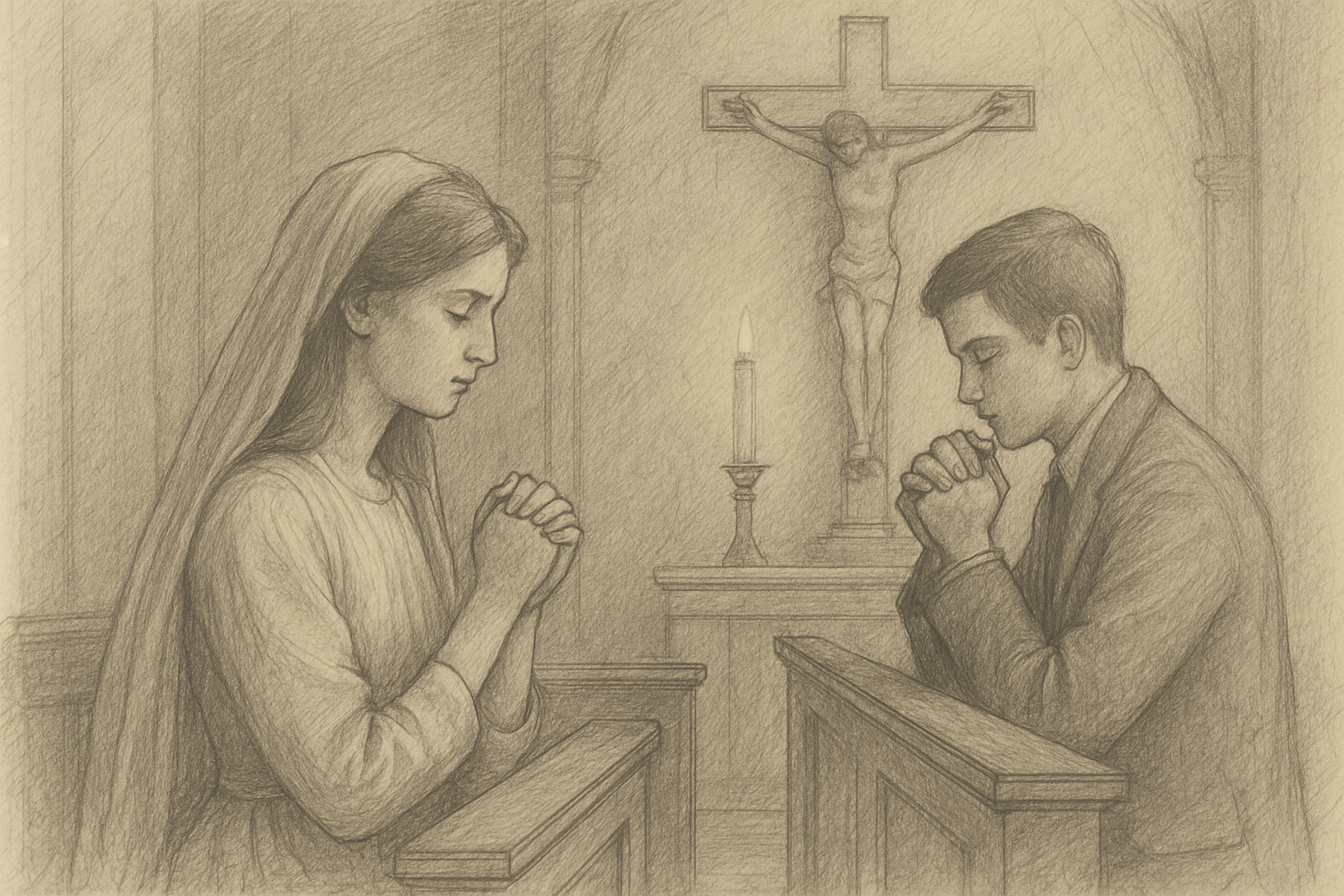
- Pray together if appropriate. A couple that can pray sincerely together is already learning to place God above impulse.
- Use the sacraments. Confession and the Eucharist are not side notes to chastity. They are sources of grace.
- Choose friendships that support virtue. It is harder to remain faithful when the surrounding culture treats your convictions as naive.
Engaged couples often need special care here. Engagement is a serious promise, but it is not yet marriage. The Church continues to ask for chastity during engagement because the sacrament has not yet been received. Far from being arbitrary, this protects the freedom and clarity needed for a truly free marital consent.
What if a relationship already crossed that line?
Many Catholics know this struggle firsthand. If pre marital sex has already happened, the answer is not despair. It is repentance and rebuilding. The past cannot always be undone, but it can be entrusted to God's mercy. The important question becomes: what now? What next step would help this relationship move toward truth rather than deeper confusion?
Sometimes the next step is confession, followed by a new commitment to chastity. Sometimes it is a pause in the relationship, especially if one person is resisting conversion while the other is trying to live faithfully. Sometimes it is wise spiritual direction or counseling, especially when there is emotional dependence, repeated failure, or fear of being alone. A good priest can help a person distinguish between weakness that can be addressed and a relationship that is pulling them away from God.
It is also worth remembering that the Church's teaching is not a theory of perfect people. It is a path for sinners who want to become saints. The Lord does not ask for a spotless past before He offers grace. He asks for a willing heart.
Hope for those who feel behind
Some readers may feel that chastity is easy to preach and hard to live, especially in a world that normalizes sexual intimacy before marriage at every turn. That feeling is understandable. But Catholic hope does not rest on the assumption that holiness is effortless. It rests on the conviction that grace is real.
God can heal habits, clarify motives, and strengthen love. He can teach a couple how to love one another without pretending that every desire must be acted upon. He can restore a person who feels unworthy. He can even bring good fruit from a season marked by confusion, if that season becomes a time of conversion.
For anyone trying to live pre marital sex Catholic teaching faithfully, the most important thing is not to be self made but to be surrendered. Pray honestly. Receive the sacraments. Seek wise counsel. Keep the conversation open with God. And remember that Christian chastity is not the refusal of love, but love trained by truth.
In the end, the Church's teaching asks for more than restraint. It asks for trust that God's design for the body is good, that waiting can be fruitful, and that a love ordered toward marriage is worth protecting before it is celebrated at the altar.
Keep Reading on Lets Read The Bible
Frequently Asked Questions
Is pre marital sex always considered sinful in Catholic teaching?
Yes. In mainstream Catholic teaching, sexual intimacy belongs within marriage. Outside marriage, it is objectively contrary to the moral order because it does not express the full covenantal gift of self that marriage signifies.
What if a couple loves each other and plans to marry soon?
Good intentions do not change the moral structure of the act. Engagement is not yet marriage, so the Church continues to call couples to chastity until the sacrament is received.
What should a Catholic do if they have already had pre marital sex?
The first step is repentance and confession. From there, a person can seek God's mercy, establish clearer boundaries, and discern whether the relationship is helping or harming the path toward holiness.