Catholic Living
When Mercy Is Misnamed: Euthanasia and the Shape of Catholic Compassion
A sober Catholic reflection on suffering, dignity, repentance, and the hope that does not abandon the vulnerable.
Site Admin | August 14, 2025 | 75 views
Euthanasia is often presented as an act of compassion. The language can sound gentle, even noble. Yet in Catholic moral life, words must be tested by truth. A choice to directly end innocent human life is never made merciful by naming it mercy. The Church resists euthanasia not because she is cold toward suffering, but because she takes the dignity of the human person seriously from conception until natural death.
That truth matters deeply for euthanasia and Catholic life. It matters for families facing fear, for patients who feel like a burden, for caregivers who are worn down, and for anyone trying to form a conscience in a culture that sometimes treats usefulness as the measure of worth. Catholic teaching does not begin by scolding the wounded. It begins by saying that every human person remains loved by God, even when sick, dependent, frightened, or near death.
The moral weight of human life
Scripture presents human life as sacred because it is gift, not possession. The Lord speaks with solemn care about the lives of the vulnerable, and the commandment You shall not kill is not a narrow rule for violent acts alone. It reveals a moral horizon in which innocent life is never ours to dispose of at will. You shall not kill
Jesus strengthens this vision by showing tenderness toward the suffering and by refusing to reduce persons to their pain. He heals, accompanies, and restores. He does not tell the sick that their lives are over when weakness begins. He meets them in their need. In Catholic life, that same gaze should shape how we think about the dying.
The Church teaches that there is a profound difference between refusing disproportionate or burdensome treatment and deliberately causing death. A person may legitimately decline extraordinary interventions that offer little hope or impose excessive burden. That is not euthanasia. Euthanasia, by contrast, intends death as the means or the end. The moral difference rests on intention, and intention matters before God.
Why false compassion is dangerous
Euthanasia is often defended with phrases like dignity, autonomy, and relief. These words are not meaningless. They point to real human desires. No one should dismiss the anguish of someone in pain or the fear of losing control. But when autonomy becomes absolute, the vulnerable are placed under a cruel burden: they may come to believe that their worth depends on their ability to manage life on their own terms.
This is where Catholic teaching offers a necessary correction. Dignity is not created by self-sufficiency. It is received. A newborn has dignity. An elderly person with dementia has dignity. A man attached to a ventilator has dignity. A woman in hospice has dignity. None are less human because they need help.
In a culture of efficiency, the sick may feel pressure to justify their continued existence. That pressure can be subtle or direct. Families may be exhausted, medical costs may be high, and prognosis may be uncertain. Still, Catholic moral life insists that one may never answer suffering by choosing the killing of the sufferer. We are called to relieve pain, accompany the sick, and practice patience, not to cross the line from care into intentional death.
Mercy does not say that a life is no longer worth living. Mercy says that a life is always worth loving.
What Catholic compassion looks like in practice
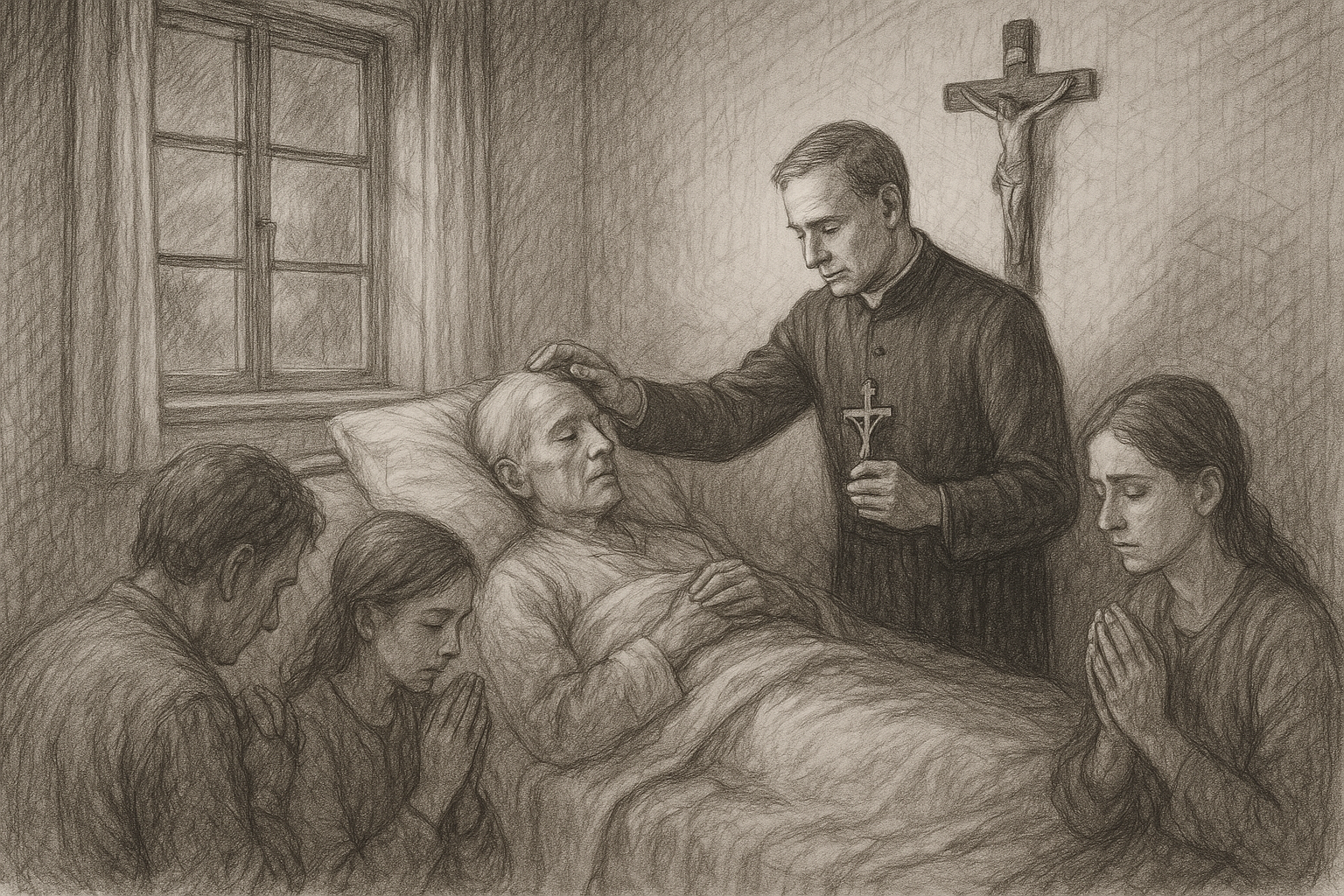
Real Catholic compassion is not sentimental. It is concrete. It asks what can be done to ease pain, preserve dignity, and strengthen hope. That may include palliative care, attentive pain management, the presence of family, the Sacraments, and honest conversation about fear. It may also include simply staying near someone when words are no longer enough.
Caregivers sometimes worry that accepting comfort measures means giving up. It does not. The goal is not to prolong biological existence at any cost, but to care for the whole person. Catholic morality recognizes that aggressive treatment can become disproportionate when it no longer offers reasonable hope or only adds burden. In such cases, it is permissible to forgo extraordinary measures while continuing ordinary care, such as food, water, hygiene, warmth, and human presence when these can be provided without excessive burden.
That distinction matters because it protects both truth and mercy. It keeps us from falsely equating every refusal of treatment with euthanasia, and it keeps us from sliding into the belief that death is a therapeutic solution. Catholics should be careful with language here, because language shapes conscience. To say that a person has a right to die can sound respectful, but it can conceal a more troubling idea: that some lives are more disposable than others.
Repentance when conscience has been formed poorly
Many people encounter euthanasia first as an emotional issue, not a theological one. Some have supported it because they feared helplessness. Some have signed papers, advocated for relatives, or repeated slogans without thinking deeply. Others have been involved in medical settings where the line between easing suffering and hastening death felt blurred. The Church's response is not humiliation. It is an invitation to conversion.
If a person recognizes that he has supported euthanasia, encouraged it, or chosen it, the path forward is not despair. It is repentance. The Lord receives the contrite heart. He does not delight in sin, but He delights in mercy. Have I any pleasure in the death of the wicked? says the Lord GOD, and not rather that he should turn from his way and live?
Practical repentance may begin with a simple act of truthfulness before God:
- Acknowledge the decision or attitude without softening it.
- Bring the matter to Confession as soon as possible.
- Ask for healing if the issue has wounded family members or caregivers.
- Pray for the grace to respect life in future choices and conversations.
- If possible, make amends by supporting the sick, the disabled, or those in hospice care.
In Confession, the penitent does not need polished arguments. He needs honesty, sorrow, and trust in Christ's mercy. The Sacrament does not merely erase guilt. It begins to restore the conscience, which is essential if one is to grow in virtue after serious moral confusion.
How to grow in virtue around illness and death
Catholic life is not only about avoiding grave sin. It is also about becoming more capable of charity. When we face illness, death, or prolonged decline, several virtues become especially important.
Patience
Patience is not passivity. It is the strength to remain steady when we cannot control the timeline of healing or dying. A patient person can sit beside suffering without turning away in panic.
Fortitude
Fortitude helps us endure difficult realities without surrendering to fear. It is needed by the sick, but also by those who love them. The courage to accompany someone in weakness is itself a form of witness.
Hope
Christian hope is not denial. It does not pretend that pain is unreal. It trusts that death does not have the last word. If we live, we live to the Lord, and if we die, we die to the Lord
Charity
Charity moves us to see the person before the problem. It asks not,
Keep Reading on Lets Read The Bible
Frequently Asked Questions
What is the Catholic difference between euthanasia and refusing extraordinary treatment?
Catholic teaching permits a person to refuse treatment that is disproportionate, excessively burdensome, or offers little reasonable hope of benefit. Euthanasia is different because it intends death as the means or goal. The moral difference lies in intention and in what is being directly chosen.
Can a Catholic receive the Sacraments after supporting or choosing euthanasia?
Yes. Anyone who is truly sorry and willing to turn back to the Lord should seek Confession as soon as possible. The Church offers mercy to repentant sinners, and the Sacrament of Reconciliation is the ordinary path to forgiveness and healing.
How can families support a loved one without promoting euthanasia?
Families can focus on presence, prayer, honest conversation, pain relief, hospice or palliative care when appropriate, and respect for ordinary care. They should reassure the loved one that being dependent does not make the person less valuable or less loved.