Catholic Living
Pornography, Grace, and the Long Road Back to Purity
A sober look at Church teaching, the wounds pornography can cause, and the mercy available to anyone seeking freedom.
Site Admin | July 28, 2025 | 86 views
Pornography is one of the most common moral and pastoral struggles in modern life, yet it is often discussed in either harsh, simplistic terms or with a shrug that treats it as harmless. The Catholic Church speaks more clearly than that. She does not reduce the matter to embarrassment or culture war. She looks at the human person, at the truth of love, and at the damage sin can do to the heart.
In the language of pornography Catholic teaching, the issue is not simply that an act is private or public, or that it follows changing social habits. The issue is that pornography breaks the meaning of the human body by turning persons into objects of use. It separates sexual desire from love, commitment, and self-gift. For that reason, the Church teaches that pornography is morally wrong and spiritually harmful.
What the Church Means by Pornography
The Catechism describes pornography as removing real or simulated sexual acts from the intimacy of the partners in order to display them to third parties. It says this offends chastity because it distorts the conjugal act, which is meant to be an expression of love between husband and wife. It also attacks the dignity of those involved because it treats persons as material to be consumed rather than persons to be honored.
This is more than a matter of rule keeping. Catholic morality begins with the conviction that every human being bears the image of God. The body is not a disposable tool. It reveals the person. That is why the Church insists that the body must be treated with reverence, especially in matters of sexuality. Saint Paul warns believers to honor God with their bodies and to avoid sin that wounds both body and soul 1 Corinthians 6:19.
Pornography also forms habits. What begins as curiosity can become compulsion, and what is viewed in secret can reshape expectations, imagination, and relationships. The more a person consumes sexual images, the easier it becomes to separate desire from real love and real responsibility. That is part of why the Church speaks so strongly about chastity. Chastity is not a rejection of desire, but the ordering of desire toward authentic love.
Why Pornography Is Not a Small Matter
Some people assume that because pornography is widely available, it must be morally neutral. The Church rejects that assumption. Availability does not make something good. Serious sins often become more ordinary, not less harmful, when a culture grows accustomed to them.
Pornography damages more than the viewer. It can exploit performers, feed industries built on degrading the human person, and encourage the idea that intimacy is a product rather than a covenant. Even when a person encounters pornography alone, the act is never truly isolated from others. Sin has a social dimension. It influences how people think about marriage, friendship, and the body itself.
There is also an interior wound. Many who struggle with pornography report shame, loneliness, anxiety, and a loss of peace. Those are not automatic signs of repentance, but they do reveal that the habit does not deliver what it promises. Pornography offers excitement, but it cannot satisfy the deeper human longing for communion, trust, and being loved as a person rather than used as a source of pleasure.
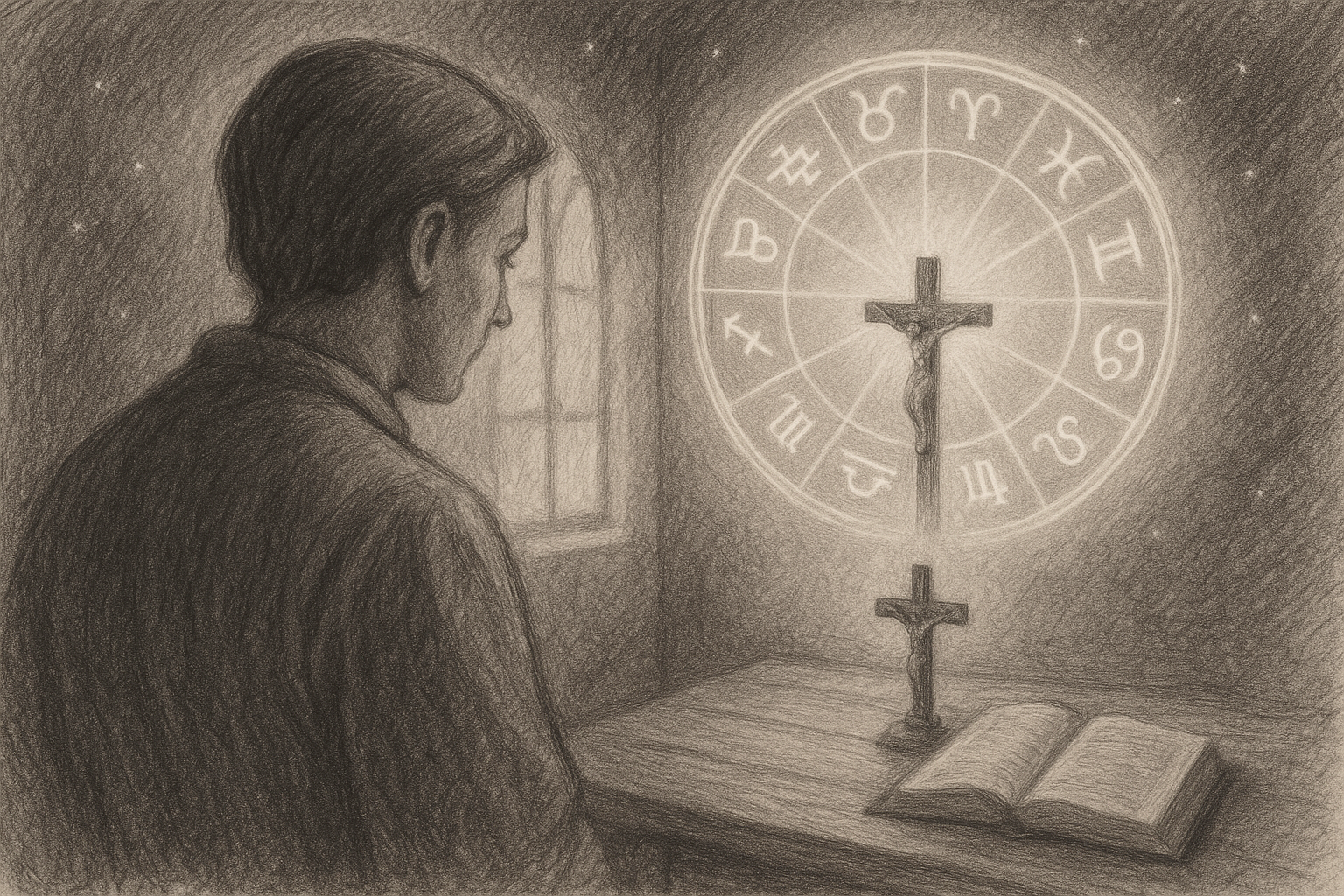
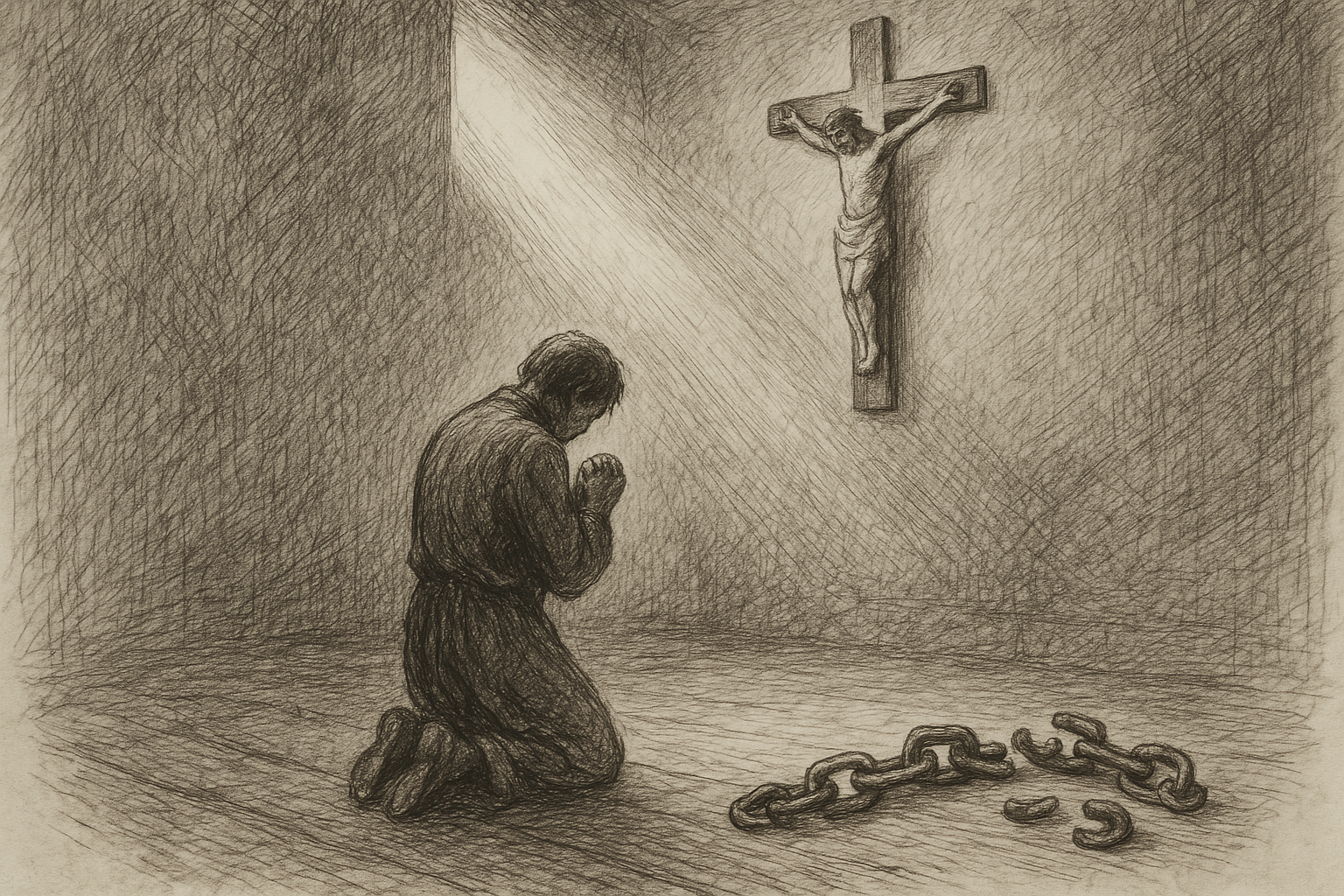
"Everyone who commits sin is a slave to sin" John 8:34.
That is a hard word, but it is also realistic. Habits can harden into slavery. The Gospel does not deny bondage. It announces that Christ has entered into it and can break it.
Mercy Without Excuses
Catholic teaching is sometimes misunderstood as though it were only about prohibition. In truth, the Church speaks of sin so that she can speak honestly about mercy. Mercy is not pretending evil is harmless. Mercy names the wound and seeks its healing.
That matters because many people who struggle with pornography already know it is wrong. They may feel trapped, ashamed, or exhausted by repeated failure. The Church does not ask such a person to begin with self hatred. She asks for honesty. A person is not defined by the sin that clings to him. He is defined by the fact that he is still called by God.
Christ meets sinners without relativizing sin. He tells the woman caught in adultery, "Neither do I condemn you; go, and do not sin again" John 8:11. That balance matters. The Lord does not dismiss the moral demand, but He does not crush the sinner either. His mercy makes conversion possible.
For Catholics, that mercy becomes concrete in the sacrament of Reconciliation. Confession is not a humiliation ritual. It is a sacramental encounter with divine mercy, where sins are named, grace is received, and a new start is given. For someone burdened by pornography, regular confession can be one of the most important steps toward freedom. It brings sin into the light, where shame loses some of its power.
Pastoral Realities Many People Face
It is important to speak with care here, because pornography does not affect everyone in the same way. Some begin using it in adolescence and continue out of habit. Others turn to it in loneliness, stress, or emotional pain. Some are married and feel ashamed because the habit is hidden from a spouse. Some have tried to quit many times and feel discouraged by relapse.
A faithful Catholic response should take these realities seriously. Spiritual advice that ignores psychology or personal history can become unhelpful. At the same time, psychological insight should never erase moral responsibility. Both truth and compassion are needed.
Parents also need help. The digital world places sexual material within reach of children long before they are mature enough to understand it. Catholic parents are right to think not only about content filters, but also about forming habits, building trust, and speaking plainly about dignity, modesty, and self control. A child who can talk with a parent before shame takes root is far better protected than a child who is left alone with curiosity and a screen.
Spouses, too, can be wounded deeply by pornography. It can create distrust, insecurity, and emotional distance. In marriage, sexual fidelity is not merely about bodily exclusivity. It includes interior fidelity, the willingness to direct desire toward the spouse alone. When pornography enters a marriage, it can injure that bond and require patient, honest work to rebuild trust.
Practical Steps Toward Freedom
No single method works for everyone, but freedom usually grows through a combination of grace, discipline, and support. The Church never treats chastity as an isolated self improvement project. It is a life of cooperation with God.
- Bring the struggle to confession. Name it honestly and receive sacramental grace.
- Pray daily for purity of heart. Short prayers said at the moment of temptation can matter more than long speeches made afterward.
- Reduce access. Remove triggers, limit unfiltered devices, and use accountable safeguards where appropriate.
- Do not stay isolated. Trusted spiritual direction, counseling, or a support group can help break secrecy.
- Build healthy habits. Sleep, exercise, structured time, and meaningful friendships can weaken the conditions that feed temptation.
- Practice custody of the eyes and imagination. What is repeated in the mind often shapes desire more than people realize.
These are not quick fixes, and they are not meant to be. Healing usually takes time. Yet time spent in grace is not wasted time. Every honest act of repentance opens the door a little wider.
When temptation feels overwhelming, it can help to remember that chastity is not mainly about saying no. It is about saying yes to a larger love. A person who begins to see others as brothers and sisters in Christ is already moving away from the logic of pornography. Desire becomes more human when it is ordered toward communion, patience, and reverence.
Hope for Those Who Feel Stuck
Some readers may carry years of regret. Others may be trying to break a habit they have never spoken about aloud. A few may have fallen today and wonder whether they have lost all progress. None of those situations is beyond God's mercy.
The Christian life is not a performance for the already pure. It is a pilgrimage for sinners being transformed. The Lord who calls us to holiness also gives the sacraments, the Scriptures, and the help of His Church. He knows the weight of temptation. He knows the shame people carry in secret. And He knows how to heal what seems beyond repair.
Purity is not a naive innocence that ignores reality. It is a disciplined love that learns to see persons truthfully. That is why pornography Catholic teaching is not ultimately about fear. It is about freedom. The Church warns against what degrades because she believes the human person is made for something greater.
That greater life begins now, often imperfectly, with one honest prayer: Lord, have mercy on me. Strengthen me. Teach me to love as You love. For anyone ready to begin again, Christ is not far away. He is already near, and His mercy is stronger than the habit that tries to bind the heart.
Keep Reading on Lets Read The Bible
Frequently Asked Questions
Is viewing pornography always a mortal sin in Catholic teaching?
The Church teaches that pornography is gravely disordered matter. Whether a particular act is mortal sin depends on full knowledge and deliberate consent, as with all mortal sin. Even when culpability is complicated by habit, immaturity, or compulsion, the act remains objectively sinful and harmful.
What should a Catholic do if pornography has become a repeated habit?
Begin with honesty before God. Go to confession, remove easy access where possible, and seek practical help through accountability, counseling, or spiritual direction. Persistent habits usually require both sacramental grace and concrete change.
Can someone who struggles with pornography still return to God?
Yes. No one is beyond mercy. The Church calls every person to repentance and trusts that Christ can heal even deep habits of sin. Regular confession, prayer, and patient support can make real freedom possible over time.