Sacraments and Liturgy
Blessed Water and the Faith We Carry Home
Holy water and sacramentals explained through Scripture, Catholic tradition, and the ordinary practice of prayer.
Site Admin | September 18, 2026 | 16 views
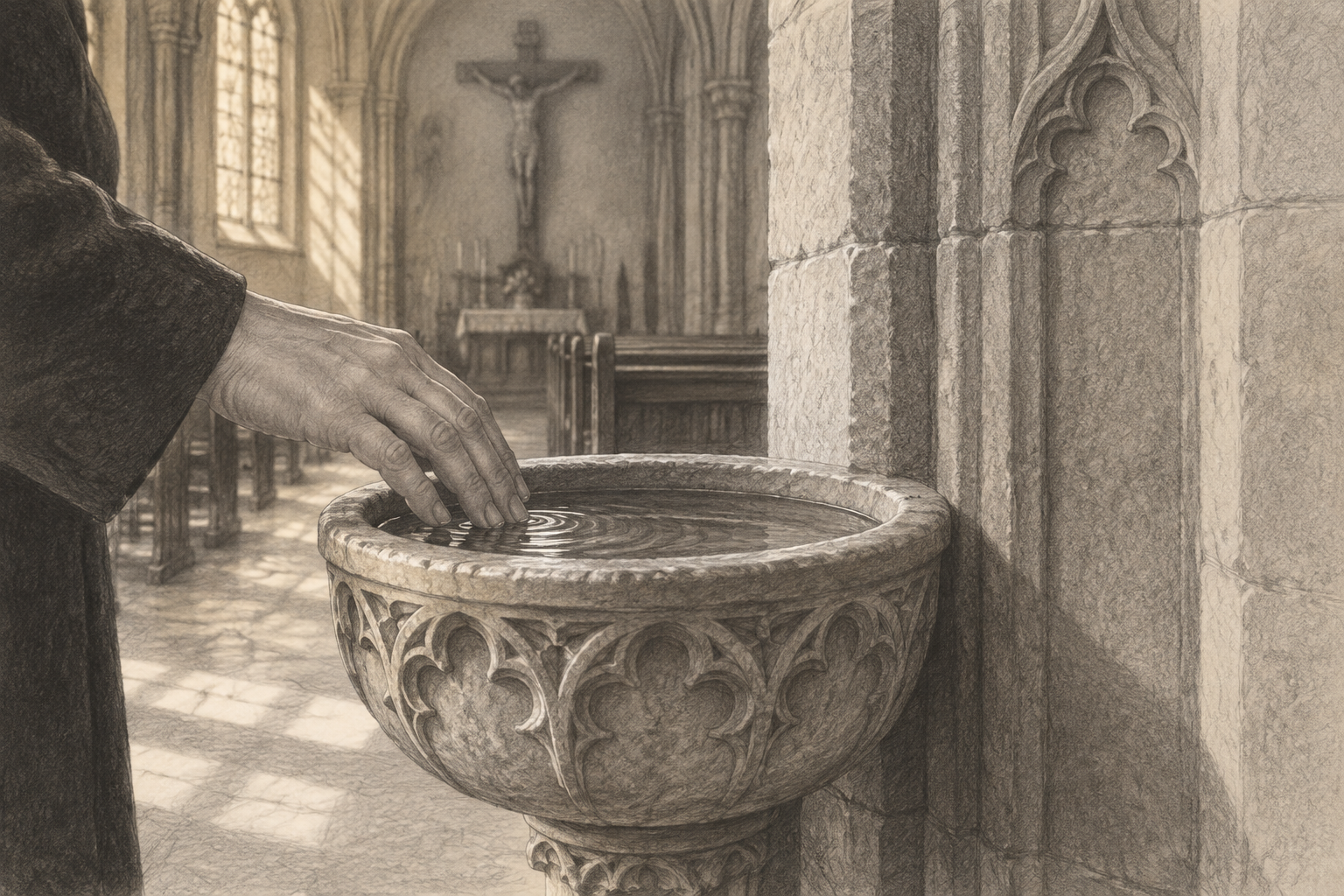
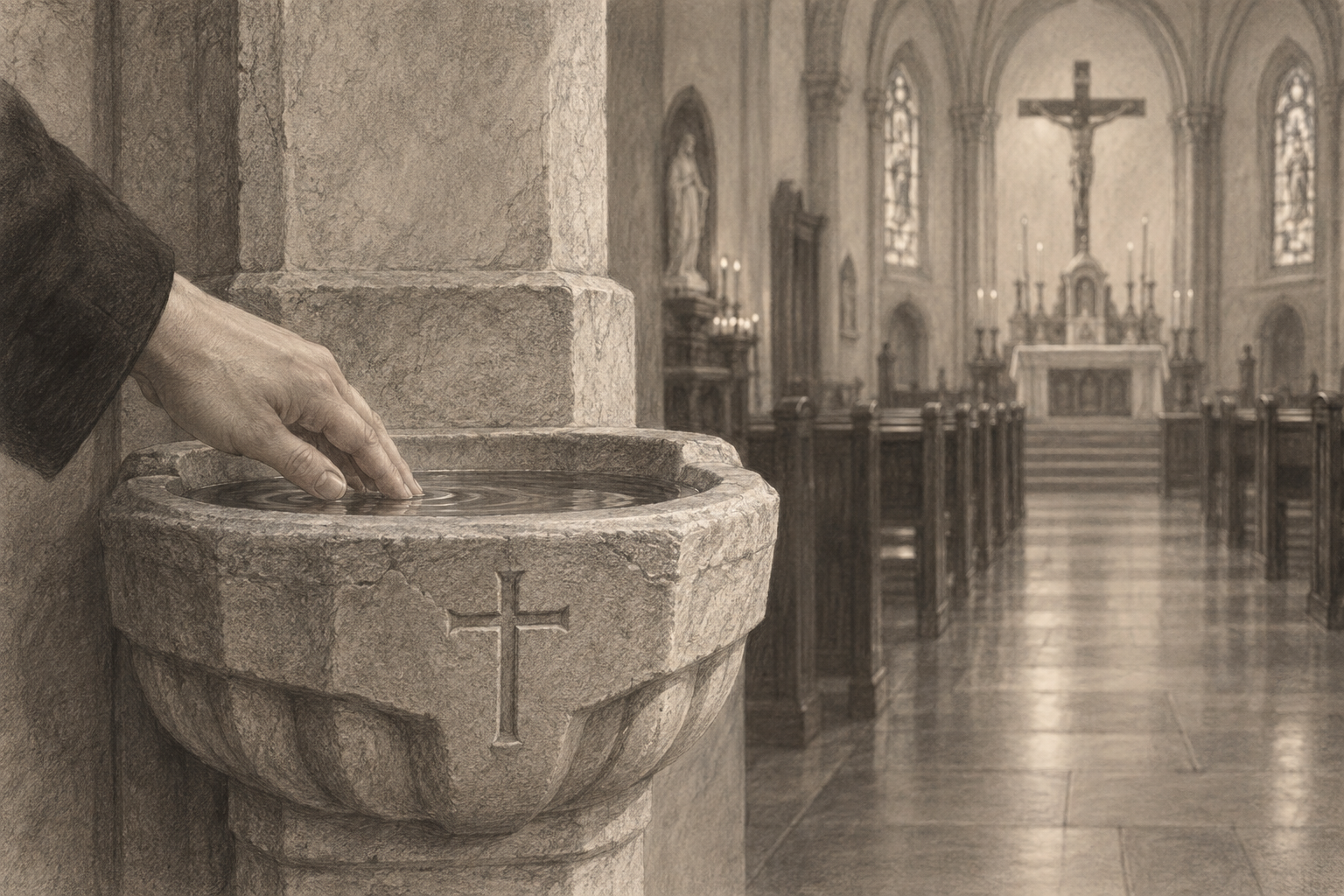
At the entrance to a Catholic church, a small vessel of water invites a familiar gesture. We dip our fingers, trace the sign of the cross, and name the Father, the Son, and the Holy Spirit. It can take only a few seconds. Yet that brief action recalls a reality that shapes an entire Christian life: through Baptism, we have been joined to Christ and brought into his Church.
Holy water belongs to the wider family of sacramentals, which includes blessings and blessed objects used in Christian devotion. These practices give faith a visible, bodily expression. They also raise reasonable questions. What does a blessing actually do? How are sacramentals different from sacraments? And how can we use them without slipping into habit or superstition?
Sacred signs, but not additional sacraments
The Catholic Church celebrates seven sacraments, instituted by Christ. Through them, Christ acts to communicate the grace they signify. Baptism, for example, does not merely remind us of cleansing. It truly washes away sin and gives new life in Christ.
Sacramentals are different. They are sacred signs instituted by the Church that prepare us to receive grace and help sanctify the circumstances of life. The Catechism of the Catholic Church explains this distinction in paragraphs 1667 and 1670. Their spiritual effects are obtained through the Church's intercession, rather than in the same way as the effects of the sacraments.
This does not make them empty symbols. A blessing is a real act of the Church's prayer. But a blessed medal does not work like Baptism, and holy water does not replace sacramental confession. Sacramentals lead us toward the sacramental life, not away from it.
The central question is not what an object can do by itself, but how God draws us to himself through the prayer of his Church. Faith, repentance, and openness to grace belong at the heart of their use.
Why water carries so much meaning
Water sustains life, washes what is soiled, and can also overwhelm and destroy. Scripture draws on all these meanings. At creation, the Spirit of God moves over the waters: Genesis 1:2. At the Red Sea, the Israelites pass through the waters on dry ground as God delivers them from slavery: Exodus 14:22.
These events belong to the biblical background of Baptism. The New Testament brings the meaning into focus when Jesus speaks of birth through water and the Spirit: John 3:5. Saint Paul describes Baptism as burial with Christ so that we may walk in newness of life: Romans 6:4.
When Catholics use holy water, they do not repeat their Baptism. Baptism is received once. Instead, the gesture recalls its enduring claim on us: we belong to Christ, are called to reject sin, and are invited to live as children of God.
The sign of the cross makes that remembrance especially clear. Water touches the body while the hand traces the sign of our redemption. The spoken names of the divine Persons recall the baptismal command of Jesus: Matthew 28:19. An ordinary movement becomes a small profession of faith.
A practice rooted in the Church's prayer
The Christian use of blessed water developed within the Church's life of worship. Ancient Christian sources attest to prayers over water, while particular customs of sprinkling and devotional use took shape over time. Today's familiar church-door fonts belong to that living history, rather than to a single command prescribing their exact form.
In the Roman Rite, the blessing and sprinkling of water can take place at Sunday Mass as a remembrance of Baptism. In that setting, it replaces the usual Penitential Act. The congregation is reminded together that Christian worship grows from the new life received in Christ.
Holy water also appears in other liturgical settings, including blessings and funeral rites. At a funeral, the sprinkling of the coffin recalls the deceased person's Baptism and expresses Christian hope in the resurrection. The water points beyond itself to God's promises.
The Church's blessing sets water apart for sacred use. Its outward properties remain those of water. It is not a medicinal substance, and its holiness is not something that can be measured by ordinary physical testing. Its purpose belongs to worship and prayer.
More than objects on a shelf
Holy water is often the most familiar sacramental, but the category is broader than a collection of religious possessions. Blessings of people, meals, homes, and objects all belong within the Church's life of sacramentals. Some are woven into public worship; others accompany family life and personal devotion.
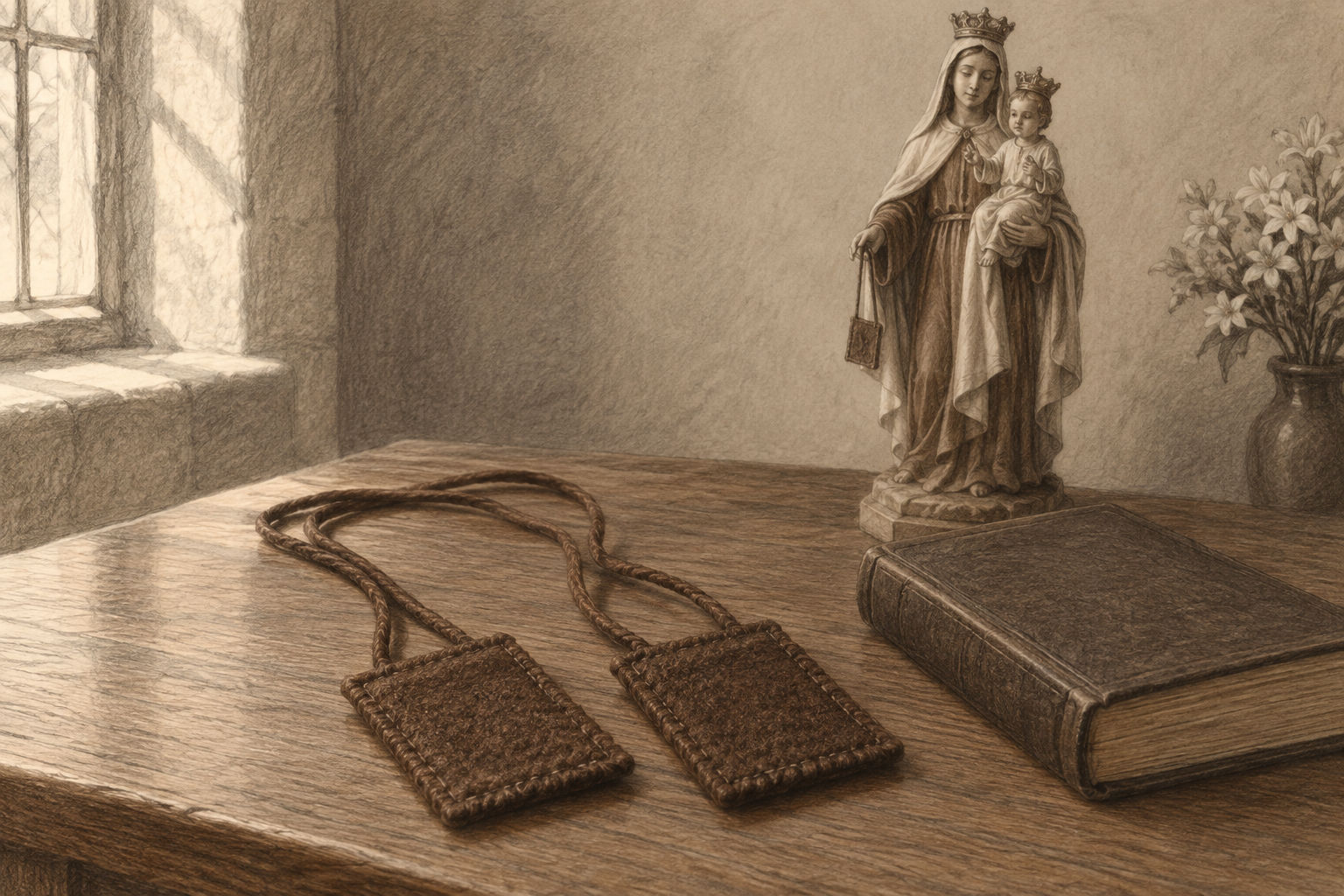
A blessed crucifix places the saving death of Jesus before our eyes. A blessed rosary supports prayerful meditation on the mysteries of Christ with Mary. A medal bearing the image of a saint can remind us to seek that saint's intercession and imitate a life of holiness.
The Catechism describes blessings as praise of God and prayer for his gifts in paragraph 1671. That is a useful correction to the idea that blessing an object simply adds an invisible power to it. A blessing directs people and things toward God's glory and our sanctification.
Not every sacramental is an object, and not every blessing requires an ordained minister. The Church provides for laypeople to lead certain blessings, while others are reserved to bishops, priests, or deacons. When in doubt, ask the parish rather than inventing a rite or assuming that every formula is interchangeable.
Trusting God without treating holiness as magic
Superstition begins when we treat a religious action as effective merely because we performed its outward motions. The Catechism warns against this in paragraph 2111. A Catholic may use a genuine sacramental in a mistaken way if the object becomes a substitute for faith, conversion, or responsible action.
Holy water is not a guarantee that a house will never suffer damage, that an illness will disappear, or that a difficult journey will end safely. Christians may certainly ask God for protection. The Church's prayers include petitions for deliverance from evil. But prayer entrusts us to God's providence; it does not place him under our control.
There is no need to search anxiously for the strongest holy water or collect more blessed objects as though spiritual protection depended on quantity. Nor should someone fear that forgetting to bless themselves has automatically exposed their family to harm.
Sacramentals also do not permit us to bypass repentance. Their prayerful use can help turn our hearts from sin, but holy water is not a substitute for the sacrament of Penance, especially when we are conscious of mortal sin. The right response to a troubled conscience is honest examination and, when needed, confession, not repeated gestures performed in fear.
Using holy water faithfully, at church and at home
A good beginning is simple: slow down enough to mean what you are doing. At the church entrance, make the sign of the cross reverently. Remember your Baptism and ask for the grace to pray attentively. If no holy water is available, you can still make the sign of the cross and enter prayerfully.
For home use, ask your parish where blessed water is available. Many churches provide a clearly designated dispenser or container. Bring a clean, suitable bottle and follow local instructions; do not assume that a baptismal font is intended for filling personal containers.
At home, a small holy water font near a doorway or prayer space can encourage a steady, unforced practice. Some families bless themselves before leaving home, before bedtime, or at the beginning of prayer. These are devotional customs, not universal obligations.
- Begin with remembrance. Recall that your life belongs to the Father, the Son, and the Holy Spirit.
- Add a brief prayer. You might say, "Lord, help me live faithfully today." No elaborate formula is necessary for ordinary personal use.
- Connect the gesture to action. Let it prompt patience, honesty, forgiveness, or a return to prayer.
- Keep the practice peaceful. Encourage children gently, explaining its meaning without frightening them about what happens if they forget.
If you would like a formal blessing of your home, contact your parish. A family's devotional use of holy water is good, but it should not be confused with every liturgical rite the Church provides.
Caring for things set apart for prayer
Blessed objects deserve respectful treatment, not nervous handling. Keep holy water in a clean, clearly identified container, and clean a household font regularly. Blessed water is not necessarily sterile, so ordinary hygiene still matters. Its normal devotional use is for blessing, not as a health remedy.
If holy water needs to be disposed of, the customary respectful practice is to pour it into the earth in a suitable place where it will not be trampled, rather than into an ordinary drain. If you are uncertain about local arrangements, ask your parish.
Broken blessed objects can also be handled reverently. Depending on the material, traditional options include burial or burning when this can be done safely and lawfully. A parish can advise about materials that make these options unsuitable. Repairing a treasured crucifix or rosary may be the best first choice.
The point is reverence, not fear of contamination or punishment. Material things wear out. Caring for them expresses gratitude for their sacred use without pretending that they are God.
Let the sign lead to a faithful life
The best fruit of a sacramental is not simply that we use it more often. It is that we become more ready to receive God's grace and respond to it. A rosary should lead us into prayer. A crucifix should deepen our love for Christ. Holy water should help us remember and live our Baptism.
That gives us a practical measure for our devotions. Are they drawing us toward Mass, confession, Scripture, and charity? Are they helping us trust God more deeply rather than feeding anxiety? Are they teaching us to recognize his claim on the ordinary hours of the day?
The next time your hand reaches toward holy water, give that familiar gesture a moment of attention. Name the Father, the Son, and the Holy Spirit with gratitude. Then carry the remembrance into whatever comes next: a conversation, a task, a burden, or an opportunity to love. The water remains at the doorway, but the baptismal life goes with you.
Keep Reading on Lets Read The Bible
Frequently Asked Questions
What is the difference between a sacrament and a sacramental?
The seven sacraments were instituted by Christ and communicate the grace they signify. Sacramentals are sacred signs instituted by the Church whose spiritual effects are obtained through her intercession. They prepare us to receive grace and help sanctify everyday life, but they do not replace the sacraments.
Can Catholics use holy water at home?
Yes. Catholics may keep holy water at home and use it reverently when making the sign of the cross or beginning prayer. Ask your parish how to obtain it, keep its container clean, and treat the practice as an invitation to faith rather than a guarantee against misfortune.
Does holy water forgive sins?
The prayerful use of holy water can foster repentance and the devotion through which venial sins are forgiven. This is not an automatic effect of touching the water. Holy water does not give sacramental absolution or replace confession when a person is conscious of mortal sin.