Sacraments and Liturgy
The Brown Scapular and the Faithfulness of Ordinary Days
A small Carmelite garment can become a steady reminder to belong to Christ, trust Mary's care, and practice the faith with patience.
Site Admin | September 15, 2026 | 26 views
A brown scapular is easy to overlook. Two small pieces of cloth, joined by cords, rest against the chest and back, usually hidden beneath ordinary clothing. There is nothing impressive about it by worldly standards. Yet for many Catholics, this quiet devotional garment becomes a daily reminder of something immense: their life belongs to Jesus Christ, and they want to follow him in the company of his mother.
That simplicity can also make the scapular easy to misunderstand. Some people receive one without much explanation. Others hear extraordinary promises and wonder whether wearing it guarantees salvation. Still others assume it belongs to a kind of Catholic life that has little connection with their own.
The Church offers a sounder approach. The brown scapular is a sacramental rooted in Carmelite spirituality. Properly understood, it does not replace the Gospel. It helps a person remember to live it.
A small garment with Carmelite roots
The word scapular comes from a Latin word associated with the shoulders. In religious life, a scapular is a garment worn over the shoulders, with panels hanging down the front and back. The small brown scapular worn by lay Catholics is a devotional form of the scapular belonging to the Carmelite habit.
The Carmelite tradition traces its beginnings to Christian hermits living on Mount Carmel in the Holy Land around the end of the twelfth and beginning of the thirteenth centuries. Their life centered on prayer, Scripture, community, and service to Jesus Christ. Mary came to be honored within this tradition as the Lady and mother of their spiritual family.
As Carmelite life spread, laypeople also sought a share in its prayer and Marian devotion. The brown scapular became a visible sign of that spiritual association. Its meaning is therefore richer than simply carrying a religious object. It is a garment that expresses a desire to live under Mary's care and learn the prayerful fidelity associated with Carmel.
The tradition of St. Simon Stock
The scapular is closely associated with the tradition that the Blessed Virgin appeared to the Carmelite St. Simon Stock and gave him the scapular with a promise of protection. Catholics should distinguish the devotion's recognized place in the Church from the historical certainty of every detail in popular accounts. The surviving evidence does not establish all those details with equal confidence.
This distinction need not weaken devotion. The value of the brown scapular does not depend on treating every later story as documented history. Its enduring foundation is the Church's approval of the devotion, its connection with the Carmelite family, and its invitation to follow Christ with Mary.
A sacramental, not an eighth sacrament
The brown scapular is a sacramental. Sacramentals are sacred signs established by the Church that prepare us to receive grace and help sanctify the circumstances of life. Their spiritual benefit is connected with the Church's prayer and with our willingness to respond to God.
This makes them different from the seven sacraments, which were instituted by Christ and confer the grace they signify. A scapular does not forgive mortal sin, replace sacramental confession, or substitute for participation in the Eucharist. It belongs within the sacramental life, not alongside it as an alternative route.
A useful comparison is a wedding ring. A ring genuinely expresses a relationship and can remind someone to live faithfully, but wearing it does not make every action faithful. Likewise, the scapular expresses a commitment that needs to be lived. Its significance is not imaginary, but neither is it mechanical.
Jesus makes clear that discipleship involves more than religious words or outward signs: doing the Father's will matters, as he teaches in Matthew 7:21. Wearing a scapular while deliberately refusing repentance would contradict what the garment signifies.
Mary's protection leads toward Jesus
Catholic devotion to Mary is never meant to draw a person away from Christ. Her maternal intercession depends entirely on him and leads us toward him. At Cana, her direction to the servants gives a clear pattern for Marian devotion: they are to do whatever Jesus tells them, as recounted in John 2:5.
The scapular makes sense within that pattern. To entrust oneself to Mary is to ask her help in hearing her Son, turning from sin, and remaining faithful when obedience becomes difficult. It is not to seek an exemption from the demands of Christian life.
The protection traditionally associated with the scapular should therefore be understood as a reason for hope, not presumption. Catholics may confidently ask Mary to intercede for the graces of repentance, perseverance, and a holy death. They should not imagine that a piece of cloth guarantees heaven regardless of their choices.
What about the promises people repeat?
Popular explanations sometimes reduce the scapular promise to a formula: wear it at death and salvation is assured. Such wording, detached from conversion and perseverance in grace, encourages superstition. No authentic Catholic devotion promises salvation to someone who knowingly rejects God and remains unwilling to repent.
You may also encounter the so-called Sabbatine privilege, often described as a guarantee of release from purgatory on the first Saturday after death. The historical document associated with this claim is disputed, and Catholics should not present that timetable as a guaranteed teaching of the Church. The sound spiritual emphasis is confidence in Mary's intercession, especially for those who have sought to live faithfully.
There is no need to build devotion on anxiety about getting a promise exactly right. God's mercy is not a loophole hidden in devotional instructions. The scapular invites trust in that mercy and a willing response to it.
Beginning the devotion without confusion
If you would like to wear the brown scapular, begin with a conversation rather than a hurried purchase. A parish priest or a Carmelite community can explain enrollment and help you understand the commitment expressed in the approved rite.
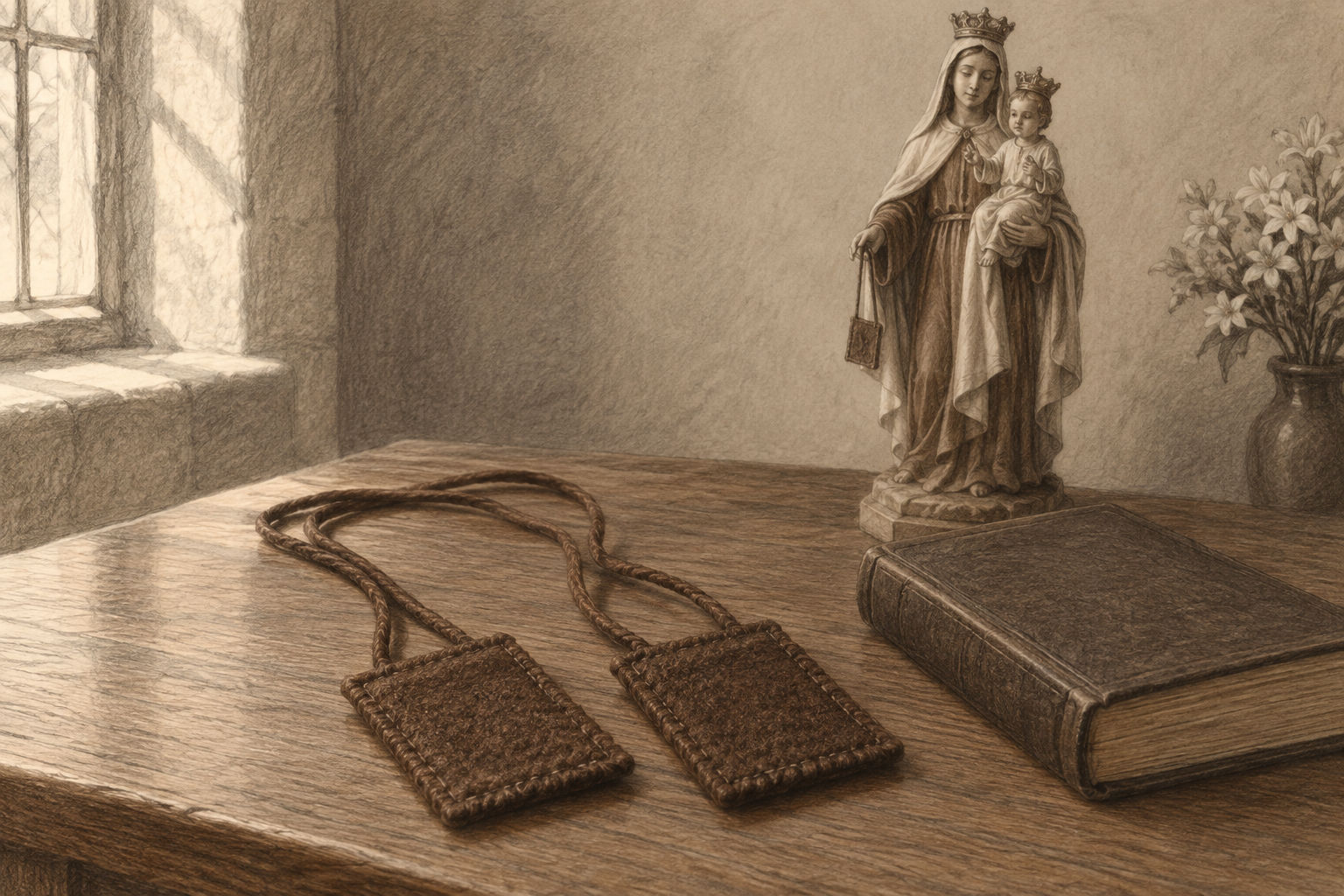
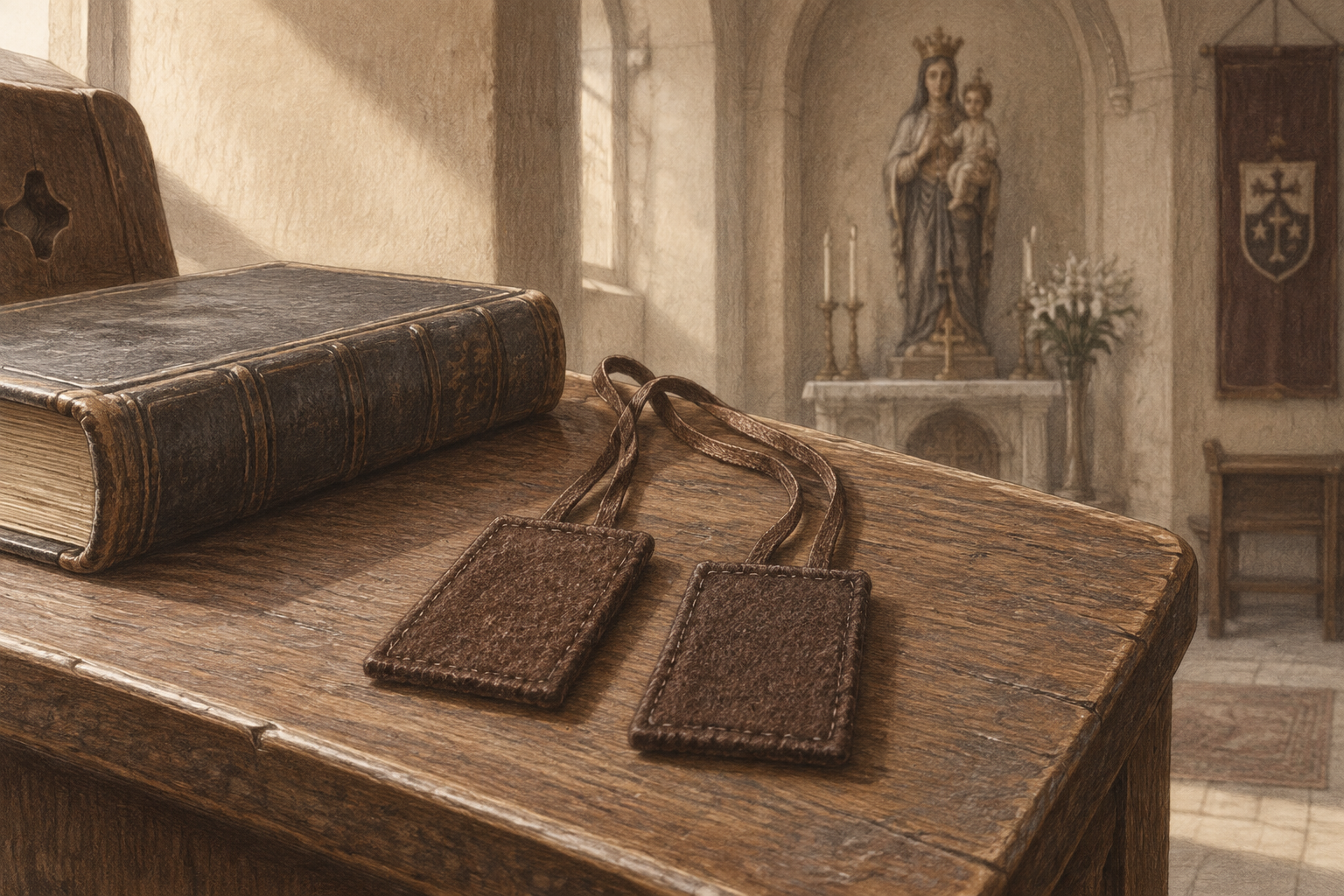
- Choose a suitable scapular. The traditional brown scapular consists of two pieces of brown wool joined by cords, with one piece worn in front and the other behind. Religious pictures are common, but they are not what gives the scapular its meaning.
- Ask about blessing and enrollment. Enrollment is a Church rite that expresses participation in the spiritual life of the Carmelite family. A priest or deacon can use the approved rite. It is more than having a new religious object blessed.
- Learn what you are undertaking. The heart of the devotion is Christian living with a Marian and Carmelite character: prayer, attention to God's word, charity, and participation in the Church's sacramental life.
- Wear it with peaceful consistency. The aim is a lasting habit of remembrance, not fear about every interruption. Removing it for bathing, medical care, or another reasonable need is not a rejection of Mary.
Enrollment is ordinarily received once. If a cloth scapular wears out or breaks, replacing it does not require another enrollment, and the replacement does not need a new blessing. If health or practical concerns make a cloth scapular difficult to wear, ask a knowledgeable priest about the Church's provision for an approved scapular medal.
Enrollment does not make a layperson a vowed Carmelite religious. Nor should every prayer requirement found in an old leaflet be assumed to bind every wearer. Follow the approved rite and any commitments belonging to a particular confraternity you actually join. When advice conflicts, seek clarification rather than multiplying obligations on your own.
Let the garment shape an ordinary day
The brown scapular is most fruitful when its meaning reaches beyond the moment of putting it on. It can become a quiet invitation to practice the Gospel in circumstances that would otherwise pass unnoticed.
Begin with a brief offering
In the morning, let the touch of the cloth prompt a simple prayer: ask Jesus to receive the day, and ask Mary to help you remain attentive to him. There is no need to invent an elaborate routine. A short prayer offered faithfully is a good beginning.
Carmelite spirituality values prayerful attention to God. A layperson can practice this by taking a few minutes with Scripture, keeping a little silence, or returning to God's presence during work. Mary, who pondered the events surrounding her Son in her heart, offers a model in Luke 2:19.
Connect devotion with the sacraments
Let the scapular remind you of Sunday Mass and the need for regular examination of conscience. If you become conscious of grave sin, seek sacramental confession rather than trying to quiet your conscience through a devotional practice alone.
A sacramental should deepen hunger for the sacraments. If wearing the scapular makes you more willing to repent, more attentive at Mass, or more grateful for the Eucharist, the devotion is bearing good fruit.
Practice the charity no one sees
A hidden garment is a fitting reminder of hidden fidelity. Answer a difficult person without contempt. Fulfill a responsibility you would rather avoid. Pray for someone who has hurt you. Give help without making sure others notice.
St. Paul speaks of Christians clothing themselves with compassion, kindness, humility, gentleness, and patience in Colossians 3:12. That passage offers a searching examination for anyone who wears a devotional garment: am I also becoming clothed in the virtues of Christ?
A devotion freely chosen
No Catholic is required to wear the brown scapular. The Church contains many legitimate devotions, and people differ in the practices that help them pray. Someone who does not wear one is not therefore less devoted to Mary or less serious about holiness.
For those who do choose it, the scapular offers something modest and steady. It can remain close through hurried mornings, illness, family strain, and seasons when prayer feels dry. It does not announce that the wearer has achieved holiness. It reminds the wearer to keep asking for grace.
When you next notice those two small pieces of cloth, let the reminder be simple: turn toward Jesus, ask his mother's help, and do the next faithful thing. The garment rests on your shoulders; the invitation reaches into the ordinary life God has given you.
Keep Reading on Lets Read The Bible
Frequently Asked Questions
Do I need to be enrolled before wearing the brown scapular?
You can begin wearing it as an expression of devotion, but enrollment through the approved Church rite is the proper way to enter the scapular devotion's spiritual association with the Carmelite family. Ask a parish priest or deacon to explain and celebrate the rite.
Does wearing the brown scapular guarantee salvation?
No. The scapular is a sacramental, not a charm or an automatic guarantee of heaven. Its promises must be understood in harmony with Catholic teaching on faith, repentance, grace, and perseverance. It expresses trust in Mary's intercession and a commitment to follow Christ.
What should I do if my brown scapular breaks or needs to be removed?
Replace a broken or worn cloth scapular without repeating enrollment; the replacement does not require a new blessing. Removing it for bathing, medical care, or another reasonable need should not cause fear. If wearing cloth is persistently difficult, ask a priest about an approved scapular medal.