Sacraments and Liturgy
A Quiet Hour Before the Lord: Entering Eucharistic Adoration with Faith
A practical Catholic guide to the Church's prayer of reverence, silence, and love before the Blessed Sacrament.
Site Admin | August 29, 2026 | 78 views
Standing Before the Living Christ
Eucharistic adoration is one of the most intimate prayers in Catholic life. It is not a performance, a technique, or a spiritual test. It is time spent before Jesus Christ, truly present in the Blessed Sacrament, with the Church's faith resting in his promise: I am the living bread and I am with you always.
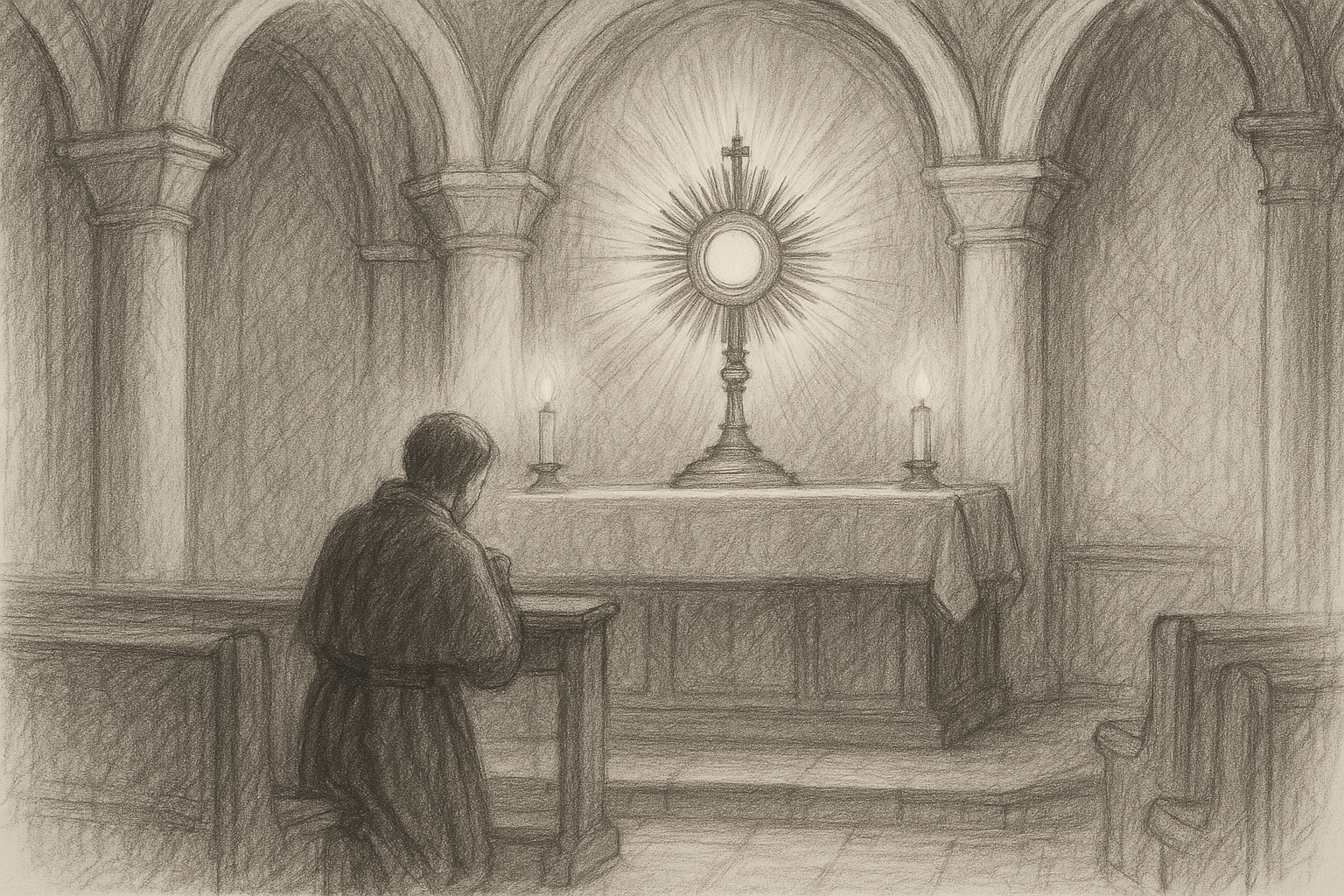
For many Catholics, adoration begins simply. A person enters a chapel, genuflects, and keeps watch in silence. There may be no words at first, only awareness, reverence, and the slow settling of the heart. In that stillness, the Church teaches that the One we adore is not a symbol but the Lord himself, hidden under the appearance of bread after the consecration at Mass.
This is why Eucharistic adoration explained plainly is really about relationship. The faithful do not come to admire a holy object. They come to be with Someone. The Blessed Sacrament rests at the center of the Church's worship because the Eucharist is the sacramental presence of Christ, the same Jesus who taught, healed, forgave, suffered, died, and rose again.
What the Church Means by Eucharistic Adoration
Eucharistic adoration is the act of worship given to Christ present in the Eucharist. It can take place before the Blessed Sacrament reserved in a tabernacle, or more commonly in a monstrance during exposition, when the Sacred Host is placed visibly before the faithful for prayer. In either case, the heart of the devotion is the same: reverence before the Lord who remains among his people.
The Church distinguishes between the Eucharist as food for Communion and the Eucharist as an object of adoration, but the two are never separated in meaning. The One received at Mass is the One adored in the chapel. The sacrifice celebrated on the altar is the same Christ who abides among his people. Adoration flows naturally from belief in the Real Presence.
It also helps to see adoration as an extension of the Mass rather than a replacement for it. The liturgy gives us the Eucharist, and adoration allows us to dwell with the gift. In silence, the soul learns to receive what the mind already confesses: Christ is here.
Scripture and the Church's Long Memory
Catholic devotion to the Eucharist did not appear out of nowhere. It grows from the New Testament witness and the Church's earliest worship. The Last Supper accounts show Jesus taking bread, blessing it, breaking it, and giving it to his disciples with words that are unmistakably sacramental: This is my body and This is my body for you. The Bread of Life discourse in John's Gospel prepares the faithful for the mystery with strong realism: I am the bread of life and whoever eats my flesh.
From the beginning, Christians understood the Eucharist as holy beyond ordinary bread. They gathered to break bread, to pray, and to remain in awe before the Lord's gift. As the Church's liturgical life developed, so did visible acts of reverence for the consecrated host. The practice of reserving the Eucharist for the sick and the dying helped deepen this faith, and public forms of devotion arose from the same conviction that Christ remains truly present.
By the Middle Ages, Eucharistic devotion had become more explicit in the Church's life, including exposition, processions, and prayers of adoration. These expressions were not innovations detached from earlier belief. They were a flowering of the Church's long contemplation of the mystery already present in Scripture and sacrament.
Adoration is the Church kneeling before the One who first stooped to serve her.
Why Silence Matters So Much
Many Catholics who are new to adoration wonder whether they should be praying constantly, reading Scripture, or trying to feel something powerful. These things can be helpful, but silence is not wasted time. In fact, silence often becomes the language of true reverence.
Before the Blessed Sacrament, silence makes room for humility. It removes the pressure to produce an experience. It allows the soul to stop managing and begin receiving. Some people arrive with a long list of intentions. Others come with fatigue or spiritual dryness. Some simply sit and breathe. The Lord can meet each of these with mercy.
Silence also teaches a discipline that modern life rarely rewards. We are usually surrounded by noise, screens, and constant motion. Eucharistic adoration draws the believer into a different rhythm. It slows the heart enough to notice God's presence. Over time, that stillness can soften resentment, sharpen repentance, and deepen gratitude.
In that sense, adoration is not passive. It is an act of faith. To remain before Jesus, even when the mind wanders or the heart feels distracted, is to say with the body what the soul believes: he is worthy of my attention.
How to Prepare for a Holy Hour
For someone beginning Eucharistic adoration, the simplest approach is often the best. Preparation need not be elaborate, but a little forethought helps the hour become peaceful rather than anxious.
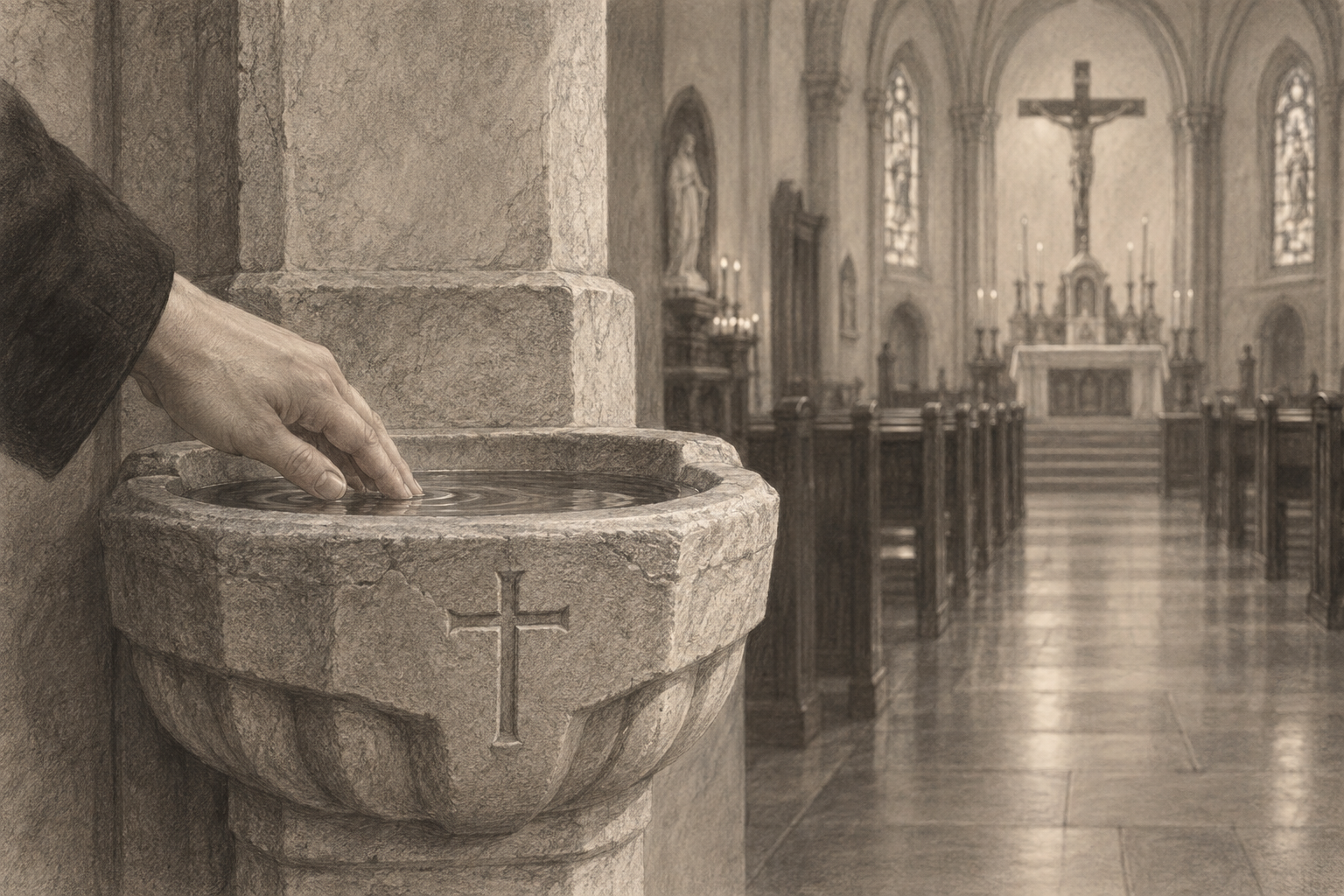
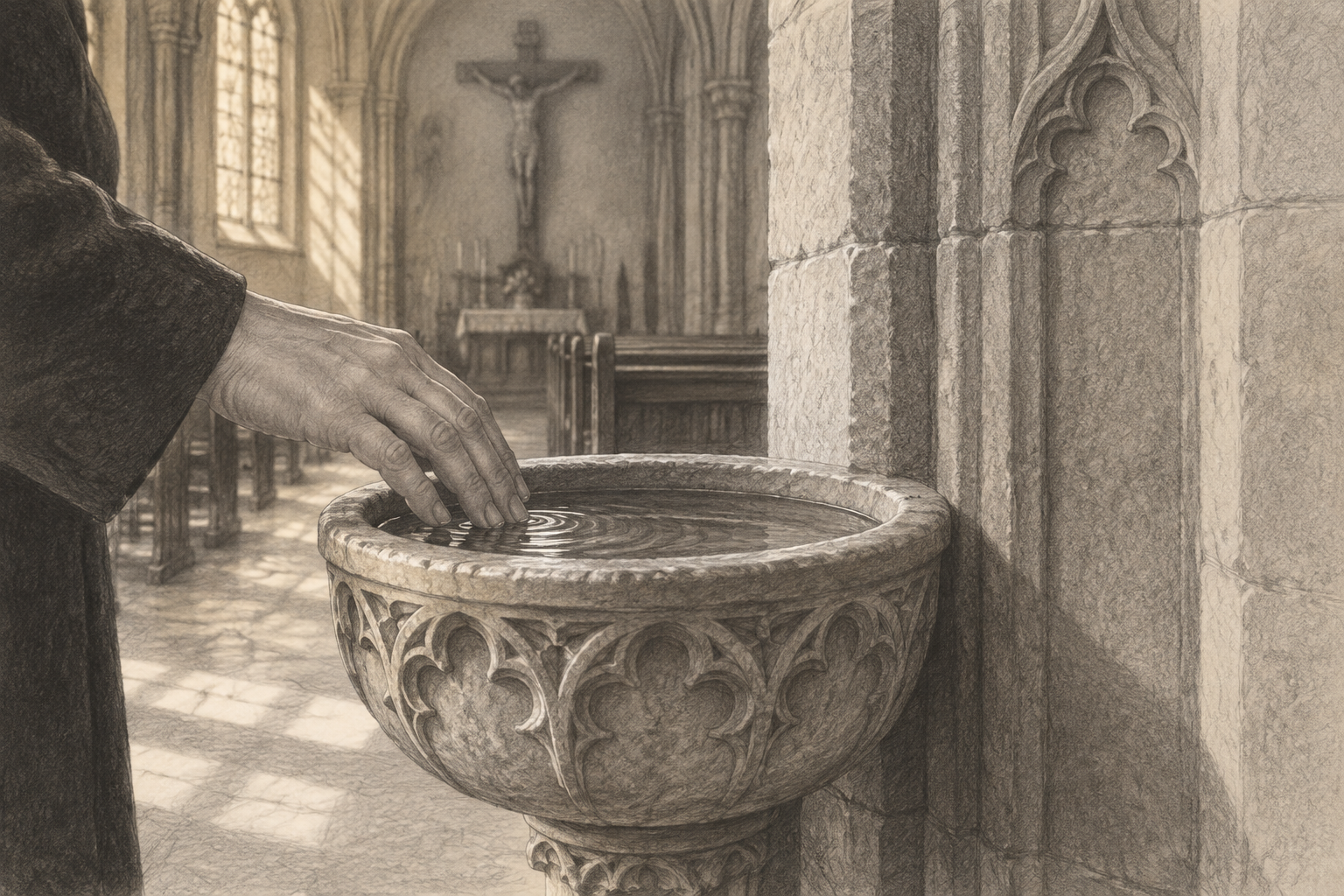
- Arrive with reverence. Enter quietly, genuflect if the Blessed Sacrament is exposed, and remember where you are. The chapel is a place of worship, not casual conversation.
- Offer the time to Christ. A brief prayer at the start can help: Lord Jesus, I believe you are here. Help me to spend this hour with you.
- Use Scripture slowly. A psalm, a passage from the Gospels, or a few verses from the Mass readings can provide a gentle focus.
- Practice simple prayer. Speak to the Lord plainly. Give thanks, ask for mercy, intercede for others, and listen.
- Accept distraction without panic. When the mind drifts, return quietly. Fidelity matters more than intensity.
- Close with gratitude. A concluding prayer, such as the Our Father, the Glory Be, or a silent act of thanksgiving, helps seal the hour.
Some people find it useful to bring a Bible, a rosary, or a small notebook. Others prefer to leave everything aside and simply remain. There is no single correct method, so long as the disposition is one of faith and reverence.
What Happens Interiorly in Adoration
The fruits of adoration are often hidden at first. Unlike a loud or emotional experience, the effects may appear gradually. A person may leave the chapel with no dramatic feeling, yet later notice greater patience, clearer priorities, or a softer conscience.
One of the deepest graces of adoration is purification of desire. The Lord gently reorders the heart. We begin to see where we have been restless, scattered, or attached to what cannot satisfy. In the light of his presence, our desires are not crushed but healed. We learn to want what is good, true, and lasting.
Adoration also strengthens gratitude for the Mass itself. The more a Catholic contemplates the Eucharist, the more the liturgy appears as gift and sacrifice rather than routine. The altar and the chapel belong together. The Host adored is the Host received. The Savior contemplated in silence is the Savior offered in worship.
This is why regular adoration can be so fruitful for families, catechists, priests, religious, and parishioners alike. It keeps the Eucharist from becoming an abstraction. It reminds the Church that her center is not an idea but a Person.
Common Misunderstandings
Some assume Eucharistic adoration is only for especially devout people. In truth, it belongs to the whole Church. No one needs advanced theological training to kneel before Christ. A simple act of faith is enough.
Others worry that adoration competes with the Mass or adds something unnecessary. But Catholic teaching sees adoration as a natural response to the gift already given in the sacrament. The Mass is the source and summit of the Christian life, and adoration is one way the faithful remain with the One who gives himself there.
It is also a mistake to think that adoration must always feel peaceful or consoling. A holy hour may involve dryness, restlessness, or even interior struggle. Yet these conditions do not make the time less valuable. Often they reveal the real state of the soul and invite a deeper surrender.
Finally, some believe they must fill every minute with vocal prayer or spiritual reading. Yet the Lord does not ask for productivity. He asks for faith, attention, and love. Sometimes the holiest response is to remain quietly before him and let him look upon us.
Living the Gift Beyond the Chapel
The grace of adoration should not stay locked in the chapel. It is meant to spill over into ordinary life. A person who has spent time before the Eucharist may find it easier to forgive, to speak more gently, to resist temptation, and to notice the poor and the suffering with a more generous heart.
Adoration also forms the conscience. When Catholics kneel before the Lord, they are reminded that worship is owed to God alone, that life is sacred, and that holiness is not reserved for a few. The quiet of the chapel can become the pattern for a more prayerful home, a more attentive parish, and a more Eucharistic way of seeing the world.
For those unable to attend often, even occasional visits can become meaningful. A few minutes with the Blessed Sacrament can steady a troubled day. A weekly holy hour can become a habit of grace. Over time, this devotion teaches the soul to live in expectation, as one who belongs to Christ and waits for his kingdom.
Eucharistic adoration explained in the simplest terms is this: the Church comes before her Lord and remains with him in love. In that faithful stillness, the heart learns again that Jesus is near, that he gives himself without reserve, and that no hour spent with him is ever lost.
Keep Reading on Lets Read The Bible
Frequently Asked Questions
Is Eucharistic adoration the same as Mass?
No. Mass is the celebration of Christ's sacrifice and the sacramental banquet of Communion. Eucharistic adoration is prayer before Christ present in the Blessed Sacrament. They are closely related, but they are not the same liturgical act.
What should I do if I do not know how to pray during adoration?
Start simply. Make an act of faith, read a short Scripture passage, speak to Jesus in your own words, and allow silence to do its work. Even a few sincere prayers are enough.
How long should a holy hour last?
A holy hour often lasts about an hour, but the most important thing is faithful attention rather than a perfect performance. Some chapels offer shorter visits or extended exposition, and Catholics may adapt their time according to the parish schedule.