Sacraments and Liturgy
A Small Sign of Grace: Holy Water in Everyday Catholic Life
How the Church's blessings help us remember our Baptism and bring prayer into ordinary places.
Site Admin | September 17, 2026 | 17 views
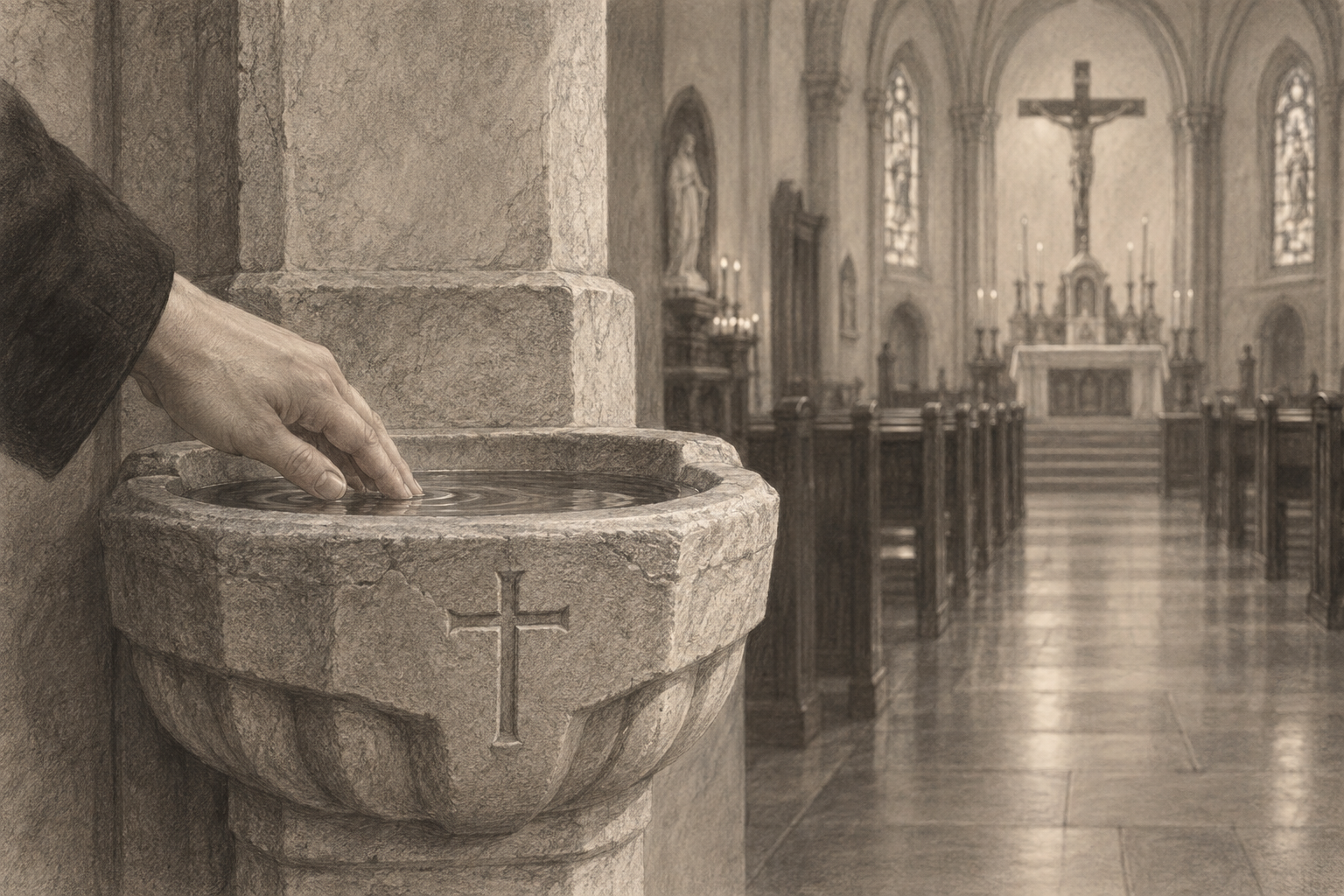
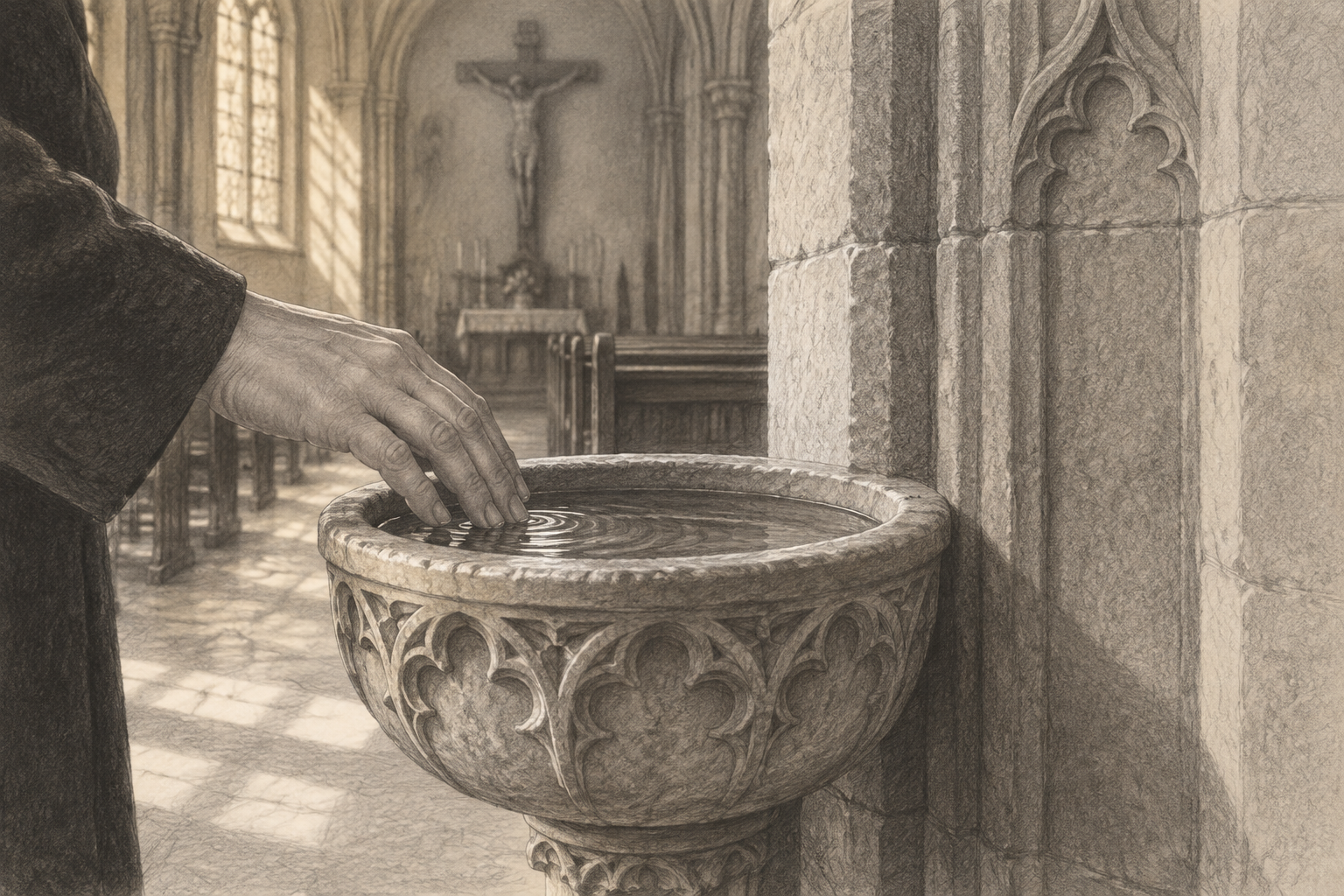
At the entrance to a Catholic church, a small font offers an invitation. We touch the water, make the Sign of the Cross, and turn toward the altar. The gesture takes only a moment. Yet it can recall the beginning of our Christian life, express repentance, and help us enter prayer with attention.
Holy water belongs to the Church's rich life of sacramentals: blessings, sacred signs, and blessed objects that help us receive God's gifts and sanctify ordinary circumstances. To use them well, we need neither elaborate routines nor anxiety about getting every movement right. We need faith in Christ, trust in the Church's prayer, and a willingness to let outward gestures shape inward attention.
What holy water is, and where it comes from
Holy water is water blessed through the Church's prayer for sacred use. In ordinary parish life, a priest or deacon blesses it according to an approved rite. The blessing asks God to help those who use it in faith, recalling the cleansing and life given through Christ.
The water remains water. It is not consecrated as bread and wine are consecrated at Mass, and it does not become a sacrament simply because it has been blessed. It has been set apart for a holy purpose through the prayer of the Church.
Water already carries a deep biblical meaning. It sustains life and washes what is unclean. God's promise of renewal includes the image of clean water and a new heart in Ezekiel 36:25 and Ezekiel 36:26. Christians hear those promises in the light of the saving work of Jesus and the gift of Baptism.
The Church's use of blessed water grew within her worship and devotional life. It should not be confused with an additional sacrament instituted alongside Baptism. Its meaning depends on God's saving action, not on any supposed hidden property of the water.
A reminder of the Baptism we have already received
The most important connection is with Baptism. Through this sacrament, we are freed from sin, reborn as children of God, and incorporated into Christ and his Church. Saint Paul teaches that those baptized into Christ are baptized into his death, so that they may walk in newness of life: Romans 6:3 and Romans 6:4.
When we use holy water, we do not repeat Baptism. We remember and seek to live what God has already accomplished in us. Making the Sign of the Cross recalls the Trinity in whose name we were baptized, as Christ commanded in Matthew 28:19.
This gives a familiar gesture a demanding meaning. To remember Baptism is to remember that we belong to Christ. It means turning away from sin, forgiving others, and accepting the responsibilities of Christian life. Holy water is not an escape from those responsibilities. It can be a small, bodily way of saying yes to them again.
Sacramentals are not the same as sacraments
The Catechism describes sacramentals as sacred signs instituted by the Church that prepare us to receive grace and help sanctify the circumstances of life (CCC 1667). Blessings are central among them. Blessed water, rosaries, medals, and crucifixes belong within this broader life of prayer.
The seven sacraments were instituted by Christ and confer the grace they signify. Their efficacy comes from Christ's action, not the personal holiness of the minister, though our dispositions matter for receiving their fruits. Sacramentals work differently: they prepare us to receive grace and cooperate with it through the Church's intercession (CCC 1670).
That distinction keeps devotion in its proper place. Holy water cannot replace Confession, and wearing a medal cannot replace participation in the Eucharist. A blessed rosary helps us pray, but possessing one is not the same as praying or growing in charity.
This does not make sacramentals unimportant. Human beings are bodily creatures. We learn, remember, and express love through physical actions. A crucifix above a bed can draw a tired person toward prayer. A blessing before a journey can turn nervous anticipation into trust. God does not ask us to leave our bodies or our ordinary surroundings outside the life of faith.
Faith, not superstition
A sacramental is used superstitiously when we treat the object or gesture as though it guarantees a result apart from faith, prayer, and God's will. The Catechism warns against attributing an almost magical importance to otherwise legitimate religious practices (CCC 2111).
The difference can be subtle. Asking God's protection while blessing oneself with holy water is a Christian act. Believing that a certain number of drops will make an accident impossible is not. Keeping a blessed medal close as a reminder of Christ or the intercession of a saint can nourish faith. Treating it as an automatic guarantee of success distorts its purpose.
The Church does pray for protection from evil, and holy water has a real place in that prayer. But Christian confidence rests in Jesus Christ, not in our ability to manage unseen dangers through objects. Sacramentals should lead us toward peace, repentance, and trust, rather than an anxious search for ever stronger spiritual defenses.
If devotional practices become a source of persistent fear, speak with a trusted priest. A missed gesture or an empty holy water bottle does not place someone beyond God's care.
Simple ways to use holy water well
When entering a church
Where holy water is available, touch it and make the Sign of the Cross reverently. Rather than rushing, take a moment to remember your Baptism and ask for a heart ready to worship. A simple personal prayer might be: Lord, help me live today as your child.
This custom is a help, not a test of Catholic belonging. If a font is empty or unavailable, enter and pray without worry. Reverence does not depend on completing every customary gesture.
At home
A small holy water font near the door can make prayer part of leaving and returning. Some Catholics use holy water before bed or during a moment of temptation or distress. These are devotional customs, not universal obligations.
Parents may use holy water when blessing their children, making the Sign of the Cross and asking God to guard and guide them. A short, peaceful prayer is enough. Children learn more from steady trust and affection than from warnings that make the world seem spiritually threatening.
- Keep holy water in a clean, clearly marked container.
- Choose a simple practice that supports prayer rather than multiplying rules.
- Let the gesture lead to action: patience at home, honesty at work, or reconciliation after an argument.
Holy water is not a medical treatment, and drinking it is not necessary for this devotion. Store it sensibly and do not assume that blessed water is safe to consume.
Receiving and caring for blessed things
Many parishes provide holy water for the faithful to take home. Ask the parish office or a member of the clergy where it is available and whether you should bring a container. If you would like a rosary, medal, or crucifix blessed, a priest or deacon can advise you and use the appropriate blessing.
Not every blessing requires an ordained minister. The Church provides certain blessings that laypeople may give, including blessings within family life. Other blessings are reserved to ordained ministers. For obtaining holy water, use what the parish provides or ask a priest or deacon rather than inventing a blessing yourself.
Blessed objects deserve respectful care, but reverence should not become scrupulosity. A broken rosary or damaged image is not evidence of divine displeasure. Repair it if practical. If a blessed object can no longer be used, ask your parish about reverent disposal; depending on the material, burial or safe burning may be appropriate. Unneeded holy water is ordinarily poured into the earth in a suitable place rather than discarded casually.
You do not need expensive objects or a large collection. One well-used rosary or a plain crucifix can serve prayer better than a shelf of sacred things that receive little attention.
Let devotion lead back to the liturgy
Sacramentals belong to the prayer of the Church, not to a separate spiritual world alongside it. Their proper direction is toward Christ and the sacramental life. The Catechism teaches that popular devotion should harmonize with the liturgy and lead people toward it (CCC 1675).
At some Sunday Masses, the blessing and sprinkling of water takes the place of the usual Penitential Act, especially during Easter Time. This communal remembrance of Baptism helps us recognize that Christian life is not merely private. We have been gathered into one people who worship God together.
The same principle applies at home. A blessed crucifix points toward the sacrifice of Christ, made sacramentally present in the Eucharist. A rosary invites meditation on the mysteries of his life with Mary. Holy water recalls the Baptism whose promises we are called to keep.
If a devotion crowds out Sunday Mass, delays a needed Confession, or becomes an excuse to neglect a neighbor, it has lost its proper direction. A fruitful devotion makes us more ready for worship and more available for love.
A small practice with room to deepen
Begin with one familiar gesture. The next time you enter a church and use holy water, pause long enough to remember whose name you bear. You were baptized into Christ. Ask him for the grace to live that belonging in the next conversation, decision, or difficulty.
Over time, the gesture may become quieter and more attentive. Its value need not depend on a strong feeling. On an ordinary day, with ordinary water blessed by the Church, you can place yourself again under the Sign of the Cross and go forward trusting the Father, the Son, and the Holy Spirit.
Keep Reading on Lets Read The Bible
Frequently Asked Questions
Can I keep and use holy water at home?
Yes. Catholics may keep holy water at home and use it when making the Sign of the Cross or praying for God's blessing and protection. Ask your parish where to obtain it, keep it in a clean container, and use it with faith rather than as a good-luck charm.
Does holy water forgive sins or replace Confession?
Holy water does not replace sacramental Confession. Its prayerful use can foster repentance and help dispose us to receive God's grace, including forgiveness of venial sins. It does not automatically remove sin, and someone conscious of mortal sin should seek the Sacrament of Reconciliation.
Does a rosary have to be blessed before I can pray with it?
No. You can pray the Rosary with unblessed beads or without beads at all. Having a rosary blessed sets it apart for devotional use through the Church's prayer, but the blessing is not a condition for beginning to pray.