Doctrine and Questions
Confession and the Mercy of Christ: Why Catholics Kneel Before a Priest
A clear look at confession, priestly absolution, and the healing Christ offers through the sacrament of Reconciliation.
Site Admin | June 5, 2026 | 29 views
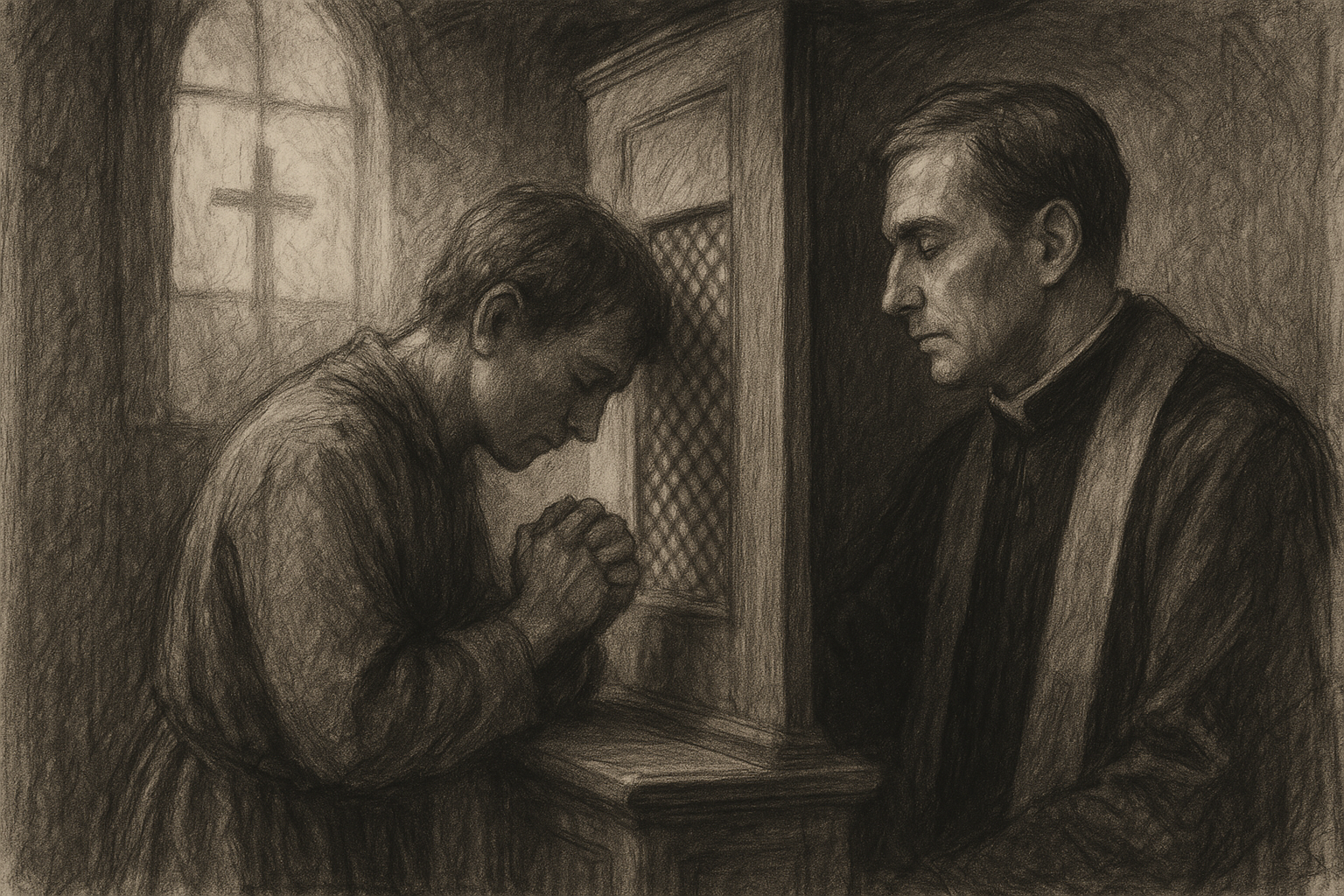
Confession to a priest is one of the most recognizable and also one of the most misunderstood practices in Catholic life. To some, it seems unnecessary, private, or even uncomfortable. To Catholics, it is something more beautiful: a sacramental encounter with the mercy of Christ, who knows human weakness and still offers forgiveness, healing, and a fresh beginning.
The Confession to a priest Catholic teaching presents is not about placing a human barrier between the sinner and God. It is about the way Christ chose to act through his Church. The priest does not replace Christ. He serves Christ. In the sacrament of Penance and Reconciliation, the sinner comes before the Lord with a contrite heart, and Christ answers through the ministry he gave to the apostles and their successors.
The root of confession is in Christ's own words
Catholic belief about confession is not a later invention. It grows from Scripture and from the Lord's authority to forgive sins. After the Resurrection, Jesus came to the disciples and said,
As the Father sent me, so I send youand then,
Receive the Holy Spiritand,
Whose sins you forgive are forgiven them.
Those words matter because they show a real sending and a real power given by Christ. The apostles were not merely told to preach a general message of mercy. They were entrusted with a ministry in which sins could truly be forgiven. That is why the Church understands sacramental confession as something Christ established for the good of souls.
Another passage often overlooked is I will give you the keys of the kingdom of heaven, where Jesus gives Peter authority in service of the Church, and whatever you bind on earth shall be bound in heaven, where a similar authority is extended to the apostolic mission. Catholic teaching sees in these passages the pattern of a Church that acts with Christ's authority, not by replacing him but by participating in his work.
Why confess to a priest at all?
A common objection is simple: if God already knows my sins, why speak them aloud to a priest? The Catholic answer is that sacramental confession is not mainly about informing God. It is about obeying Christ's chosen way of healing us. God does not need information. We need conversion, humility, and the grace that comes through a sacrament.
Speaking sins aloud can be difficult, and that difficulty is part of the medicine. Sin often hides in secrecy, self-justification, and denial. Confession breaks that pattern. It brings our wounds into the light, where mercy can reach them. The priest listens not as a spiritual consultant giving personal opinions, but as a minister of Christ and the Church, bound to charity and sacramental secrecy.
There is also a deeply human dimension here. We are not disembodied minds. We speak, hear, receive, and respond. Christ, who became man, uses visible signs for invisible grace. Just as water, bread, wine, oil, and touch are used in other sacraments, so confession uses speech, contrition, absolution, and penance to convey God's mercy in a concrete way.
Confession is not humiliation, but healing
Some people fear confession because they imagine it as a courtroom with a stern judge. But the sacrament is better understood as a place of healing. The Church teaches that mortal sin wounds or breaks communion with God and the Church, while venial sin weakens charity. In confession, God restores what sin has damaged.
The Psalms give the right spirit for this sacrament.
Create a clean heart for me, O Godis not the cry of a defeated man, but of a repentant one who trusts God's mercy. That same hope is echoed in the parable of the prodigal son, where the father runs to meet the returning child. Confession is a meeting with that fatherly mercy, made sacramental in the life of the Church.
It is important to remember that contrition is central. Catholics are not taught to treat confession like a routine errand with no interior conversion. True confession includes sorrow for sin, a desire to turn away from it, and trust in God's grace. The priest's role is to help make that turning real and objective, not merely private and internal.
What the priest actually does
The priest hears the confession, offers counsel when needed, assigns a penance, and gives absolution. The words of absolution are not a wish or a prayer that God might forgive if he feels like it. They are a sacramental act by which Christ forgives through the ministry of the priest.
This can be hard for some Christians to accept, especially if they are used to thinking of faith only in terms of a direct inward relationship with God. Catholic teaching does not deny that personal relationship. It insists that Christ works through a visible Church. The same Lord who forgives sins by his divine authority also chose apostles to continue his saving work in history.
The priest himself remains a sinner in need of mercy. That is not a flaw in the sacrament. It is part of its humility. God uses earthen vessels so that the power belongs to him. A priest does not forgive by his own personal holiness. He forgives because Christ acts through the sacrament instituted by Christ.
The seal of confession protects the penitent
One of the strongest signs that confession is meant for healing, not control, is the seal of confession. What is confessed sacramentally is absolutely protected. A priest may never reveal it. This is not a mere policy choice. It safeguards trust so that a person can speak honestly before God without fear.
That seal also reminds us that confession belongs to the order of mercy. The point is not exposure. The point is reconciliation. The Church takes this sacred confidence seriously because the sacrament is holy and because souls are helped when they can be vulnerable before God in safety.
Is confession in Scripture only for public sins?
Sometimes people note that the New Testament speaks of confessing sins and ask whether that means only public wrongdoing. But the biblical witness is broader. Confess your sins to one another shows that confession has a communal and ecclesial dimension. Sin is never merely private because it affects our relationship with God and with the body of believers.
In the Acts of the Apostles, believers also came forward to confess their practices: Many of those who had become believers came forward and openly acknowledged their practices. The early Church lived with the awareness that repentance was to be brought into the light, not hidden away. Catholic sacramental confession continues that pattern in a disciplined and merciful form.
It is also worth noting that the Church does not teach that every sin must be named in public. Rather, sins that are grave and remembered should be confessed in kind and number as part of a sincere sacramental confession. This is not to create anxiety, but to make confession honest and complete.
Common misunderstandings about confession
One misunderstanding is that Catholics think they can sin freely because confession is always available. That is not Catholic teaching. Presuming on mercy is itself a grave spiritual danger. Confession is a gift for the repentant, not a license for indifference.
Another misunderstanding is that confession means telling a priest instead of telling God. In reality, Catholics do both. The priestly ministry exists because Christ chose to reconcile us through the Church. The penitent addresses God through the sacrament, and the priest is the instrument through whom Christ grants absolution.
A third misunderstanding is that confession is only for people with serious sins. While mortal sin requires sacramental confession before receiving Holy Communion, many Catholics also go regularly to confession for venial sins, habits of impatience, pride, resentment, and other ordinary wounds of the soul. Frequent confession can help form conscience, strengthen humility, and support spiritual growth.
Finally, some think confession is psychologically unhealthy because it focuses on sin. In fact, honest acknowledgment of sin is often the beginning of peace. What is unhealthy is denial. The sacrament teaches us to face the truth about ourselves without despair, because mercy is stronger than sin.
How to approach confession well
A fruitful confession begins before one enters the confessional. A person should pray for light, examine conscience, and ask for the grace of sincere sorrow. The aim is not to impress the priest or to achieve a feeling, but to tell the truth before God.
A simple structure can help:
- Make a careful examination of conscience.
- Be honest about sins, without excuses.
- Express sorrow and a desire to change.
- Listen attentively to the priest's counsel.
- Perform the assigned penance with gratitude.
After confession, the penance is not a payment for forgiveness. It is a response of love, a small participation in the healing work God has begun. Even a brief prayer, act of charity, or Scripture meditation can become part of renewed life in grace.
Confession and the wider life of the Church
The sacrament of Reconciliation does not stand alone. It supports all of Catholic life. It helps the baptized return to grace, prepares the soul for Holy Communion, and strengthens the bond between the believer and the Church. Because sin harms communion, forgiveness restores communion.
That is why confession can be a profound source of peace. A person leaves not merely with a lighter conscience, but with the assurance that God has acted. The burden is lifted by grace, not by wishful thinking. In that sense, confession is one of the most tender proofs that Christ continues to shepherd his people.
For Catholics, then, confession to a priest is never just a disciplinary habit. It is a sacrament of mercy, rooted in Scripture, lived in the Church, and ordered toward reconciliation with God. The priest speaks, but Christ forgives. The sinner kneels, but stands up renewed. And the Church, far from being a barrier to grace, becomes the place where mercy is heard, received, and carried back into daily life.
Keep Reading on Lets Read The Bible
Frequently Asked Questions
Does Catholic teaching say a priest forgives sins by his own power?
No. Catholic teaching holds that Christ forgives sins through the ministry of the priest. The priest is an instrument of Christ, not the source of forgiveness.
Why must sins be confessed out loud in the sacrament?
Speaking sins aloud is part of the sacramental sign. It helps the penitent practice humility, tell the truth clearly, and receive God's mercy in a concrete way.
Do Catholics need to go to confession only after mortal sin?
Mortal sin should be confessed before receiving Holy Communion. Many Catholics also go regularly for venial sins because the sacrament strengthens repentance and spiritual growth.