Doctrine and Questions
Mary, Mother of God, and the Heart of Catholic Faith
How one ancient title safeguards the truth about Jesus Christ and sheds light on Mary's place in the life of the Church
Site Admin | June 28, 2026 | 79 views
Among the titles the Church gives to Mary, none is more important, and none is more easily misunderstood, than Mother of God. For some people, the phrase sounds excessive, as if Catholics were trying to place Mary above her Son. For others, it sounds like a poetic flourish with little doctrinal weight. In truth, it is neither. It is a precise confession about Jesus Christ, and that is why the Church has guarded it so carefully for centuries.
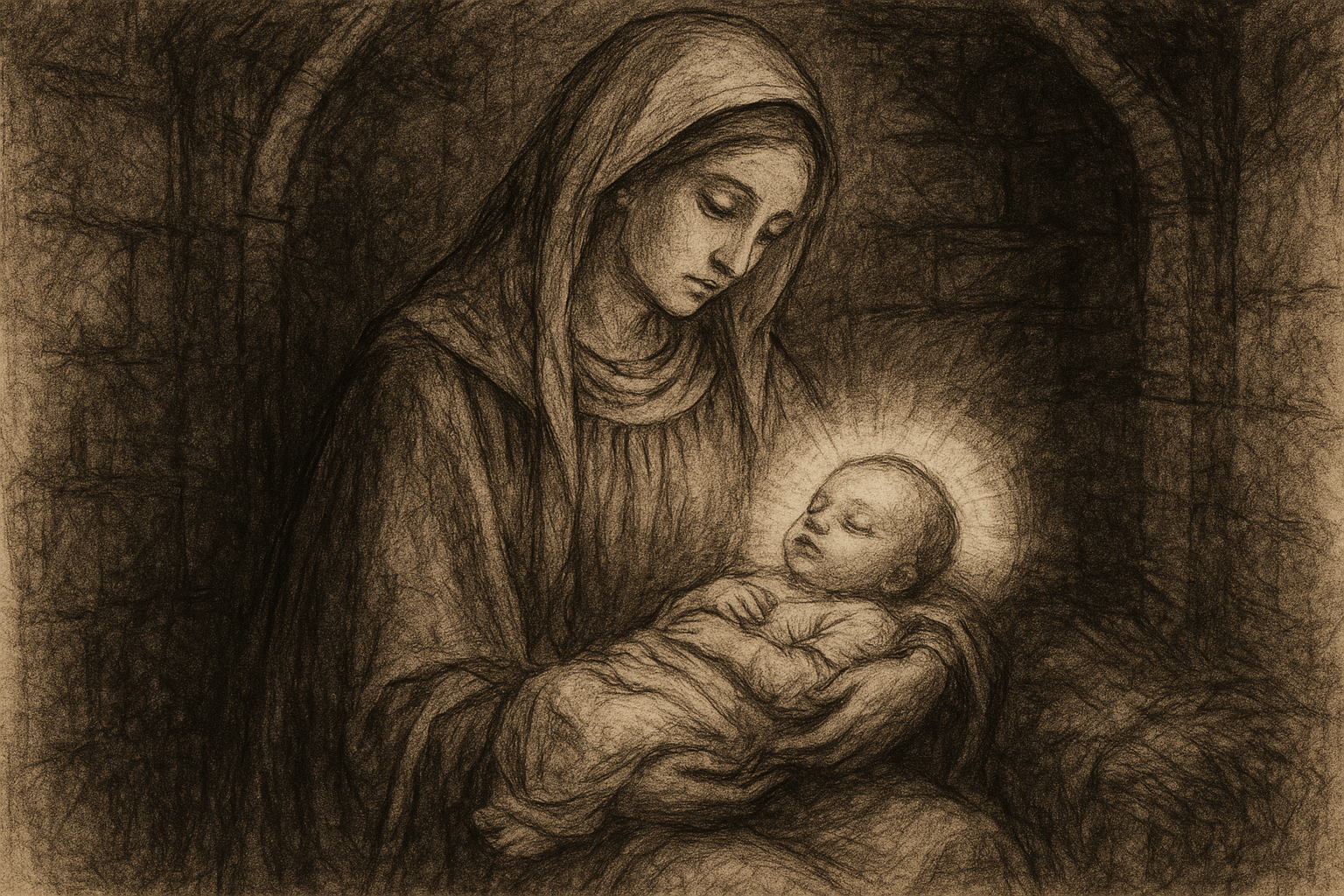
To say that Mary is the Mother of God is not to say that she is the source of the divine nature. Catholics do not mean that Mary existed before God or that she somehow gave divinity to the eternal Son. Rather, the title affirms that the Child she bore is truly God the Son made man. The one Mary carried in her womb, wrapped in swaddling clothes, and nursed at her breast is not a mere prophet or holy teacher. He is the eternal Word who became flesh. That is the heart of the title, and it is the reason the Church insists on it.
The title protects who Jesus is
The title Mother of God is first of all Christological. It safeguards the truth that Jesus Christ is one person with two natures, divine and human. The Son of God did not simply dwell in a holy man as in a temporary vessel. He assumed human nature from Mary. The one born of her is the same divine Person who existed from all eternity with the Father and the Holy Spirit.
That is why the Church does not say that Mary gave birth only to Jesus' human side. Such a division would damage the mystery of the Incarnation. The child in her arms was not a split reality, half divine and half human, but one divine Person living a real human life. Mary is Mother of God because the person she gave birth to is God the Son in the flesh.
This careful language may sound technical, but it protects something very concrete. If Jesus is not truly God, then His words do not reveal the Father perfectly, His Cross does not save, and His Resurrection does not conquer death from within. If Jesus is not truly man, then He does not enter our condition fully, and human suffering remains untouched by divine mercy. The title Mother of God defends the full truth of the Incarnation against both errors.
Scripture points to the same mystery
Scripture does not use the exact phrase Mother of God, but it strongly supports the doctrine. The first clue appears in the account of the Visitation. When Mary visits Elizabeth, Elizabeth asks, "And why is this granted me, that the mother of my Lord should come to me?" the mother of my Lord. In the biblical world, Lord is not a casual honorific when applied in this way. Elizabeth, filled with the Holy Spirit, recognizes something extraordinary about the child Mary bears.
There is also the angelic announcement to Mary herself. She is told that the child to be born will be called holy, the Son of God the Son of God. These are not titles of an ordinary child. They identify the Child Mary receives as belonging uniquely to God. Her motherhood, therefore, is not merely biological in the shallow sense. It is personal, holy, and inseparable from the identity of her Son.
St. John gives the same witness in a different form when he writes, "And the Word became flesh and dwelt among us" the Word became flesh. The eternal Word truly took on human nature. He did not merely appear human. If Mary gave birth to the Word made flesh, then the title Mother of God follows naturally. The title is not an added decoration placed on top of Scripture. It is a faithful summary of Scripture's own logic.
St. Paul also speaks this way when he writes that God sent His Son, born of woman, born under the law born of woman. Paul does not say that a mere human person became divine later. He says the Son was sent and was born of a woman. The Son already existed, and Mary truly bore Him. Catholic teaching simply draws out what the apostolic witness already implies.
Why the Church defended this title so firmly
The Church's defense of the title Mother of God was not driven by sentiment. It came from controversy. In the early centuries, some teachers tried to explain Christ in ways that weakened His unity. If Mary were called only mother of Christ in a way that separated the divine Son from the human Jesus, the result would be confusion about the Savior Himself. The Church responded by clarifying that the one born of Mary is one and the same Person, the Son of God.
This is why the title has a deep place in Catholic worship and teaching. It is not mainly about Mary as an isolated figure. It is about safeguarding the identity of Jesus. When the Church calls Mary Mother of God, she is really saying, with all solemnity, that the Child of Bethlehem is God among us. The title guards the Incarnation against reduction. It says that the mystery is real, personal, and entirely centered on Christ.
That also explains why authentic Marian devotion never competes with devotion to Jesus. Proper devotion to Mary always leads to her Son. Mary is honored because of who He is and because of the unique work God did in her. Any devotion that separates Mary from Christ or treats her as an end in herself has missed the point. The title Mother of God keeps everything in order. It places Mary exactly where the Gospel places her: close to Jesus, always serving the truth about Him.
What the title does not mean
Because the phrase can be misunderstood, it helps to say plainly what Catholics do not mean. Mary is not the origin of God in His divine nature. God has no beginning, and Mary is a creature. The eternal Son was never without the Father or the Holy Spirit. Mary did not create divinity, and she did not cause the divine nature to exist.
Nor does the title imply that Mary is equal to God in dignity. Catholic teaching gives her singular honor because of her role in salvation history, but she remains a human being entirely dependent on grace. Her greatness is a gift. She is not worshiped, for worship belongs to God alone. She is venerated because the Lord has done great things for her great things for me, and because she always points beyond herself to Him.
The title also does not mean Mary understands everything in the same way God does. Her motherhood is unique, but it is still creaturely. She believed, pondered, suffered, and trusted. At Bethlehem, at Cana, and beneath the Cross, she stands as the faithful disciple. Her greatness is not that she replaces Christ, but that she receives Him more completely than anyone else could.
Why ordinary Catholics should care
The doctrine of Mary as Mother of God matters for more than apologetics. It shapes how Catholics pray, suffer, and live. If the eternal Son truly entered our world through Mary, then our bodies, families, homes, and ordinary human work can become places of grace. The Incarnation is not a distant theological idea. It means God has drawn near in flesh and blood, in a home, in a family, in human history.
That is one reason Catholics instinctively turn to Mary in prayer. She reminds us that faith is not abstract. She received the Word, carried Him, and trusted Him when the path was unclear. Her motherhood shows that God often works through humble obedience rather than outward power. For Catholics trying to live faithfully in daily life, that is a consoling truth.
The title also helps the faithful keep a proper sense of Christ's humanity. Since Mary is His real mother, Jesus is not a Savior who stands far away from human experience. He came through a woman's body, into a human family, into the conditions of ordinary life. He knew dependence, growth, care, and loss. When Catholics remember that Mary is Mother of God, they remember that the Gospel is not an idea. It is a divine presence that entered human life fully and truly.
And there is a practical spiritual benefit as well. The title teaches reverence. It teaches Catholics to speak carefully about holy things, to resist shallow language, and to let the Church's wisdom shape their devotion. In an age that often flattens mystery, this title invites patient wonder. God became man without ceasing to be God, and Mary truly gave Him birth. That is not a puzzle to be explained away. It is a revelation to be received with faith.
Mary's place within the mystery of Christ
Catholic teaching never isolates Mary from the mystery of her Son. Her dignity is always relational. She is Mother of God because of who Christ is. She is the first disciple because she first received Him in faith. She is blessed among women because the Lord looked upon her lowliness looked upon the lowliness.
At Cana, she quietly directs the servants toward Jesus: "Do whatever he tells you" Do whatever he tells you. That line captures her whole spiritual posture. Mary does not gather attention to herself. She turns every glance toward Christ. The title Mother of God belongs to that same pattern. It is a title of honor, but more than that, it is a title of service to truth. It helps the Church confess who Jesus is.
For Catholics, then, the doctrine is not a side issue or a devotional extra. It stands at the threshold of Christian faith. If Mary is Mother of God, then Jesus is truly God made man. If Jesus is truly God made man, then salvation has entered history, grace has taken flesh, and the Church has good reason to trust the promises of Christ. The title is old, but its meaning is never exhausted. It remains one of the clearest ways the Church says, with reverence and certainty, that the Word became flesh and dwelt among us.
Keep Reading on Lets Read The Bible
Frequently Asked Questions
Does calling Mary Mother of God mean Mary is greater than Jesus?
No. The title honors Mary because of her relationship to Jesus, but it does not place her above Him. It protects the truth that Jesus is one divine Person, the Son of God, who truly became man.
Is Mother of God a biblical title?
The exact phrase is not found in Scripture, but the doctrine is strongly supported by Scripture. Elizabeth calls Mary the mother of my Lord, and the Gospel teaches that the Word became flesh and that Mary's child is the Son of God.
Why is the title important for Catholic faith and prayer?
It keeps the identity of Jesus clear. If the one born of Mary is truly God made man, then the Incarnation is real, salvation is real, and Catholic devotion to Mary remains firmly centered on Christ.