Doctrine and Questions
From Eden to the First Family: How the Human Race Began in Catholic Teaching
Scripture, original sin, and the Church's careful way of speaking about Adam and Eve and the spread of the human family
Site Admin | June 19, 2026 | 48 views
The question of how Adam and Eve populated the earth Catholic teaching addresses is not a trivial one. It touches on Scripture, the origin of humanity, the unity of the human family, and the doctrine of original sin. It also raises understandable questions. If Adam and Eve were the first human beings, where did the rest of us come from? How could a small beginning become the whole world? And what exactly does the Church ask us to believe?
Catholic readers do not need to fear this question. The Church is not asking us to ignore reason, and she is not asking us to read Genesis as though it were a modern scientific report. At the same time, she does teach that humanity has a real beginning in our first parents, and that all people belong to one human family. The story of Adam and Eve is not a decorative myth detached from history. It is part of the revealed truth about who we are before God.
What the Church actually teaches about Adam and Eve
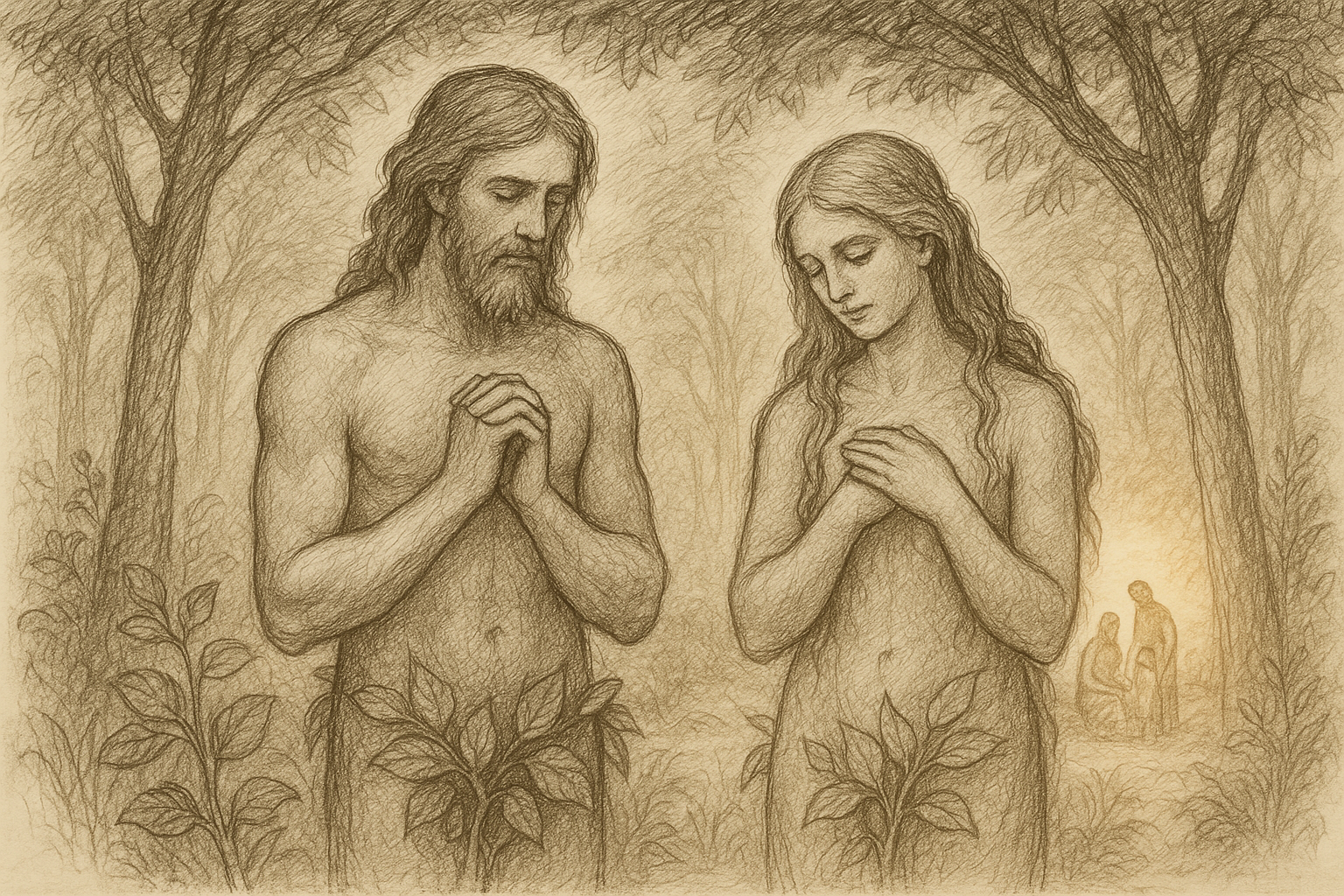
Catholic teaching affirms that Adam and Eve were real persons and that the human race descends from them. The Catechism speaks of the whole human race as having its origin in one man and one woman, and it links that truth to the doctrine of original sin. Genesis presents Adam and Eve not simply as symbols, but as the first human parents through whom the history of fallen humanity begins.
At the same time, the Church allows freedom in how one understands the literary form of Genesis. Catholics are not required to imagine that every detail in the opening chapters of Genesis was written in a modern historical style. The Church insists on the truth conveyed by the text: God created human beings, mankind is one family, sin entered through our first parents, and humanity now lives in need of redemption.
This matters because some discussions about Adam and Eve become trapped in a false choice. Either Genesis must be read as flat literalism, or it must be discarded as mere poetry. Catholic tradition rejects both extremes. It receives Scripture as true, while also recognizing that sacred authors communicate truth through inspired language, images, genealogy, and theology.
So how could Adam and Eve populate the earth?
The short answer is that Adam and Eve would have populated the earth through the ordinary means by which human life spreads: they had children, and their children formed families and had children of their own. The Bible itself begins to describe this. Genesis tells us that Adam and Eve had sons and daughters, even if it does not list every name or every branch of the family tree. The sacred text is not trying to give a full demographic record. It is showing that human life multiplied from the first parents God gave to the world.
In other words, the question is not whether the Bible leaves room for population growth. It does. The real question is whether we are willing to trust that the first human family, aided by God's providence and blessed with fertility, could indeed grow into the human race. There is nothing in Catholic doctrine that requires us to imagine a second, unrelated source of human beings.
When people ask how such a thing could happen, they often picture the modern world and assume the earliest generations must have been tiny, fragile, and unable to expand. But the point of Genesis is not to give us population statistics. The inspired author wants us to know that humanity shares one origin and one condition before God. The details of how many children were born in which generation are not the center of the revelation.
Genesis speaks of more than biology
Genesis is deeply concerned with meaning. It tells us not only that human life began, but that human life is ordered toward communion with God. Adam is formed from the dust, Eve from his side, and both are given dignity as bearers of the divine image. The first family is meant to be fruitful, to steward creation, and to live in obedience to the Creator.
This is why the command to be fruitful and multiply cannot be reduced to a merely biological instruction. It is part of the vocation of the human race. Husband and wife are called to cooperate with God in the gift of life. The spread of humanity is therefore not a random accident, but part of the original blessing given to the first couple.
The blessing is important because it shows that human multiplication is part of God's design from the beginning. In Catholic thought, children are not the accidental byproduct of nature. They are gifts. So when we speak of Adam and Eve populating the earth, we are speaking about a family life that was meant to unfold under God's providence from the start.
What about the problem of Cain and his wife?
This is one of the most common objections, and it is worth answering plainly. Genesis says Cain feared being killed and then went on to build a city. Later, the text mentions that Cain had a wife. Where did she come from if only Adam and Eve existed?
The simplest answer is that Adam and Eve had other children besides the ones named in the narrative. Scripture explicitly says that Adam became the father of sons and daughters. Cain's wife would naturally have come from that larger family, likely from one of his sisters or close relatives in the earliest generations. This is not a moral problem in the context of humanity's first beginnings, because the human race had not yet spread broadly enough for other marriage options to exist.
Some readers feel uneasy about this because close kin marriage is rightly forbidden later in Scripture and in Catholic moral teaching. But there is an important distinction between the unique circumstances of the first generations and the conditions that apply once the human race is established. What would be forbidden or dangerous later is not automatically the same in the dawn of humanity, when there were no other human beings available.
It is also worth saying that Genesis does not try to satisfy every curiosity. It offers a theological account of our origins, not a detailed social history of every early marriage. The fact that Cain's wife is not named is a reminder that the sacred writer is not focused on our modern questions. He is focused on the emergence of sin, violence, and human dispersion away from God.
Does Catholic teaching require us to imagine only two biological ancestors?
Catholic teaching certainly requires belief in one human family descending from a real first pair, Adam and Eve. Yet theologians have discussed different ways of understanding how this relates to the details of human development. The Church has not defined every scientific question about population genetics, and Catholics should be careful not to speak more narrowly than the Church herself has spoken.
What is essential is this: all people are truly united in origin, and the human race is not a collection of unrelated beings. Adam and Eve are not simply literary stand-ins for a crowd. They are our first parents in the order of revelation. Their sin is linked to our condition, and their role in history is real.
Some Catholic thinkers have explored models that take scientific findings seriously while preserving the doctrine that humanity comes from our first parents. Those discussions can be useful, but they should never be allowed to weaken the basic biblical and doctrinal truth. The Church's concern is not to map out every step of population growth with laboratory precision. Her concern is to safeguard the truth that humanity is one, fallen, and in need of grace.
Original sin and the unity of the human family
The doctrine of original sin helps us see why this question matters so much. If Adam and Eve were isolated religious symbols, then the universality of sin would become difficult to explain in the biblical sense. But if they are our first parents, then their disobedience marks the beginning of a wounded human condition that is passed on to all their descendants.
That does not mean each person is guilty of Adam's personal act. It means that human nature itself has been wounded, and we are born into a condition that needs healing. This is why baptism matters. It is not merely a community rite. It is the sacramental gift of new life in Christ, the new Adam, who restores what was lost.
Saint Paul ties the fall of humanity to one man and the redemption of humanity to one man, Jesus Christ. This parallel is central to Catholic theology. We are not saved by a vague spiritual uplift. We are saved because the Son of God entered real human history to heal a real human wound that began with our first parents.
Reading Genesis with reverence and confidence
It can be tempting to read Genesis as though every question must be solved by a single paragraph. But Scripture asks for a more reverent patience. The opening chapters of Genesis teach us that God is the Creator, that man and woman are made in his image, that marriage is ordered to life, and that sin entered the world through disobedience. These truths are not less real because they are presented in sacred narrative.
For Catholics, the right response is neither embarrassment nor defensiveness. It is confidence. We can say without hesitation that Adam and Eve populated the earth through the gift of children, that all human beings descend from the first family, and that the Bible is telling us something true about our shared origin. We can also admit that the Bible is not trying to answer every scientific or genealogical detail modern readers want.
That balance is important. It keeps us from treating Scripture like a puzzle box and from treating doctrine like a superstition. The Church invites us to hold together reason, revelation, and humility. We know enough to trust God, and we know enough to keep asking honest questions.
In the end, the story of Adam and Eve is not mainly about a biological problem. It is about the first human family standing before God, receiving life, falling into sin, and passing on to us both the wound of disobedience and the hope of redemption. The same Lord who made humanity from one pair also sends his Son to gather the scattered children of Adam into one redeemed family.
Keep Reading on Lets Read The Bible
Frequently Asked Questions
Did Adam and Eve have other children besides Cain, Abel, and Seth?
Yes. Genesis says that Adam became the father of sons and daughters. Scripture names only a few of them, but it clearly implies a larger family from which the human race spread.
Does the Church require Catholics to read Genesis as strict scientific history?
No. The Church teaches the truth of Genesis while recognizing its sacred literary form. Catholics must believe that God created humanity, that Adam and Eve were real first parents, and that original sin is a real part of human history.
How can Cain have a wife if Adam and Eve were the first human beings?
Catholic teaching commonly explains that Cain's wife would have come from Adam and Eve's other children or close descendants in the earliest generations. Genesis does not name every person, but it does indicate that the first family grew.