Social Teaching
The Hard Discipline of Peace in an Age of War
Just war reasoning forms Catholics to resist aggression without surrendering human dignity, truth, or the command to seek peace.
Site Admin | September 28, 2026 | 2 views
War often reaches us first as a headline, an image, or an argument. The distance can make moral judgment seem easy. One side appears entirely righteous, the other entirely wicked, and every proposed act of force is treated either as obvious necessity or unforgivable violence. Catholic moral reasoning asks us to slow down. It refuses both indifference to aggression and enthusiasm for war.
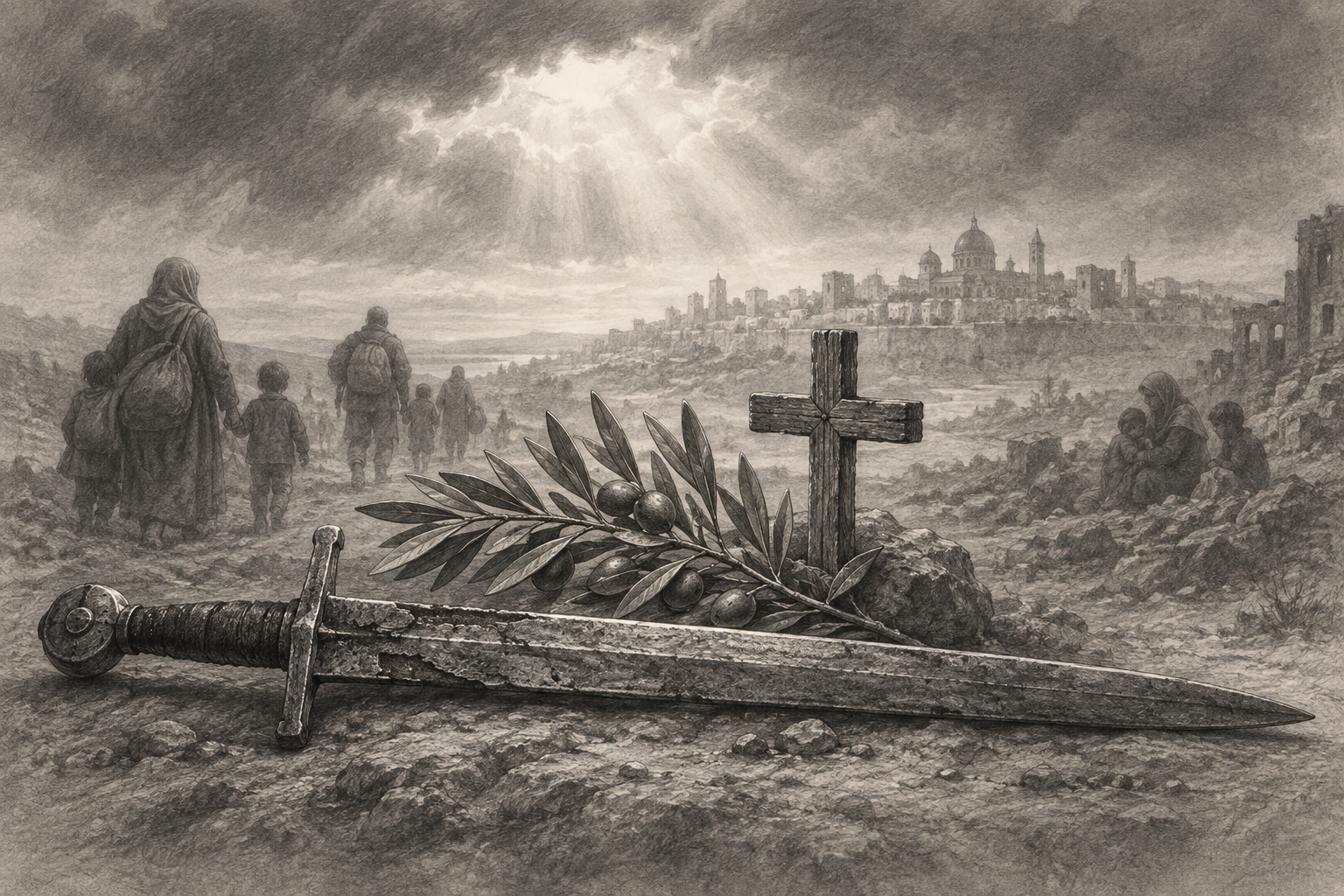
Just war reasoning matters because human lives are at stake, including the lives of civilians, soldiers, prisoners, refugees, and even enemies. It belongs within the Church's wider commitment to peace, not outside it. Its purpose is not to make war respectable. Its purpose is to place strict moral limits around the use of force while insisting that peace must be more than the temporary silence of weapons.
Peace is the goal, not a slogan
Christ calls peacemakers blessed: Matthew 5:9. He also commands his disciples to love their enemies and pray for those who persecute them: Matthew 5:44. These teachings prevent Christians from treating hatred, revenge, or national pride as moral virtues.
Yet Christian peace is not passive acceptance of injustice. Love of an aggressor does not require abandonment of the aggressor's victims. A parent may restrain someone who is attacking a child without ceasing to recognize the attacker's humanity. In a more complex way, legitimate public authorities may have a responsibility to protect a population from grave aggression.
This tension is one reason the Catholic tradition developed careful principles for judging war. The tradition recognizes both the evil of violence and the duty to defend innocent life. It does not pretend that every tragic situation offers a perfectly clean choice. Instead, it asks whether force is truly necessary, limited, proportionate, and directed toward a just peace.
Just war reasoning begins with a presumption for peace and places the burden of proof on those who would use armed force.
A framework of moral restraint
The Catechism of the Catholic Church teaches that governments and citizens must work for the avoidance of war. It also recognizes a right to legitimate defense once every peaceful effort has failed. The traditional conditions for such defense are demanding, and the Catechism says that all of them must be satisfied.
- The harm must be grave, lasting, and certain. Armed force cannot be justified by vague fear, wounded pride, economic ambition, or a desire for revenge.
- Peaceful alternatives must have been exhausted. Diplomacy, negotiation, mediation, sanctions, and other realistic means deserve serious effort. War must not become a shortcut around the difficult work of peace.
- There must be a serious prospect of success. It is immoral to unleash devastation when the stated protective goal cannot reasonably be achieved.
- The use of force must not produce evils graver than the evil being resisted. Modern weapons make this judgment especially sobering because their effects can spread far beyond a battlefield.
The decision also belongs to those who possess legitimate responsibility for the common good. This does not make every government decision morally correct. It does mean that private anger, political factions, and individual adventurers do not have authority to begin a war. Citizens may and sometimes must question whether public authorities have judged honestly and prudently.
These conditions are not boxes to be checked after leaders have already decided to fight. They are moral tests that can expose propaganda, challenge reckless policy, and reveal when the language of defense is being used to disguise conquest or retaliation.
Moral limits remain during conflict
A just cause does not make every method just. Catholic teaching rejects the idea that good ends excuse evil means. Once fighting begins, civilians and those no longer taking part in combat must be respected and protected. The wounded, prisoners, displaced families, medical workers, and others in vulnerable situations retain their God given dignity.
Direct attacks on innocent people are never morally acceptable. Neither are acts intended to terrorize civilian populations. Commands to commit atrocities do not become lawful merely because they come from a superior. Personal conscience remains accountable to moral truth, although conscience must be formed through prayer, sound teaching, honest information, and prudent counsel rather than private preference.
This moral clarity guards against a dangerous temptation: believing that an enemy's injustice removes all limits from our response. Saint Paul warns Christians not to be conquered by evil, but to conquer evil with good: Romans 12:21. Resisting evil must not turn the defender into an imitator of the wrong being resisted.
The enemy also bears the image of God
War encourages abstraction. People become targets, losses, assets, or obstacles. Catholic faith restores the face of the person. Every human being is created by God and possesses a dignity that no uniform, nationality, crime, or political system can erase.
Recognizing this dignity does not deny guilt. Aggressors may need to be restrained, disarmed, arrested, or held accountable. Mercy is not the cancellation of justice. But justice itself must never become a cover for cruelty. The Christian cannot delight in suffering, celebrate civilian death, or speak as though an entire people deserves destruction.
Even our words matter. Dehumanizing language prepares the imagination to tolerate dehumanizing acts. Catholics should be especially cautious when public voices describe whole populations as vermin, disease, or collective enemies. Such speech violates charity and makes truthful moral judgment more difficult.
Love of enemies is not sentimental approval. It is the refusal to will their moral or physical ruin. It includes prayer for their conversion, concern for their victims, and hope that justice may open a path toward reconciliation.
Prudence needs facts
Just war reasoning depends on truthful knowledge. Questions about the seriousness of a threat, the exhaustion of peaceful means, the chance of success, and the likely harm to civilians cannot be answered responsibly without reliable facts.
In wartime, information is often partial, emotionally charged, or deliberately manipulated. Catholics should therefore resist instant certainty. A dramatic video may lack context. A claim repeated by many people may still be false. A government's official statement may contain truth, error, or both. Prudence requires attention to credible reporting, evidence from multiple sources, and correction when new facts emerge.
This does not mean refusing every judgment until perfect knowledge arrives. Perfect knowledge rarely arrives in human affairs. It means judging humbly, distinguishing fact from interpretation, and avoiding the sin of bearing false witness. The command against falsehood applies even when a false story appears useful to a cause we support.
Conscience is more than personal instinct
Catholics sometimes speak of conscience as if it were a private permission slip. The Church understands conscience as a judgment of reason by which a person recognizes the moral quality of an act. It must be formed and informed.
For military personnel, this formation can carry a severe burden. Service members may face decisions under pressure, danger, and incomplete information. They deserve prayer, competent pastoral care, and moral formation that takes their responsibilities seriously. They should never be treated merely as symbols in a political debate.
Civilians also have duties of conscience. Voters can ask whether leaders speak truthfully about threats, whether diplomatic possibilities have received a genuine hearing, and whether military aims are limited and coherent. Taxpayers and workers may need to consider how their labor or investments relate to weapons, exploitation, or the protection of life. These questions require prudence, and faithful Catholics may disagree about particular policies while still sharing the same moral principles.
Disagreement does not excuse contempt. Questions of strategy and probability often involve uncertain judgments. A Catholic should clearly oppose intrinsically evil acts while remaining modest about conclusions that depend on changing facts.
How just war reasoning shapes ordinary life
Most Catholics will never decide whether a nation goes to war. Still, just war reasoning and Catholic life belong together because the same habits of mind apply close to home.
- Refuse revenge. In family disputes, parish conflicts, and public debate, seek justice without desiring humiliation or destruction.
- Protect the vulnerable. Peace is not maintained by ignoring abuse. Charity may require intervention, reporting wrongdoing, or supporting those in danger.
- Use the least harmful effective means. Before escalating a conflict, ask whether patient conversation, mediation, boundaries, or lawful authority can address it.
- Examine the likely consequences. A harsh response may satisfy anger while deepening the original harm.
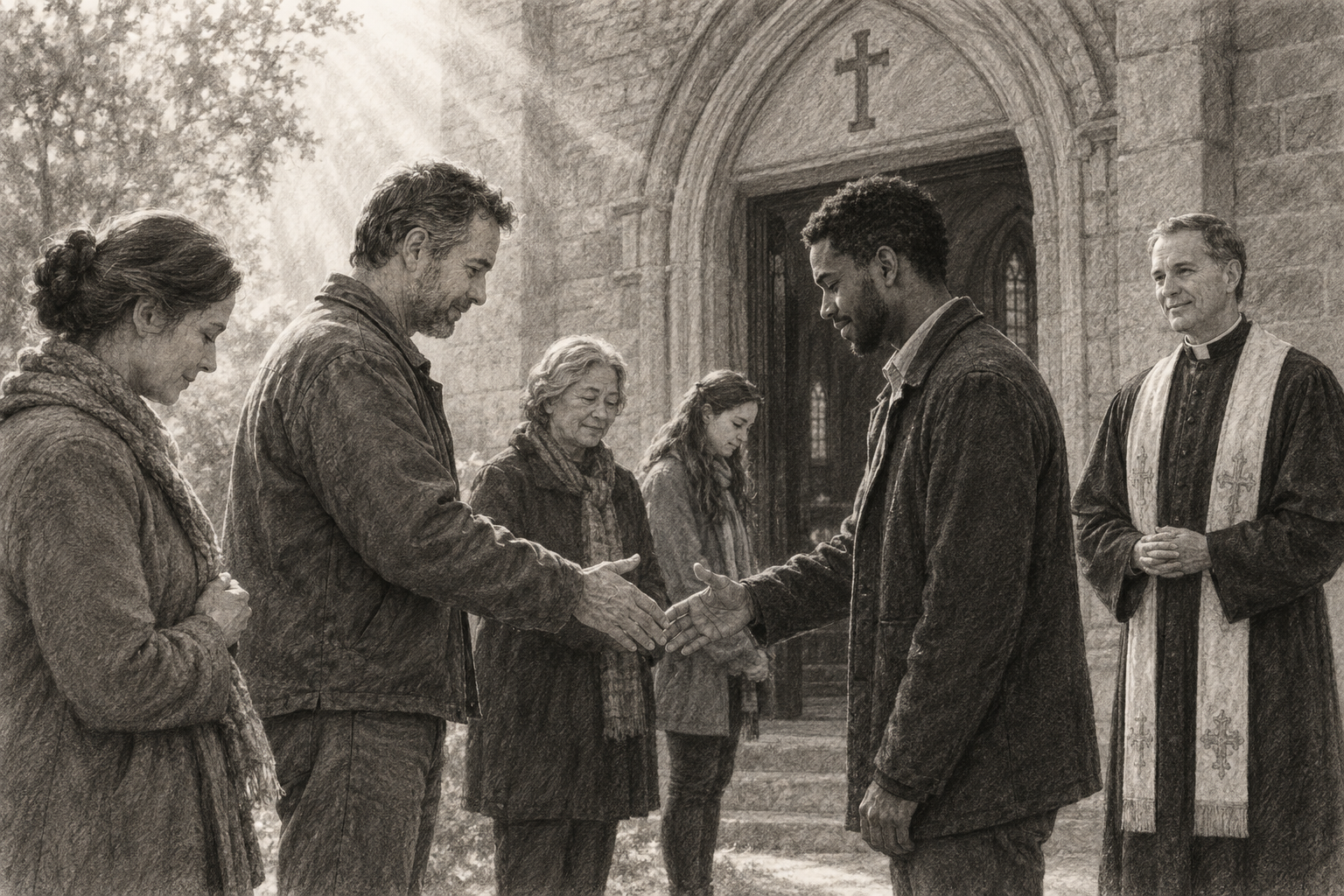
- Keep the door open to restoration. Accountability should aim, where possible, at repentance, repair, and renewed communion.
These habits do not reduce international war to a household disagreement. They show that peacemaking is a moral discipline practiced long before a crisis. People trained in contempt during ordinary life will not suddenly become wise in national emergencies. People who learn patience, courage, truthfulness, and mercy are better prepared to recognize the demands of justice when the stakes rise.
Works of peace before and after war
The Church's commitment to peace includes more than evaluating the moment when force may be used. Catholics are called to address the conditions that feed conflict, including grave injustice, persecution, corruption, desperate poverty, arms trafficking, and the denial of basic human rights.
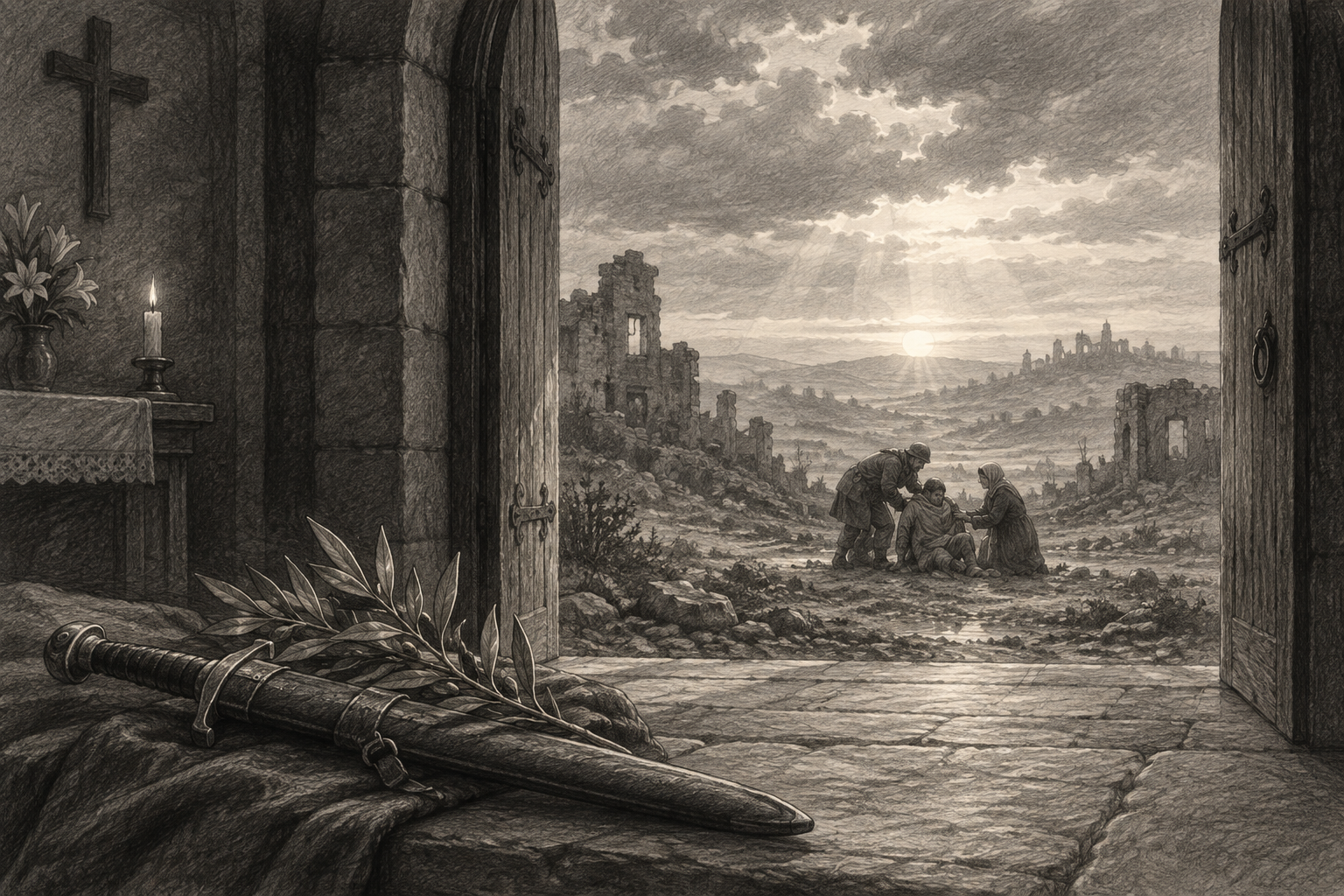
Practical works of peace include welcoming refugees, supporting victims of war, assisting veterans and their families, caring for the wounded, encouraging diplomacy, and helping communities rebuild. Peace also requires repentance and memory. The dead should not be turned into political tools, and the suffering of victims should not be erased for the sake of a shallow reconciliation.
The prophet Isaiah offers a vision in which weapons are transformed into tools of cultivation: Isaiah 2:4. Christians know that the fullness of this peace will come through God's kingdom. That hope does not release us from present responsibility. It makes us less willing to accept war as normal and more determined to practice peace without abandoning those who need protection.
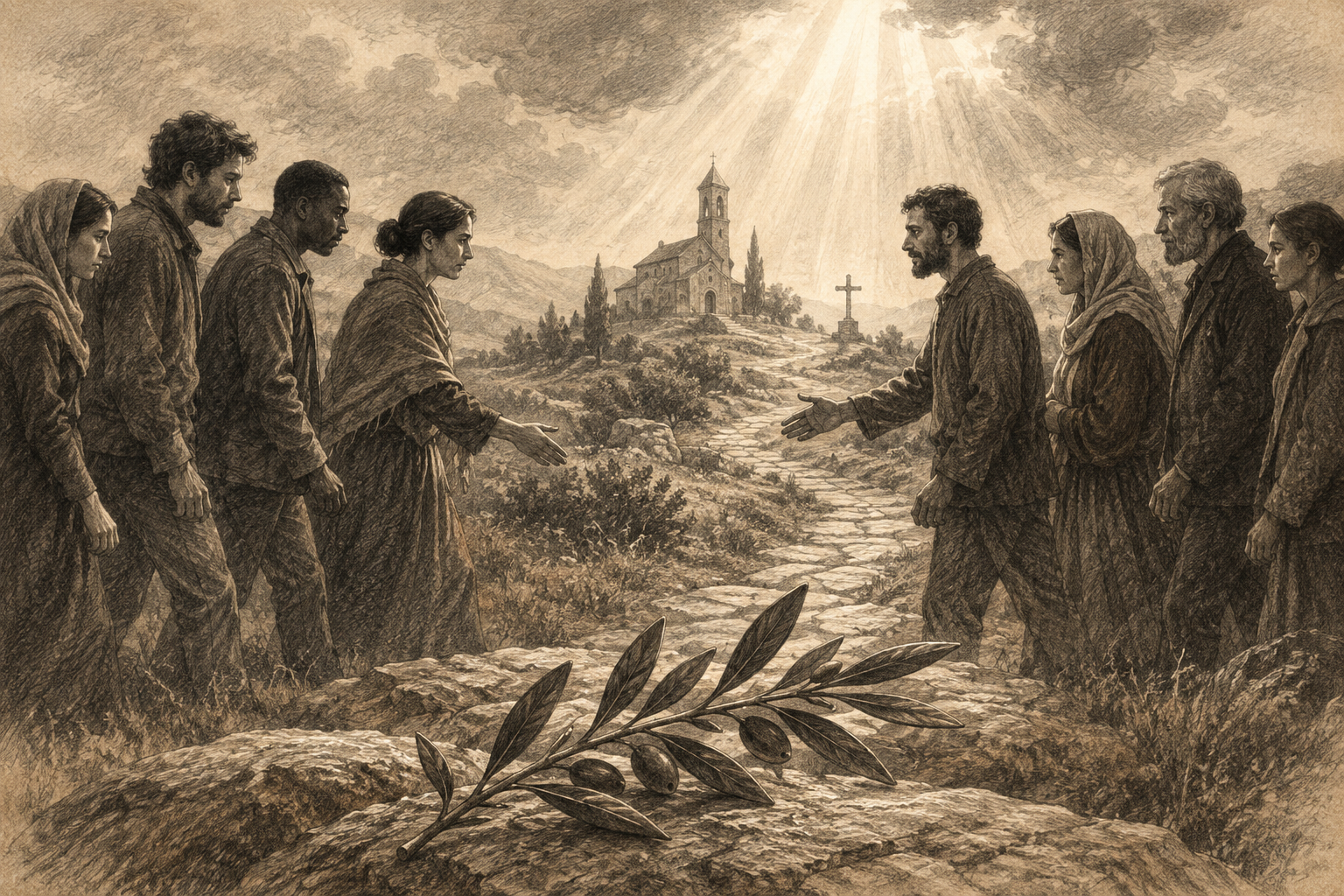
Just war reasoning leaves Catholics with no room for casual slogans. It asks us to grieve violence, restrain wrongdoing, defend the innocent, examine facts, and reject hatred. Above all, it reminds us that peace is not achieved when one side has simply crushed the other. A worthy peace restores justice, honors the dead, safeguards the living, and allows former enemies to imagine a future not governed by fear.
Keep Reading on Lets Read The Bible
Frequently Asked Questions
Does Catholic teaching say that war can ever be morally justified?
Catholic teaching permits legitimate defense by military force only under strict conditions, including grave and certain harm, exhaustion of peaceful alternatives, a serious prospect of success, and proportionality. These conditions must all be met. The presumption remains in favor of peace.
Does a just cause allow every military tactic?
No. A just cause does not justify immoral means. Civilians and those no longer participating in combat must be protected. Direct attacks on innocent people, terrorism, torture, and other intrinsically evil acts cannot be justified by military necessity or superior orders.
How can Catholics practice just war principles in daily life?
Catholics can resist revenge, protect vulnerable people, seek peaceful remedies before escalating conflict, examine the consequences of their actions, reject dehumanizing speech, and pursue justice that leaves room for repentance and restoration.