Marian Devotion
Mary, Mother of God, and the Mystery at the Center of Christian Faith
The Church's ancient title for Mary is really a confession about Jesus: who he is, how he entered our world, and why devotion to his Mother leads us closer to his heart.
Site Admin | April 6, 2026 | 69 views
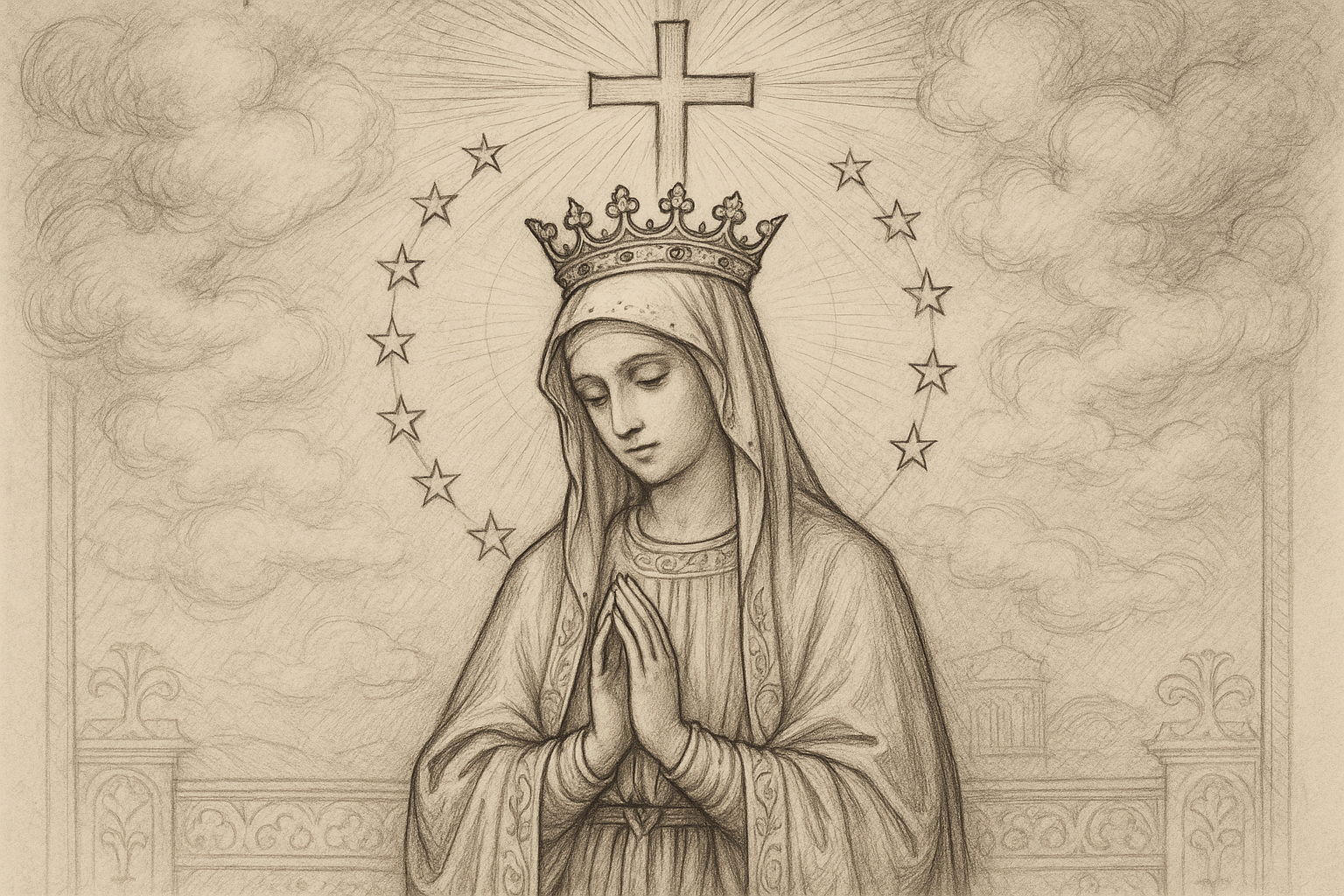
Among the titles Catholics give to Mary, few are more important, or more easily misunderstood, than Mother of God. At first hearing, the phrase can sound as though the Church is saying something exaggerated about Mary herself. In truth, the title is meant first of all as a confession about Jesus Christ. It protects the belief that the child born of Mary is not a mere man later associated with God, but the eternal Son of the Father, truly divine and truly human.
That is why the Mary as Mother of God Catholic meaning reaches far beyond devotion. It belongs to the heart of Christian faith. When Catholics call Mary Mother of God, they are not claiming that Mary is the source of Jesus' divinity. They are saying that the one person she bore in her womb is the divine Son made flesh. The title honors the mystery that the Word truly entered human history through her yes, and it keeps us from splitting Jesus into two persons, one human and one divine.
What the Church Means by Mother of God
The Church uses the title Mother of God because Mary is the mother of Jesus, and Jesus is one divine Person. The Son of God did not merely dwell in a human being as in a temple. He became man. From the first moment of the Incarnation, the child conceived by the Holy Spirit and born of the Virgin Mary was already the eternal Son.
This is why the title does not mean that Mary existed before God or gave rise to his divine nature. Rather, it names her relationship to the Person of her Son. A mother gives birth to a person, not to an abstract nature. Since the person Mary bore is truly God the Son, the Church rightly calls her Mother of God.
The language is simple, but the doctrine it protects is profound. If someone says Mary is only the mother of Jesus' human side, then Jesus begins to sound divided, as though there were one person doing divine things and another person doing human things. Catholic faith rejects that. The Church confesses one Lord Jesus Christ, one divine Person, in two natures, divine and human. Mary is his mother according to the flesh, but because the child she bore is the eternal Son, she is Mother of God in the full Christian sense.
Scripture and the Mystery of Mary's Maternity
The Bible does not use the exact phrase Mother of God, yet it gives the foundation for it. The angel Gabriel announces that Mary will conceive by the Holy Spirit and bear a son named Jesus, who will be called Son of the Most High: [[VERSE|luke|1|31-33|Luke 1:31-33]]. When Mary visits Elizabeth, the older woman, filled with the Holy Spirit, cries out, And why is this granted me, that the mother of my Lord should come to me? Luke 1:43. In biblical language, Lord is no casual title. In the setting of Luke's Gospel, it points toward the divinity of the child Mary carries.
St. John gives the doctrine even more directly, though in a different way. He writes that the Word became flesh and dwelt among us John 1:14. The one born of Mary is not a creature later adopted by God. He is the eternal Word who enters human life from within. That is why the Church sees Mary's maternity as a real and holy participation in the Incarnation, not a mere biological detail.
St. Paul also helps us see the same truth when he says that God sent his Son, born of a woman Galatians 4:4. The sentence is brief, but it holds together two great Christian truths: the Son is already God's Son before his birth, and he truly enters our race by being born of a woman. That woman is Mary.
Why the Title Needed to Be Defended
Early Christians did not invent the title Mother of God as a devotional flourish. They used it because the Church had to defend who Christ really is. In the early centuries, some teachers spoke in ways that weakened either his divinity or his humanity. If Jesus was less than fully God, then he could not save us completely. If he was not fully man, then he did not truly share our condition or heal it from within.
The title Mother of God served as a guardian of the faith. By honoring Mary with this title, the Church was defending the truth that the one she bore was one person, not two. The belief was solemnly affirmed at the Council of Ephesus in 431, where the Church defended the title Theotokos, a Greek word meaning God-bearer or Mother of God. The council's purpose was not to place Mary at the center in place of Christ. It was to protect the identity of Christ himself.
This matters because Christian devotion can drift in either direction. Some believers are tempted to make Mary too little, treating her as an optional figure in the story of salvation. Others may exaggerate her role in a way that obscures her Son. Catholic teaching avoids both errors. Mary is truly honored, but always as the Mother of the Lord, always in relation to Jesus, always as the woman through whom the Savior came into the world.
How the Title Deepens Devotion to Jesus
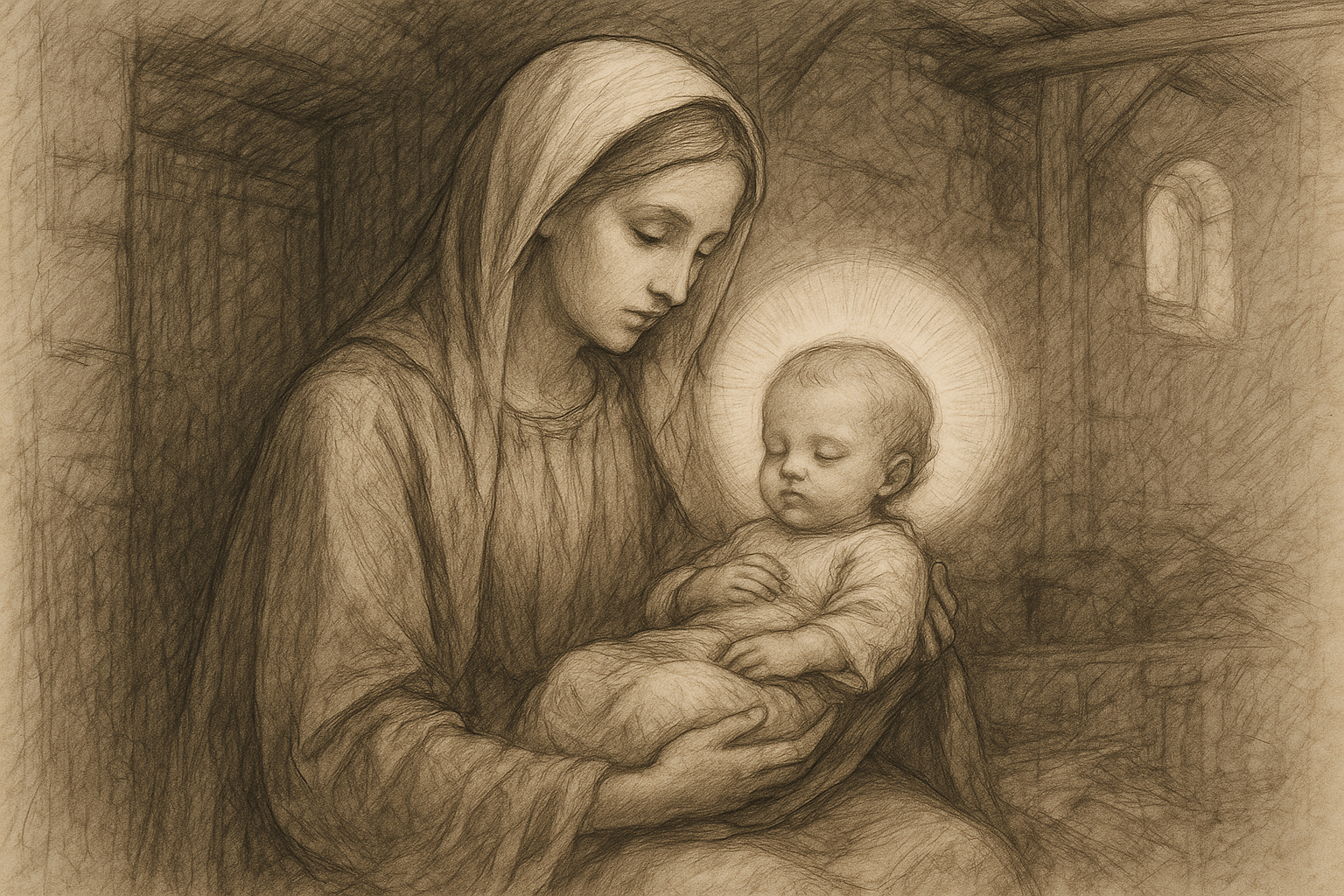
Far from competing with Christ, the title Mother of God points us more deeply to him. If Mary is Mother of God, then the child in her arms is not distant from our humanity. He entered it with real flesh, a real family, a real mother, and a real human history. The Incarnation was not an appearance. It was a birth.
That means devotion to Mary can train the heart to adore Jesus more truly. She is the first to receive him, the first to carry him, the first to give him to the world. In the home of Nazareth, the eternal Son learned human life from the woman who said yes to God. In a mystery beyond our full understanding, the One who made Mary also chose to be lovingly received, nourished, and raised by her.
Catholics do not honor Mary because they think she replaces Jesus. They honor her because she reveals how humble God is. The Lord of glory did not come through force or spectacle. He came through consent, silence, labor, and motherly care. That alone should make us ponder what God values.
Behold, I am the handmaid of the Lord; let it be to me according to your word Luke 1:38.
Mary's response at the Annunciation is more than a beautiful line. It is the pattern of faith. She receives the Word before she fully understands how the mystery will unfold. She trusts before she sees. And because she believes, Christ comes into the world through her. When Catholics honor her as Mother of God, they are also learning how to receive Christ with the same surrender.
Mary's Title and the Logic of the Incarnation
The Incarnation is not a doctrine Catholics can admire from a distance. It changes the shape of everything. If God truly became man, then material reality matters. The body matters. Family matters. Human obedience matters. Mary stands at the doorway of that mystery. She is not the source of salvation, but she is inseparably linked to the Savior's coming.
Her motherhood tells us something beautiful about God's way of working. He saves not by bypassing human freedom, but by entering it. He asks for consent. He uses ordinary human life. He entrusts his Son to a mother. In this way, Mary becomes a sign that grace does not destroy nature. It fulfills it.
For Catholics, this also means that Marian devotion is never meant to be sentimental only. It is doctrinally grounded. When we pray the Hail Mary, we are not merely reciting pious words. We are echoing Scripture, honoring the Mother of the Lord, and placing ourselves near the mystery of Christ's coming. The prayer leads us to Jesus, because every true Marian prayer must do that.
What the Title Does Not Mean
Because the phrase Mother of God can be misunderstood, it helps to be precise about what it does not mean.
- It does not mean Mary is greater than God.
- It does not mean she gave Jesus his divine nature.
- It does not mean she is the origin of the Trinity.
- It does not mean Catholics worship her.
Instead, it means that the person she gave birth to is the divine Son made man. It is a Christological title before it is a Marian one. The Church's love for Mary is always ordered to the truth about Jesus.
That ordering is especially important in prayer and preaching. Whenever Catholics speak warmly of Mary, they should do so in a way that clarifies, not confuses, the Lordship of Christ. Mary's greatness is entirely received. She is great because God has done great things for her Luke 1:49.
Devotion That Leads to Worship
A healthy Marian devotion never stops at Mary. It passes through her to Jesus. She is like a clear window, not a wall. She is like a mother who holds the child and quietly says, Look to him. That is why the title Mother of God is so fruitful for prayer. It teaches us that the holiness of Mary is inseparable from the holiness of Christ, and that true reverence for her strengthens faith in the Lord she bore.
In the life of the Church, this title has also helped the faithful remain close to the humanity of Jesus. He was not only announced from heaven; he was carried in Mary's womb. He was not only proclaimed by angels; he was cradled by a mother. He was not only adored by the wise; he was nursed in ordinary human need. The title Mother of God draws our gaze toward that astonishing nearness.
In the end, the Mary as Mother of God Catholic meaning is not an isolated doctrine. It is a doorway into the Incarnation itself. To call Mary Mother of God is to confess that the Son of God truly came among us, that he began his earthly life in her womb, and that the humility of God is more tender than we can imagine. In honoring Mary, the Church is really praising the God who chose to come to us through her.
Keep Reading on Lets Read The Bible
Frequently Asked Questions
Why do Catholics call Mary Mother of God?
Catholics call Mary Mother of God because the person she bore is Jesus Christ, and Jesus is one divine Person, the Son of God. The title protects the truth that he is truly God and truly man.
Does Mother of God mean Mary is above God?
No. It does not mean Mary is above God or the source of Jesus' divinity. It means that the child she bore is the eternal Son made flesh.
How does this title help Catholic devotion?
It deepens devotion by keeping Mary always connected to Jesus. The title leads Catholics to adore Christ more fully because it highlights the reality of the Incarnation.