Marian Devotion
Mary Taken Up in Glory: The Assumption and the Hope It Puts Before Us
The Church's feast of the Assumption reveals both Mary's singular grace and the destiny God promises to the faithful.
Site Admin | April 5, 2026 | 81 views
When the Church speaks of Mary's Assumption
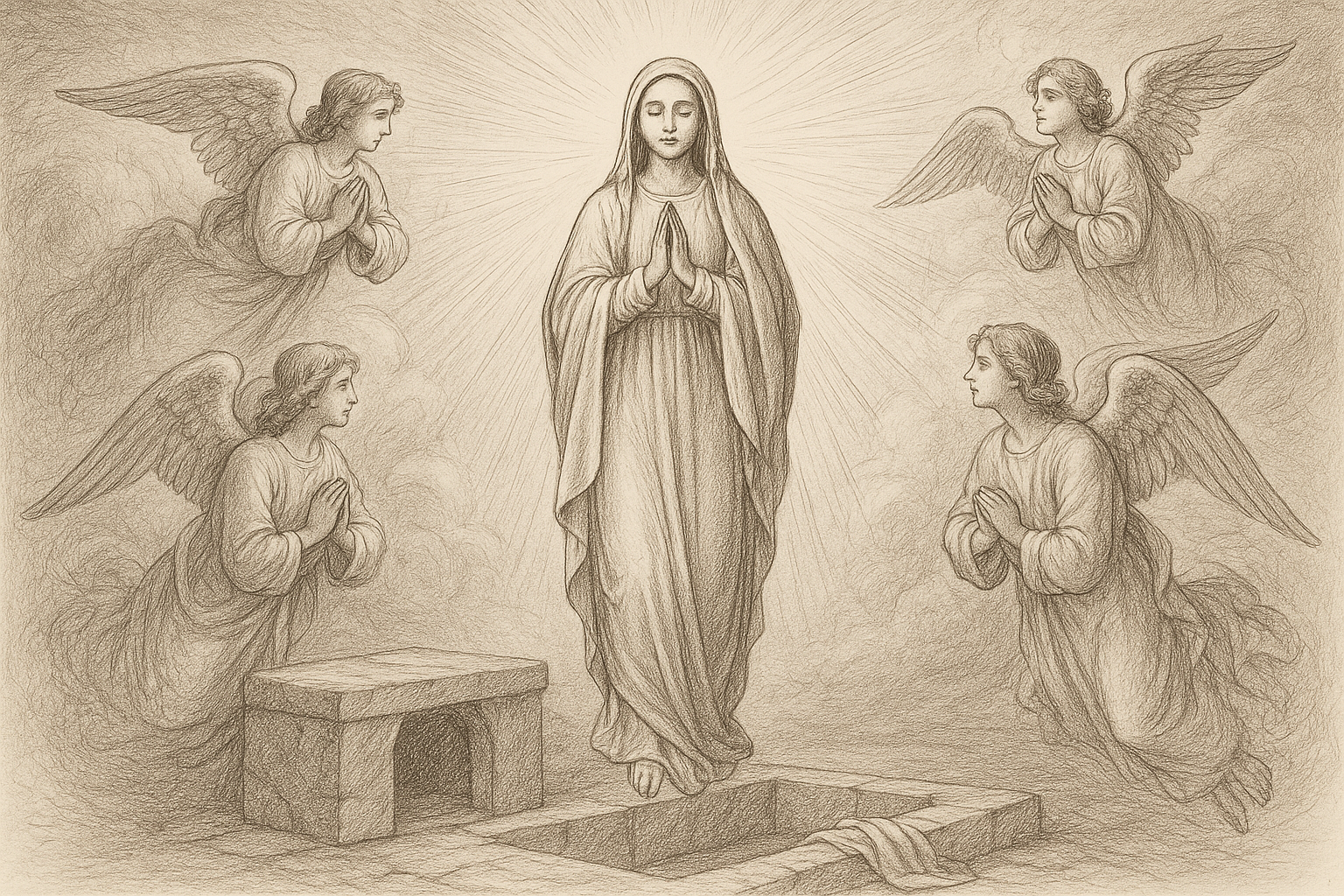
Among the great feasts of the Church, the Assumption stands out because it turns our eyes toward both Mary and our own destiny. The Church teaches that when her earthly life was finished, the Blessed Virgin Mary was taken up, body and soul, into heavenly glory. This is what Catholics mean by the Assumption explained: not a myth, not a poetic image, but a solemn doctrine about God's work in the one who bore His Son.
The Assumption is deeply Marian, but it is also deeply Christ-centered. Mary does not stand in glory apart from Christ. She is there because of Him, by His grace, and for His praise. Her Assumption points to the power of the Resurrection and to the promise that the Lord will not abandon those who belong to Him.
For Catholics, this feast is not meant to remain at the level of information. It invites reverence, gratitude, and a renewed confidence that God completes what He begins.
What the Church teaches
The dogma of the Assumption was defined by Pope Pius XII in 1950 in Munificentissimus Deus. The teaching states that the Immaculate Mother of God, the ever Virgin Mary, having completed the course of her earthly life, was assumed body and soul into heavenly glory. The Church does not define the precise manner of her departure from this world, but she does clearly confess the reality of her glorification.
That detail matters. Catholics are not asked to speculate beyond what the Church teaches. We are asked to receive the faith handed on by the Church with trust. The doctrine speaks first of God's action: Mary was assumed. She did not ascend by her own power. She was received into glory by the Lord who had already filled her life with grace.
This also helps distinguish the Assumption from the Ascension of Jesus. Christ ascended by His divine power as Lord. Mary was assumed by God's action as a creature redeemed by Christ. The difference is important, because it keeps the focus where it belongs: on the mercy of God and the unique role of Mary within salvation history.
Scripture's quiet witness to Mary's glory
Scripture does not narrate the Assumption in the same direct way that it narrates the Ascension of Christ. Yet the Bible gives the Church real patterns, images, and promises that fit beautifully with the doctrine. Catholic faith does not depend on forcing a verse to say more than it does. Instead, it reads Scripture with the fullness of apostolic faith.
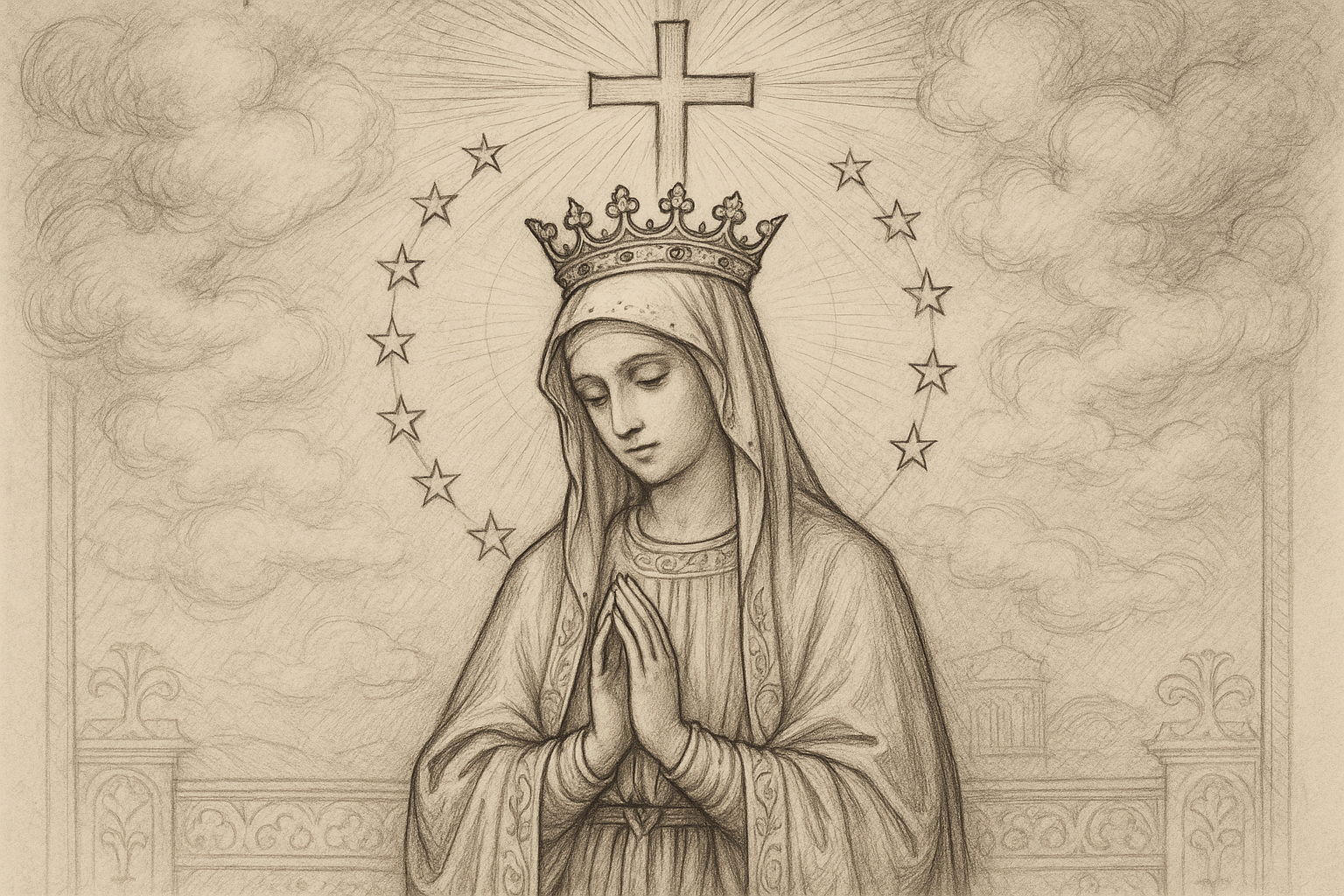
The clearest Marian text is the woman clothed with the sun in Revelation. The Woman Clothed with the Sun presents a woman in heavenly splendor, crowned and radiant, involved in the drama of salvation. Catholics have long seen here both Mary and the Church. The image is not a proof text in a narrow sense, but it offers a vision of the Mother of the Messiah glorified in God's presence.
Another important line is found in Mary's own Magnificat: He Has Regarded the Low Estate of His Handmaiden. Mary praises God for looking upon her lowliness. The Assumption shows the full reach of that divine regard. The God who lifts up the lowly has done something astonishing in her.
Psalm language also helps shape Catholic devotion. The Ark of the Covenant was a sign of God's presence among His people. In Christian reading, the ark can illuminate Mary's role as the one who bore the Word made flesh. Revelation's notice of the ark in heaven, The Ark of the Covenant in Heaven, immediately precedes the vision of the woman clothed with the sun. The sequence invites contemplation. The one who carried the Lord in her womb is now honored in the presence of the Lord she bore.
There is also the broader biblical promise of bodily resurrection. Saint Paul teaches that Christ will transform our lowly body to be like His glorious body, He Will Change Our Lowly Body. Mary's Assumption is not a replacement for that promise. It is a sign of it, a foretaste of what the risen Christ intends for His faithful ones.
Why Catholics do not treat the Assumption as a private opinion
Catholics sometimes hear Marian doctrine described as something optional or merely devotional. The Assumption is not optional in that sense. It belongs to the Church's solemn teaching, and therefore to the faith Catholics profess. But it is worth saying gently that this does not make the doctrine dry or severe. It means the Church believes God has acted in a way worthy of worship and worthy of trust.
Dogma is not the enemy of devotion. When the Church defines a doctrine, she is not narrowing reality. She is safeguarding a gift. The Assumption protects several truths at once: Mary's unique place in salvation history, the dignity of the body, the final victory of Christ, and the reality that heaven is not an abstraction. It is the living communion of God with His saints.
In this way, the Assumption also guards Christian hope against a merely spiritualized imagination. The human person is not meant to be complete apart from the body. The body matters, history matters, and grace does not discard creation. What God has made, He is able to redeem and glorify.
What the Assumption says about Mary
The Assumption reveals Mary's singular vocation without separating her from the rest of the redeemed. She is honored because she is the Mother of the Lord and because her whole life was uniquely given to God. Her faith, her humility, her consent at the Annunciation, and her persevering presence in the life of Jesus all prepare the way for this glory.
Yet Catholic devotion to Mary is always meant to lead beyond Mary to Christ. She is never the center in herself. She is the one who says, Do whatever he tells you. Her glorification is a testimony to the saving work of her Son. She shines because the light of Christ has reached her fully.
This is one reason the Assumption is so fitting for prayer. It allows us to contemplate a human life wholly filled by grace. Mary is not a distant symbol of spiritual success. She is a real mother, a real disciple, and a real saint whose destiny is already fulfilled in heaven.
What the Assumption says about us
For ordinary Catholics, the Assumption is not only about Mary. It is also about the destiny God desires for His people. If Mary has been taken into heavenly glory, then the Resurrection of Christ is already bearing fruit in a human life. What happened in her points forward to what God promises to all who die in His friendship and await the resurrection of the body.
This gives the feast a quiet seriousness. We live in a culture that often treats the body as disposable or the soul as detached from the concrete world. The Assumption insists that salvation is more complete than that. God redeems the whole person. He does not merely rescue us from matter. He redeems us as embodied creatures made for communion with Him.
That truth can comfort the suffering, the aging, and those who fear death. The Assumption says that the final word over a human life does not belong to decay. It belongs to God.
Mary's Assumption is a promise seen in one human life: what the risen Christ begins in grace, He can bring to glory.
How to pray with this feast
Marian devotion becomes fruitful when it leads to prayer that is both simple and steady. The Assumption can be prayed with in many ways, but the most important thing is to let the doctrine become contemplation. Read the Gospel scenes that place Mary near Jesus. Pray the Hail Mary slowly. Meditate on the mysteries of the Rosary. Ask Mary to help you desire heaven without fear.
You might also pray with gratitude for your body, even if your body is weak, burdened, or marked by suffering. The Assumption does not deny pain. It transfigures the horizon of pain. It reminds us that bodily life is meaningful to God and that resurrection is not wishful thinking.
Here are a few simple practices that can help:
- Attend Mass on the Solemnity of the Assumption if it is possible in your location.
- Read Mary Visits Elizabeth and The Woman Clothed with the Sun in prayerful silence.
- Offer a decade of the Rosary for the grace of a holy death and final perseverance.
- Thank God for the dignity of the human body and ask for purity of heart.
- Entrust departed loved ones to the mercy of Christ, who is Lord of the living and the dead.
If you keep the feast at home, a simple candle before an icon or image of Our Lady can help focus the heart. The point is not display. The point is reverence.
Mary, the Church, and the shape of hope
The Assumption also helps Catholics understand the Church herself. Mary is often called the first and best disciple, and in her glorification we glimpse what the Church hopes to become. She is a mother, a believer, and a sign of the end toward which grace is moving all the faithful.
In that sense, Marian devotion is never a detour from Christian life. It is a school of receptivity. Mary teaches the Church how to receive the word of God, how to remain at the Cross, and how to wait in hope. Her Assumption tells us that such fidelity is not forgotten by God.
We live by promises that are already true in Christ and not yet complete in us. Mary, already glorified, stands as a sign that the promises are trustworthy. The one who magnifies the Lord in humility now magnifies His mercy in glory.
For Catholics who want to keep this feast well, the best response is not argument but adoration. Let the doctrine lead to trust. Let trust lead to prayer. Let prayer lead to deeper love for Christ, whose grace is so powerful that even death does not have the final say over those He has redeemed.
And so the Church looks to Mary not to stop at her, but to see more clearly the mercy of her Son, who raises the lowly and brings His servants home.
Keep Reading on Lets Read The Bible
Frequently Asked Questions
What does the Assumption of Mary mean in Catholic teaching?
The Assumption means that at the end of her earthly life, the Blessed Virgin Mary was taken up, body and soul, into heavenly glory by God's power. Catholics do not hold that she ascended by her own strength, but that she was assumed by the Lord as a singular grace.
Is the Assumption found explicitly in the Bible?
Scripture does not give a direct narrative of the Assumption, but Catholics see strong biblical patterns and images that support the doctrine, especially the woman clothed with the sun in Revelation, the ark imagery, and the biblical promise of the resurrection of the body.
How should Catholics pray with the feast of the Assumption?
Catholics can pray by attending Mass if possible, reading Scripture passages connected with Mary, praying the Rosary, and thanking God for the hope of bodily resurrection. The feast is meant to deepen trust in Christ and reverence for His work in Mary and in the Church.