Marian Devotion
Mary Ever Virgin: A Quiet Sign of Total Belonging to Christ
The Church's teaching on Mary's perpetual virginity is not a side note, but a window into her unique vocation and her Son's identity.
Site Admin | April 2, 2026 | 83 views
Mary's lifelong virginity and the heart of Catholic devotion
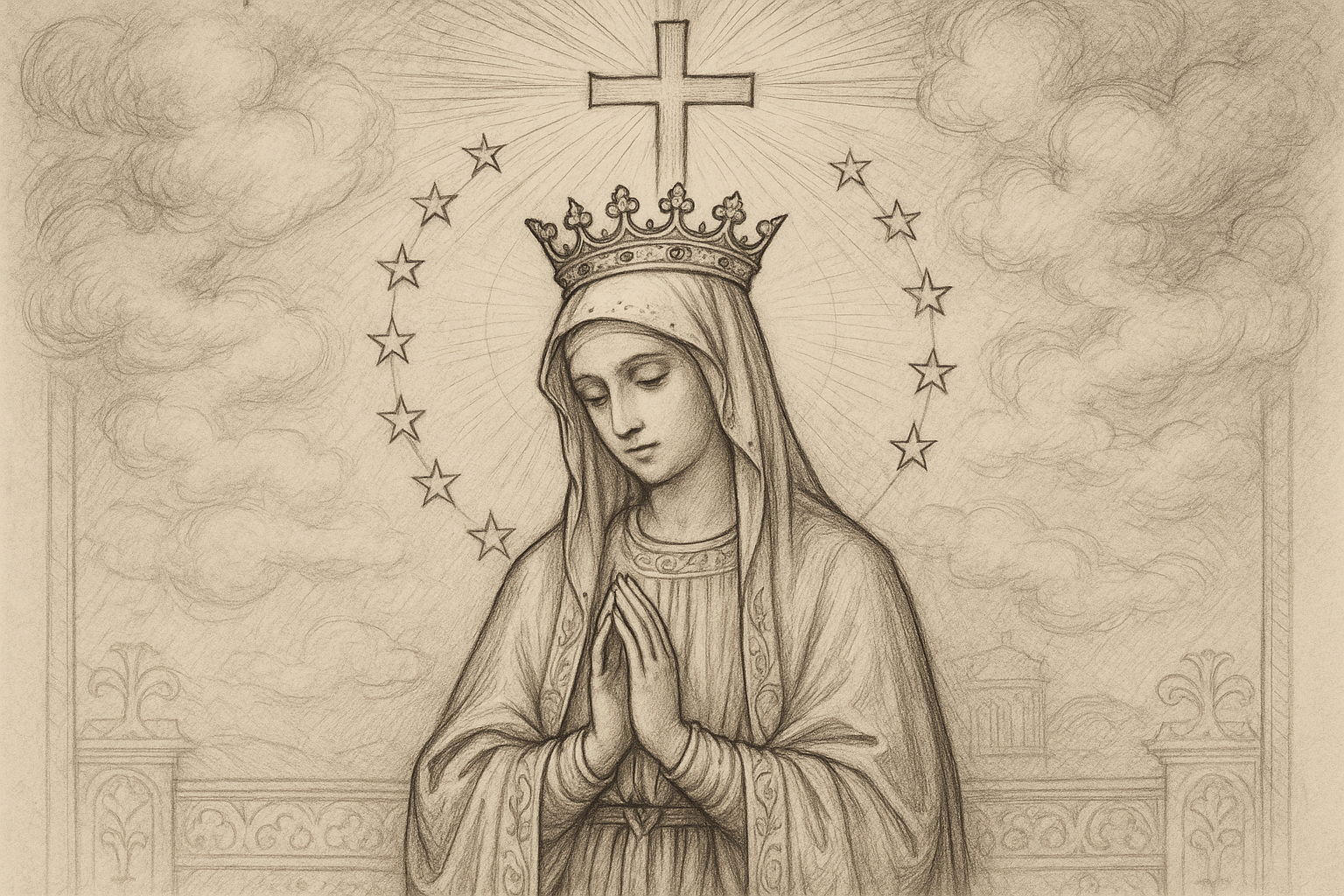
The perpetual virginity of Mary is one of those teachings that can seem small at first glance, yet it opens onto some of the deepest mysteries of the faith. Catholics confess that Mary was a virgin before the birth of Jesus, in giving birth to Him, and after His birth. This is not a poetic exaggeration or a devotional flourish added much later. It belongs to the Church's living memory and to the way Christians have long read the Gospel witness about the Mother of the Lord.
When Catholics speak of the perpetual virginity of Mary Catholic meaning, we are not trying to create distance between Mary and the rest of humanity. We are saying something about grace. Mary is fully human, fully redeemed by her Son, and yet uniquely set apart for a singular mission in salvation history. Her virginity is not an isolated fact about her body. It is a sign of her entire person, given without reserve to God.
That is why this teaching has always been closely tied to devotion to Jesus. Mary does not draw attention to herself for her own sake. She points beyond herself to the One she bore, nurtured, and followed. Her lifelong virginity helps the Church confess that Christ is no ordinary child within an ordinary family line. He is the eternal Son entering human history in a way that is utterly free, gracious, and new.
The biblical clues Catholics have always noticed
Scripture does not present Mary's virginity as a marginal detail. From the Annunciation onward, it is central. When the angel Gabriel announces that she will conceive, Mary asks, "How can this be, since I do not know man?" How can this be, since I do not know man? Her question makes sense only if she is living in a real, deliberate virginity. Her response, "Behold, I am the handmaid of the Lord" Behold, I am the handmaid of the Lord, reveals both her surrender and her openness to God's unexpected design.
The Church also sees Mary's virginity reflected in Isaiah's prophecy of the virgin who will bear a son and call his name Emmanuel. The Gospel writers do not quote the prophecy merely to satisfy curiosity. They are showing that Jesus fulfills God's promise in a way that is astonishing and wholly divine. His conception is not the result of human initiative. It is the work of the Holy Spirit.
Then there is the birth of Christ itself. Catholics have long understood that Jesus' birth did not violate Mary's virginity, but rather manifested God's power in a manner beyond ordinary experience. The Church has never taught that we can explain the mystery by ordinary biological categories alone. The language of virginity here protects something true about Jesus: His coming into the world is a pure gift, not a human achievement.
Some readers point to references in the Gospels to Jesus' brothers and sisters. Catholics do not deny those passages. Rather, we read them in light of the biblical use of kinship language, which can describe relatives, not only children of the same mother and father. The ancient Christian tradition also consistently understood these references in a way compatible with Mary's lifelong virginity. That reading did not come from later sentimentality. It came from the Church's earliest faith and worship.
Another passage often discussed is the scene in which Jesus is found in the temple and Mary says to Him, "Your father and I have been looking for you anxiously" Your father and I have been looking for you anxiously. The line is beautifully human and tender, yet it also preserves Joseph's true but virginal paternity in the household of Nazareth. Joseph is a real father in the order of guardianship and legal responsibility, but not the source of Jesus' conception.
What the Church means by perpetual virginity
The Church's teaching is precise. Mary remained a virgin before the conception of Jesus, in giving birth to Him, and after His birth. This is why the ancient formula always spoke of her as ever-virgin. The teaching is not limited to a single moment. It describes a whole vocation.
It is important to say what the doctrine is and what it is not. It does not imply that marital intimacy is bad. The Church has always honored marriage as a holy vocation. Nor does it suggest that motherhood is less worthy than virginity. Catholic faith does not rank ordinary women below Mary in a way that makes their lives smaller. Rather, Mary's unique mission is singular because Christ's coming is singular.
Her virginity is, in this sense, a sign of total availability to God. She belongs wholly to the Lord who asked for her consent and then filled her with grace. She is the first and clearest example of a life not divided by competing claims. What belongs to Mary belongs first to God, and what belongs to God is returned to us in the form of blessing.
The Church also links Mary's virginity to the Church itself. Catholic tradition has often seen in Mary an image of the Church, which is called to be both virgin and mother: virgin in fidelity to Christ, mother in bringing forth new life through baptism and faith. In that light, Mary's perpetual virginity is not an odd exception. It is a luminous sign of what the whole Church is meant to be.
Why the ancient Church insisted on it
This teaching was not invented to win an argument. It arose because Christians wanted to safeguard the truth of the Incarnation. If Jesus is truly God made man, then His birth should not be treated as one more ordinary event in a household. The Church saw Mary's virginity as part of the wonder of the Incarnation itself.
Early Christians defended this teaching in order to preserve reverence for both Mary and Christ. If Jesus is the new Adam, then Mary stands in a uniquely new relation to His coming. Her virginity testifies that salvation begins with God's initiative. Human planning, power, and possession do not produce the Savior. Grace does.
This is one reason the doctrine has always had a devotional force. Catholics do not meditate on Mary's perpetual virginity merely to settle a historical question. We contemplate it because it shows the shape of divine action. God saves by gift. God enters history with tenderness and authority. God chooses the lowly and makes them vessels of glory.
Mary's virginity, then, is not about remoteness. It is about receptivity. She is open to God in a way that allows the Word to take flesh in her and through her for the salvation of the world.
How Mary's virginity deepens love for Jesus
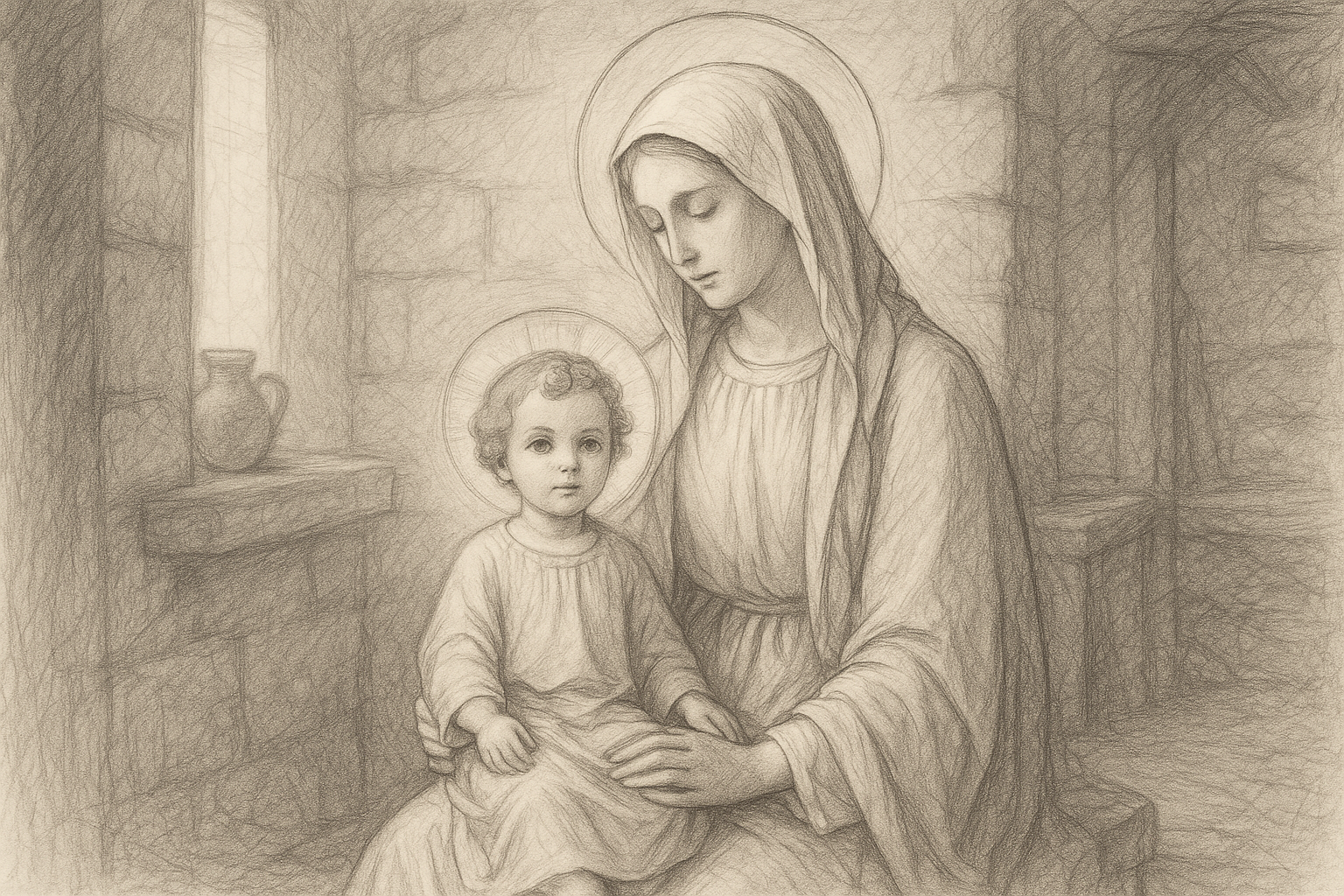
At the center of this teaching is not Mary alone, but Jesus. The perpetual virginity of Mary Catholic meaning becomes clearest when we see what it says about her Son. Jesus is not one child among many in the same spiritual category. He is the Son given by the Father, conceived by the Holy Spirit, and born of the Virgin Mary for the life of the world.
Mary's lifelong virginity also highlights the uniqueness of Christ's birth from the Father. In a mysterious but fitting way, her bodily virginity mirrors the newness of the Son's coming. There is no earthly source sufficient to explain Him. He comes from above. He enters our world without ceasing to be who He is.
For Catholics, this changes the way we pray. It becomes easier to approach the mysteries of Christ with awe rather than familiarity. Mary teaches us that holiness is not self-assertion. It is receptivity, fidelity, and trust. Her life quietly resists the modern temptation to measure value by productivity or public visibility. She matters because God has acted in her.
There is also a pastoral beauty here. Many believers know what it is to surrender plans, hopes, and even personal expectations to God. Mary's virginity can speak to that experience with particular tenderness. It shows that a life wholly given to the Lord is not diminished, but fulfilled. What seems like renunciation becomes fruitfulness in God's hands.
Mary, Joseph, and the holiness of hidden life
Catholics should never speak of Mary's perpetual virginity as though Joseph were somehow sidelined or dishonored. He was a just man, a true protector, and a father in the household of Nazareth. The silence of Scripture about his words is itself telling. Joseph's greatness lies in faithful obedience, not self-display.
Together, Mary and Joseph reveal a holiness that is quiet, chaste, and profoundly ordered toward Christ. Their home was not defined by worldly expectation but by divine purpose. In them the Church sees that sanctity often looks hidden. The most significant work of God may take place in a family life that appears simple from the outside.
This matters for Catholics today because it reminds us that the value of family life is not measured only by outward success. Holiness can be practiced in obscurity, patience, and trust. Mary's virginity belongs to that hidden sanctity. It is not a denial of love. It is love consecrated to God's plan.
Living the teaching with reverence rather than argument alone
Some Catholics encounter this doctrine first as a point of controversy. Others inherit it with devotion but little explanation. In either case, the best response is not mere defensiveness. The better path is contemplation. Mary is not a puzzle to solve. She is a mother to honor and a disciple to imitate.
To honor her perpetual virginity is to honor the holy mystery that God can do more than we imagine. It is to trust that the Lord who asked for Mary's yes still asks for ours. It is to accept that purity of heart, fidelity, and single-minded love remain possible by grace. And it is to let Mary guide us toward her Son, whom she received first in her womb and then in faith.
The more Catholics meditate on Mary's place in the plan of salvation, the more clearly they see the generosity of God. Her perpetual virginity is not a barrier to intimacy with Christ. It is a signpost toward it. In her, the Church sees what it looks like when a human life is completely given over to the Lord, and in Jesus, the Church sees the Lord who makes such surrender fruitful beyond measure.
To pray with Mary is to learn that the quiet life hidden in God is never wasted. Her virginity, preserved in the Church's memory and confession, continues to direct believers toward the mystery at the center of everything: Christ has come, Christ is Lord, and the Mother who bore Him belongs to Him forever.
Keep Reading on Lets Read The Bible
Frequently Asked Questions
What does the perpetual virginity of Mary mean in Catholic teaching?
It means Mary was a virgin before Jesus was conceived, remained a virgin in giving birth to Him, and stayed a virgin for the rest of her life. The Church calls her ever-virgin.
Does Mary's perpetual virginity deny the value of marriage?
No. Catholic teaching honors marriage as a holy sacrament. Mary's unique vocation does not lessen marriage; it reveals a distinct calling given to her alone in salvation history.
Why do Catholics say Jesus had no brothers and sisters in the usual sense?
Catholics read the Gospel references to Jesus' brothers and sisters in light of biblical kinship language and the Church's ancient tradition, which understood those passages in a way compatible with Mary's lifelong virginity.