Marian Devotion
A Grace Prepared Before the First Moment: Mary and the Immaculate Conception
The Church's teaching on Mary's sinless beginning reveals the first motion of Christ's redeeming love.
Site Admin | March 31, 2026 | 93 views
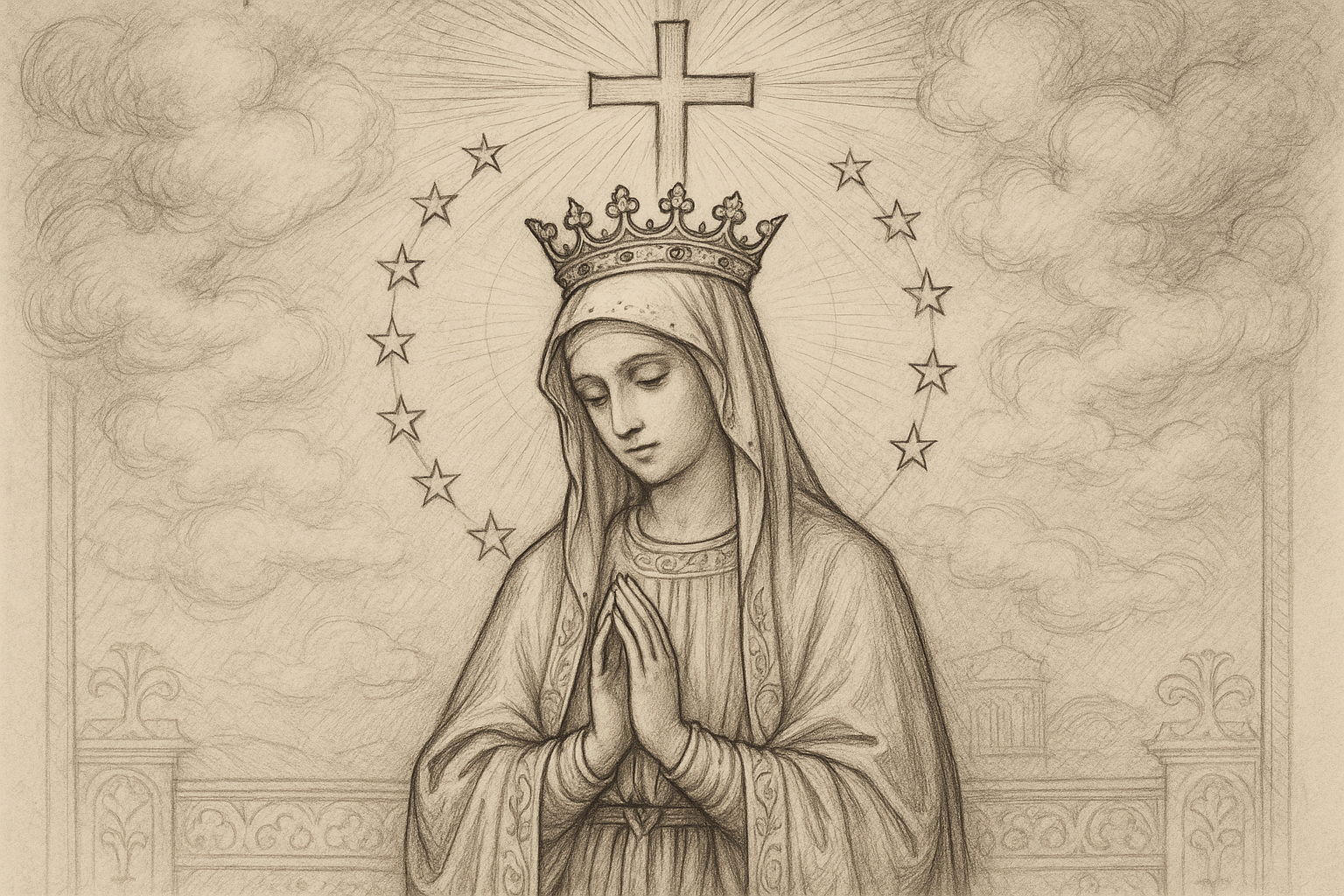
The phrase the Immaculate Conception Catholic meaning is sometimes misunderstood, even among Catholics who pray the Rosary and honor the Blessed Virgin Mary with sincere love. The teaching does not refer to the conception of Jesus in the womb of Mary. It refers to Mary herself. The Church teaches that from the first moment of her existence, by a singular grace and privilege from Almighty God and in view of the merits of Jesus Christ, Mary was preserved free from original sin.
That teaching is not a poetic embellishment added late to Christian devotion. It grows from the Church's reflection on Scripture, the witness of the Fathers, and the long, patient discernment of the people of God. It was solemnly defined by Pope Pius IX in 1854, but the faith it expressed was already living in the Church long before that date. Catholics do not adore Mary. We honor her because what God did in her reveals something luminous about what he intends to do in us through Christ.
The first grace belongs to Jesus
The heart of the doctrine is Christ-centered. Mary is immaculate not apart from Christ, but because of him. Her preservation from original sin is itself an act of redemption, one applied in advance by the power of Jesus' saving work. This is one reason Catholics speak carefully about her holiness. She is not a rival to the Savior. She is the first and most perfect beneficiary of his mercy.
Scripture announces that the Lord's saving work reaches into human history in ways deeper than human calculation. In the Annunciation, the angel Gabriel greets Mary with words that the Church has long heard as rich with meaning: Hail, full of grace, the Lord is with you. The expression points to a special and abiding fullness of grace. Mary is addressed not merely as a woman favored at one moment, but as one who has been, in God's plan, set apart by grace.
When Catholics meditate on this greeting, we do not claim that the verse alone proves the doctrine in a simple, isolated way. Rather, we see in it a biblical harmony. A heart entirely held by grace fits the role Mary is asked to bear. The mother of the Incarnate Son is prepared by the very God who sends the Son. The gift and the mission belong together.
What the Church means by original sin
To understand the Immaculate Conception, it helps to remember what the Church means by original sin. This is not personal guilt for a deed one has chosen. It is the wounded condition of humanity, the loss of original holiness and justice, and the inherited disorder that marks our life apart from sanctifying grace. Every child of Adam enters the world in need of redemption.
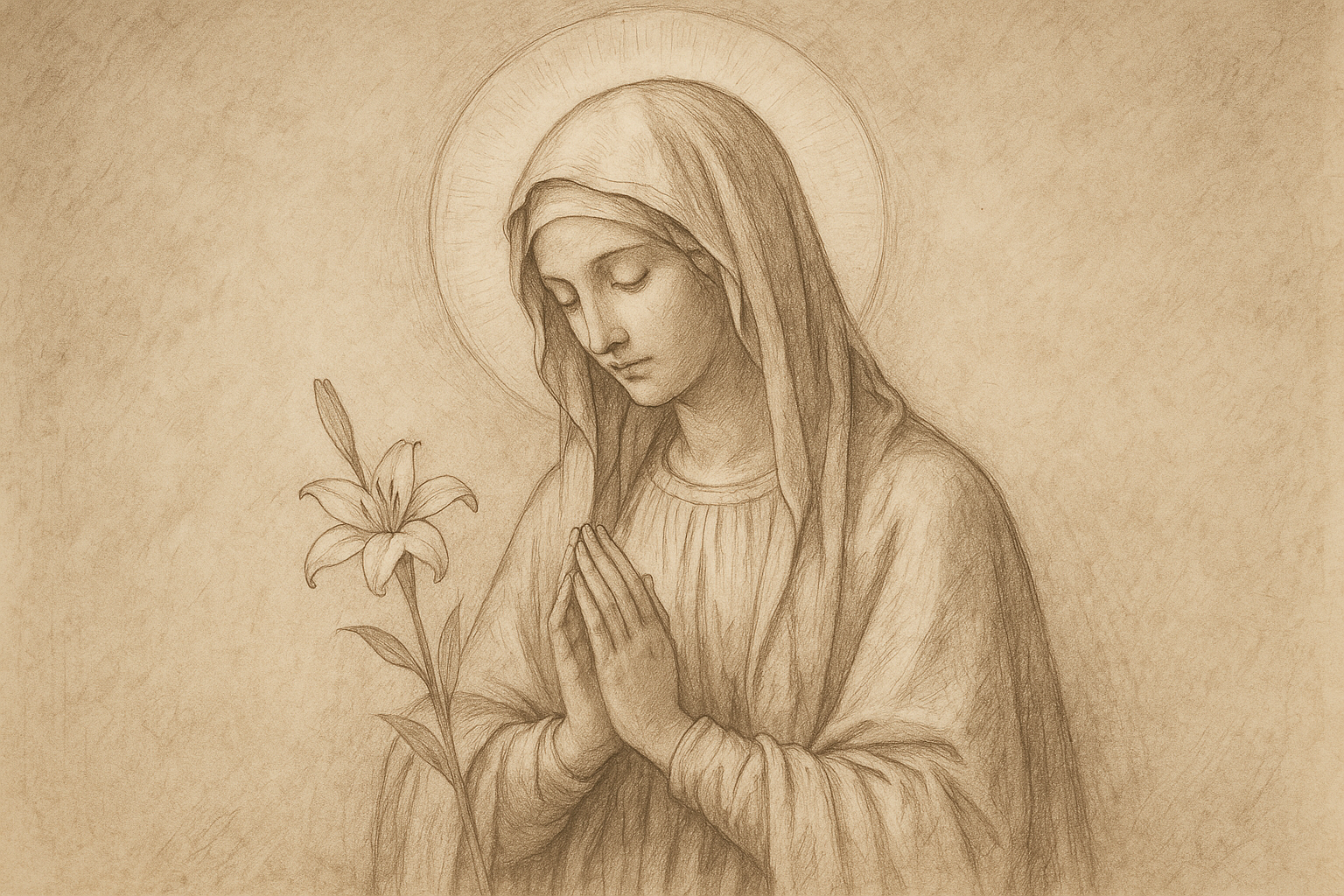
Mary is the exception, but not because she stands outside humanity. She is wholly human, the daughter of Israel, and like all of us she depends entirely on God. The difference is that God, in view of Christ's future merits, preserved her from that fallen condition from the first instant of her life. She still needed a savior. In fact, Catholic theology has often delighted in saying that Mary was saved more perfectly than others, because she was saved from falling into sin rather than lifted out of it after the fact.
This is a subtle but beautiful point. When Catholics speak of Mary's sinlessness, we are not saying she did not need Christ. We are saying Christ's grace is so powerful that he can redeem not only by healing what is broken, but also by preventing a wound from opening in the first place. That is the Immaculate Conception in its deepest sense.
Biblical echoes that prepare the way
While the doctrine is not stated in a single sentence of Scripture, the Bible offers images and patterns that help us receive it. The first is the promise of enmity between the serpent and the woman in Genesis 3:15. Christians have long seen there a first promise of the Redeemer and a woman mysteriously joined to his victory. The Church reads this passage with Christ at the center, and Mary in intimate relation to him as the new Eve who stands where the old Eve fell.
Another biblical background appears in the holy dwelling places of God. The Ark of the Covenant was carefully prepared for the presence of the Lord among his people. Catholic tradition has often seen Mary as the true Ark, not because she replaces the old covenant, but because she bears within herself the living Word made flesh. This is one reason the Church's liturgy and devotional life are so often attentive to the language of holiness, dwelling, and consecration when speaking of Mary.
At the Visitation, Elizabeth is filled with the Holy Spirit and cries out, Blessed are you among women, and blessed is the fruit of your womb!. The blessing of the Mother and the blessing of the Son are inseparable. Mary's blessedness flows from Jesus, and everything in her points back to him. Her dignity is never self-enclosed. It opens outward in praise.
God's grace did not wait for Mary to become holy after a struggle already begun. By a singular act of mercy, he prepared her from the first moment for the mission of bearing his Son into the world.
How the Church came to define the dogma
Catholic doctrine often develops through prayerful reflection over time. The Immaculate Conception is a good example. Christians long honored Mary as uniquely holy. Medieval theology asked how best to express that holiness without weakening the universal need for redemption. The answer that eventually prevailed, especially through the work of Blessed John Duns Scotus, was that Mary was redeemed in a more sublime way: by prevenient grace, applied in advance through the merits of Christ.
That insight preserved two truths at once. First, Christ is the one Savior of the human race. Second, Mary's holiness is so complete that God can be said to have fashioned her in a singular manner for her role as Mother of the Lord. When Pope Pius IX defined the dogma in Ineffabilis Deus, he was not inventing a new faith. He was confirming, in a solemn way, what the Church had come to recognize in prayer, devotion, preaching, and theological reflection.
This matters because Catholic doctrine is not a collection of isolated propositions. It is a living contemplation of the mystery of Christ. The Immaculate Conception safeguards the greatness of grace, the universality of Christ's redemption, and the unique place given to Mary in salvation history. The doctrine stands at the intersection of Scripture, tradition, and worship.
Why this teaching deepens devotion to Jesus
Some people first encounter the Immaculate Conception as a Marian doctrine and wonder why Catholics place so much weight on it. The answer is that Marian truth always serves Christ. Mary is not an endpoint. She is the surest human witness to what grace can do. In her, we see the fruit of redemption as God intended it to be from the beginning: a fully yielded human life, untouched by sin, wholly open to his will.
That vision does not distract from Jesus. It magnifies him. If Christ's grace can preserve Mary in such a way, then his mercy is not thin or fragile. It is strong, prior, and victorious. The doctrine becomes an invitation to confidence. It tells the Church that holiness is not our own achievement. It is a gift God can give, shape, and sustain.
It also gives ordinary believers a maternal companion in the life of faith. Mary does not compete with our Lord's uniqueness. Rather, she helps us receive him. Her life is marked by listening, surrender, pondering, and fidelity. She says, Be it done to me according to your word. That fiat rests on a grace already at work in her. The purity of her response teaches us what a fully grace-filled human yes can look like.
Devotion that stays ordered to Christ
Healthy Marian devotion is always ordered to Jesus. Catholics honor Mary by imitating her faith, asking for her intercession, and contemplating the works God has done in her. We do not place her above the Lord. Rather, we stand with her before him. Her greatness is entirely derivative, and that is part of her beauty.
In a culture that often treats holiness as self-improvement, the Immaculate Conception corrects us. Holiness begins in God's initiative. It is received before it is performed. Mary is the clearest sign of that truth. She is not a monument to human spiritual achievement. She is a monument to divine generosity.
For this reason, the feast of the Immaculate Conception is more than a doctrinal commemoration. It is a reminder that God prepares his gifts in secret. He acts before we see the fruit. He forms saints in hiddenness. And in Mary, the hidden work of grace becomes visible for the whole Church to contemplate.
Praying the doctrine with the Church
Catholics do well to let doctrine become prayer. When we contemplate Mary conceived without sin, we are invited to ask for purity of heart, humility, and trust. We are also invited to gratitude. The God who preserved Mary is the same God who desires to sanctify us. He may not grant the same privilege to us, but he does offer real grace, real healing, and real communion with himself.
That is why the Immaculate Conception is never merely an abstract statement. It belongs to the language of hope. Mary shows what the human person looks like when grace is welcomed completely. She is a sign of what the Church herself hopes to become: holy, spotless, and prepared for the Lord.
When Catholics say the Immaculate Conception's meaning is beautiful, we are not praising beauty as ornament. We are recognizing that God's mercy can create a harmony deeper than nature alone. In Mary, the first fruit of redemption shines before the world, and in that light, the face of Christ appears all the more merciful, powerful, and near.
Keep Reading on Lets Read The Bible
Frequently Asked Questions
Is the Immaculate Conception about Jesus or Mary?
It is about Mary. The doctrine teaches that Mary, from the first moment of her conception, was preserved from original sin by a singular grace of God in view of the merits of Jesus Christ.
Does the Immaculate Conception mean Mary did not need a savior?
No. Catholics believe Mary needed Christ completely. The difference is that she was saved in a unique way, preserved from original sin rather than cleansed from it after the fact.
Where does the Bible point toward the Immaculate Conception?
Catholics usually point to passages such as Genesis 3:15, Luke 1:28, and Luke 1:42, together with the Church's long tradition of reading Mary as uniquely graced and intimately joined to Christ's saving work.