Marian Devotion
At Cana, Mary Teaches the Quiet Art of Trust
A reverent look at the Wedding at Cana, where Mary leads the Church to notice Christ, receive his word, and do whatever he says.
Site Admin | March 28, 2026 | 139 views
The Wedding at Cana is brief in the Gospel, but it opens a deep window into the heart of Mary and the mission of Jesus. In just a few verses, St. John shows Mary at a wedding feast in need, speaking to her Son, and then guiding the servants toward obedience. The scene is simple, but its meaning is rich. It is one of the clearest places in Scripture where Mary appears not as a distraction from Christ, but as one who quietly leads others to him.
For Catholics, Mary at Cana explained is not just an interesting episode from Jesus' public ministry. It is a living picture of how Mary still works in the Church: she notices human need, intercedes with maternal care, and points every soul toward the Savior. The miracle itself belongs to Christ alone. Yet Marys presence helps us see how grace often comes to us through humble trust and prompt obedience.
The scene at Cana in St. Johns Gospel
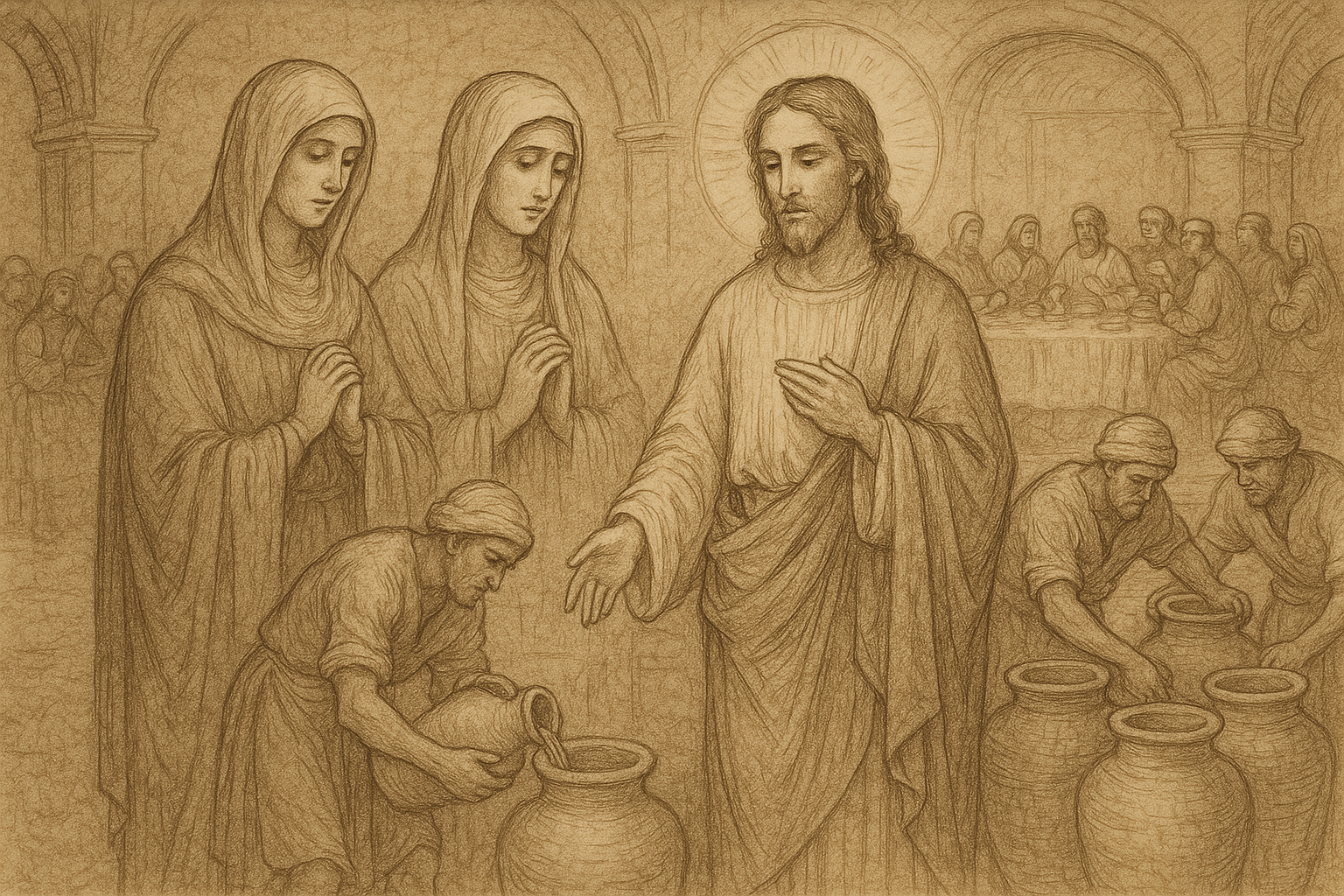
St. John tells us that the wedding took place in Cana of Galilee and that Jesus, his mother, and his disciples were invited. When the wine ran short, Mary brought the need to Jesus: they have no wine They have no wine. Jesus replied, Woman, what does this have to do with me? My hour has not yet come My hour has not yet come. Mary then spoke the words that have echoed through Christian devotion ever since: Do whatever he tells you Do whatever he tells you.
That final command is worth pausing over. Mary does not direct attention to herself. She does not offer a strategy, and she does not attempt to solve the problem by her own power. She places the servants in the posture of faith. Her words are short, but they contain the whole shape of discipleship: listen to Christ, trust him, and obey him.
When Jesus tells the servants to fill the jars with water, he transforms the water into wine, and the steward is surprised by its quality Fill the jars with water The steward tasted the water now become wine. St. John concludes, This, the first of his signs, Jesus did at Cana in Galilee, and manifested his glory; and his disciples believed in him First sign at Cana. The sign reveals who Jesus is. It also shows that Marys presence belongs within the economy of revelation, not outside it.
What Marys role means for Catholic devotion
Catholic devotion to Mary always remains Christ-centered. Mary is not the source of salvation. She is the one who receives it first, believes it fully, and helps others come to her Son. Cana is one of the strongest biblical images for this truth. Mary sees a lack that the guests cannot fix. She presents the need to Jesus. Then she steps back and leaves the matter in his hands.
This is why Catholics see Marian devotion as fundamentally relational rather than sentimental. To honor Mary is to recognize the work God has done in her and through her. She is the woman of faith who keeps the focus where it belongs. At Cana, she does not ask for honor or explanation. She simply trusts that Jesus will act, even if his response unfolds in a way she could not predict.
That pattern helps explain why the Church asks the faithful to turn to Mary in prayer. We do not pray to her as if she were divine. We ask her intercession because the Communion of Saints is real, and because the mother of Jesus has a singular place in salvation history. Her closeness to Christ is not a rival to his lordship. It is a sign of his grace.
Mary notices what others miss
There is a tenderness in the fact that Mary sees the lack of wine before the hosts speak publicly of it. The Gospel does not say how she knew, only that she did. In a spiritual sense, this is fitting. Marys maternal care is attentive. She notices what is fragile, what is lacking, and what is on the verge of collapse. Many Christians find in this detail a comfort for their own hidden burdens. There are needs we can barely name, and yet Mary brings them to Jesus.
This does not mean that she replaces personal prayer. Rather, she teaches us how to pray. She does not dramatize the shortage. She does not panic. She carries the need into the presence of the Lord. That is often the first movement of authentic prayer: bringing reality to God without disguise.
Marys words form disciples
At Cana, Marys instruction to the servants remains one of the most important Marian lines in Scripture. Do whatever he tells you Do whatever he tells you. These words are Marian because they flow from Marys own obedience. She has already given her own yes to God at the Annunciation Let it be to me according to your word. She now helps others enter the same obedience.
In Catholic spiritual life, this is a beautiful pattern for discernment. Marian devotion is never meant to stop at affection. It should produce readiness. Mary leads the soul toward practical fidelity: forgive, repent, pray, serve, remain, wait, trust. Her role is maternal, but also disciplinary in the best sense. She teaches the will to bend toward Christ.
Cana and the deeper signs in Johns Gospel
St. John is careful to call Cana a sign, not only a miracle. Signs in the Fourth Gospel point beyond themselves. The abundance of wine evokes joy, covenant, and divine generosity. The setting of a wedding hints at the nuptial imagery that runs through Scripture from the prophets to the Book of Revelation. The Church has often seen in Cana a foreshadowing of the new covenant, where Christ is the bridegroom who brings the wine of the kingdom.
This is one reason the passage matters so much in Catholic theology. Mary is present at the beginning of Jesus public ministry, and she is present in a context of joy, promise, and communion. The sign does not merely fix an embarrassment at a feast. It reveals that in Jesus, God has come to give more than enough. What is lacking in human life can be renewed by divine grace.
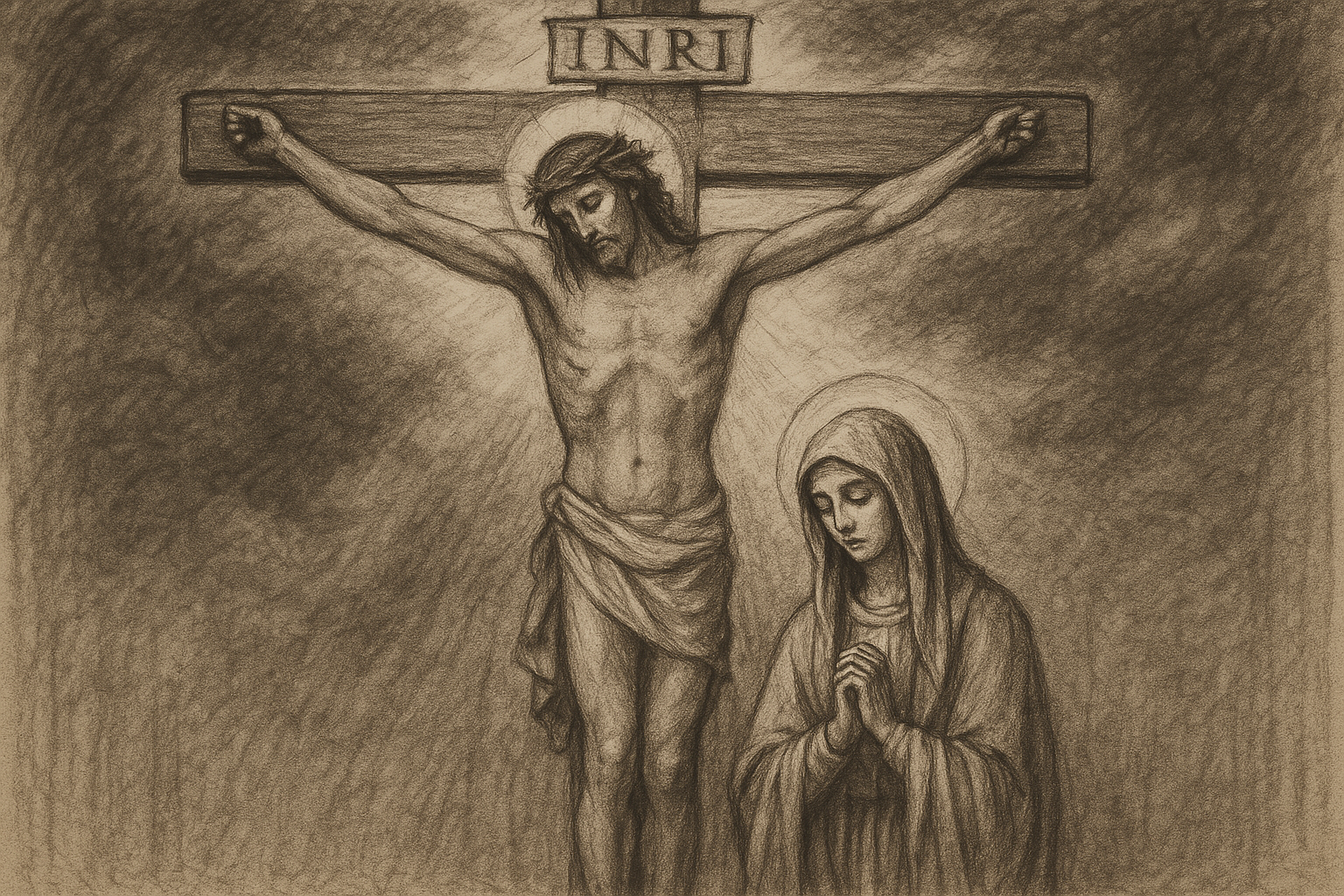
Some readers notice that Jesus speaks of his hour as not yet come My hour has not yet come. In Johns Gospel, the hour points toward the Passion, Resurrection, and glorification of the Son. Cana is therefore not a casual opening act. It is an early sign that already points toward the Cross, where Christ will pour out the greater wine of his saving blood. Mary's presence at Cana and later at Calvary invites Catholics to see the unity of her maternal role across the life of Christ.
How the Church has received Cana
The Church reads Cana with deep reverence because it is one of the most revealing Marian passages in Scripture. It shows Mary as mother, believer, intercessor, and disciple. It also shows the Church how to respond to Christ. There is no competition between Mary and Jesus here. The more clearly Mary is seen, the more clearly Jesus is seen.
Catholic tradition has long linked Cana with the fruitfulness of prayer. People come to Mary not because she stands in place of Christ, but because she belongs so closely to his life. The saints and the liturgy alike have drawn strength from this mystery. At Cana, Mary does not force a miracle. She prepares hearts to receive one.
That is important for those who struggle with prayer. Many people want immediate answers, visible signs, or dramatic assurance. Cana offers something gentler and often more difficult: trust. Mary speaks, the servants obey, and the result is left to Jesus. Christian maturity is often found in that same sequence.
Praying with Mary at Cana today
For a Catholic trying to pray with this passage, the lesson is wonderfully concrete. Begin by noticing the need. Mary did not ignore the shortage of wine, and neither should we ignore the real needs of our families, parishes, and hearts. Next, present the need to Jesus. A brief prayer is enough. Then listen for the command of Christ, and do it.
That might look like any of the following:
- bringing a particular burden to prayer without trying to control the outcome
- asking Mary to intercede when a situation feels beyond your strength
- reading John 2 slowly and imagining the servants standing before the jars
- choosing one clear act of obedience that Christ is asking of you today
Many Catholics also find it helpful to pray the Rosary with Cana in mind, especially when asking for grace in family life, marriage, or times of scarcity. The episode invites a very human kind of confidence. God does not despise small needs. He can transform what is ordinary, limited, and even empty into something that manifests his glory.
In personal prayer, it is also fitting to ask for Marys help in learning her patience. She does not demand a timeline. She does not need to see the whole plan before she trusts. At Cana she stands in quiet faith, and that silence is itself instructive. A soul formed by Mary learns to wait without despair.
Mary's presence at Cana is a reminder that faith does not begin with control. It begins with bringing the need to Jesus and trusting his word.
What Cana reveals about Mary and the Christian life
Mary at Cana reveals that holiness is not loud. It is attentive, receptive, and obedient. It reveals that intercession is an act of love, not manipulation. It reveals that Jesus responds to human need according to divine wisdom, even when the timing is mysterious. And it reveals that the best Marian devotion always ends in the same place: the feet of Christ, the ear of the disciple, and the will ready to obey.
For Catholics seeking a stable spiritual life, Cana offers a simple rule. Bring what is lacking to Jesus. Listen to Marys counsel. Do what Christ says. This is not a technique, but a way of living in grace. In the ordinary pressures of family, work, grief, and uncertainty, the Wedding at Cana continues to speak with quiet force. Mary still points the Church toward her Son, and her words remain enough for every age.
When the wine runs short in our own lives, the answer is not self-reliance. It is the same path the servants took: trust the one whom Mary names. Christ can still transform emptiness into abundance, and he often begins by inviting us to act on a word we have not yet fully understood. At Cana, Mary shows the Church how to stand in that holy space between need and miracle, waiting on the Lord who never fails to give what is fitting in its time.
Keep Reading on Lets Read The Bible
Frequently Asked Questions
Why is Mary important at the Wedding at Cana?
Mary is important at Cana because she notices the need, brings it to Jesus, and tells the servants to obey him. Catholics see in her a model of intercession and discipleship, always leading others toward Christ.
Does Mary at Cana mean Catholics pray to Mary instead of Jesus?
No. Cana shows the opposite. Mary does not replace Jesus. She directs attention to him and his word. Catholic prayer to Mary asks for her intercession and remains ordered to Christ, the one who performs the sign.
What is the main spiritual lesson of Cana for Catholics?
The main lesson is trustful obedience. Mary teaches believers to bring real needs to Jesus, listen to his word, and do whatever he says, even before the result is visible.