Marian Devotion
At Cana, Mary Points the Heart Toward Jesus
The wedding feast in John 2 reveals not only Marys care, but also the gentle way she leads believers to her Son.
Site Admin | March 27, 2026 | 90 views
The wedding at Cana is a small scene with a wide horizon. In just a few verses, the Gospel of John shows a family celebration, a real human need, and the first public sign of Jesus Christ. At the center of it all stands Mary, quietly attentive, deeply trusting, and entirely focused on her Son.
For Catholics, the Mary at Cana Catholic meaning reaches beyond the memory of a miracle. It gives a glimpse of how Mary acts in the life of the Church. She does not draw attention to herself. She notices what is lacking, brings the need to Jesus, and tells the servants, Do whatever he tells you Do whatever he tells you. In that line alone, the heart of Marian devotion begins to come into view.
The scene at Cana in the Gospel of John
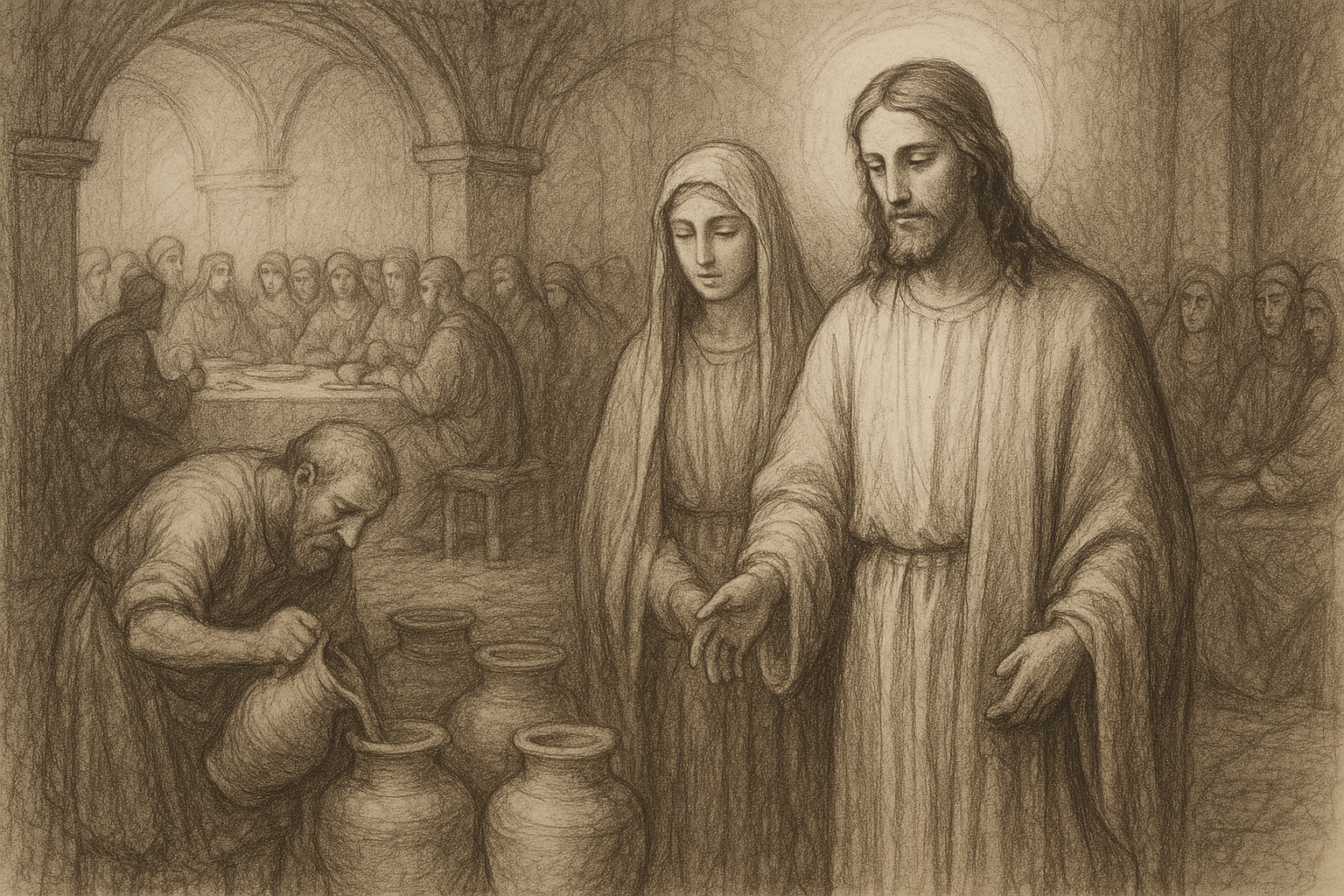
John tells us that the wedding feast took place in Cana of Galilee The wedding at Cana. Jesus, His mother, and His disciples were invited. At some point, the wine runs out, which in the culture of the time would have meant a serious embarrassment for the bride and groom and their families. Mary sees the need before anyone else speaks aloud.
Her brief words to Jesus are striking: They have no wine They have no wine. She does not tell Him what to do. She does not demand a miracle. She simply presents the need. This is one reason Catholics have long seen in Mary a model of prayer. She brings human lack before the Lord with confidence and peace.
Jesus answers in a way that can sound difficult at first: Woman, how does your concern affect me? My hour has not yet come My hour has not yet come. Catholic readers do not hear this as a rejection of Mary, but as a sign that His mission belongs to the Father and will unfold in divine timing. In John, the word hour points toward the saving events of the Passion, death, and glorification of Christ.
Even so, Mary remains steady. She turns to the servants and tells them to obey Jesus. That is her final recorded speech in the New Testament. It is simple, direct, and forever memorable.
Why the Church sees Mary here as more than a bystander
The Church does not read Cana as a charming family story with a moral attached. It is a revelation. Mary is present at the beginning of Jesus public signs, just as she is present at the beginning of His earthly life. At Cana, she acts as a mother who notices a need and intercedes with trust.
Catholic tradition sees in this passage the first sign of Marys maternal care for the disciples of Christ. She is not replacing Jesus or standing between Him and the world as if she were a barrier. She is leading the needy to Him. That is exactly what saints and faithful Catholics mean when they speak of Marys intercession. She prays, she points, and she remains attentive to the will of God.
The miracle itself is important too. Jesus changes water into wine Fill the jars with water, The steward tasted the water now wine. This abundance is not only practical. It is symbolic. In Scripture, wine often suggests joy, blessing, and the richness of God-saving action. At Cana, Jesus reveals that the Messiah has come to bring the feast to its fullness.
Marys presence at that feast helps reveal the character of that fullness. Where human joy falls short, Christ supplies more than enough. Where the jars are empty, He fills them. Where the household is embarrassed, He responds with overflowing generosity. Mary notices the lack, but Jesus provides the abundance.
Do whatever he tells you
Few lines in the Gospels are as important for Catholic devotion as Marys instruction to the servants: Do whatever he tells you Do whatever he tells you. This is not only a practical direction for the people standing nearby. It is a lasting spiritual instruction for the Church.
Mary does not keep attention on her own role. She directs all eyes to Jesus. In that sense, Cana is a master lesson in Marian devotion. True devotion to Mary is never a rival to devotion to Christ. It deepens it. Marys whole purpose is to lead believers into closer obedience to her Son.
That is why Catholics find in this verse a pattern for prayer and discipleship. To honor Mary rightly is to become more responsive to Christ. To ask her intercession is to seek the help of one who is already aligned with His will. To love her is to learn from her faith, her humility, and her unwavering confidence in Jesus.
In Christian life, this matters in ordinary ways. People bring family troubles, hidden grief, worried consciences, and practical needs to the Lord through Marys prayers. Cana reminds believers that no need is too small to be noticed, and no shortage is beyond the reach of Christ.
Mary and the mystery of Jesus hour
The exchange between Jesus and Mary also points forward to the rest of John's Gospel. When Jesus says that His hour has not yet come, He is speaking from within the mystery of His mission. Cana is the first sign, but it is not the full revelation. The Cross will be the supreme sign of His love.
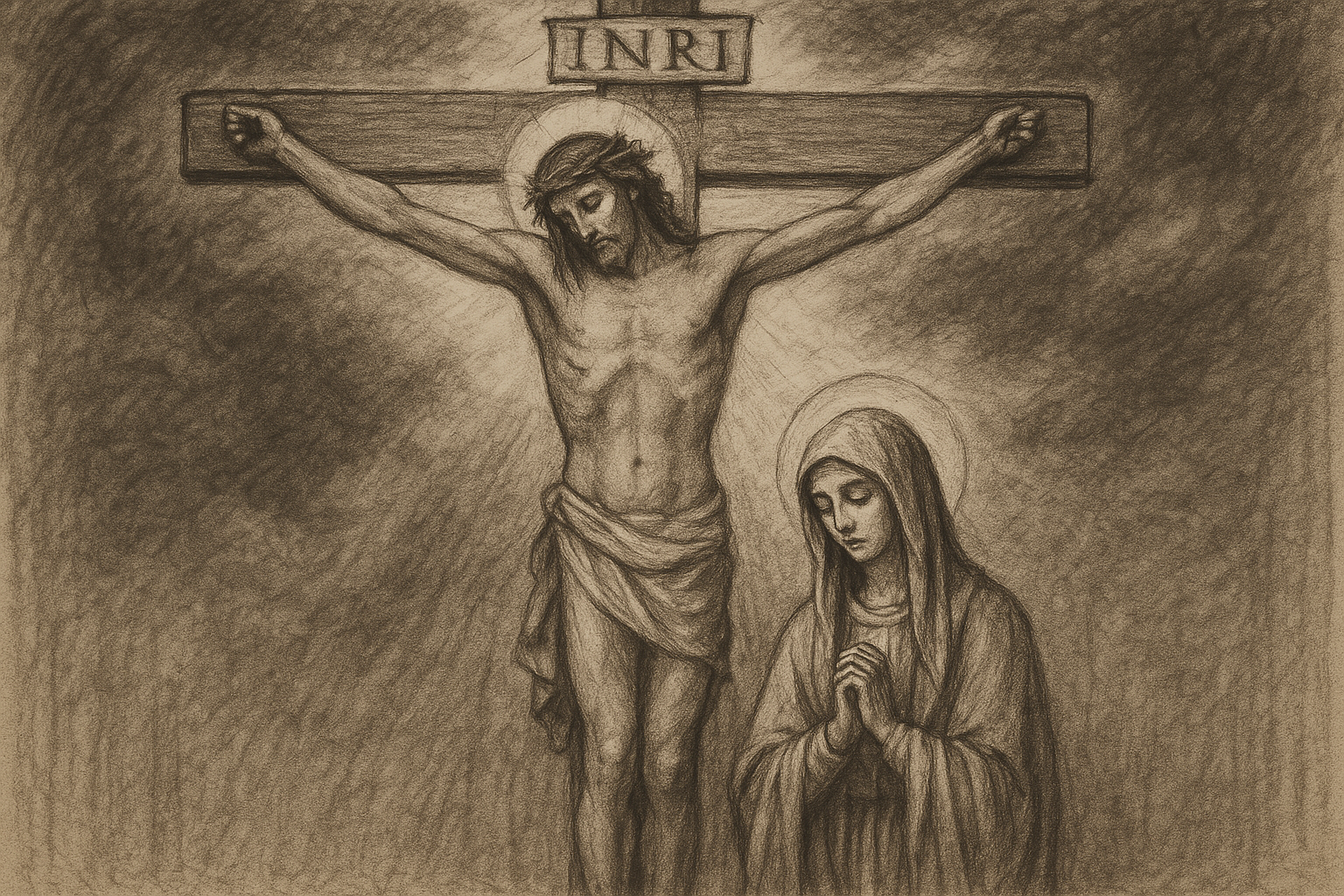
Marys presence at Cana prepares us for her presence at Calvary. The same mother who noticed a lack at the wedding feast will stand near the Cross as Jesus gives Himself for the life of the world Standing by the cross of Jesus. The Church has long seen a deep unity between these moments. At Cana, Christ begins to reveal His glory. At Calvary, He completes the work of redemption.
This helps Catholics understand that Marys maternal care is not sentimental and not confined to happy moments. She is present in need, in surrender, and in the costly path of discipleship. She does not remove the Cross, but she helps the Church remain faithful beneath it.
In that light, Cana becomes more than the story of a wedding. It becomes a sign of the whole Christian life. The Lord provides. Mary believes. The servants obey. The disciples see and come to faith His disciples began to believe.
How Catholics pray with Cana today
Many Catholics turn to Cana when they pray for marriages, families, new beginnings, and moments of lack. That is fitting, because the first sign of Jesus in John takes place in a wedding setting, a place of covenant and joy. The Blessed Virgin is attentive there, and she remains attentive now.
Praying with Cana does not mean treating Mary as a source of power apart from Christ. It means trusting that the mother who brought a need to Jesus still helps believers bring their own needs to Him. Her words remain a kind of prayer rule:
- Notice what is missing.
- Bring it to Jesus without fear.
- Wait in trust for His answer.
- Do whatever He tells you.
This pattern fits the Catholic life very well. The Church is full of people who must learn to wait, to ask, and to obey. Cana shows that faith is not passive. It is attentive, confident, and ready to act when the Lord speaks.
In Marian devotion, this is one reason the rosary and other prayers to Mary never end with Mary alone. They return to Christ. They place the believer in a posture of listening. Mary at Cana quietly trains the soul to hear the voice of her Son.
What Cana reveals about authentic Marian devotion
Authentic Marian devotion is Christ-centered. That may sound obvious, but it is worth saying plainly because Cana makes it so visible. Marys greatness lies in the fact that she belongs entirely to the Lord. She is not the source of grace. She is the faithful servant through whom grace is sought, welcomed, and received.
This is why the Church honors her without ever setting her against Jesus. Her dignity is always ordered to His. At Cana, she appears at the exact moment when the identity of the Bridegroom begins to shine. The miracle is Christ's. The faith is Mary's. The disciples are drawn into belief.
For Catholics, that means Marian devotion should lead to imitation. Mary listens. Mary notices. Mary trusts. Mary speaks only enough to lead others to obedience. If devotion to her does not make a person more receptive to Jesus, then something has gone off course.
But when Cana is prayed well, it strengthens hope. It reminds believers that Christ is generous, that His timing is wise, and that His mother is attentive to the needs of His people. In that sense, the wedding feast in Cana remains present wherever Christians ask the Lord for what they lack and then stand ready to receive His transforming answer.
At Cana, the jars were filled to the brim Fill the jars with water. That detail matters. Christ does not act halfway. The sign is abundant because His mercy is abundant. Mary sees the need. Jesus reveals His glory. The disciples believe. And the Church, still reading this Gospel centuries later, learns again how to come to the Son with trust and to hear His mother say, with calm certainty, Do whatever he tells you.
Keep Reading on Lets Read The Bible
Frequently Asked Questions
What is the Mary at Cana Catholic meaning?
It is the Church's understanding of Mary at the wedding feast in John 2 as a model of intercession, attentive motherhood, and trust in Jesus. She notices the need, brings it to Christ, and points others to obedience to Him.
Why does Mary tell the servants to do whatever Jesus says?
Her words show the heart of Marian devotion. Mary does not place herself at the center. She directs everyone toward Christ and toward faithful obedience to His word.
Does Cana prove that Catholics pray to Mary instead of Jesus?
No. Cana shows the opposite. Mary brings a need to Jesus and helps others turn to Him. Catholic prayer to Mary is meant to lead believers more deeply to Christ, not away from Him.