Marian Devotion
Seven Wounds, One Heart: Entering the Sorrows of Mary
How the Seven Sorrows of Mary draw Catholics into a deeper contemplation of Christ's saving love
Site Admin | April 18, 2026 | 110 views
The Seven Sorrows of Mary occupy a special place in Catholic devotion because they are not simply memories of Mary's grief. They are seven moments in the Gospel story where the Mother of Jesus is drawn into the mystery of her Son's saving work. When Catholics pray with these sorrows, they are not placing Mary above Christ. They are contemplating how closely she remained united to Him in joy and in pain, and how her maternal suffering can help form a more prayerful heart in us.
The the Seven Sorrows of Mary Catholic meaning is rooted in Scripture, tradition, and the Church's long habit of seeing in Mary a disciple who listened, pondered, and endured. Her sorrows are often associated with the prophecy of Simeon, the flight into Egypt, the loss of the child Jesus in the Temple, the meeting with Jesus on the way to Calvary, His crucifixion, His body taken down from the cross, and His burial. These are not isolated emotional scenes. They trace the path of a mother whose love was purified by faith and who stood with the Redeemer in the hour of His Passion.
Biblical roots in the life of Mary
The devotion begins with the Gospel itself. At the Presentation of Jesus in the Temple, Simeon blesses the holy family and then turns to Mary with words that anticipate suffering: and you yourself a sword will pierce. That sentence is one of the clearest scriptural foundations for the devotion. It tells us that Mary's motherhood would not be sheltered from sorrow. Her heart would be touched by the rejection and suffering of the Messiah she had given to the world.
From there, the Gospel accounts show the human texture of her trials. The holy family flees into Egypt to escape Herod's violence, and later Mary and Joseph search anxiously for the boy Jesus when He remains in the Temple. In both scenes, the Church sees a mother who must trust God without fully understanding the road before her. Her faith does not remove uncertainty, but it keeps her from despair.
At Cana, Mary points beyond herself toward Jesus: Do whatever he tells you. That line is often remembered as a Marian phrase of surrender, but it also helps explain her sorrows. Mary never stops directing attention to her Son. Even in suffering, she remains transparent to Christ. That is one reason Catholic devotion to the Seven Sorrows is so Christ-centered. Mary's pain matters because it is inseparable from His saving mission.
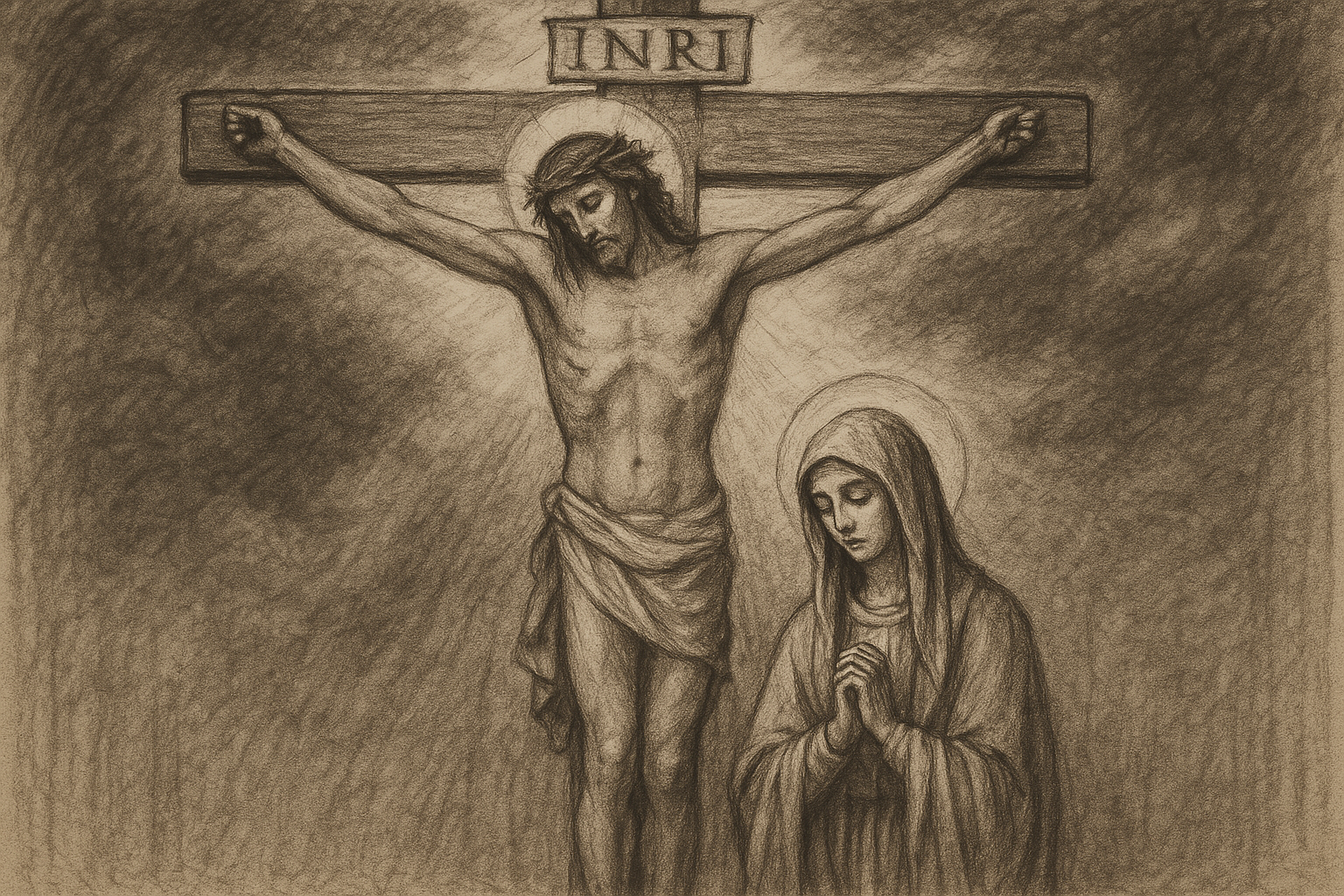
On Calvary, the Gospel gives the most solemn image of all: Mary standing near the cross while Jesus dies. The Fourth Gospel says, Standing by the cross of Jesus were his mother, and then records Jesus entrusting Mary to the beloved disciple and the disciple to Mary. The Church has long heard in that scene not only tenderness but mystery. In the hour of redemption, Mary is present as mother, disciple, and witness. She does not replace the sacrifice of Christ. She stands near it and receives its fruit.
The seven sorrows traditionally contemplated
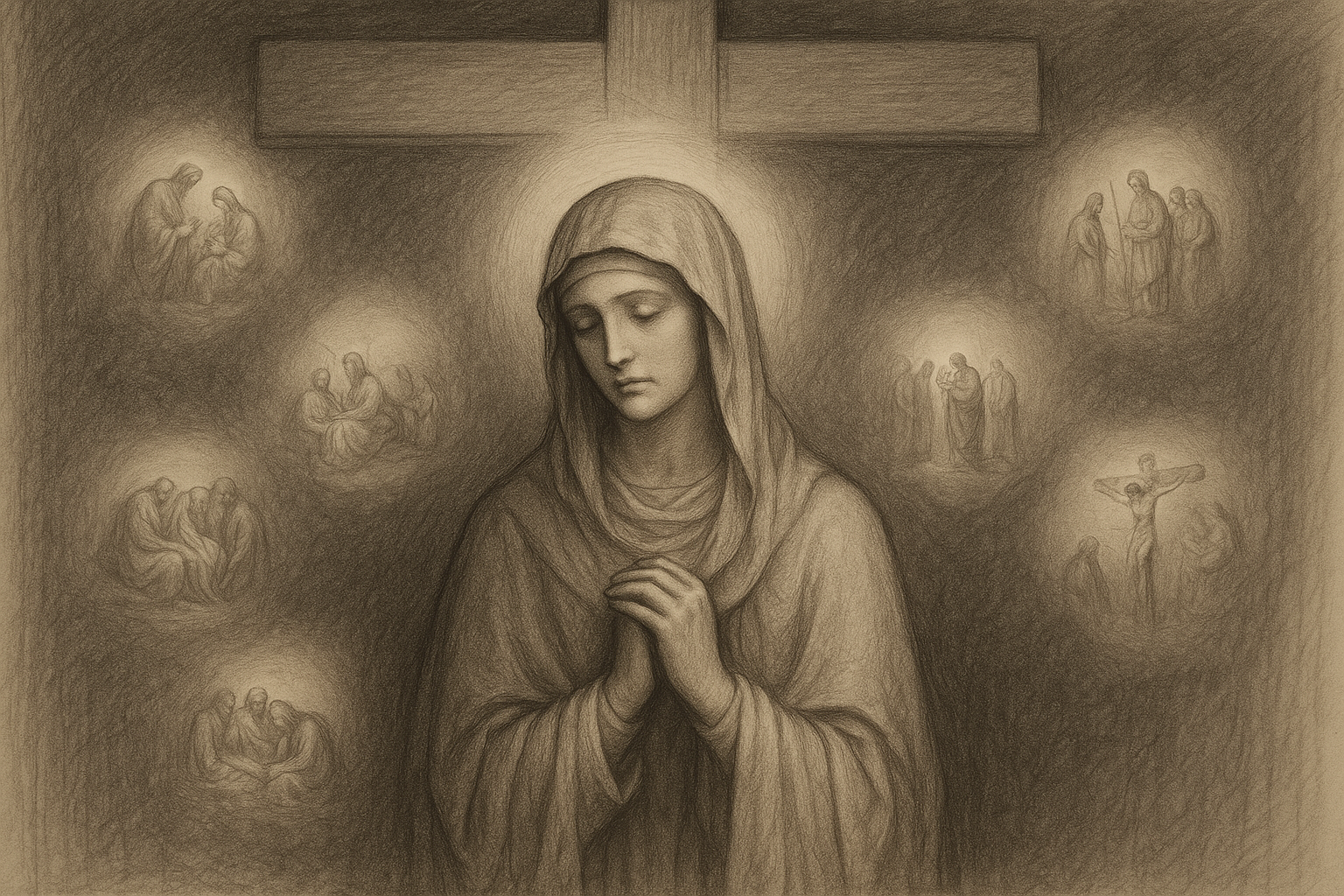
Catholics commonly meditate on these seven sorrows:
- The prophecy of Simeon in the Temple
- The flight into Egypt
- The loss of the child Jesus in the Temple
- Mary meeting Jesus on the way to Calvary
- The crucifixion and death of Jesus
- Jesus being taken down from the cross
- Jesus being laid in the tomb
Each sorrow invites a different kind of prayer. The first three belong to hidden domestic life, where fear, confusion, and loss already touch the Holy Family. The last four belong to the Passion, where Mary enters more directly into the mystery of Christ's suffering and death. Taken together, the seven sorrows present the whole arc of maternal sorrow: foreboding, exile, searching, helpless witnessing, and grief at burial. Yet the devotion is not only about pain. It is also about fidelity. Mary remains. Mary believes. Mary loves to the end.
How the Church understands Mary's sorrow
The Church does not teach that Mary suffered as Christ suffered in the exact same way. Jesus alone is the Redeemer, and His sacrifice is unique. Yet Catholic teaching also recognizes Mary in a singular relationship to that sacrifice. Because she is His Mother and because she is completely united to Him by grace, her suffering has a real spiritual meaning. It is not redemptive in itself, but it is profoundly joined to the redemptive suffering of Christ.
This is why Catholic tradition often speaks of Mary as the sorrowful Mother, or Our Lady of Sorrows. Her compassion is not mere sentiment. The word itself suggests to suffer with. Mary suffers with Jesus, and because of that she also suffers with the Church. Her sorrows teach that love and pain are often woven together in a fallen world, and that holiness does not always look like comfort. Sometimes holiness looks like fidelity at the foot of the cross.
The saints have often seen in Mary a model of contemplative endurance. She does not speak many words in the Gospels, but her silence is not emptiness. It is receptivity. She treasures events in her heart, even when those events are painful or bewildering. In this way, the Seven Sorrows help Catholics understand that Christian meditation is not an attempt to escape suffering. It is a way of bringing suffering before God and allowing Him to sanctify it.
Mary's sorrow is never detached from the Savior she bore. Her heart is pierced because His mission is real, and her fidelity becomes a quiet school of discipleship for the Church.
Why this devotion deepens love for Jesus
Some Catholics are drawn to Marian devotion through tenderness, while others come to it through grief. The Seven Sorrows speak to both. They help believers see Jesus more clearly because they place His Passion in the context of personal love. The cross was not an abstraction. It was the suffering of a Son, watched by His mother. The burial was not merely a historical detail. It was a mother's final act of surrender before the stone was sealed.
When Catholics meditate on the Seven Sorrows, they often discover that Mary does not compete with Christ for affection. She leads the heart toward Him. Her sorrow exposes the seriousness of sin, the cost of redemption, and the depth of divine love. If the Mother of God weeps at the cross, then the cross is not a symbol of distant religion. It is the place where heaven enters our human misery and changes it from within.
This devotion also guards against shallow faith. It reminds believers that grace does not always remove the sword. Sometimes grace enables a person to endure it with hope. That lesson matters in every Christian life. Parents, caregivers, the sick, the bereaved, and those who have lost their way often find in Mary a companion who understands what it means to watch helplessly, to pray without immediate answers, and to keep trusting when joy has been wounded.
The Seven Sorrows as a path of compassion
Devotion to Mary's sorrows is also a school of compassion toward others. Catholics do not contemplate her pain in order to grow morbid or self-absorbed. They do so in order to become more like Christ, who is moved by human suffering and who calls His disciples to mercy. The contemplative memory of Mary's tears can soften a hard heart. It can make a person more patient with the suffering of neighbors, more attentive to the burdens of family members, and more willing to pray for those whose grief is hidden.
Compassion in the Catholic sense is never sentimental. It asks us to stay close to suffering without fleeing from it. Mary does that at Calvary. She does it in the Temple. She does it in exile and in the search for Jesus. In this way, she becomes a motherly teacher for believers who want to love more truly. Her example shows that holiness includes a capacity to remain faithful when life is not gentle.
There is also a quiet dignity in the way this devotion keeps memory alive. Modern life often moves quickly past suffering, as if pain were an inconvenience to be managed and forgotten. The Seven Sorrows do the opposite. They invite the Church to remember, to ponder, and to stay present. In that patient remembrance, love grows deeper.
Praying the sorrows today
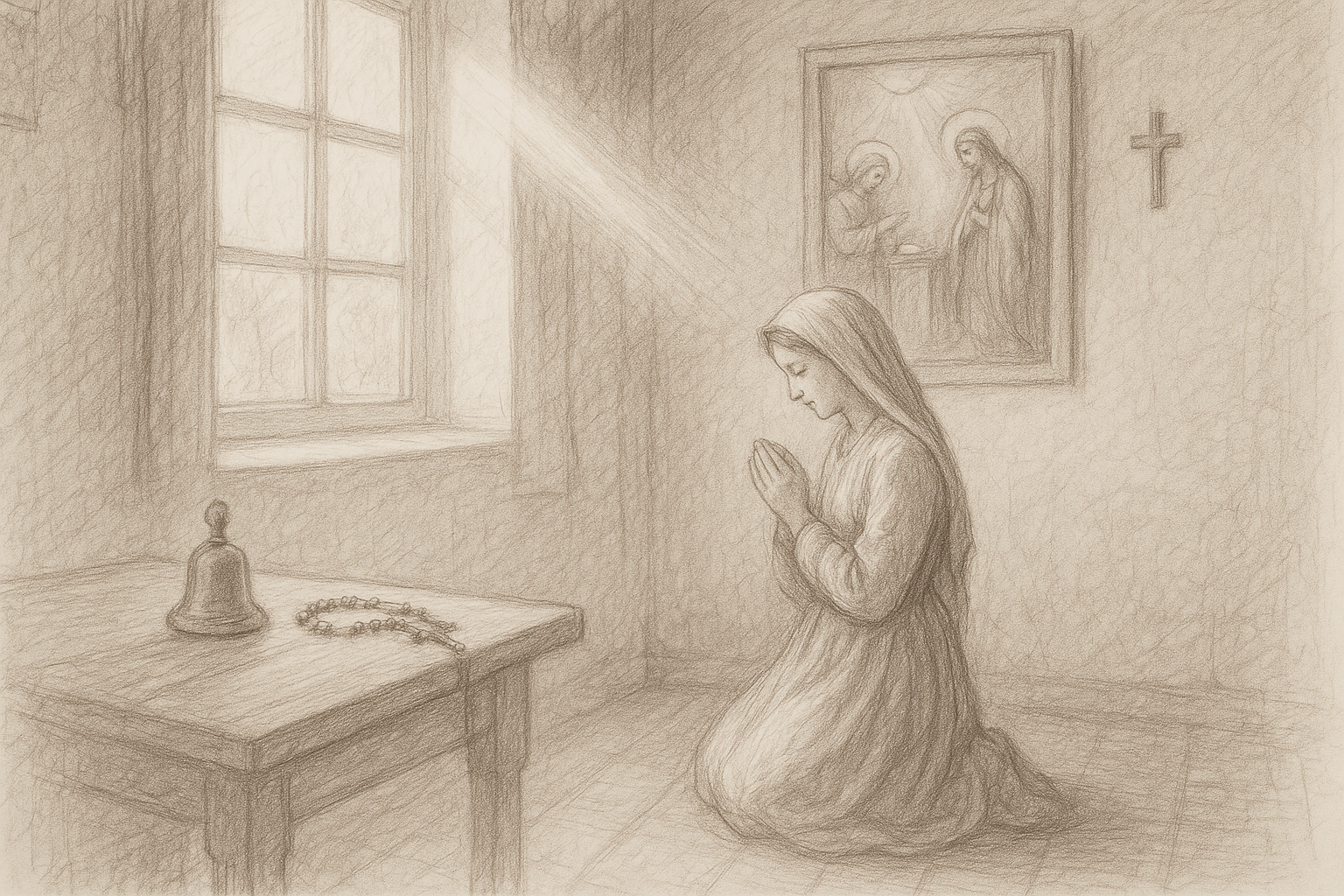
Catholics often pray the Seven Sorrows in a chaplet, but the devotion can also be practiced slowly with Scripture, especially during Lent or on the memorial of Our Lady of Sorrows. A person may take one sorrow at a time, read the Gospel passage connected to it, and ask for the grace to see suffering through Mary's eyes. What would it mean to trust God in uncertainty? What would it mean to remain near Jesus when faith is costly? What would it mean to stand with another person in grief without trying to explain the pain away?
This kind of prayer is simple, but it can be transformative. It does not demand sophisticated language. It asks for honesty, patience, and a willingness to enter the Gospel with Mary. Over time, that habit can reshape the way a Catholic views sorrow itself. Sorrow is still sorrow. The cross is still the cross. But neither is empty when carried in union with Christ.
That is the enduring gift of the Seven Sorrows of Mary. They do not teach believers to seek suffering for its own sake. They teach believers that suffering, when united to Jesus, can become a place of love, trust, and hidden grace. Mary stands there first, and she stands with us still.
Keep Reading on Lets Read The Bible
Frequently Asked Questions
What are the Seven Sorrows of Mary?
They are seven Gospel scenes traditionally associated with Mary's suffering: Simeon's prophecy, the flight into Egypt, the loss of Jesus in the Temple, Mary meeting Jesus on the way to Calvary, the crucifixion, Jesus being taken down from the cross, and His burial.
Is devotion to the Seven Sorrows of Mary biblical?
Yes. The devotion is rooted in Scripture, especially Simeon's prophecy in Luke 2:35 and the accounts of the Passion in the Gospels. Catholic tradition reflects on these passages to understand Mary's role in the mystery of Christ.
How does the Seven Sorrows devotion help Catholics grow spiritually?
It deepens meditation on Christ's Passion, strengthens trust in suffering, and forms the heart in compassion. By praying with Mary, Catholics learn to remain faithful to Jesus in sorrow and to accompany others with greater mercy.