Marian Devotion
Our Lady of Guadalupe and the Tender Strength of the Gospel
How Mary's message in Guadalupe draws the Church deeper into Scripture, worship, and the defense of human life
Site Admin | April 8, 2026 | 87 views
For many Catholics, Our Lady of Guadalupe is one of the most beloved signs of Mary's maternal care. Her image, her words, and the story of Saint Juan Diego have traveled far beyond Mexico, but the devotion is not built on sentiment alone. It is rooted in a distinctly Catholic understanding of Mary: as the Mother of the Lord, a true disciple, and one who always leads the Church closer to her Son.
The Our Lady of Guadalupe Catholic meaning is not found in a private symbol detached from the Gospel. It is found in the way God chooses to work through humility, beauty, and mercy. In Guadalupe, many Catholics see a meeting point between Scripture, doctrine, and pastoral care. Mary appears not to replace Christ, but to make Christ near. She does not center attention on herself, but gathers the poor, the wounded, and the uncertain into faith.
Mary's place in the life of the Church
Catholic devotion to Mary always begins with Jesus. The Church honors her because God honored her first. At the Annunciation, she receives the Word of God and answers with trust: Let it be to me according to your word. Her whole life afterward is marked by that same obedience. She points to Christ, as at Cana when she says, Do whatever he tells you.
This is why Marian devotion is never meant to compete with worship due to God alone. Instead, it helps believers receive Christ more fully. The Second Vatican Council taught that Mary's maternal role in no way obscures or diminishes the unique mediation of Christ, but rather shows its power. That is the Church's instinct in every authentic Marian devotion: Mary magnifies the Lord.
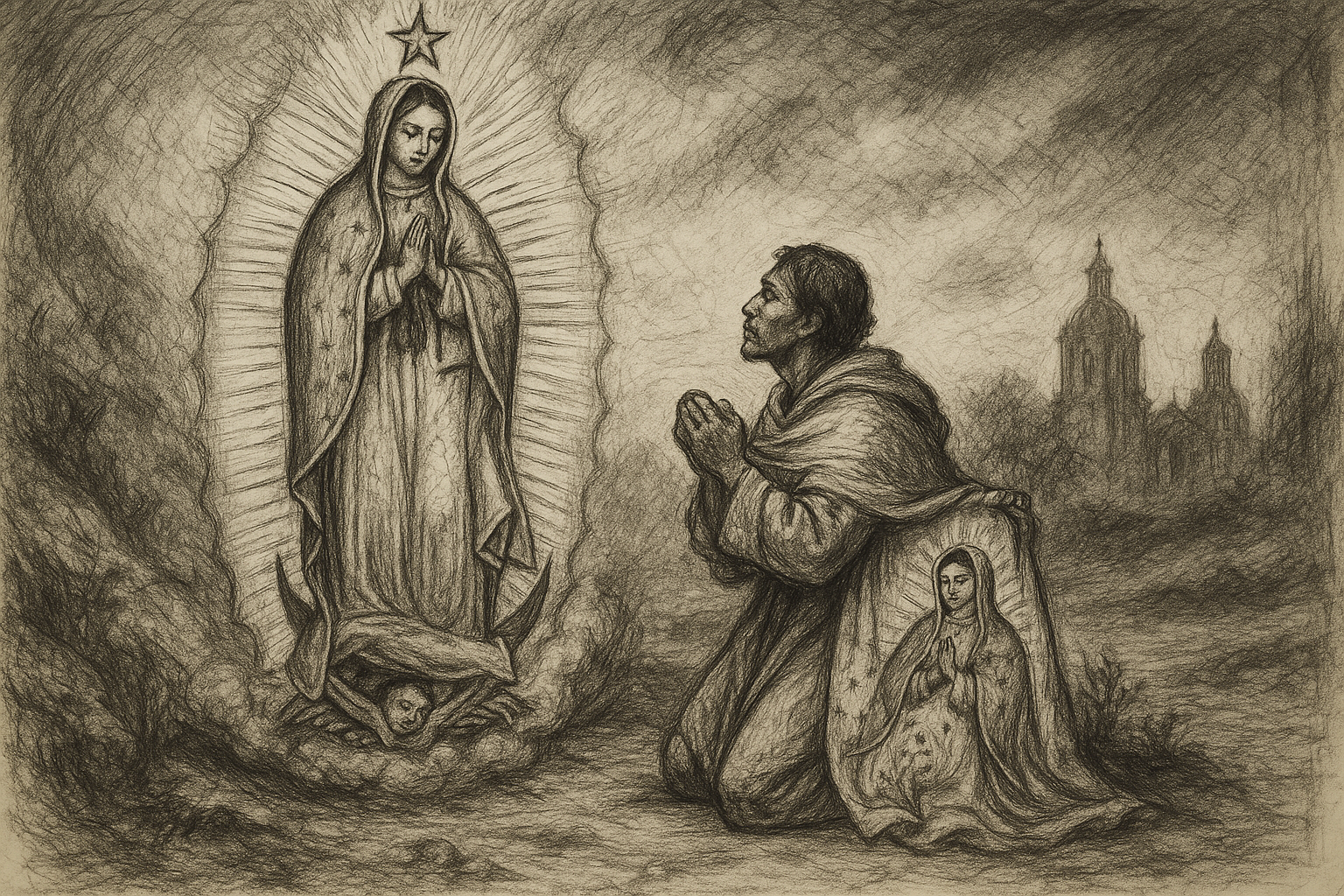
Guadalupe fits this pattern beautifully. The tilma image bears witness to a motherly nearness that is gentle and unmistakable. Yet the center of the story is not the image itself. The center is the conversion of hearts, the building up of the faith, and the proclamation of the true God to a people in need of consolation and truth.
The biblical echoes woven into Guadalupe
Catholics often notice that the Guadalupe event seems to resonate with Scripture. That is not accidental. Marian devotion in the Church has always been read through biblical patterns, especially the way God works through signs that are both humble and filled with meaning.
One of the clearest connections is Mary's role as the woman who receives and bears God's presence. The Ark of the Covenant was a holy sign of God's nearness in the Old Testament. Mary is often seen in that light because she carried within her the Word made flesh. When the angel greets her in Luke's Gospel, the language recalls the solemn awe surrounding God's dwelling among his people. In the Visitation, Elizabeth recognizes this mystery and calls Mary blessed among women: Blessed are you among women.
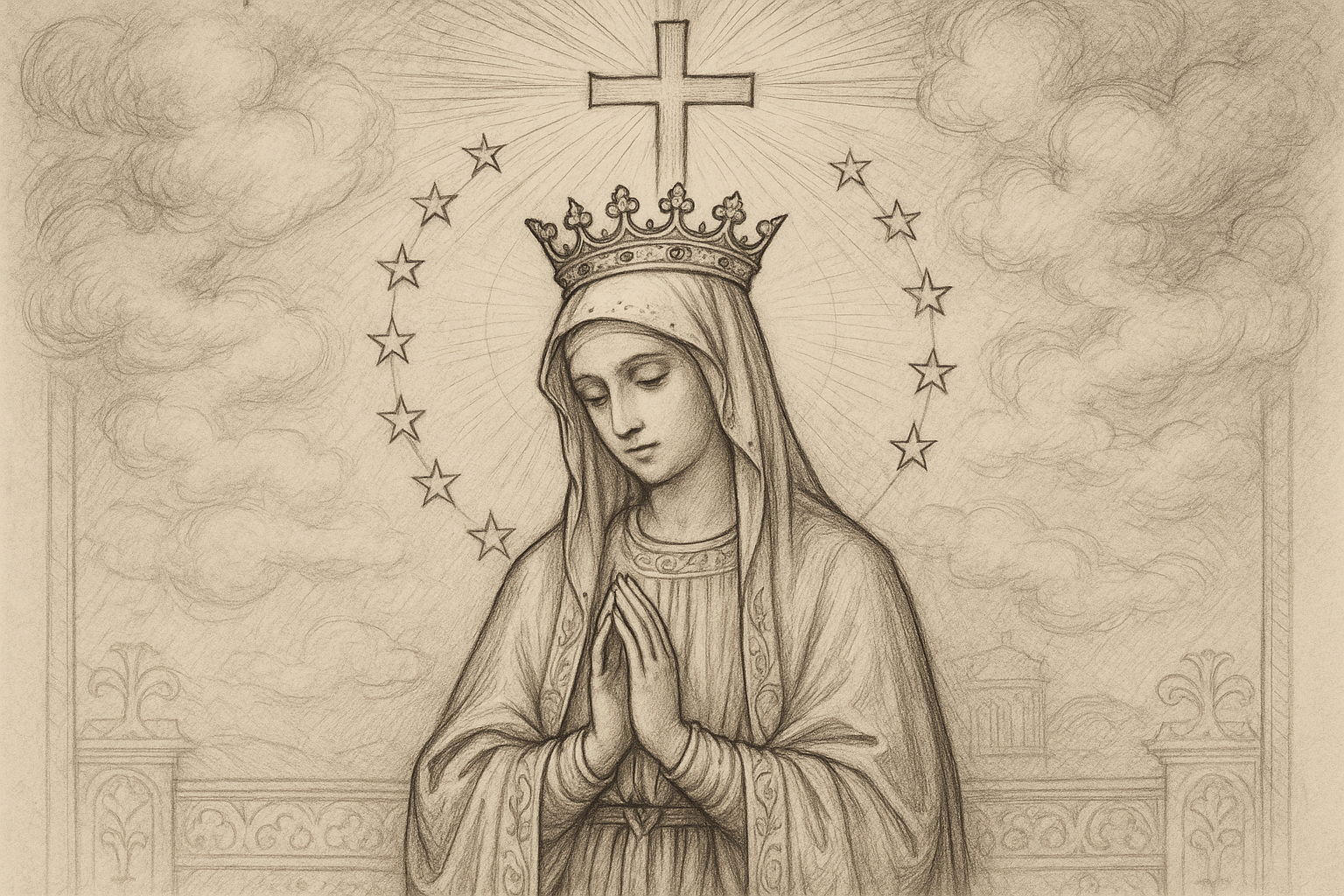
Guadalupe also carries echoes of the Apocalypse, where John sees the woman clothed with the sun, crowned with stars, and laboring in the struggle between life and death: A woman clothed with the sun. Catholics are careful not to force every detail into a one-to-one match, but the imagery has long helped the faithful understand Mary's maternal role in spiritual battle. The Church has often seen in her a mother standing with the people of God amid trial.
Even the appearance of Our Lady to Saint Juan Diego fits a biblical pattern. God chooses the lowly. He speaks through the humble. He entrusts great messages to those the world would overlook. That is consistent with the whole drama of salvation history, where divine power is made known in mercy rather than spectacle.
What the Church sees in the tilma
Catholics venerate, but do not worship, sacred images. An image of Christ or Mary is not a god. It is a reminder, a sign, a help to prayer. In Guadalupe, the tilma became a treasured image because it served as an instrument of evangelization. The story places great emphasis on Mary's request that a church be built, which is fitting: devotion to Mary is meant to gather people into the worship of God.
The image itself has invited generations of believers into reflection. Her bowed head suggests reverence. Her dark sash is often understood as a sign of maternity. Her posture is not triumphant in a worldly sense, but receptive and serene. Many Catholics see in this a Marian lesson: true greatness is found in surrender to God.
It is also important to say what the Church does and does not claim. The faithful may hold Guadalupe with great confidence and love, but devotion is not the same thing as defining doctrine. The Church's judgment on such apparitions is pastoral and spiritual. What matters most is that the devotion leads to prayer, conversion, repentance, and fidelity to Christ. A good Marian devotion never ends in itself.
Why Guadalupe speaks so strongly to pro-life faith
One reason Guadalupe continues to matter so deeply is that it speaks to the dignity of unborn life. Catholic moral teaching is clear: every human life is sacred from conception to natural death. The unborn are not hidden from God's love, and they are not beyond the concern of his Church.
Guadalupe became a powerful sign for this truth because Mary's presence is so intimately linked to the mystery of life in the womb. She who bore the Savior also received a message that brings comfort to the vulnerable. In a culture that often measures value by strength, usefulness, or visibility, Guadalupe reminds the faithful that God treasures the small, the unseen, and the defenseless.
For many pro-life Catholics, the devotion is not only emotional but theological. If Mary carried Jesus in her womb, then human life in the womb has a dignity that cannot be reduced to biology alone. It is personal. It is beloved. It is known by God. The image of Our Lady of Guadalupe has therefore become a point of prayer, witness, and courage for those defending life.
At the same time, pro-life devotion must remain deeply Christian. It is not merely activism with religious language added on. It flows from the conviction that Christ took flesh, sanctified human life, and entered our condition from within. Mary is present at that mystery, not as a rival to Christ, but as the first and most faithful bearer of his gift.
The humility of Juan Diego
Another reason Guadalupe continues to move Catholics is the figure of Juan Diego himself. He was not a bishop, a scholar, or a powerful public leader. He was a humble indigenous man, and that matters. God often chooses those whom the world dismisses. The message entrusted to Juan Diego reminds the Church that holiness is not reserved for the socially important.
His role also keeps devotion properly ordered. The Blessed Virgin does not come to create a cult of personality around the visionary. She comes to lead him, and through him others, into obedience. Juan Diego's simple faith shows the proper Catholic response to grace: listen, trust, act.
That is a lesson for all believers. True devotion is never merely admiration. It is a call to conversion. When Mary speaks, even in a private revelation, she speaks as a mother guiding her children toward the will of God. The result should be deeper prayer, more generous charity, and a greater desire to belong to Christ.
How Guadalupe deepens devotion to Jesus
Authentic Marian devotion always has a Christological center. This is especially clear in Guadalupe. The whole event points beyond itself. Mary requests a church, and the Church exists to worship God. Mary comforts the faithful, and Christ is the Savior. Mary gathers people into hope, and hope is fulfilled in the Lord who conquered sin and death.
The more seriously Catholics take Guadalupe, the more they should be drawn into the sacraments, Scripture, and the life of grace. Marian devotion at its best does not stand apart from ordinary Christian life. It supports it. It encourages the Rosary, confession, the Eucharist, and acts of mercy. It also helps believers remember that holiness is possible in hidden and ordinary places.
That is the quiet force of Guadalupe. She does not shout. She does not compete. She does not distract. She carries the tenderness of a mother and the clarity of faith. In her, the Church sees a woman who receives God and returns us to him. And for that reason, her message remains fresh whenever the world forgets the value of the weak, the unborn, and the beloved.
To pray with Our Lady of Guadalupe is to ask for a heart like Mary's: receptive, obedient, and unafraid to trust that God's mercy can enter history through the smallest yes. In that light, her devotion becomes not a side path, but a sure help on the road to Christ.
Keep Reading on Lets Read The Bible
Frequently Asked Questions
What is the Catholic meaning of Our Lady of Guadalupe?
The Catholic meaning of Our Lady of Guadalupe is that Mary, the Mother of Jesus, draws people to her Son through a sign of mercy, humility, and evangelization. The devotion emphasizes God's care for the poor, the conversion of hearts, and the dignity of every human life.
Is devotion to Our Lady of Guadalupe worship of Mary?
No. Catholics venerate Mary but do not worship her. Worship belongs to God alone. Marian devotion is meant to honor what God has done in her and to lead the faithful closer to Jesus Christ.
Why is Our Lady of Guadalupe important for pro-life Catholics?
Our Lady of Guadalupe is important for pro-life Catholics because she speaks to the sacredness of human life, especially life in the womb. Her maternal image and message remind believers that the unborn are known and loved by God.