Marian Devotion
A Heart Kept for Christ: Reading the Immaculate Conception with Catholic Faith
The Church's teaching on Mary's sinless beginning reveals both the beauty of grace and the mercy God intends for all his children.
Site Admin | April 1, 2026 | 83 views
The first thing Catholics mean by the Immaculate Conception
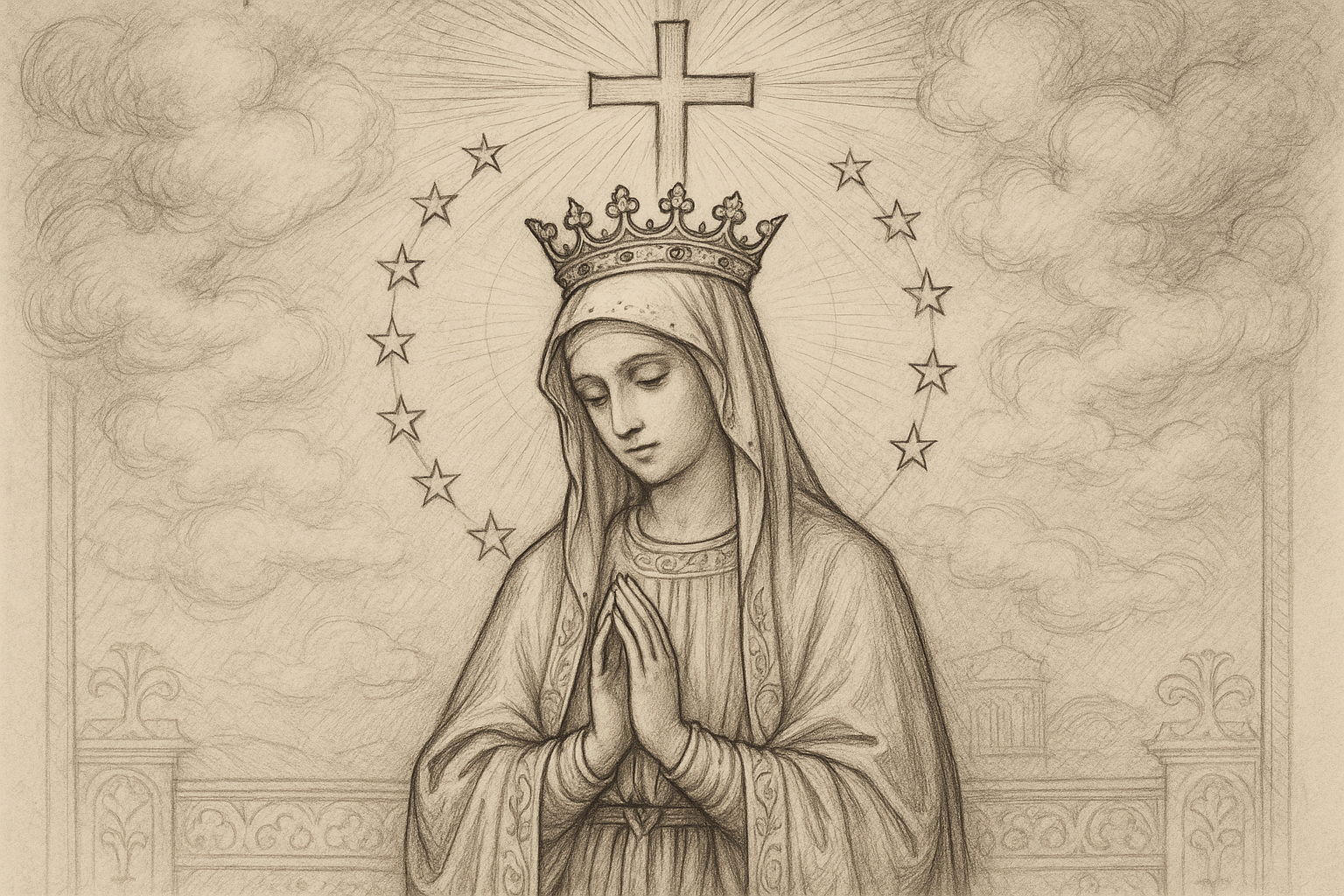
When Catholics speak of the Immaculate Conception explained, they are not referring to the conception of Jesus in Mary, but to the beginning of Mary herself. The Church teaches that, by a singular grace from God and in view of the merits of Jesus Christ, Mary was preserved from original sin from the first moment of her conception. This is not a claim that Mary was divine, nor that she did not need salvation. It is a claim that Christ saved her in a more perfect and anticipatory way.
That distinction matters. The Immaculate Conception is not a story about Mary standing apart from Christ. It is a story about Christ's redeeming work reaching her first and most fully. The one who would bear the Savior was prepared by the Savior's grace. In Mary's holiness, the Church sees not human achievement but divine generosity.
Catholics therefore honor Mary not because she replaces Christ, but because she points to him so clearly. Her purity is a sign of what grace can do when God acts without resistance. It is also a quiet reminder that salvation is always gift before it is task.
Scripture's quiet witness to Mary's place in God's plan
The Bible does not contain a direct sentence that says, in so many words, that Mary was conceived without original sin. Catholic teaching does not pretend otherwise. Instead, the Church reads Scripture as a whole and sees in Mary the woman whom God prepared with special care for the Incarnation of his Son.
At the Annunciation, the angel greets Mary with words that are striking in their fullness: Hail, full of grace. Catholics have long heard in this greeting a sign that Mary's life is uniquely filled with God's favor. The angel does not speak to her as an ordinary recipient of grace only after the fact, but as one already marked by God's gracious initiative.
Another scriptural thread appears in the opening pages of Genesis. After the fall, God speaks of enmity between the serpent and the woman, and between the serpent's offspring and hers: Genesis 3:15. Catholic readers have seen here a promise of victory over sin and evil that finds its fullest expression in Christ, while also illuminating the woman associated with that victory. Mary is never the redeemer, but she stands where God's triumph over the serpent is most beautifully displayed.
The Church also hears Mary as the New Eve. Just as Eve cooperated in humanity's fall, Mary cooperates in God's saving plan through her obedient faith. At Cana, she says, Do whatever he tells you, and at the Annunciation she gives her consent to God's word: Let it be done to me according to your word. That simple yes does not create grace, but it receives it completely. In Mary, human freedom is not erased; it is healed and made fruitful.
The Immaculate Conception is not a decorative doctrine. It is a proclamation that God's grace can precede, prepare, and preserve a human life for a holy purpose.
What the Church actually teaches
The Immaculate Conception is a defined dogma of the Catholic Church. That means it is not optional devotional language. Yet the doctrine is often misunderstood, even by practicing Catholics. It does not mean Mary did not need a Savior. On the contrary, the Church insists that she was saved by Christ more perfectly than anyone else, because his grace preserved her from original sin at the outset of her existence.
This teaching developed over time in the Church's prayer, theology, and liturgy. Catholics did not invent it out of sentiment. They came to recognize that the way the Church honors Mary is connected to what God revealed about Christ. If Jesus is the all-holy Son of God made man, it is fitting that his mother be prepared by a unique act of grace.
The doctrine also safeguards a deeper truth about salvation. Grace does not merely repair after damage; it can also prepare before damage occurs. God is not limited to rescuing at the last moment. He can sanctify in advance, according to his merciful design. Mary is the most luminous example of this truth.
Why the Immaculate Conception matters for ordinary Catholics
It is easy to think that Mary's holiness belongs to a level of sanctity too distant for daily life. Yet the doctrine speaks directly to anyone who has ever asked whether grace can truly change a human heart. Mary shows that God's mercy is not abstract. It enters history, human lineage, family life, obscurity, and obedience. It makes possible what sin had made impossible.
For Catholics who struggle with recurring sin, the Immaculate Conception offers hope without illusion. Mary is not given to us as a rebuke but as a promise of what God desires to accomplish in his children. We may not be preserved from original sin as she was, but we are invited to real purification, real conversion, and real holiness through baptism, confession, prayer, and perseverance.
The doctrine also deepens reverence for the body and for human beginnings. God does not treat the beginning of a human life as insignificant. He prepared Mary from the first moment of her existence. That quiet truth teaches that every human life is known, loved, and addressed by God from the start, even when the world does not notice.
There is also a pastoral comfort here. Mary is not only a doctrinal figure. She is a mother in the life of the Church. Her sinless beginning makes her a compelling intercessor for those who desire purity of heart, clarity of conscience, and a more generous yes to God. She does not compete with the Lord's mercy. She shows its beauty.
Marian devotion that stays close to Christ
Healthy Marian devotion never drifts away from Christ. It brings us nearer to him. The Church's love for Mary is always meant to be Christ-centered, because Mary's whole life is ordered toward her Son. To honor her Immaculate Conception is to admire the holiness of the One who fashioned her for his coming.
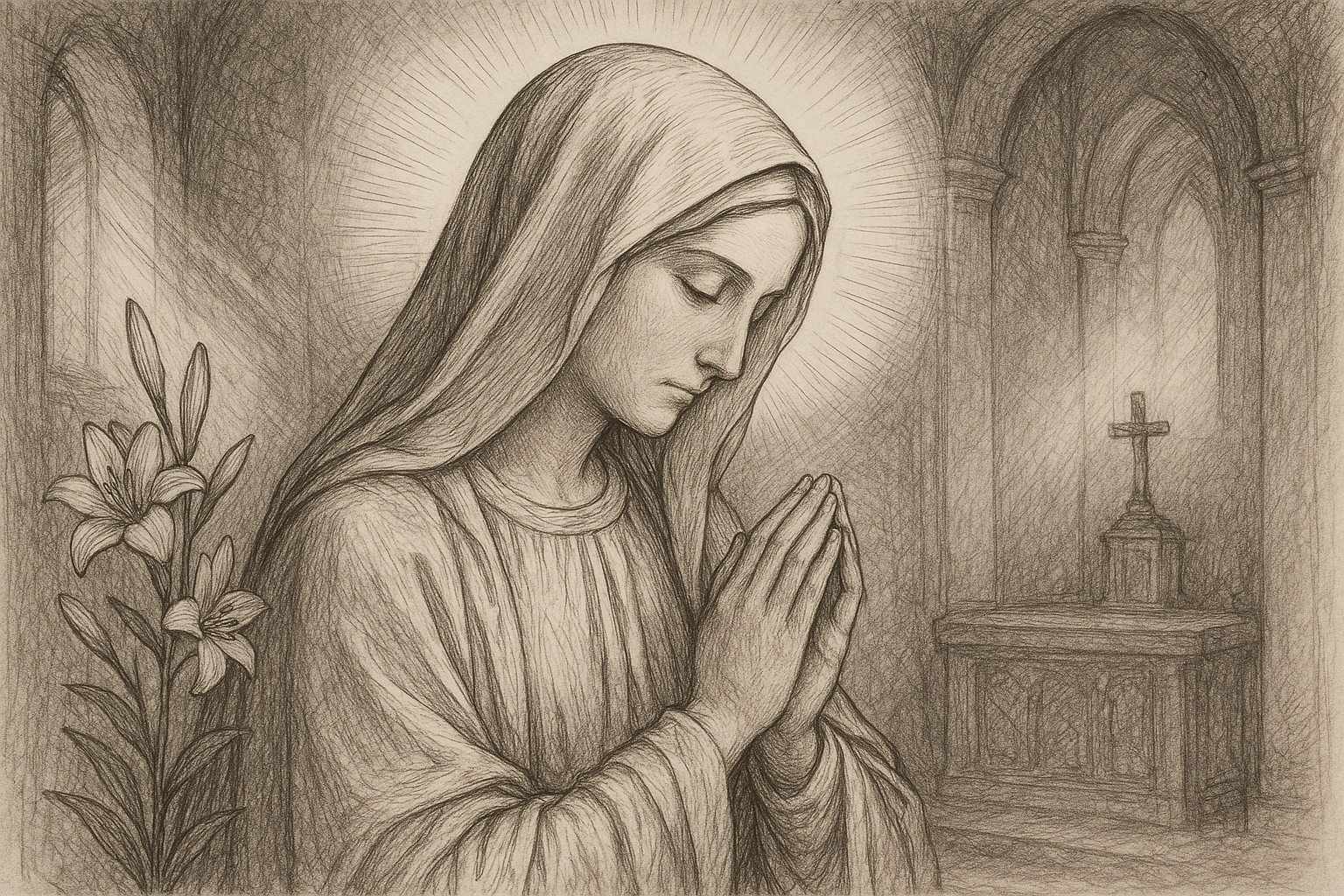
One practical way to pray with this doctrine is to ask for a cleaner heart, not merely a more religious mood. Devotion to Mary should make us more honest about sin and more confident in grace. A person can pray the Rosary slowly, meditating on the mysteries of Christ, while asking Mary to teach a steadier obedience. A person can also pray before the Eucharist, remembering that the same Lord whom Mary carried in her womb is truly present on the altar.
Another helpful practice is to keep Mary's response at the center of prayer. Her words, Let it be done to me according to your word, can become a daily act of surrender. They are small words, but they contain the rhythm of Christian discipleship. In them, fear yields to trust and self-protection yields to love.
Catholics may also find it fruitful to pray the Memorare or the Litany of Loreto with greater attention to the names given to Mary. Each title can become a way of remembering that her holiness is not self-generated. She is what she is because God has acted in her. That truth keeps devotion from becoming sentimentality.
Three simple ways to pray with the doctrine
- Thank God for the gift of Mary as a sign of what grace can do in a human life.
- Ask Mary to help you reject sin early, before it gains strength in your thoughts and habits.
- Offer one concrete act of obedience each day, and place it in Christ's hands through Mary's intercession.
A doctrine that protects hope
Some people fear that the Immaculate Conception creates distance between Mary and the rest of humanity. In fact, it does the opposite. It shows what humanity looks like when grace is not resisted. Mary is not less human because she is immaculate. She is the most fully responsive human being after Christ himself. Her life reveals what our own lives are meant to become by grace.
This is why the doctrine is so hopeful. It tells us that holiness is not a myth or an elite privilege. God can enter ordinary human reality and make it radiant. He can prepare a soul for a mission. He can preserve, heal, and sanctify. The Immaculate Conception is a sign that grace is stronger than sin, and that God's plan for humanity is not defeat but communion.
It is also worth noticing how quietly Mary's holiness unfolds in the Gospel. She does not announce herself. She does not seek attention. She listens, receives, treasures, and follows. The Immaculate Conception explains the hidden root of that life. Her outward humility rests on a deep inward purity given by God. Catholic devotion learns from this hiddenness. It teaches us that the most important work of grace often happens where no one sees it.
When Catholics celebrate the Immaculate Conception, they are not merely admiring a singular privilege. They are praising the Lord who prepares vessels for his own glory. Mary becomes a mirror of the Church's calling: to be holy, not by pride, but by grace; not by self-assertion, but by faithful reception. In her, the promise of redemption takes on a human face, and prayer finds a mother who always leads us back to her Son.
Keep Reading on Lets Read The Bible
Frequently Asked Questions
Does the Immaculate Conception mean Jesus was conceived without sin?
No. The Immaculate Conception refers to Mary's conception, not Jesus'. It teaches that Mary was preserved from original sin by God's grace in view of the merits of Christ.
Is the Immaculate Conception clearly stated in the Bible?
Not in a single explicit verse. Catholics understand it through Scripture as a whole, especially passages such as Luke 1:28 and Genesis 3:15, read in the light of the Church's teaching and tradition.
How can this doctrine help in daily prayer?
It can encourage trust that God's grace can truly purify the heart. Many Catholics pray with Mary for obedience, purity, and a deeper yes to Christ, especially through the Rosary, the Memorare, or quiet prayer before the Blessed Sacrament.