Doctrine and Questions
Mary of Nazareth and the Name the Church Protects
A careful look at the title Mother of God, and why the Church has guarded it so closely
Site Admin | June 27, 2026 | 73 views
The title that guards the truth about Jesus
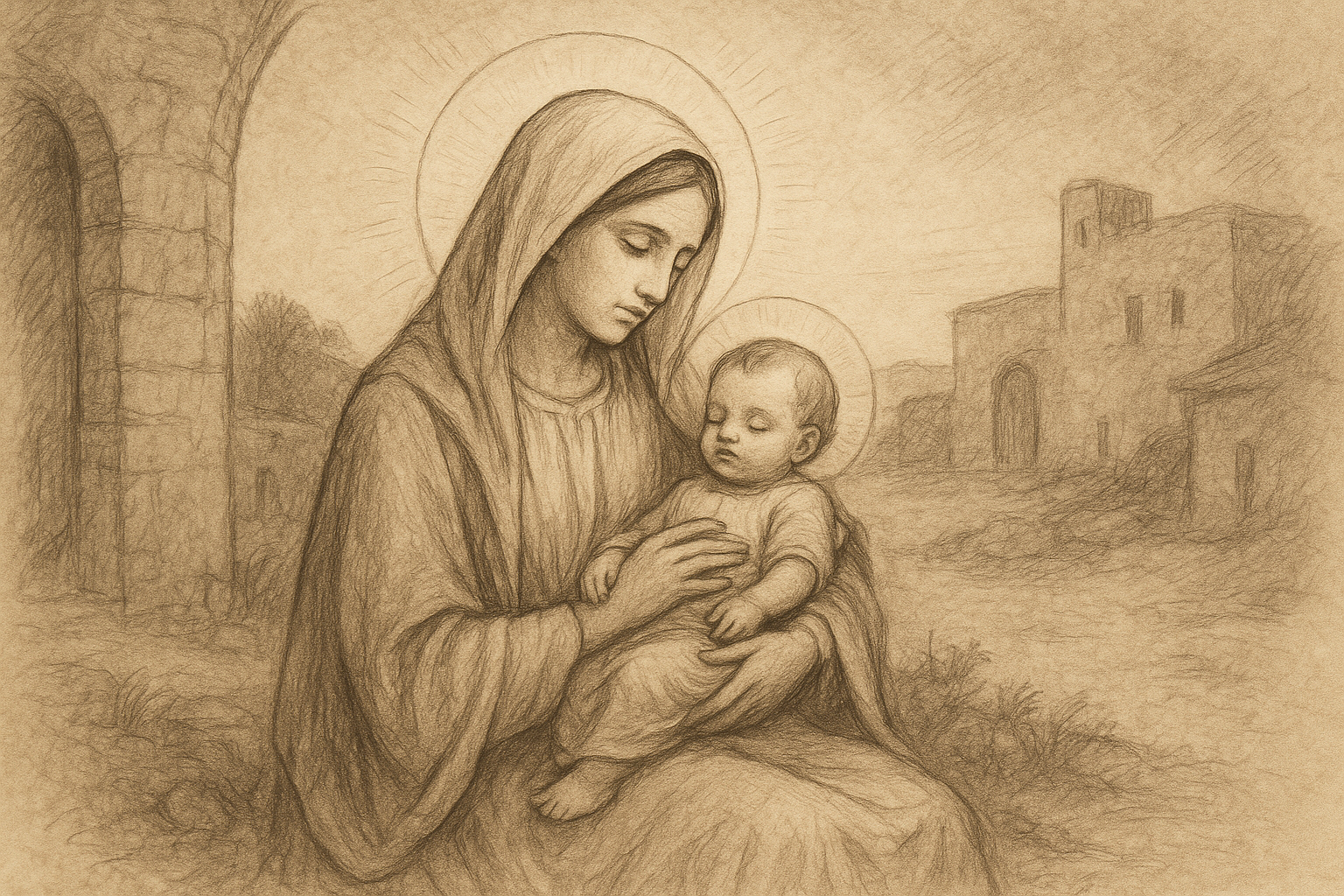
When Catholics say Mary is the Mother of God, they are not trying to make Mary greater than she is. They are trying to say something true about Jesus. The title does not begin with Mary and move upward. It begins with Christ. If the child Mary bore is truly the eternal Son of the Father, then the woman who gave Him birth can rightly be called Mother of God.
This is why the phrase Mary as Mother of God Catholic teaching matters so much. It protects the confession that Jesus Christ is one divine Person, the Son of God, who truly took flesh in time. Mary is honored because the One she carried in her womb is not a mere prophet or holy man, but the Word made flesh.
Scripture opens this mystery gently and without fanfare. At the Annunciation, the angel tells Mary, you will conceive in your womb and bear a son. He will be called the Son of the Most High, and His kingdom will have no end. The child promised to Mary is already identified in His divine identity. The child is not someone who later becomes divine. He is the Son before He is born.
Elizabeth's greeting points us in the same direction
One of the clearest biblical moments comes when Mary visits Elizabeth. Filled with the Holy Spirit, Elizabeth asks, And why is this granted me, that the mother of my Lord should come to me? That word Lord is not casual. In Luke's Gospel, it carries real weight. Elizabeth recognizes that the child Mary bears is her Lord, and therefore Mary is already the mother of the one who is Lord.
Catholic teaching does not claim that Mary is the source of Christ's divine nature. God has no beginning, and the Son is eternally begotten of the Father. Mary is the mother of Christ according to His human birth, but because the one she bore is a single divine Person, her motherhood properly reaches the whole Person. A mother does not give birth to a nature alone. She gives birth to a person. That is the heart of the doctrine.
This is also why the Church has always spoken carefully about Jesus. If we divide Him into two separate subjects, one divine and one human, the Gospel begins to fracture. But if we confess one Lord Jesus Christ, then the title Mother of God does not exaggerate Mary. It confesses Christ.
What the Church meant to protect at Ephesus
In the early centuries, Christians were forced to say precisely what the Bible had already revealed. The Church faced confusion about how the divine and human in Christ belong together. Some wanted to separate them too sharply. Others spoke as if Christ's humanity were swallowed up by His divinity. The Church resisted both errors because both distort the Savior.
The title Mother of God became a safeguard. It was not invented to flatter Mary. It was defended to preserve the truth that the baby in the manger is the same eternal Son who made the heavens. To deny that title is often, though not always intentionally, to risk making Christ into two persons or to imply that His humanity is somehow disconnected from His divinity.
Catholics therefore hear the title as a Christological confession. Mary is Theotokos, a Greek term meaning God-bearer or Mother of God, because the one born from her is God the Son in the flesh. The Church's instinct is simple: if the child is God, then His mother may be called the Mother of God, not as though she gave Him His Godhead, but because she gave Him His human birth.
The title Mother of God does not elevate Mary above Christ. It protects the truth that the child she bore is one divine Person, fully God and fully man.
Why this title does not diminish Jesus
Some Christians worry that calling Mary Mother of God might somehow diminish the glory due to Christ. In reality, the opposite is true. The title magnifies Him. It says that the Child born in Bethlehem is not a lesser being, not a heavenly creature, and not only a man chosen by God. He is the eternal Son entering human history.
The Gospel of John speaks this way with grandeur: And the Word became flesh and dwelt among us. That verse is decisive. The Word did not merely visit flesh. He became flesh. The divine Son truly entered our condition without ceasing to be God. If Mary bore that Word in the flesh, then the title Mother of God is not a poetic exaggeration. It is the natural confession of faith.
To speak this way also preserves the reality of salvation. If the one born of Mary were not truly God, then His death on the Cross would not have the power the Church proclaims. But because the one who suffers is the divine Son made man, His Cross has infinite saving value. Mary's motherhood is therefore woven into the very story of redemption, not as a rival to Christ's work, but as the humble human yes through which the Redeemer entered the world.
Mary's yes and the shape of Christian faith
Mary's role is marked first by faith and obedience. When she hears the message of the angel, she does not seize control of the mystery. She receives it in trust: Behold, I am the handmaid of the Lord; let it be to me according to your word. Her fiat is not merely a personal moment of courage. It is the quiet openness through which God brings the Incarnation into history.
That is why the Church speaks of Mary with honor, but never as the center of the Gospel. She points away from herself. At Cana, she says to the servants, Do whatever he tells you. That remains her pattern. Her greatness lies in her nearness to Christ, and in her complete surrender to His will.
Catholics often say Mary is the first and best disciple, and that is true in a careful sense. She is not the source of grace. She is the one who received grace most fully among creatures and responded with perfect faith. Her motherhood is therefore both physical and spiritual. She gives birth to Jesus according to the flesh, and she stands as a sign of what humble discipleship looks like when it is wholly open to God.
Common misunderstandings, answered gently
Some sincere Christians object that the title Mother of God is unscriptural. Yet the Bible need not use a later theological phrase in exactly the same words for the teaching to be biblical. Scripture calls Mary the mother of Jesus, and Scripture also confesses Jesus as Lord, Son of God, and the Word made flesh. When those truths are held together, the Church's language follows naturally.
Others worry that the title implies Mary existed before God or somehow caused God to begin. That is not Catholic teaching. The Church does not say Mary is mother of the divine nature. She is mother of the Person who is God. The distinction is subtle, but important. Mothers are related to persons, not abstract natures.
Still others think the title belongs more to devotion than doctrine. In fact, it belongs to both. It is doctrinal because it guards the truth about Christ. It is devotional because it allows the faithful to love Mary as the Scripture presents her: the woman chosen to bear the Savior, to stand near His Cross, and to pray with the disciples as the Church begins its life.
There is a further misunderstanding that deserves care. Some imagine that honoring Mary means giving her divine qualities. Catholic teaching does not do this. Mary remains a creature, redeemed by her Son like every other human being, though in a singular way preserved by God's grace. Her holiness comes from Christ. Her title never competes with His divinity.
How the title shapes prayer and worship
Because the title Mother of God is about Christ, it also shapes the way Catholics pray. Marian devotion is healthiest when it leads to adoration of the Lord. When believers ask Mary to pray for them, they are not placing her beside God as an independent power. They are asking a mother in the order of grace to intercede before the Son she bore and served.
This is why the title has a pastoral beauty. It keeps prayer Christ-centered while allowing room for tenderness. Mary is close to the mysteries of Jesus because she lived them from within. She welcomed His birth, guarded Him in her home, followed Him in faith, and remained near Him in suffering. The Church does not admire her apart from Christ. She is admirable because Christ's life in her was so complete.
At the same time, the title invites reverence for the Incarnation itself. God did not save us from a distance. He came near. He took a human mother, a real genealogy, a real birth, and a real human life. In that sense, honoring Mary as Mother of God is one way of confessing that salvation is not an idea. It is a person, Jesus Christ, born of the Virgin Mary for us and for our salvation.
A title that leads back to the Creed
The simplest way to understand the doctrine is to return to the faith the Church professes each Sunday. Jesus Christ is true God from true God, and He became man for our sake. Mary belongs inside that confession because the Incarnation belongs to history. Her title does not add a second center to the faith. It reveals how completely the Son entered our world.
When Catholics say Mary is Mother of God, they are not drifting into sentiment. They are standing with Scripture, with the early Church, and with the Creed itself. The name belongs to Christ first, and only then to Mary as His mother. It is a name of humility and precision, a name that keeps the mystery intact.
So the next time the title sounds surprising, let it be surprising in a holy way. It is surprising that God would come so near, that the eternal Word would be carried in a mother's arms, and that salvation would begin with a child's birth in Bethlehem. Mary's greatness is that she belonged entirely to that mystery. Her Son is Lord. Her Son is God. And because of that, the Church can say with gratitude and confidence that Mary is the Mother of God.
Keep Reading on Lets Read The Bible
Frequently Asked Questions
What does it mean to call Mary Mother of God?
It means that Mary gave birth to Jesus Christ, who is one divine Person, fully God and fully man. The title refers to the person of Jesus, not to a supposed origin of His divine nature.
Is the title Mother of God found in the Bible?
The exact phrase is not used in Scripture, but the teaching is biblical. Luke calls Mary the mother of my Lord, and John says the Word became flesh. The Church's title summarizes those truths.
Does calling Mary Mother of God make her equal to Jesus?
No. Mary is a creature and Jesus is God. The title honors Mary only because of who her Son is. It protects the truth about Christ and does not place Mary on the same level as Him.