Doctrine and Questions
Mary, the Mother of God, and the Shape of Catholic Faith
A careful look at one of the Church's oldest confessions about Mary, Jesus, and what Christians mean when they say Christ is truly God and truly man.
Site Admin | July 11, 2025 | 70 views
Among the titles Catholics give Mary, none is more important, or more easily misunderstood, than Mother of God. Some hear it and assume Catholics are saying Mary is greater than God, or that she somehow existed before the Lord she bore. That is not what the Church means. The title is not a poetic exaggeration. It is a confession about Jesus Christ.
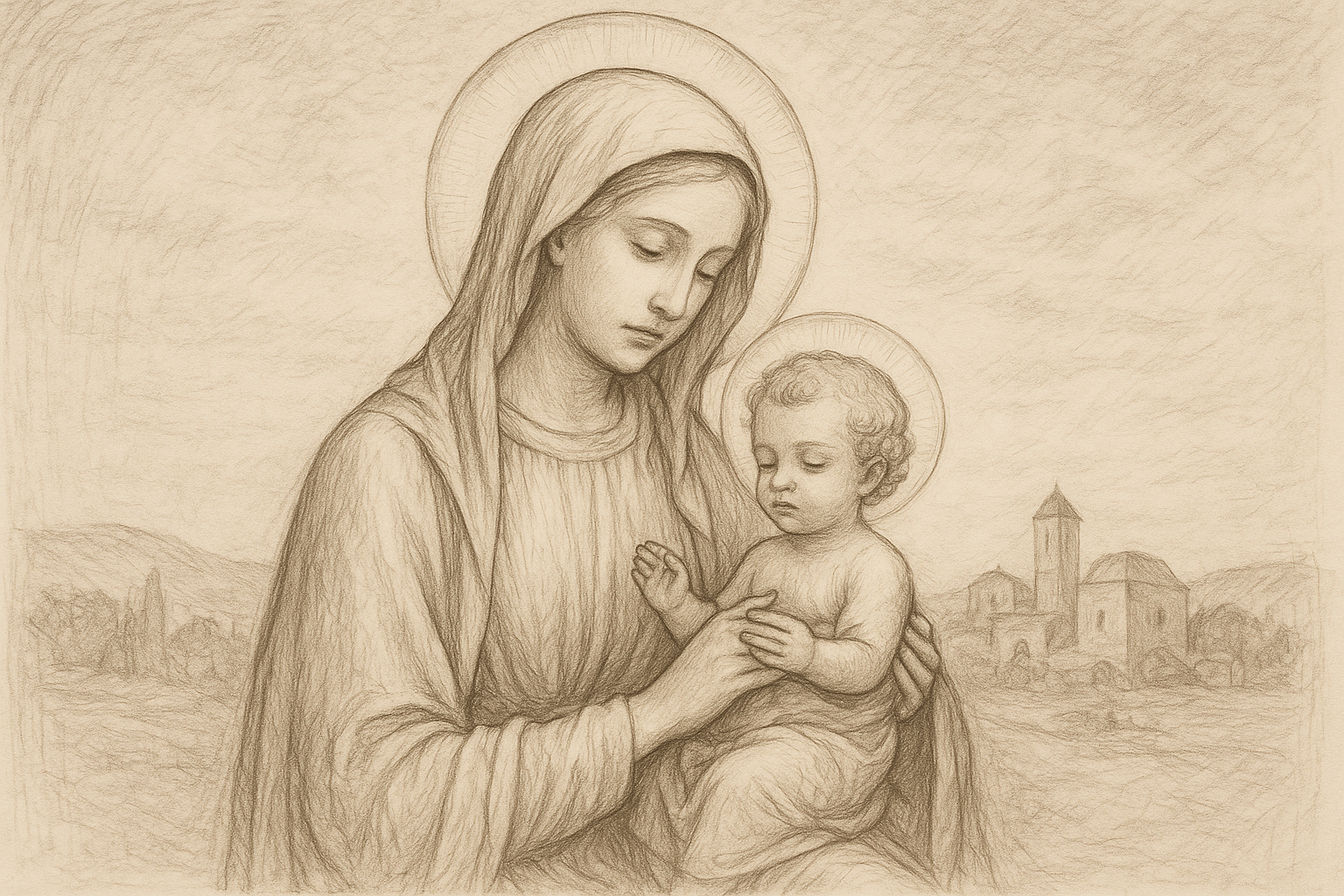
To call Mary the Mother of God is to say something first about the Child she carried, gave birth to, and raised. The one born of her is not a mere prophet, holy teacher, or adopted son. He is the eternal Son of the Father, who truly became man for our salvation. Mary's title guards that mystery with precision.
What the Church means by Mother of God
The phrase Mother of God can sound surprising if we isolate Mary from the Incarnation. But Catholic teaching begins from the person of Jesus, not from Mary in isolation. Jesus is one divine Person, the Son of God, with two natures, divine and human. Mary is the mother of that one divine Person according to his human birth. She is not the source of his divinity. She is the mother of the Person who is God the Son made flesh.
This is why the Church has always insisted that the title protects Christology. It does not add to Jesus. It keeps us from dividing him into two separate beings, one human and one divine, as though Mary were mother only of the human part. Catholics reject that split because the faith of the Church confesses one Lord, one Son, one Savior. The child in Mary's arms is the same one whom the Father sends into the world.
As the Gospel says, the angel told Mary, The holy one to be born will be called Son of God. The one she bore is already called Son of God. Elizabeth then greets her with wonder: And how does this happen to me, that the mother of my Lord should come to me? In the biblical world, Lord is not a casual title. In Luke's Gospel, it carries a weight that points toward Jesus' divine identity.
Scripture's witness to Mary's title
Scripture does not use the exact phrase Mother of God, but it gives the Church the truth from which the title follows. The most important question is not whether the phrase appears verbatim, but whether the reality it names is faithful to the Gospel.
Luke's infancy narrative is especially clear. Mary receives the angelic message, conceives by the Holy Spirit, and bears the Son who is called holy and Son of God. Elizabeth, filled with the Holy Spirit, calls Mary the mother of my Lord. The Church has long recognized that this is more than a polite greeting. It is a Spirit-led confession.
John's Gospel also points in the same direction. The Word was with God, and the Word was God, and the Word became flesh and dwelt among us. If the eternal Word truly became flesh, then the mother who gave him birth is rightly called the mother of the one Person who is God the Son. The title does not suggest that Mary is the origin of God's divine nature. It states that the one born of her is none other than God made man.
Saint Paul speaks similarly when he writes that God sent forth his Son, born of a woman, born under the law, so that we might receive adoption as sons God sent forth his Son, born of a woman. Paul does not pause to name Mary, but he clearly teaches that the Son sent by the Father is truly born of a woman. The Church, reading this in the light of the whole canon, identifies that woman as Mary and sees in her a profound place in salvation history.
Why the Church defended the title so strongly
In the early centuries, Christians had to answer confusion about Jesus' identity. Some thinkers tried to separate his humanity from his divinity. Others treated him as if the divine Son merely used a human body like a garment. The Church recognized that such ideas weaken the Gospel itself. If Jesus is not truly God, he cannot save us in the fullest sense. If he is not truly man, he cannot truly redeem human nature from within.
The title Mother of God became a way to defend the unity of Christ's person. Mary is mother of the person, not merely of a detachable human nature. This mattered pastorally, not just philosophically. Believers needed a clear way to speak about the Lord they worshiped and received in the sacraments.
The Council of Ephesus in 431 gave solemn expression to this ancient faith by affirming Mary as Theotokos, a Greek term often translated Mother of God or God-bearer. The point was never to glorify Mary apart from Christ. It was to preserve the truth that the one she bore is truly the Son of God. Catholics continue to use the title in that same spirit, always in reference to Jesus first.
Mary's greatness is never competitive with Christ's divinity. Her dignity shines because the one she bore is the Lord of glory.
Common misunderstandings and simple answers
Many objections to the title come from reasonable concern, but they often rest on a misunderstanding. Catholics can answer them patiently and without defensiveness.
- Does this mean Mary existed before God? No. Mary is a creature. The title speaks about the identity of her Son, not about Mary's origin.
- Does this mean Mary gave Jesus his divinity? No. The Son is eternally God. Mary gave him his human nature through her motherhood.
- Does this mean Catholics worship Mary? No. Worship belongs to God alone. Honor shown to Mary is a form of reverence for what God has done in her, not adoration of her as divine.
These clarifications are not small details. They are the difference between authentic Catholic devotion and confusion. When Catholics speak carefully, they show that Marian devotion is meant to deepen faith in Christ, not compete with it.
There is also a scriptural pattern worth noticing. In the Old Testament, the mother of the king held an important place in the royal household. In the New Testament, Mary is associated with the Messiah not because she rules over him, but because she is chosen to be the mother through whom the King enters the world. Her role is inseparable from Jesus' kingship.
What this title says about Jesus
In the end, the title Mother of God protects the Church's confession that Jesus is one divine Person. It says that the baby in Bethlehem is not a temporary vessel for God, but God the Son who has truly entered human history. It also says that the humanity he receives from Mary is real, complete, and sanctified from within.
This matters because salvation depends on who Jesus is. We do not place our hope in a religious teacher who merely points toward God. We place our hope in the incarnate Son who unites humanity to himself. The truth about Mary therefore leads directly to the truth about Christ. Catholic teaching refuses to separate the two, because the Gospel itself does not separate them.
For ordinary Catholics, this can change the way the Hail Mary is prayed. The prayer is not a sentimental gesture. It is a scriptural plea to one whom God has favored and whom the Church recognizes as the mother of the Lord. When believers ask Mary to pray for them, they are already confessing that Jesus is Lord, that his mother stands within the history of grace, and that heaven is not cut off from the life of the Church.
It can also strengthen confidence in the Incarnation. If God truly entered our human condition through a real mother, then no part of human life is too ordinary for his redeeming love. Birth, family, labor, silence, hidden years, suffering, and obedience all take on new meaning in Christ. Mary's motherhood places those realities within the saving work of God.
Mary's yes and the freedom of faith
Mary is not Mother of God merely because of biology. She is also the woman who freely said yes to God's word. Her fiat, let it be to me according to your word, reveals the posture of every disciple. God does not override the human person. He invites, calls, and fills with grace. Mary's cooperation shows what redeemed freedom looks like.
That is why Catholics honor her without confusion. She is not a rival savior. She is the first and most faithful disciple. Her motherhood and her obedience belong together. She receives Christ before she bears him to the world, and in that sense she becomes a model for every believer who would carry Christ in faith and service.
When Catholics speak of Mary as Mother of God explained rightly, they are speaking about more than a title. They are speaking about the mystery that the eternal Son took flesh, that the Gospel is grounded in history, and that God chose to enter the world through the humble obedience of a woman of Israel. The title is brief, but the faith it protects is vast. It keeps our eyes fixed where they belong, on Jesus Christ, true God and true man, born of the Virgin Mary for our salvation.
Prayerful reflection
For a Christian, this doctrine invites gratitude rather than debate alone. If the Son of God was willing to be born of a woman, then humility is not weakness and hiddenness is not emptiness. In Mary's motherhood, the Church sees the nearness of God and the dignity he gives to human life. That is a truth worth keeping close, especially when faith needs to be simple, steady, and sure.
Keep Reading on Lets Read The Bible
Frequently Asked Questions
Why do Catholics call Mary the Mother of God?
Because the one Mary bore is Jesus Christ, and Jesus is one divine Person, the eternal Son of God made man. The title protects the truth about who Jesus is.
Does Mother of God mean Mary is divine?
No. Mary is a creature and a daughter of Israel. The title refers to her Son's identity, not to Mary's own nature.
Where is this idea found in the Bible?
Scripture does not use the exact phrase, but it presents Mary as the mother of the Lord, the one whose child is called Son of God and who is truly born of a woman.