Doctrine and Questions
The Crucifix at the Center: What Catholics Are Really Seeing
A crucifix is not decoration in Catholic life. It is a confession of faith, a reminder of sacrifice, and a daily call to love Christ who loved us first.
Site Admin | June 29, 2025 | 84 views
The Cross is not empty in Catholic memory
When someone walks into a Catholic home, chapel, classroom, or church and sees a crucifix, the first impression may be simple: there is Jesus on the Cross. Yet that small detail carries a great deal of Catholic meaning. Catholics keep crucifixes because the Cross is not just a historical event, a religious symbol, or a distant reminder of suffering. It is the sign of the Lord's saving love made visible. The crucifix says that the One who was nailed to the Cross is the same One who rose from the dead, and that His death was not an accident but a sacrifice offered for the salvation of the world.
This is one reason why Catholics keep crucifixes explained with such clarity is important. The crucifix belongs to the heart of the faith, because Christianity is not built on an idea but on the saving acts of Christ. Saint Paul wrote, we preach Christ crucified 1 Corinthians 1:23. That phrase is not a spiritual slogan. It is the center of Catholic preaching, worship, and devotion.
Why the crucifix differs from a plain cross
Many Christians use a plain cross, and Catholics respect that. But the crucifix shows something specific: the body of Christ upon the Cross. This matters because it keeps together two truths that should never be separated. First, Jesus truly suffered and died. Second, He offered that suffering in love for our redemption. The crucifix makes the Passion concrete. It does not let the believer reduce the Cross to a general sign of hope. It presents the cost of salvation in a form the eyes can receive and the heart can ponder.
The Gospels are not shy about the physical reality of the Passion. They show the scourging, the crowning with thorns, the nails, the thirst, and the death of the Lord. Saint John records how the soldier pierced His side, and how blood and water flowed out John 19:34. Catholics see in that wound a sign of sacramental life and the love poured out for the Church. The crucifix therefore becomes a visual confession that Christ gave everything.
The crucifix teaches the truth about sacrifice
Catholic faith is sacramental, embodied, and rooted in visible signs. So it is fitting that the Church uses images to teach and remind. A crucifix teaches what words alone can easily fade from memory: love is costly, redemption is real, and sin is serious. In a world that often avoids sacrifice, the crucifix stands quietly and says that salvation came through self-giving love, not through comfort or convenience.
Jesus Himself described the path of discipleship in sacrificial terms. He said, If any man would come after me, let him deny himself and take up his cross daily and follow me Luke 9:23. The crucifix gives that command a face. It reminds Catholics that Christian life is not only about private inspiration or moral effort. It is about union with Christ, especially in His Passion. The sign on the wall becomes a call in the conscience.
Saint Paul goes even further, explaining that Christ humbled Himself and became obedient unto death, even death on a cross Philippians 2:8. Catholics keep crucifixes because humility is hard to remember and easy to need. The crucifix teaches that divine glory was revealed not by avoiding suffering but by entering it in love.
The crucifix is a reminder of mercy
At first glance, some people see only suffering in a crucifix. Catholics see mercy. The wounds of Christ are not signs of defeat. They are signs of love that went all the way. The Cross reveals that God did not remain distant from human pain. He entered it, bore it, and transformed it. That is why the crucifix is not meant to produce despair. It is meant to awaken gratitude.
When Catholics pray before a crucifix, they are not glorifying pain itself. They are honoring the Lord who endured pain to save sinners. The sight of His open arms and wounded body speaks to the conscience with remarkable force. It says that no sin is beyond His mercy, and no suffering is wasted when united to Him. The prophet Isaiah pointed toward this mystery when he wrote that by His wounds we are healed Isaiah 53:5.
That line is not an abstraction for Catholic devotion. It is a living truth. The crucifix places mercy before the eyes in a way that can soften pride, encourage repentance, and renew hope. Many Catholics have learned to pray more honestly because a crucifix gave them no place to hide from the truth and no reason to doubt the love of Christ.
Why Catholics place crucifixes in homes, churches, and daily life
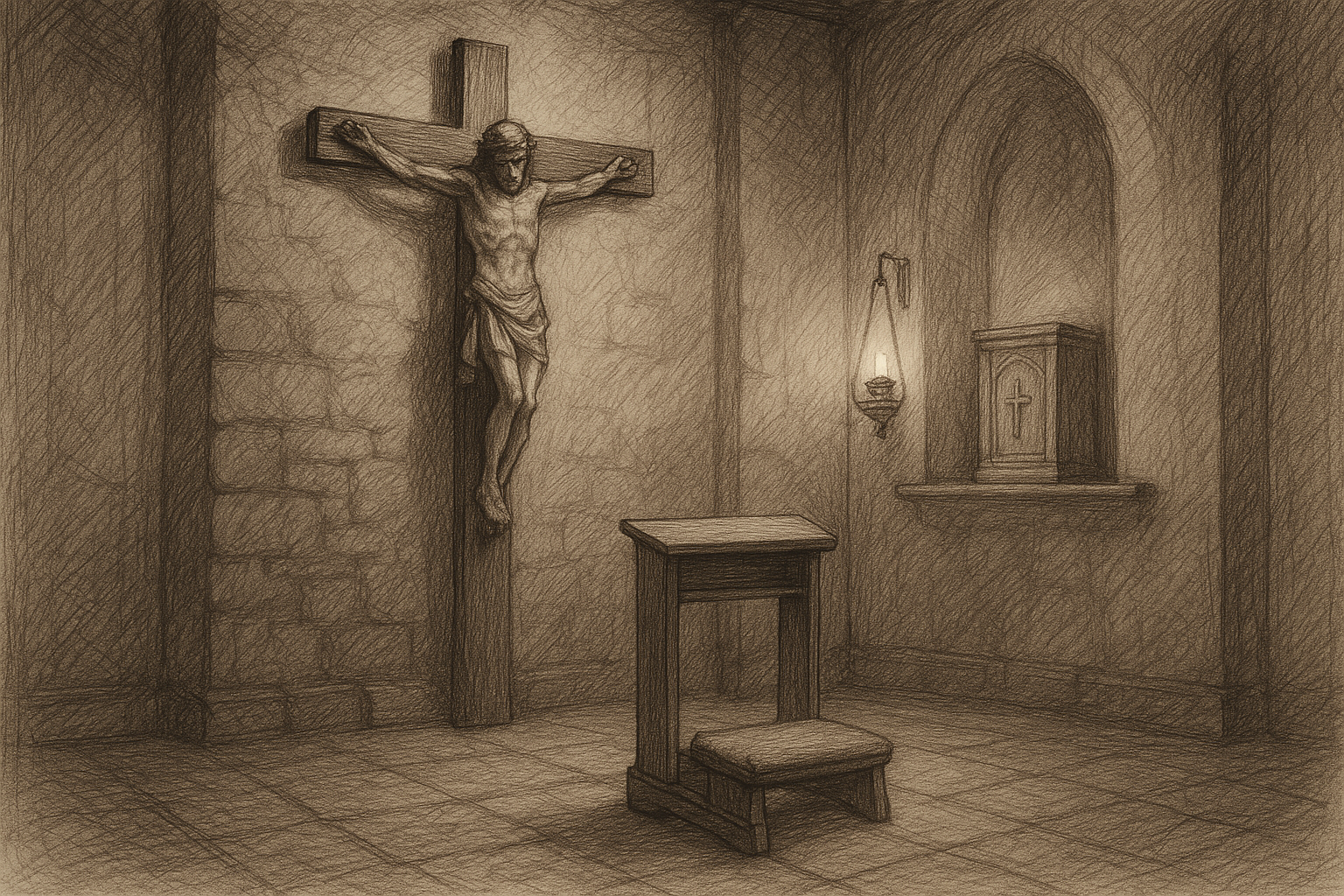
The Catholic tradition does not treat sacred images as magic objects. A crucifix is not a charm and does not replace prayer, faith, or the sacraments. It works, if that word may be used carefully, as a holy reminder that directs the mind to Christ. In the home, it can shape the atmosphere of prayer. In a bedroom, it can encourage morning offering and evening examination of conscience. In a living room, it can quietly witness that the family belongs to the Lord. In a classroom or office, it can remind Catholics that work, study, and responsibility are all lived before God.
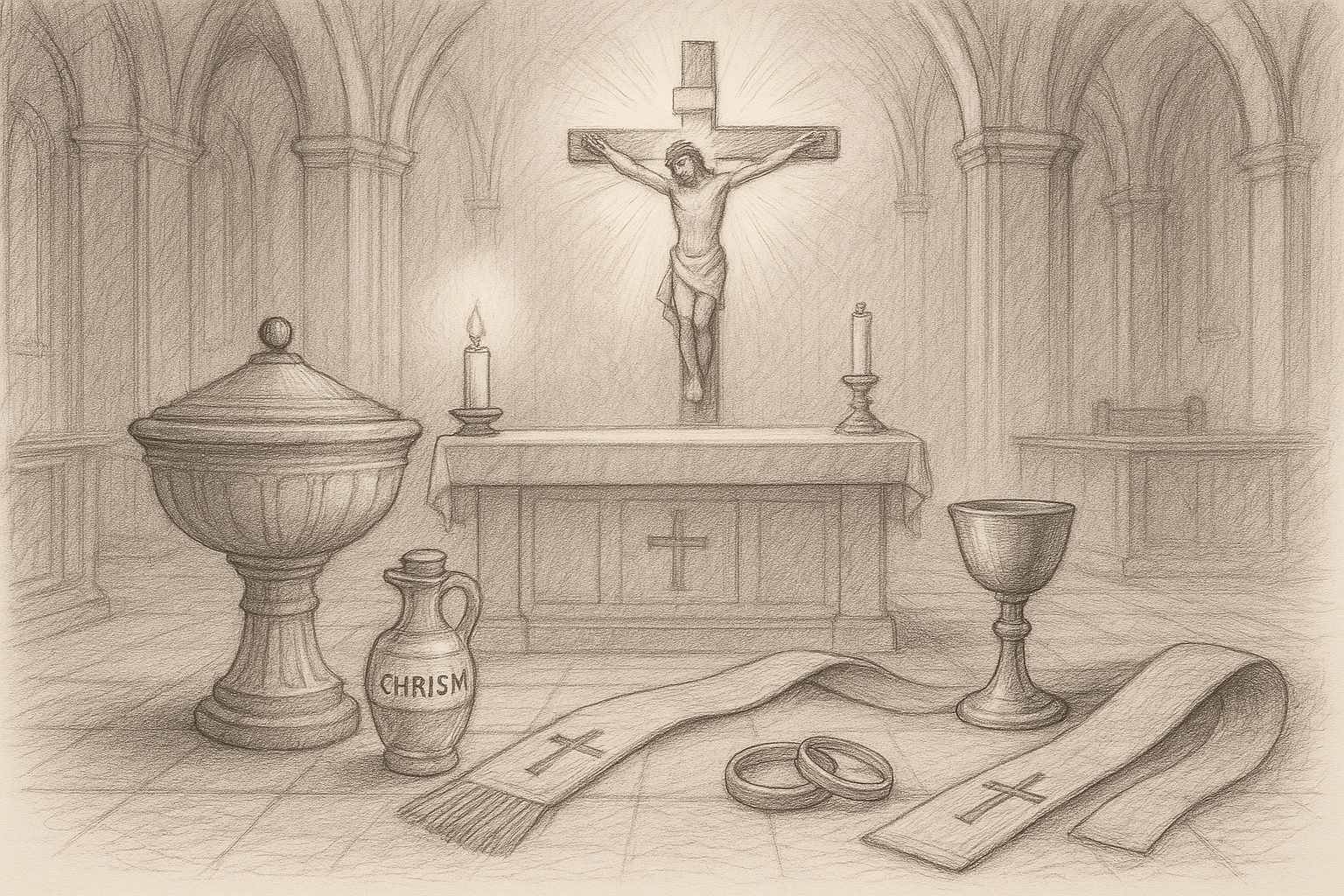
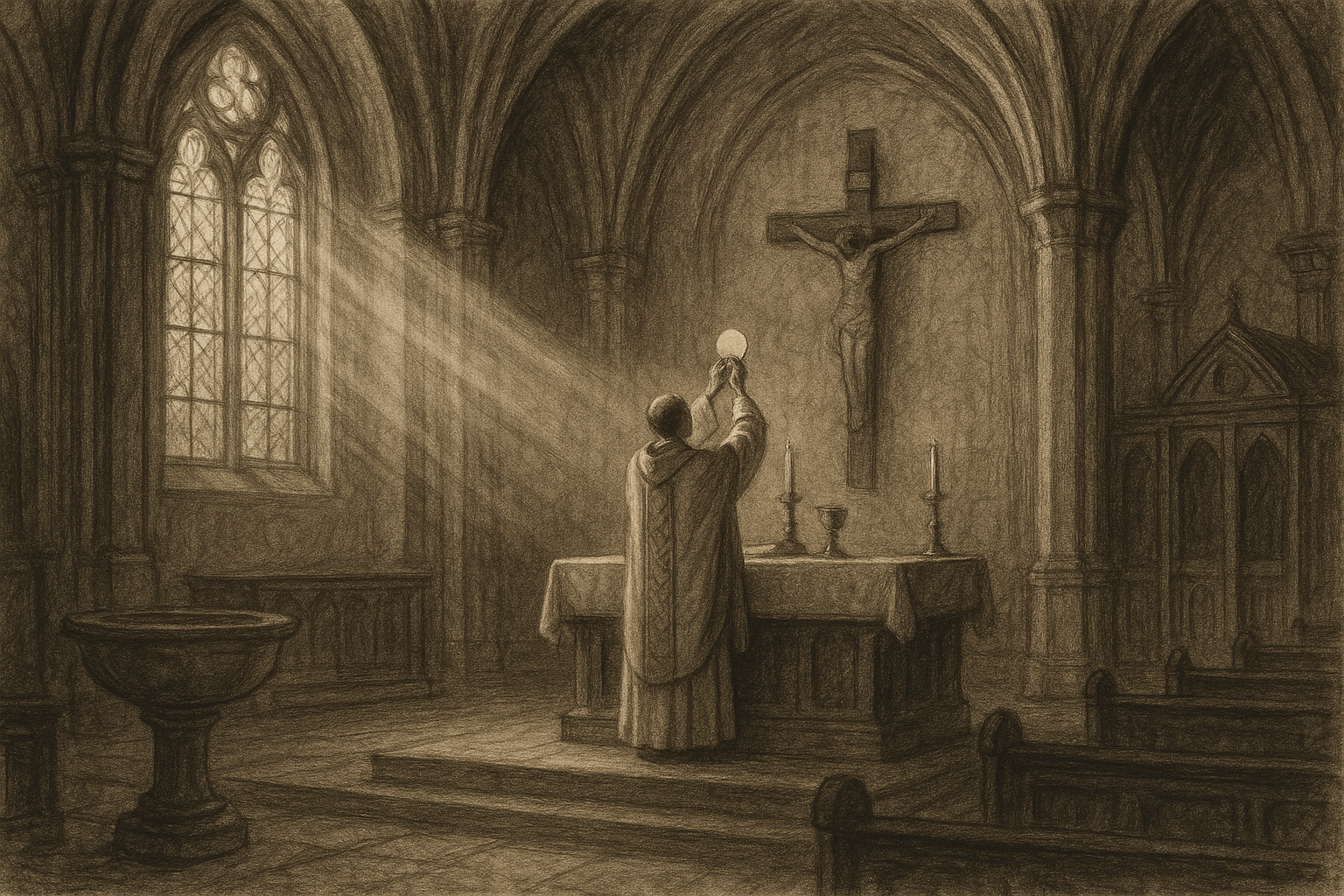
In church, the crucifix has even deeper liturgical meaning. Catholic worship is centered on the one sacrifice of Christ made present sacramentally in the Eucharist. The crucifix helps the faithful see the connection between Calvary and the altar. The Mass is not a new sacrifice separate from the Cross. It is the sacramental making-present of the one sacrifice of Christ. For that reason, the crucifix belongs naturally where the Church gathers to worship.
There is also a pastoral reason. Human beings learn through sight as well as speech. A crucifix can reach a child before a catechism explanation does. It can comfort the dying, steady the distracted, and call the wandering heart back to prayer. Catholics keep crucifixes because they know how quickly the soul forgets what it most needs to remember.
Scripture and the early Christian mind
Some object that early Christians should have avoided the Cross because crucifixion was shameful. Yet the New Testament does the opposite. It speaks openly of the Cross as the place of victory. Saint Paul wrote, far be it from me to glory except in the cross of our Lord Jesus Christ Galatians 6:14. That is a strong statement. The Apostle is not praising suffering for its own sake. He is praising the saving love of Christ revealed in the Cross.
The Letter to the Hebrews also presents Jesus as the One who endured the Cross for the joy set before Him Hebrews 12:2. Catholics keep crucifixes because the biblical witness already sees the Cross as something to contemplate, not to avoid. The crucifix does not invent a devotion foreign to Scripture. It helps believers enter more deeply into what Scripture already proclaims.
Christian history also confirms this instinct. From the earliest centuries, believers marked themselves with the sign of the Cross and kept before their eyes reminders of the Lord's Passion. Over time, the crucifix became a particularly clear expression of that devotion. Its purpose has always been catechetical and prayerful: to keep Christ's saving death and resurrection in view.
How the crucifix shapes ordinary Catholic habits
The value of the crucifix is not limited to formal theology. It touches ordinary life in practical ways.
- It invites a short prayer before leaving home or beginning work.
- It can remind a person to offer up suffering instead of resenting it.
- It helps prepare the heart for confession by recalling the price of mercy.
- It makes family prayer more concrete and less abstract.
- It teaches children that Jesus truly loves them and truly suffered for them.
These are small things, but Catholic life is often shaped by small faithful repetitions. A crucifix on the wall can become part of the rhythm of grace. It meets the believer in grief, illness, temptation, and decision. It does not remove the need for virtue. It strengthens the desire for it.
For many Catholics, the crucifix also becomes a companion in suffering. When pain is personal and words are thin, the image of Christ on the Cross can say what cannot be easily explained: you are not alone. Christ knows suffering from within. He is not a distant observer. He is the Redeemer who entered the human condition fully, and He remains near to those who carry crosses of their own.
The crucifix points beyond death to resurrection
Keeping a crucifix does not mean Catholics are fixated on death. It means they remember that death has been entered and conquered by Christ. The crucifix is not the last word. It is the doorway to Easter. The body of Jesus on the Cross is the body that will rise in glory. For Catholics, that is precisely why the crucifix is such a powerful sign. It keeps together sorrow and hope, sacrifice and victory, Friday and Sunday.
When the crucifix is placed in a Catholic space, it proclaims that love is stronger than sin and stronger than death. It says that the Son of God did not merely appear to suffer but truly suffered for our sake. It says that mercy has a shape, and that shape is the Cross. And it says, in a way that no merely decorative object can say, that the path to life runs through the self-giving love of Christ.
That is why Catholics keep crucifixes explained in such simple terms, yet with such depth: because the crucifix is a daily reminder of who Jesus is, what He has done, and what His disciples are called to become. It stands quietly in the room, but it speaks with the full gravity of the Gospel.
Keep Reading on Lets Read The Bible
Frequently Asked Questions
Why do Catholics use a crucifix instead of only a plain cross?
Catholics use a crucifix because it shows Christ on the Cross, keeping the Passion and sacrificial love of Jesus at the center of devotion. A plain cross can be meaningful, but the crucifix makes the reality of the Lord's suffering and redemption more visible.
Is keeping a crucifix a form of worshiping an image?
No. Catholics do not worship wood, metal, or images. The crucifix is a sacred sign that points to Christ and helps the faithful pray, remember the Passion, and grow in love for the Lord who died and rose again.
Where should a Catholic place a crucifix in the home?
There is no single rule, but many Catholics place a crucifix in bedrooms, living rooms, prayer spaces, or above doorways. The goal is not decoration alone but a visible reminder of Christ's presence, sacrifice, and mercy in daily life.