Doctrine and Questions
More Than Symbols: Catholic Faith and the Living Gift of the Eucharist
A clear look at the Church's teaching on the Real Presence, rooted in Scripture, worship, and daily Catholic life.
Site Admin | June 17, 2025 | 70 views
The heart of Catholic belief at the altar
Among the doctrines that define Catholic life, few are more central than the Real Presence in the Eucharist explained through the Church's steady faith from the beginning. Catholics do not approach the Mass as a symbolic remembrance alone. We believe that when the priest speaks the words of Christ over bread and wine, the gift received is truly Jesus Christ himself, Body, Blood, Soul, and Divinity, present in a sacramental way that surpasses ordinary human speech.
This is not a minor detail of devotion. It is the center of Catholic worship. The Eucharist is not only something Catholics talk about or admire from a distance. It is the sacrament in which the Lord gives himself to his Church, fulfilling his promise to remain with us. The teaching can be difficult to grasp because it reaches beyond ordinary categories, yet it is firmly rooted in Scripture, affirmed by the Church, and lived by generations of believers who knew they were kneeling before a mystery, not an idea.
What the Church means by Real Presence
When Catholics speak of the Real Presence, they mean that Jesus is truly and substantially present in the Eucharist. The appearance of bread and wine remains, but the reality is changed by God's power. The Church has long used the term transubstantiation to describe this change. That word is not meant to make the mystery smaller or colder. It protects the truth that something real happens at the consecration, even if the change cannot be measured by the senses.
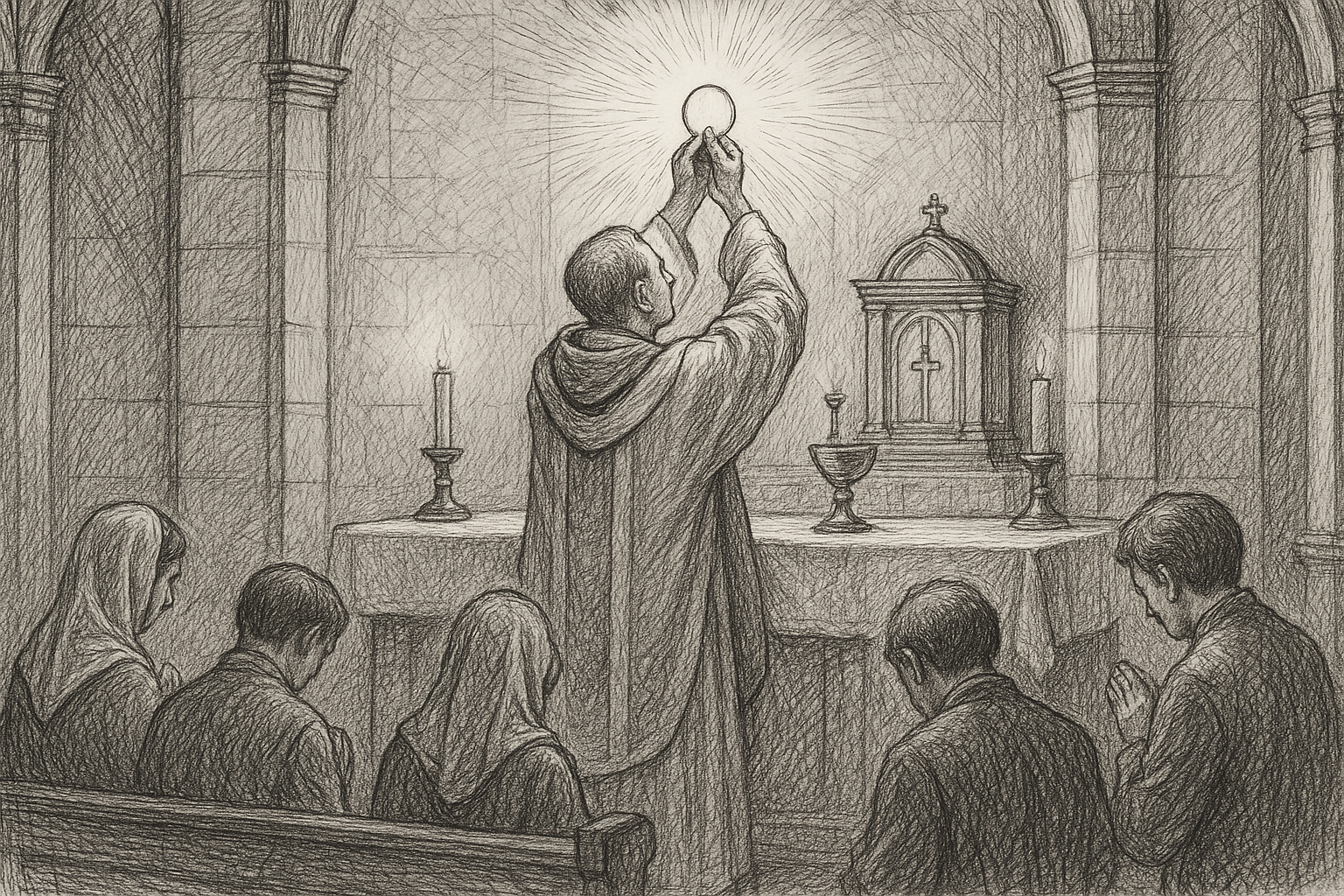
To the eye, taste, and touch, the Eucharist still looks like bread and wine. Yet faith receives what Christ promised. This is why Catholics show such reverence before the tabernacle, why the Eucharist is reserved in churches, and why the faithful adore Christ truly present in the Blessed Sacrament. The Church does not teach that the Eucharist is a mere reminder, a religious symbol, or a communal token. It is a sacrament in which Christ acts and gives himself.
Scripture and the promise of Christ
The Catholic understanding of the Eucharist does not begin with later theology. It begins with Christ's own words. At the Last Supper, Jesus took bread, blessed it, broke it, and gave it to the disciples, saying, This is my body. He took the cup and said, This is my blood of the covenant. The language is direct and striking. Jesus does not say that the bread merely represents his body or that the wine only reminds the disciples of his sacrifice. He identifies the gift with himself.
Saint Paul's account is equally serious. He warns the Corinthians that whoever eats the bread or drinks the cup unworthily will be answerable for the body and blood of the Lord, and he adds that those who receive without discerning the body eat and drink judgment on themselves 1 Corinthians 11:27, 1 Corinthians 11:29. Such language would be difficult to explain if the Eucharist were only a symbol. Paul treats the sacrament as something holy, objective, and dangerous if received without reverence.
Jesus also speaks in the Bread of Life discourse with a realism that unsettles many listeners. He says, I am the living bread that came down from heaven, and then, Unless you eat the flesh of the Son of Man and drink his blood, you have no life in you. The crowd is confused, and many disciples turn away. Instead of softening the teaching into metaphor, Jesus allows the challenge to stand. The Church has always seen this passage as a foundation for Eucharistic faith.
Jesus does not merely invite believers to think about him. He gives himself to be received.
How the early Church understood the sacrament
The Catholic reading of the Eucharist is not a later invention detached from Christian origins. The earliest Christians spoke of the Eucharist with awe and confidence. They gathered for the breaking of the bread, offered prayer, and recognized that the Lord was truly giving himself in the sacrament. The pattern of worship in the New Testament already points in this direction, and the Church Fathers made that faith explicit as they defended the apostolic teaching against misunderstandings.
This matters because it shows continuity. The Church did not gradually move from a simple memorial meal to a more sacred view centuries later. Rather, she preserved what Christ taught and the apostles handed on. Across time, Christians needed words to explain what they were receiving, and Catholic theology provided careful language for a mystery the Church already adored. The doctrine of the Real Presence is not an ornament on Catholic life. It is part of the original family inheritance of the Church.
Why the Eucharist is more than a private devotion
The Real Presence in the Eucharist explained in Catholic life is not only about belief at Mass. It shapes the habits of a Christian heart. If Christ is truly present, then worship cannot be casual. Silence before the Blessed Sacrament becomes meaningful. Kneeling becomes more than posture. Preparation for Communion becomes an act of love. Even the way Catholics approach confession is tied to Eucharistic reverence, since the Church teaches that those conscious of serious sin should not receive Holy Communion without prior sacramental confession.
In ordinary life, this teaching gives Catholics a pattern for love. The Eucharist teaches that God gives himself without reserve. It teaches that holiness is not an abstract ideal but a communion with Christ that enters the body and changes the soul. It teaches that the Christian life is fed by grace, not self-sufficiency. In a world that often treats worship as personal preference, the Eucharist reminds Catholics that worship is first of all receiving a gift.
That gift also forms the Church as a body. The same Lord who is received by one communicant is received by all. This creates unity, not by human agreement alone, but by sharing in Christ. The Mass is therefore never a private spiritual experience cut off from the parish, the diocese, or the wider Church. It is the action of Christ with his people, drawing them into one sacrifice and one communion.
The mystery of sacrifice and communion
Catholic teaching on the Eucharist includes both presence and sacrifice. The Mass is not a repetition of Calvary, as if Christ had to suffer again. His sacrifice is once for all. Yet the Mass makes that one sacrifice sacramentally present, so that the Church may enter into it and receive its fruits. This is why Catholic worship can speak of altar and sacrifice together without contradiction. At Mass, the risen Christ who died for us is present and active.
This sacrificial dimension helps explain why the Eucharist is given as food. Sacrifice and banquet belong together. The Lamb is offered, and the faithful are fed. That pattern runs through the Bible, from Passover to the New Covenant. In Christ, the old signs find their fulfillment. What was foreshadowed in the Passover lamb now becomes a living communion with the Lamb of God. The Eucharist is therefore both altar and meal, both offering and nourishment.
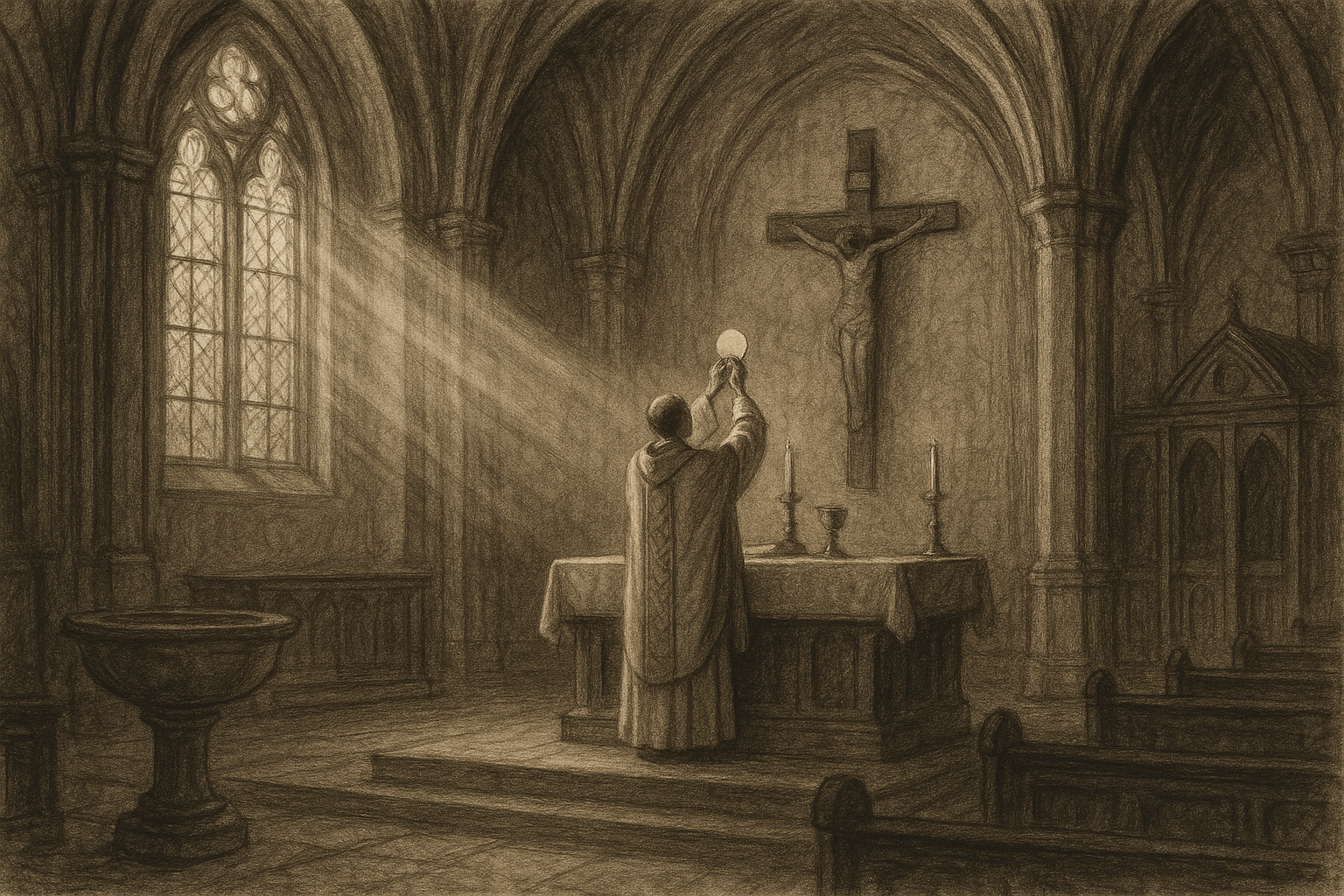
For Catholics, this means that every Mass is an encounter with the saving work of Jesus. The altar is not a stage for religious memory. It is the place where the Church is gathered into the self-giving love of Christ. When the priest says the words of consecration, the faithful are not asked to imagine something holy. They are invited to receive Someone holy.
Questions Catholics often ask
How can bread and wine become Christ without changing appearance?
The mystery does not depend on visible change. Catholic faith holds that God changes the inner reality of the Eucharist while allowing the outward appearances to remain. The senses testify to bread and wine, but faith receives the deeper reality given by Christ's word. This is why the sacrament calls for adoration. What seems ordinary is, by God's promise, extraordinary.
Is the Eucharist just a reminder of Jesus?
No. It certainly recalls Christ's saving death and resurrection, but it is far more than memory. In the biblical sense, remembrance is not mere mental recall. It is a living making-present of God's saving act. The Eucharist is therefore both memorial and mystery, a sacrament in which Christ truly gives himself to the Church.
Why does the Church ask Catholics to prepare carefully for Communion?
Because the Eucharist is holy. Saint Paul warns against receiving unworthily, and the Church takes that warning seriously. Preparation through prayer, examination of conscience, and confession when needed is not meant to burden Catholics. It is meant to protect reverence and deepen love. When a person approaches the Eucharist with humility, the sacrament becomes a source of healing and grace.
Living as people who believe what we receive
The Real Presence in the Eucharist explained fully is not only a doctrine to defend but a reality to live. If Catholics truly believe Christ is present, then Sunday Mass becomes the center of the week, not a spiritual accessory. Adoration becomes a natural response. Gratitude grows. The poor, the lonely, and the suffering are seen with new eyes, because the same Lord who feeds us in the Eucharist calls us to love one another in truth.
There is also comfort here for those who struggle to feel close to God. The Eucharist does not depend on emotional intensity. Christ is present by his promise. Even when prayer feels dry, the sacrament remains a steady sign that the Lord has not abandoned his people. He gives himself quietly, faithfully, and completely. That is the kind of love Catholics return to the altar to receive again and again.
In the end, the Eucharist asks for faith that is both simple and profound. It asks Catholics to believe Jesus meant what he said, to trust the Church that has guarded his words, and to come to Mass ready to meet the living Lord. In that mystery, bread is not only bread, and the Church is not only a gathering. Christ is here, and he gives himself to his people.
Keep Reading on Lets Read The Bible
Frequently Asked Questions
What does the Catholic Church mean by the Real Presence in the Eucharist?
The Catholic Church teaches that Jesus Christ is truly and substantially present in the Eucharist. The appearances of bread and wine remain, but their deepest reality is changed by God's power into the Body and Blood of Christ.
Where is the Real Presence taught in the Bible?
Catholics point especially to the Last Supper accounts in the Gospels, Saint Paul's teaching in 1 Corinthians 11, and Jesus' Bread of Life discourse in John 6. These passages are read as direct support for the Church's Eucharistic faith.
Why does receiving the Eucharist worthily matter so much?
Because the Eucharist is not a mere symbol. Saint Paul warns that receiving unworthily profanes the body and blood of the Lord. The Church therefore teaches Catholics to approach Holy Communion with faith, reverence, and, when necessary, sacramental confession.