Saints and Witnesses
The Patient Saint Who Teaches Us to Begin Again
St. Francis de Sales shows that holiness can grow through steadiness, courtesy, and trust in God's grace.
Site Admin | June 9, 2025 | 67 views
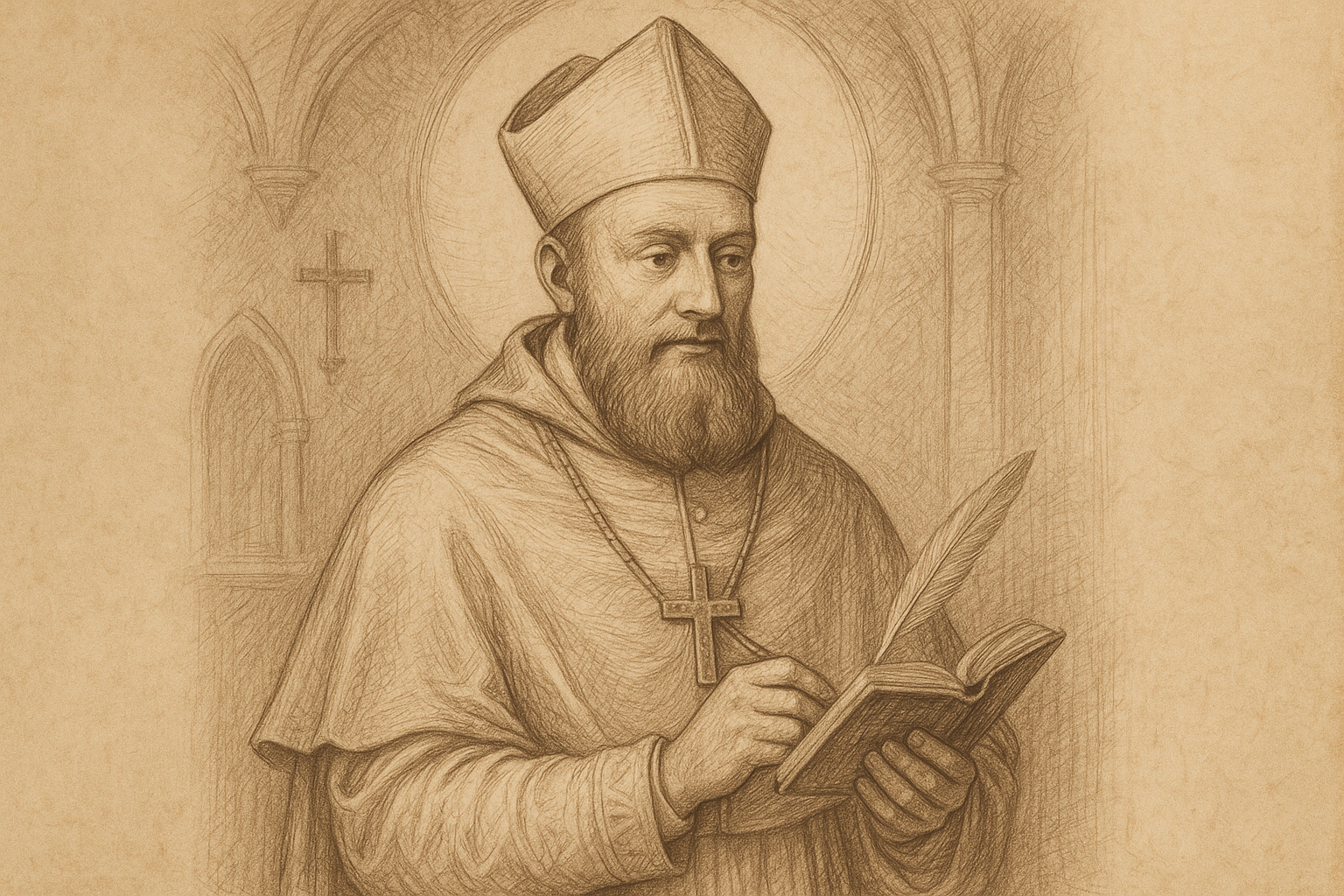
When Catholics speak about saints who feel close to everyday life, St. Francis de Sales often belongs near the top of the list. He was a bishop, a teacher, a spiritual guide, and a writer of uncommon clarity. Yet what makes him endure is not only his learning or his office. It is the way he lived the Christian life with steady confidence, patient charity, and a firm refusal to treat holiness as a contest of appearances.
For many believers, the phrase St. Francis de Sales Catholic inspiration points to something deeply practical. He did not preach a spirituality for the exceptional few. He taught that grace can shape ordinary days, ordinary habits, and ordinary souls. In a time when people often imagine sanctity as dramatic or out of reach, his witness quietly insists that the Lord works through small acts done faithfully.
A saint formed by conflict and grace
Francis de Sales was born in 1567 in Savoy, in what is now part of France. He came from a noble family and received an excellent education. He studied law and theology, and his intellectual gifts were evident early. But his life was not simply the story of a gifted man advancing comfortably. He lived in the midst of religious tension, including the difficult aftermath of the Reformation, when charity and doctrinal clarity were both urgently needed.
He was ordained a priest in 1593 and soon became known for his pastoral zeal. As a young priest, he was sent to the Chablais region, where many had drifted from Catholic practice. The work was not easy. Preaching alone was not enough, and open hostility was often present. Francis responded with patience, method, and remarkable self-command. Rather than meeting resistance with anger, he used conversation, writing, and steady presence. Over time, many returned to the Church.
This part of his life matters because it shows that missionary fruit does not always come from force. Francis did not confuse firmness with harshness. He understood that truth must be spoken, but it should be spoken in a way that leaves room for the listener to be moved by grace. That balance remains one of his great gifts to the Church.
Gentleness was not weakness in him
Modern readers sometimes mistake gentleness for softness, hesitation, or lack of conviction. St. Francis de Sales proves the opposite. His gentleness was disciplined. It came from a soul trained in prayer and governed by charity. He could be clear, exact, and persuasive without becoming severe.
That is why his example feels so timely. Catholics today live among many pressures that reward harshness. Online argument, constant opinion, and spiritual fatigue can make it easy to imagine that only the loudest voices matter. Francis offers another way. He shows that a Christian can be strong without being abrasive and faithful without being theatrical.
True gentleness is not the absence of truth. It is truth carried by love.
His writings reflect this spirit. In Introduction to the Devout Life, one of his best-known works, he addressed ordinary Christians rather than monks or cloistered contemplatives. He urged them to seek holiness in daily responsibilities, examinations of conscience, prayer, and the quiet ordering of the heart toward God. He did not ask people to become someone else. He called them to become what grace could make of them.
Holiness in ordinary life
One of the most enduring reasons St. Francis de Sales still inspires Catholics is his insistence that devotion belongs to every state of life. This was a significant insight in his time and remains so now. A married person, a worker, a parent, a student, and a bishop all have different duties, but the same Lord calls each one to love faithfully where they are.
Francis understood that sanctity is not the property of those with unusual schedules or dramatic gifts. It is the fruit of cooperation with God in the actual circumstances of life. He encouraged people to pray, to receive the sacraments, to root out sin, and to practice charity in speech and conduct. He also warned against discouragement, one of the great enemies of spiritual growth.
His counsel still speaks clearly to Catholics who feel stuck between noble ideals and daily weakness. The saint does not say that growth is effortless. He says that growth is possible. The Christian life is often slow, and often hidden, but God is at work even there.
Three lessons from his approach
- Begin where you are. Francis did not wait for perfect conditions before pursuing holiness.
- Choose steady practices. Small acts of prayer and charity shape the soul over time.
- Trust God's mercy more than your moods. Emotional ups and downs do not decide the truth of grace.
A doctor of the Church with a pastoral heart
St. Francis de Sales was named a Doctor of the Church because of the enduring value of his teaching. That title is not a mere honor. It recognizes that his doctrine and spiritual wisdom continue to serve the Church. He later became bishop of Geneva, though he lived and ministered from Annecy because of the political realities of the region. Even there, he remained a tireless shepherd, devoted to preaching, correspondence, and reform.
What distinguishes him from some more severe reformers of his era is the tone of his authority. He was serious about sin, doctrine, and discipline, but he was not grim. He believed that a holy life should be marked by peace. He knew that fear alone cannot sustain conversion. The heart needs truth, yes, but also encouragement, patience, and hope.
That combination makes him especially valuable to Catholics who are tempted to separate orthodoxy from tenderness. Francis shows that the two belong together. A faithful Catholic should not apologize for the truth, but neither should he or she treat people as projects. Every soul is someone Christ died to save.
His friendship with St. Jane Frances de Chantal
Another reason Francis remains so beloved is the spiritual friendship he shared with St. Jane Frances de Chantal. Their correspondence helped shape the Order of the Visitation, which Francis co-founded with her. The order was intended to offer a path of religious life marked by humility and accessibility rather than extreme austerity.
The Visitation itself reflects his spiritual instinct. He wanted a community where charity would be central and where women who might not be able to live more rigorous forms of religious life could still answer God's call generously. Again, the pattern is clear. Francis did not build holiness around spiritual spectacle. He built it around faithful love.
His friendship with Jane Frances de Chantal also reminds Catholics that sanctity is often nourished through holy relationships. The saints did not become saints alone. They listened, corrected, encouraged, and endured together in the body of Christ. Francis's letters reveal a shepherd who cared deeply, thought carefully, and spoke with warmth.
Why his witness still helps Catholics now
St. Francis de Sales remains important because so many Catholics struggle with spiritual inconsistency. Some feel overwhelmed by their failures. Others are tempted to think the faith is only for the naturally disciplined or the visibly accomplished. Francis answers both temptations with calm confidence.
He reminds the Church that grace is real, that spiritual growth is possible, and that charity is not optional. He also gives a practical model for Catholic witness in difficult times. He did not argue merely to win. He spoke so that hearts might be won for Christ. That difference matters. It changes the tone of evangelization, catechesis, and even family life.
His witness is especially helpful in an age of impatience. People want immediate results. They want visible progress. Yet much of Christian life unfolds slowly. Confession, Mass, prayer, work, sacrifice, reconciliation, and the repeated choice to begin again: these are the ordinary roads by which God forms saints. Francis de Sales understood this well. He would likely tell us not to despise small steps, because small steps taken with love become a path.
He also helps Catholics recover the dignity of calm speech. Not every disagreement must become a battle. Not every correction must sound severe. Not every act of faith must be dramatic to be real. In a Church that must often speak in a divided world, his example is a needed reminder that clarity and kindness can live together.
A witness for those who are tired
Many believers are weary. They are tired of their own faults, tired of conflict, tired of the noise of the age. St. Francis de Sales speaks gently to that exhaustion. He does not deny the seriousness of conversion. He simply refuses despair. He knows that God works patiently, and that the soul often grows by returning again and again to prayer, humility, and the sacraments.
That is why his life continues to console. He was not a saint because everything came easily. He became a saint by cooperating with grace in the middle of real demands. He preached, wrote, governed, encouraged, and remained steadfast. His holiness was not flashy, but it was durable.
For Catholics seeking inspiration, that durability matters. It tells us that the path of Christ is not reserved for the rare or the heroic in worldly terms. It is open to anyone willing to let the Lord shape the heart. St. Francis de Sales still points that way, and he does so with the same tone that marked his life: clear, faithful, and full of peace.
Keep Reading on Lets Read The Bible
Frequently Asked Questions
Why is St. Francis de Sales associated with gentleness?
He is associated with gentleness because he consistently taught and practiced charity in speech, correction, and evangelization. His gentleness was not weakness but a disciplined form of Christian strength rooted in love and truth.
What is St. Francis de Sales best known for writing?
He is best known for Introduction to the Devout Life, a classic spiritual work written for ordinary Catholics who wanted to grow in holiness while living in the world. His writings emphasize prayer, virtue, and steady conversion.
How can Catholics imitate St. Francis de Sales today?
Catholics can imitate him by practicing patience, speaking with charity, praying faithfully, using the sacraments well, and refusing discouragement. He teaches that holiness grows through small, consistent acts of love.