Saints and Witnesses
St. Francis de Sales and the Quiet Power of Gentleness
A closer look at the bishop, writer, and spiritual teacher who showed that holiness can be firm, clear, and kind at once.
Site Admin | June 8, 2025 | 66 views
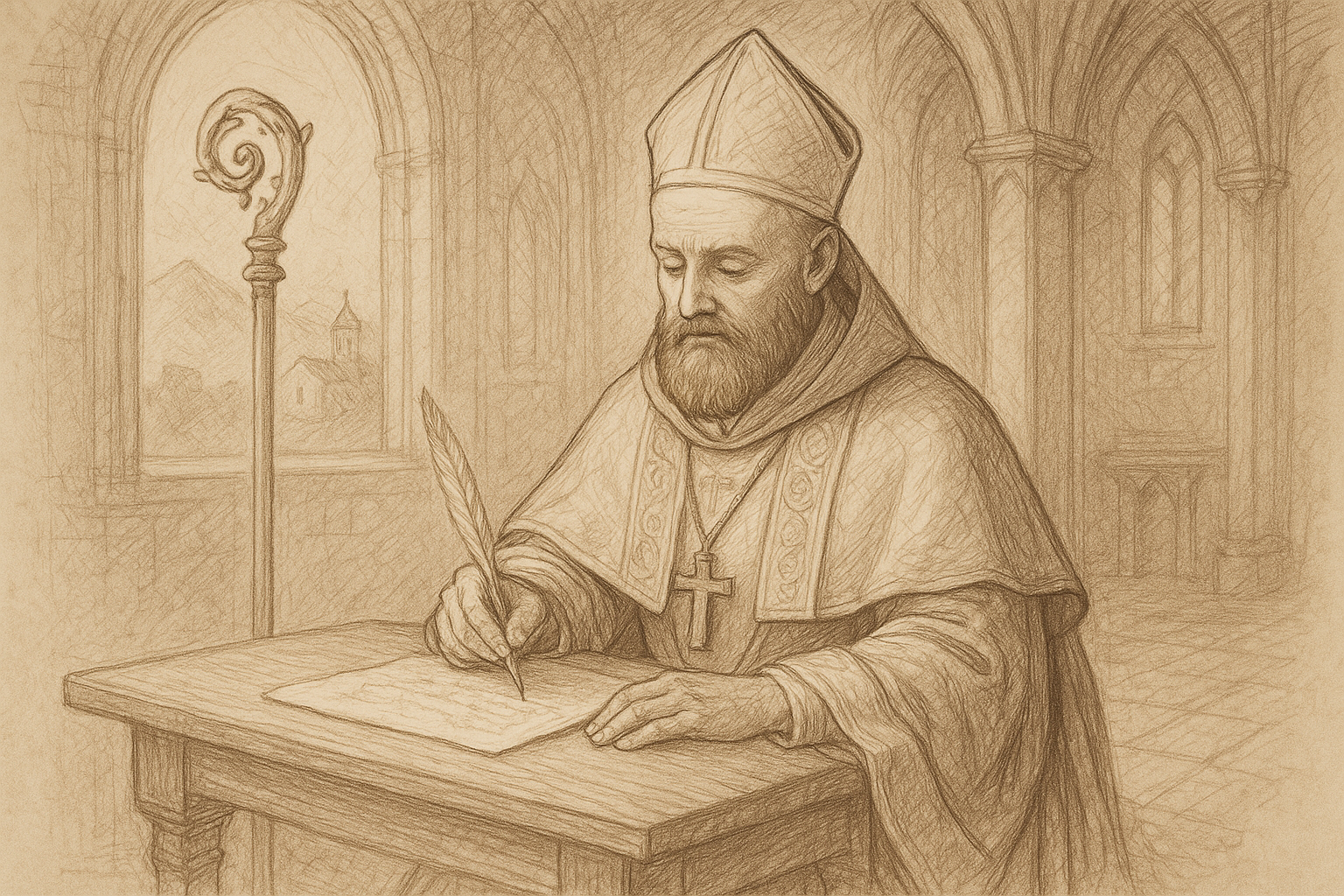
St. Francis de Sales is one of the Church's most beloved saints, not because he lived loudly, but because he lived faithfully. His St. Francis de Sales life shows a man of intelligence, discipline, courage, and remarkable gentleness. He was a bishop, a preacher, a spiritual writer, and a careful shepherd of souls. Yet what stands out most is the way he joined truth and charity without separating them.
In every age, Catholics are tempted to think that holiness must look forceful to be effective. St. Francis de Sales offers a different witness. He reminds us that firmness does not require severity, and that meekness is not weakness. His life is a testimony to the power of grace working through patience, prayer, and steady love of God.
A life shaped by faith, study, and providence
Francis de Sales was born in 1567 in Savoy, a region shaped by political tension and religious conflict. His family belonged to the nobility, and from an early age he received a careful education. Though his father hoped for a civil career, Francis felt drawn to the priesthood. He studied in Paris and later at Padua, where he developed both intellectual maturity and a deep spiritual life.
His early years were not free from interior struggle. For a time, he was tormented by the fear that he was destined for damnation. That anguish lifted when he entrusted himself more completely to God. This experience became important in his later ministry, because it gave him a lived understanding of the anxieties that many souls carry in silence.
Francis was ordained a priest in 1593. He served in a difficult missionary context, especially in the Chablais region, where many had drifted from the Catholic faith after the spread of Calvinism. Instead of relying on argument alone, he used prayer, patient conversation, written tracts, and personal contact. His approach was not timid. It was strategic, charitable, and anchored in trust that grace can open hearts more effectively than anger ever can.
The missionary who would not surrender gentleness
One of the most striking parts of the St. Francis de Sales life is the way he entered controversy without becoming harsh. He knew the doctrinal issues of his time. He did not blur Catholic teaching or speak as though truth were negotiable. But he also understood that many people resist the Church not only because of ideas, but because of wounds, habits, and fears. For that reason, he chose persuasion over provocation.
His missionary work in the Chablais took years, not days. He often had little visible success at first. Yet he kept going. He distributed written explanations of the faith, spoke with individuals, and quietly built trust. Over time, many returned to the Church. His example is a reminder that conversion is usually a work of God carried out through patient instruments.
Jesus teaches that the meek are blessed and that mercy belongs at the heart of Christian life Matthew 5:5 Matthew 5:7. St. Francis de Sales lived those words in a concrete pastoral setting, where calm conviction proved more fruitful than spiritual combativeness.
He later became bishop of Geneva, though he could not reside in the city because of the political and religious situation. Instead, he served from Annecy. There he became known as a careful pastor, devoted to preaching, administration, and the formation of clergy and laity alike. He visited parishes, guided souls, and worked to renew the Church through ordinary fidelity.
A teacher of ordinary holiness
Many saints are remembered for dramatic acts. St. Francis de Sales is remembered for helping Catholics see that holiness belongs in daily life. His most famous spiritual work, Introduction to the Devout Life, was written for lay people, especially those living in the world. That was a fresh and generous vision for his time. He wanted ordinary Christians to understand that friendship, work, family life, responsibilities, and recreation could all become places of sanctification.
He did not ask people to live in a state of constant strain. He urged them to be faithful in the duties proper to their state in life. He warned against discouragement and against the false idea that devotion requires a gloomy temperament. His counsel is still bracing because it is so realistic.
For Francis, devotion was not an ornament added to life after everything else was done. It was a way of loving God in the middle of real obligations. That insight has remained one of the most practical gifts of his St. Francis de Sales life for Catholics today.
His wisdom on gentleness
St. Francis de Sales became widely associated with gentleness because he practiced it with consistency. He did not confuse gentleness with passivity. In his hands, gentleness was an expression of ordered charity. It meant speaking with sincerity while refusing unnecessary severity. It meant remembering that people change more readily when they are invited rather than crushed.
This virtue appears throughout his writing and pastoral example. He encouraged people to be patient with themselves while still striving seriously for holiness. He knew that many souls fail because they grow impatient with their own weakness. His answer was not laxity, but confidence in God's mercy and a steady recommitment to prayer, confession, and virtue.
The saints often help us see that the Christian life is both demanding and merciful. Francis de Sales understood this balance well. He could be exact in doctrine and tender in manner. In that combination, he reflected something deeply Catholic: truth is not diminished by charity, and charity is not authentic without truth.
Service to souls through writing and friendship
Francis was not only a bishop and missionary. He was also a masterful writer and a wise spiritual director. His correspondence reveals a man attentive to the individual condition of each soul. He did not offer one-size-fits-all advice. He listened, discerned, and responded with practical counsel.
His spiritual direction often emphasized small but real acts of fidelity. He knew that holiness is built by repeated choices. A sincere prayer, a restrained word, a patient response, a generous sacrifice: these can shape a soul over time. His advice remains helpful because it takes human weakness seriously without excusing it.
He also worked with St. Jane Frances de Chantal in founding the Visitation Order. The order was marked by humility and charity, and it reflected his conviction that religious life should be grounded in simplicity and love. His collaboration with her also shows how fruitful spiritual friendship can be when both people seek God's will rather than personal acclaim.
The Church receives a doctor of gentleness
Francis de Sales died in 1622 and was canonized in 1665. In time, the Church recognized him as a Doctor of the Church, honoring the lasting value of his teaching. That title is fitting, because his writing and example have guided generations of Catholics in prayer, vocation, and spiritual maturity.
He is especially remembered as a patron of writers, journalists, and communicators. That connection makes sense, since he understood how words can either close doors or open them. He used language to build bridges toward the truth. He knew that a soul often hears teaching more deeply when it is spoken with respect.
His example is valuable in a culture that often rewards speed, sharpness, and performance. Francis de Sales invites us to a different way. He asks whether our speech is truly ordered to the good of the other person. He challenges us to examine whether we defend the faith in a way that actually resembles the faith we claim to defend.
Lessons Catholics can carry into daily life
The life of St. Francis de Sales offers several clear lessons. First, holiness is not reserved for a few intense personalities. It is possible for every baptized Christian who cooperates with grace. Second, the truth of the faith should be spoken with patience, not fear. Third, interior peace grows when we trust God more deeply than our anxieties.
His example is especially useful for anyone who feels rushed, reactive, or spiritually scattered. He teaches that discipline and gentleness can live together. He teaches that we do not need to become sharp to become effective. He teaches that the Christian life is most persuasive when it is visibly rooted in charity.
- When correction is needed, speak clearly but without contempt.
- When progress feels slow, remain faithful instead of dramatic.
- When prayer feels dry, continue anyway with trust.
- When your duties feel ordinary, offer them to God with love.
- When others are difficult, remember that patience can be a form of evangelization.
These are not small lessons. They are the kind that shape a lifetime. The Church does not need only heroic spectacle. She also needs steady saints who reveal that grace can make a person both strong and mild at the same time.
St. Francis de Sales shows that the most effective witness is often calm, consistent, and deeply human. His life still speaks to parents, priests, teachers, writers, and anyone trying to live the faith in a complicated world. In him, Catholics find a saint who never confused gentleness with compromise and never let zeal lose its charity. That combination remains rare, and it remains beautiful.
Keep Reading on Lets Read The Bible
Frequently Asked Questions
Why is St. Francis de Sales associated with gentleness?
He is associated with gentleness because he consistently combined doctrinal clarity with patience, kindness, and pastoral tact. He believed that truth should be communicated in a way that helps souls receive it rather than pushing them away.
What is St. Francis de Sales best known for writing?
He is best known for Introduction to the Devout Life, a classic spiritual work written for lay people. It teaches that ordinary Christians can grow in holiness while living in the world.
What can Catholics learn from the St. Francis de Sales life today?
Catholics can learn that holiness grows through steady faithfulness, prayer, and charity in everyday duties. His life also shows that correction and evangelization are most fruitful when they are guided by patience and love.