Social Teaching
Peace Made Visible: Catholic Social Teaching in Daily Life
Peacemaking is not sentimental avoidance. In Catholic life, it is a disciplined work shaped by truth, justice, mercy, and reverence for the dignity of every person.
Site Admin | October 8, 2025 | 85 views
Peace is not passive
When Catholics speak about peace making, they are not talking about pretending conflict does not exist. Peace in the Christian sense is not silence at any cost, nor is it the fragile calm that comes from avoiding hard truths. Catholic social teaching presents peace as a gift from God and also as a task for human beings. It must be received, protected, and worked for.
That is why peace making Catholic teaching is never only about temperament. Some people are naturally calm, others are more direct, but the Church asks more than personality. She asks for conversion. A peacemaker is someone who helps restore right relationship with God, neighbor, and self, while refusing the lie that justice and mercy can be separated.
Scripture repeatedly joins peace with righteousness. In the Psalms, peace and justice meet, and in the prophets, peace is never a cover for oppression. The New Testament deepens that pattern in Christ, who reconciles sinners to the Father and forms one people out of those once divided. The peace Jesus gives is real because it comes through the Cross and Resurrection, not around them. Peace I leave with you, my peace I give to you
The Church's language of peace
Catholic social teaching approaches peace through several connected truths. First, every human person possesses God-given dignity. Second, the common good matters, because we do not become fully human in isolation. Third, solidarity calls us to recognize that the suffering of one affects all. Fourth, peace requires justice, because injustice breeds resentment, fear, and division. Finally, peace depends on charity, the love that seeks the true good of the other.
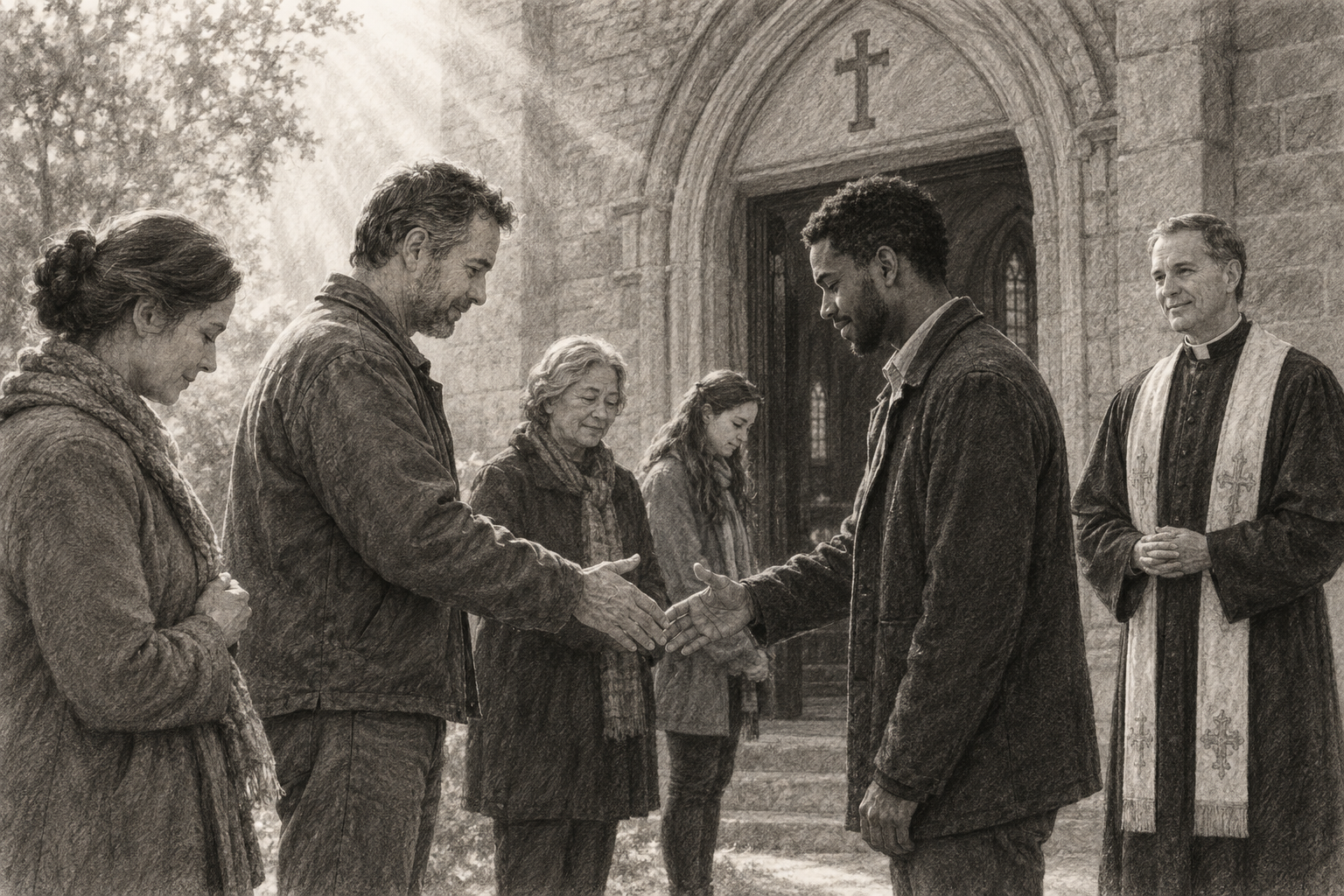
These principles are not abstract slogans. They give shape to daily decisions. A parent who refuses cruelty in the home is working for peace. A parishioner who speaks honestly but gently in a tense meeting is working for peace. A citizen who resists contempt and listens carefully is working for peace. A boss who pays fairly and treats workers with respect is also working for peace.
The Church does not reduce peace to policy, but neither does she confine it to private feeling. Peace is social because persons are social. We build or damage peace through the way we speak, govern, labor, spend, forgive, and seek the truth.
Peace and justice belong together
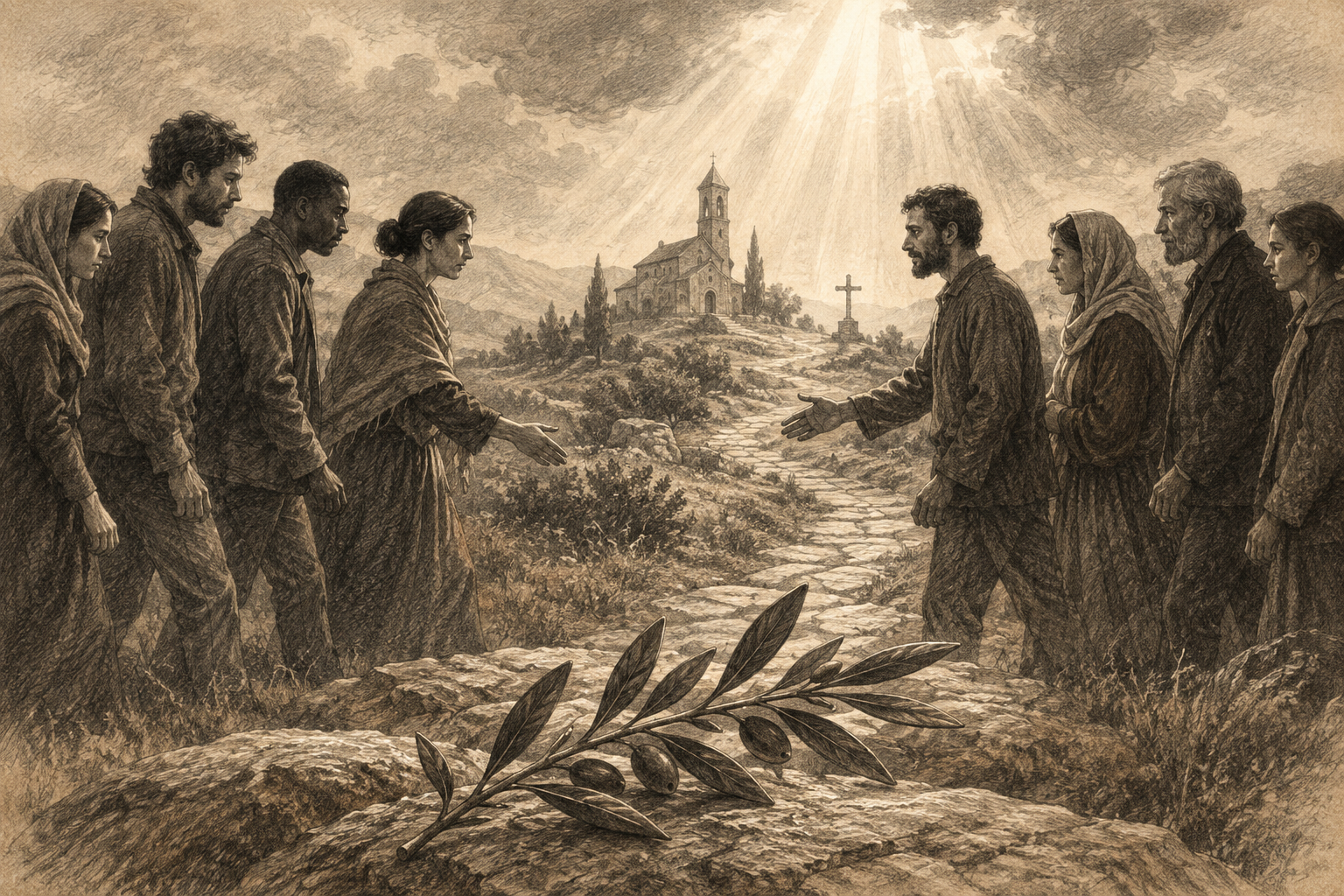
One of the most common mistakes about peacemaking is to imagine that peace and justice compete with one another. In reality, the Catholic tradition insists that peace without justice is unstable, while justice without mercy can become cold and destructive. The goal is not compromise between opposites, but right order under God.
The prophet Isaiah links peace with justice in a way that remains strikingly relevant. The effect of righteousness will be peace This does not mean that every dispute can be solved neatly, or that every wrong can be repaired at once. It does mean that whenever people are humiliated, lied to, exploited, or excluded, the road to peace becomes harder. Truth matters. Accountability matters. Repair matters.
Catholic teaching on peace also resists a shallow kind of neutrality. To love peace does not mean to be indifferent when the weak are harmed. The Church's social vision is clear that the dignity of the human person must be defended, especially when persons are reduced to instruments, labels, or obstacles. Peacemaking may sometimes involve difficult speech, patient advocacy, or the courage to confront wrongdoing without hatred.
At the same time, justice alone does not complete the work. Even when a wrong has been named and corrected, peace may still require forgiveness, reconciliation, and a willingness to begin again. Justice can open the door. Charity must walk through it.
Christ shows the shape of true peace
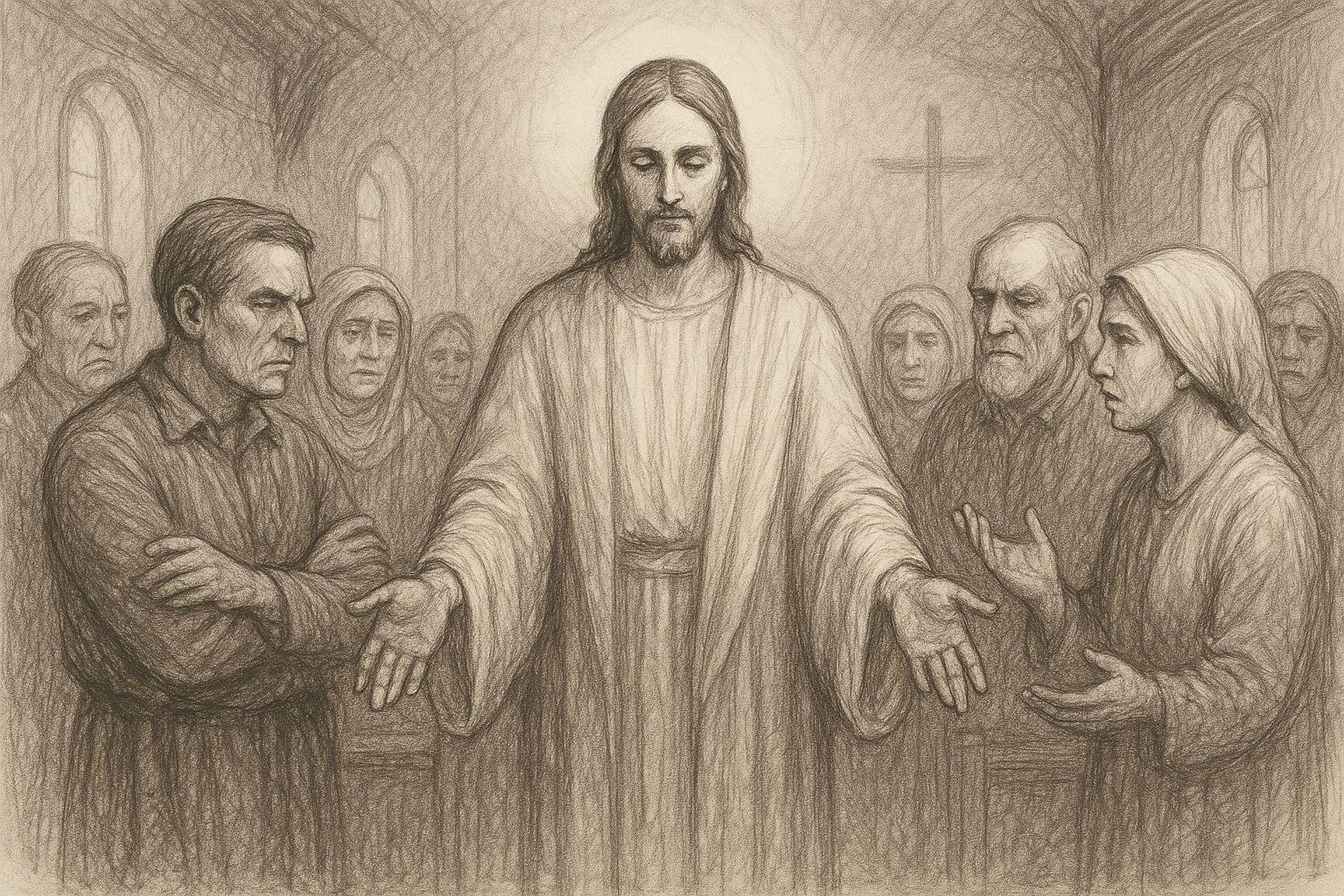
The life of Jesus reveals that peace is not sentimental. He blesses the peacemakers, but He also drives out corruption from the Temple, speaks firmly to hypocrisy, and refuses to be trapped by human faction. Christ never confuses peace with cowardice. He tells the truth even when truth is costly.
At the same time, He draws near to those whom others exclude. He eats with sinners, speaks with outsiders, and restores the broken. He does not excuse sin, but He does not crush the sinner either. In Him, truth and mercy meet without contradiction. That is why Christian peacemaking must be rooted in His own way of being in the world.
St. Paul writes that Christ is our peace, having broken down the dividing wall of hostility. Christ is our peace, and has broken down the dividing wall of hostility This is not simply poetic language. It points to the mystery that the Cross reconciles what human sin has fractured. Every authentic act of peacemaking in the Church is a small participation in that greater reconciliation.
For Catholics, then, peacemaking is never mere conflict management. It is discipleship. It asks whether we are becoming the sort of people who can bear truth without arrogance, correction without vengeance, and mercy without sentimentality.
Peacemaking in the family and parish
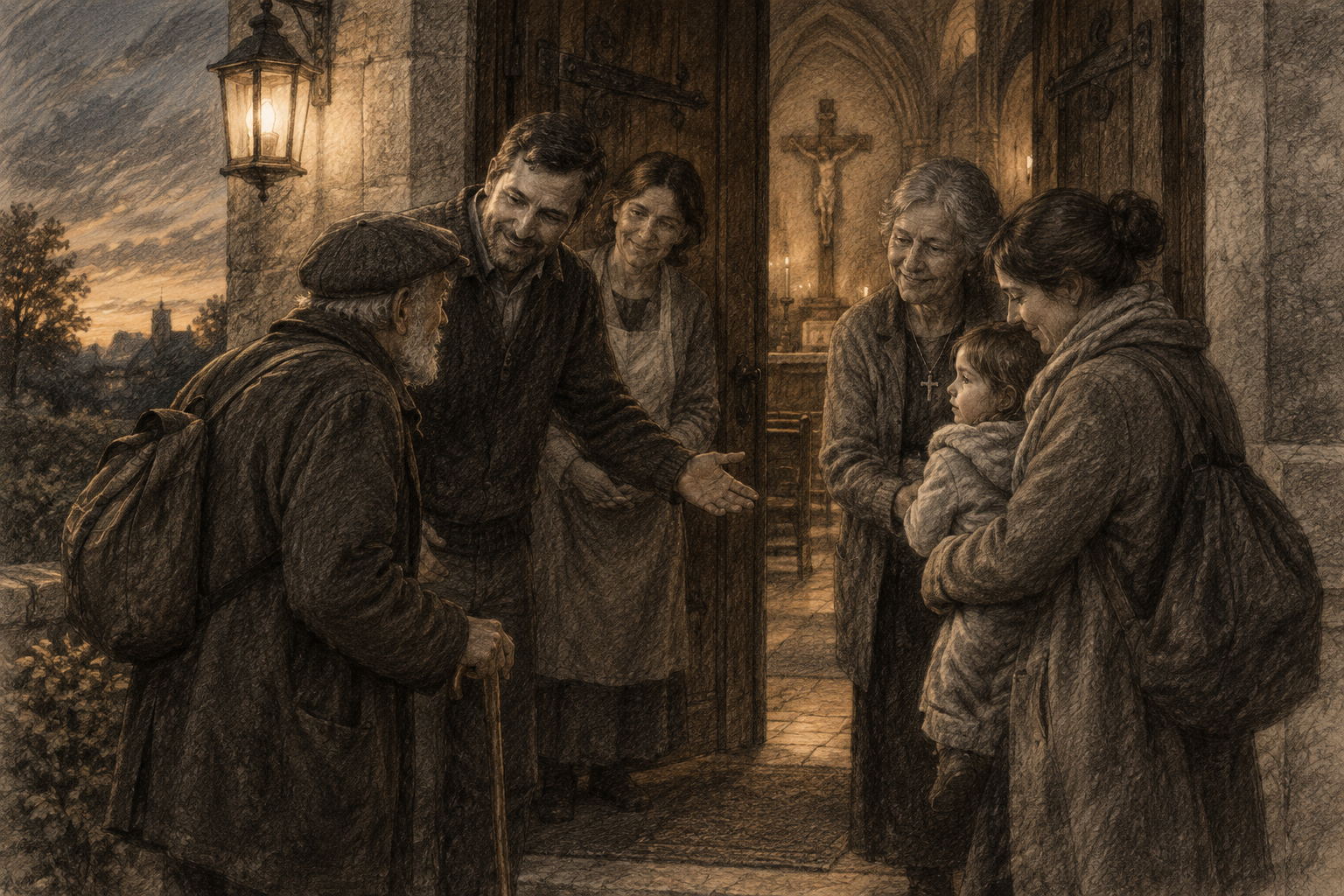
Many of the most important peacemaking moments happen where no one applauds. They happen in kitchens, at dining tables, in classrooms, and in parish halls. The family is often the first school of peace because it is where we learn patience, apology, listening, and restraint. It is also where we learn how easily wounded pride can turn small misunderstandings into lasting bitterness.
A Catholic home becomes more peaceful not when conflict disappears, but when family members learn to address conflict with honesty and charity. That can mean apologizing quickly, refusing insults, making time for shared prayer, and avoiding the habit of assigning bad motives too readily. It can also mean setting healthy boundaries, because peace is not preserved by enabling harm.
Parish life offers a similar lesson. Catholics are united by the same sacraments, but we do not always think alike. Differences in temperament, generation, liturgical preference, or social concern can become occasions for patient love or for division. The peacemaker in parish life is not the person who always gets the last word. It is the person who seeks communion, speaks with reverence, and remembers that the Church is larger than any single preference.
St. James offers a severe but helpful reminder: quarrels often begin in disordered desire. What causes wars, and what causes fightings among you? That insight is useful at every level. Peacemaking begins when we become honest about pride, envy, fear, and the need to win.
Peacemaking in public life
Catholic social teaching never isolates the spiritual life from civic responsibility. Christians should not be consumed by partisan combat, but neither should they retreat from the duties of citizenship. Peace in public life depends on habits that are increasingly rare: careful speech, willingness to recognize complexity, concern for the vulnerable, and a refusal to dehumanize opponents.
Public peace is fragile when political discourse becomes contemptuous. When people are spoken of as enemies rather than neighbors, moral imagination shrinks. Catholic teaching encourages a different approach. We can disagree strongly about laws, budgets, borders, schools, and many other matters while still acknowledging the dignity of those with whom we disagree. That dignity does not depend on agreement.
This is not a call to vagueness. The Church's commitment to peace includes a commitment to the conditions that sustain human flourishing: justice, work, family life, care for the poor, and protection of life. But it also includes the discipline of charity in public speech. The Christian should not spread what is false, mock the weak, or cheer humiliation as if it were victory.
Peace making Catholic teaching reminds us that civic peace is not built by outrage alone. It is built by ordinary integrity: truthful speech, lawful conduct, respect for persons, and a willingness to seek the common good rather than private gain.
The interior work of a peacemaker
It is tempting to imagine peacemaking as something outward and visible only. Yet Catholic tradition knows that no one can make peace well without interior conversion. The heart must be healed before the hands can help heal the world.
Prayer is essential here. In prayer, we are reminded that God is the source of peace, not our own control. The Rosary, Eucharistic adoration, the Liturgy of the Hours, and simple daily prayer can all school the soul in patience and humility. They teach us to wait, to listen, and to surrender the need to dominate every conversation.
Examination of conscience is another quiet tool of peacemaking. Before correcting others, we ask whether we are irritable, defensive, or proud. Before blaming a neighbor, we ask whether we have spoken charitably. Before demanding reconciliation from someone else, we ask whether we are ready to repent ourselves.
The Beatitudes offer the interior map. Blessed are the peacemakers, for they shall be called sons of God Jesus does not bless the loudest voices or the most forceful personalities. He blesses those who, by grace, become instruments of God's reconciling love.
What peacemaking looks like in practice
Peacemaking can be very concrete. It may include:
- Listening without interrupting when someone is hurt.
- Refusing gossip that deepens division.
- Apologizing without excuses.
- Seeking restitution when harm has been done.
- Defending the dignity of someone who is being mocked or ignored.
- Choosing language that clarifies rather than inflames.
- Praying for enemies rather than fantasizing about their defeat.
These practices may seem small, but they form the moral habits that make larger acts of peace possible. The Church often works in hidden ways. A kind word, a patient conversation, or a refusal to escalate can alter the atmosphere of a home or group more than we realize.
Peacemaking also requires realism. Not every conflict ends with full reconciliation. Not every relationship can be restored in the same way. Sometimes peace means truthfully acknowledging limits, grieving what was lost, and entrusting what cannot yet be healed to God's mercy. The Church does not promise that every tension will vanish, but she does promise that no sincere act of charity is wasted.
Peace is not the absence of struggle, but the presence of ordered love.
Learning to be makers of peace
The world often rewards speed, outrage, and certainty. Catholic peacemaking asks for something slower and deeper. It calls us to become men and women who can hold truth without cruelty, pursue justice without hatred, and seek reconciliation without surrendering moral clarity.
That kind of witness is possible only by grace. Yet grace works through habits, and habits are made in the daily life of discipleship. The Mass sends us forth in peace because peace is not a private possession. It is a mission. Every Christian, in some measure, is invited to become a living sign that God still gathers what sin has scattered.
In that sense, peacemaking is not a side duty for especially gentle people. It belongs to the center of Catholic life. Wherever dignity is defended, truth is spoken with charity, and justice is joined to mercy, peace begins to take visible form.
And because Christ Himself is our peace, even the smallest faithful effort can become part of something larger than we can see.
Keep Reading on Lets Read The Bible
Frequently Asked Questions
What does peace making mean in Catholic social teaching?
In Catholic social teaching, peacemaking means working for right relationship among persons and communities through truth, justice, mercy, and respect for human dignity. It is not mere conflict avoidance or outward calm.
Can Catholics pursue peace without speaking about justice?
No. The Catholic tradition holds that peace and justice belong together. Peace built on denial of wrongdoing is unstable, while justice without charity can become harsh. Authentic peacemaking names harm and seeks repair.
Is peacemaking only about being gentle and agreeable?
No. Some peacemaking requires gentle speech, but it can also require honest correction, defense of the vulnerable, patient listening, and firm resistance to sin or abuse. Christ's peace is truthful, not passive.