Saints and Witnesses
The Quiet Strength of St. Benedict: A Life That Still Orders Catholic Hearts
How the father of Western monasticism continues to speak to Catholics through prayer, discipline, and peace
Site Admin | May 21, 2026 | 104 views
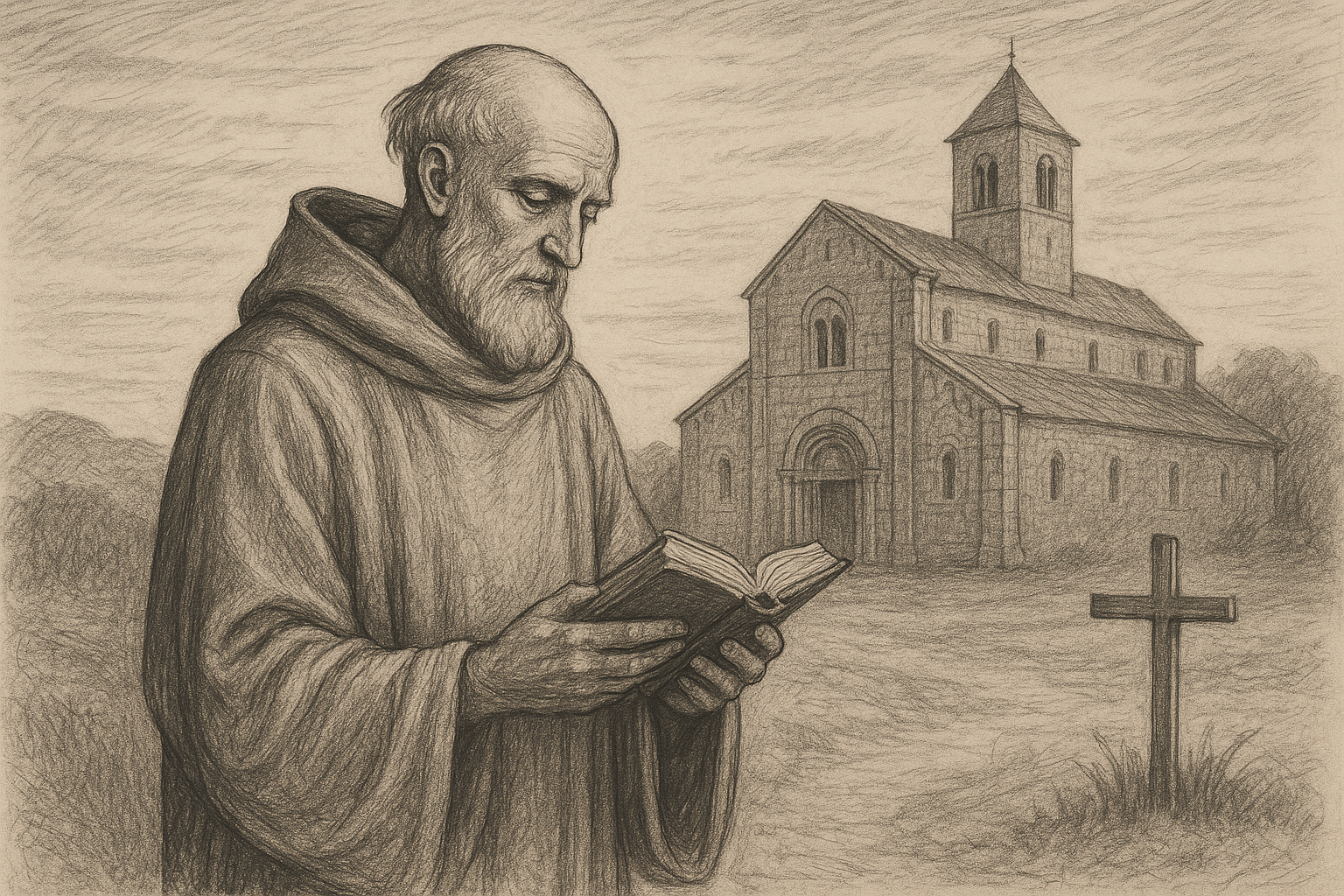
St. Benedict is one of those saints whose influence is larger than his biography. He lived in a time of uncertainty, when the Roman world in the West had changed and Christian communities were learning how to endure in a fractured culture. Benedict did not answer the moment with noise or power. He answered with a rule, a rhythm, and a life given over to God.
That is part of the enduring St. Benedict Catholic inspiration. He reminds Catholics that holiness is not always dramatic. Sometimes it is built through faithful prayer, ordered work, humility, silence, and perseverance. Benedict's legacy is not a spiritual slogan. It is a way of life that has helped form monasteries, culture, learning, and prayer for more than fifteen centuries.
Who St. Benedict was
The most important historical source for St. Benedict is the second book of St. Gregory the Great's Dialogues, which presents Benedict as a man of prayer who sought God in solitude before gathering disciples around him. Benedict is traditionally associated with Nursia in Italy and with Monte Cassino, where he established the monastery that became linked to his name and influence.
What can be said with confidence is this: Benedict became a guiding figure in Western monasticism because he gave the Church a wise and balanced vision of communal life. His rule was neither harshly rigid nor loosely sentimental. It joined prayer, labor, obedience, moderation, and peace. In a world often marked by instability, that balance mattered.
Benedict's life also shows that holiness does not depend on social visibility. He was not remembered because he held worldly office or sought public acclaim. He was remembered because he helped souls seek God in a disciplined and deeply human way. That is one reason Catholics still turn to him when they want a model of steady fidelity rather than spectacle.
The Rule of St. Benedict and the shape of Christian life
The Rule of St. Benedict remains his greatest gift to the Church. It is not a rule only for monks in an enclosed monastery. It is a spiritual school of life that teaches how to place Christ at the center of each day. Its themes are simple but demanding: prayer, work, obedience, humility, hospitality, and perseverance.
At the heart of the Rule is the conviction that life must be ordered toward God. Benedict does not assume that discipleship happens by accident. He assumes that the human heart needs training. That insight aligns with the wider biblical witness, where faith is shown in endurance, self-denial, and daily fidelity. Jesus calls His disciples not only to believe, but to follow: take up his cross and follow.
In Benedict's world, prayer was not an escape from duty. Prayer was the source of duty rightly lived. Work was not a nuisance. Work was a place of sanctification. Silence was not emptiness. Silence made room for listening. These are not old-fashioned ideas in the sense of being outdated. They are perennial because the human person has not changed.
Ora et labora
The phrase often associated with Benedict, ora et labora, prayer and work, captures the spirit of his Rule even if the exact phrase is not itself a formal motto from the text. It summarizes a Catholic wisdom that joins contemplation and action. Benedict teaches that neither prayer nor work should be reduced to self-expression. Both are offered to God.
This balance is deeply biblical. The Lord commands His people to hear and obey, to worship and serve, to love Him with the whole heart and to carry that love into daily responsibilities. In Benedict's hands, that biblical pattern becomes practical. The monk prays the Psalms, labors with his hands, lives under obedience, and grows in humility.
For Catholics today, this is bracing. Many people feel divided between prayer and real life, as if prayer belonged in one room and work in another. Benedict gently refuses that split. He shows that ordinary tasks can be sanctified when they are done before God.
Why his witness continues to speak
St. Benedict continues to matter because he offers more than inspiration. He offers form. Modern life can be fragmented, noisy, and impatient. Benedict's witness speaks to that condition with extraordinary restraint. He does not ask Catholics to become experts in spiritual performance. He asks them to become faithful.
There are at least four reasons his witness remains so powerful.
- He gives structure to freedom. Human beings are not made for chaos. A disciplined life can become a freer life when it is ordered toward God.
- He honors stability. Benedict understood that growth in holiness usually requires staying put, receiving correction, and persevering where God has placed us.
- He prizes humility. The Rule teaches that self-knowledge is essential. Pride distorts community and prayer, while humility opens the heart to grace.
- He makes room for peace. Benedict does not promise a life without struggle, but he shows that peace is possible when Christ governs the soul.
These are not abstract virtues. They are concrete habits of discipleship. A Catholic who prays morning and night, works honestly, keeps commitments, accepts correction, and seeks silence where possible is already being shaped by Benedict's wisdom.
St. Benedict and the biblical call to seek God
Benedict's Rule can be understood as a response to the scriptural call to seek the Lord with constancy. The Psalms, which remain central to monastic prayer, repeatedly speak of lifting the heart to God, trusting His mercy, and learning to walk in His ways. Benedict took that biblical pattern seriously.
He also understood the importance of listening. The opening word of the Rule, Listen, signals the whole spiritual posture Benedict wants to cultivate. Listening is not passive. It is obedient attention. It is the soul turning toward God so that it can receive wisdom. Scripture often presents this as the beginning of life with God: let the wise hear and increase in learning.
That same listening is necessary for Catholic life now. A Christian cannot hear God well while constantly drowning in distraction. Benedict's witness therefore feels timely. He teaches that if the heart is scattered, the answer is not despair. The answer is discipline, prayer, and a return to God.
Holy leisure, ordered labor, and steady prayer are not the opposite of fruitful life. For Benedict, they are the path to it.
What Catholics can receive from Benedict today
Catholics do not need to become monks in order to learn from Benedict. His wisdom can be translated into parish life, family life, and personal prayer. A home can become more Benedictine when its members pray together, keep a regular rhythm, and treat time as a gift rather than a possession.
Parents can learn from Benedict's patience and structure. Workers can learn from his dignity of labor. Students can learn from his seriousness about attention. Those who feel overwhelmed can learn from his conviction that a faithful life is built one hour at a time.
Benedict also offers a needed correction to spiritual individualism. He did not envision salvation as a private project detached from community. He knew that Christians need one another, with all the inconvenience and grace that this requires. The monastery was a school of charity as much as a school of prayer.
That is one reason his witness remains so fruitful. He does not merely comfort. He converts. He asks Catholics to let Christ order their desires, habits, and relationships. And because that ordering is gentle but real, it can be lived in ordinary places.
The Benedictine legacy in the life of the Church
Across the centuries, Benedictine communities have preserved prayer, manuscripts, learning, hospitality, and liturgical life. The cultural impact of Benedictine monasticism is immense, but its deepest contribution is spiritual. It has kept alive a practical memory of what it means to seek God first.
That legacy should not be romanticized. Monastic life includes sacrifice, silence, correction, and hidden labor. Yet precisely there, in what the world may overlook, Benedict points to lasting fruit. The saint who seems quiet becomes a source of strength for generations.
For Catholics, this is a consoling pattern. God often does His most enduring work through hidden fidelity. Benedict's life is a witness to the fruitfulness of beginnings that seem small. A rule written for monks in a troubled age helped shape Christian civilization because it was rooted in Christ.
That is the heart of St. Benedict Catholic inspiration: not sentiment, but a way of becoming available to grace. When life feels scattered, Benedict invites the soul to listen again, pray again, work again, and begin again. That is a deeply Catholic answer, and it still bears fruit.
Keep Reading on Lets Read The Bible
Frequently Asked Questions
Who was St. Benedict in Catholic tradition?
St. Benedict is traditionally regarded as the founder of Western monastic life and the author of the Rule of St. Benedict. He is remembered as a man of prayer, discipline, and humility whose influence shaped Christian life far beyond the monastery.
What is the main message of the Rule of St. Benedict?
The Rule of St. Benedict teaches a balanced life centered on prayer, work, obedience, humility, and stability. Its goal is to form disciples who seek God steadily and live in peace with others.
How can ordinary Catholics apply St. Benedict's example today?
Catholics can apply Benedict's example by building regular habits of prayer, practicing humility, keeping commitments, working faithfully, and making room for silence and listening in daily life.