Saints and Witnesses
A Flame in the Church: St. Catherine of Siena and the Courage of Holiness
Her life shows how prayer, truth, and obedience can reshape both a soul and the Church.
Site Admin | May 18, 2025 | 72 views
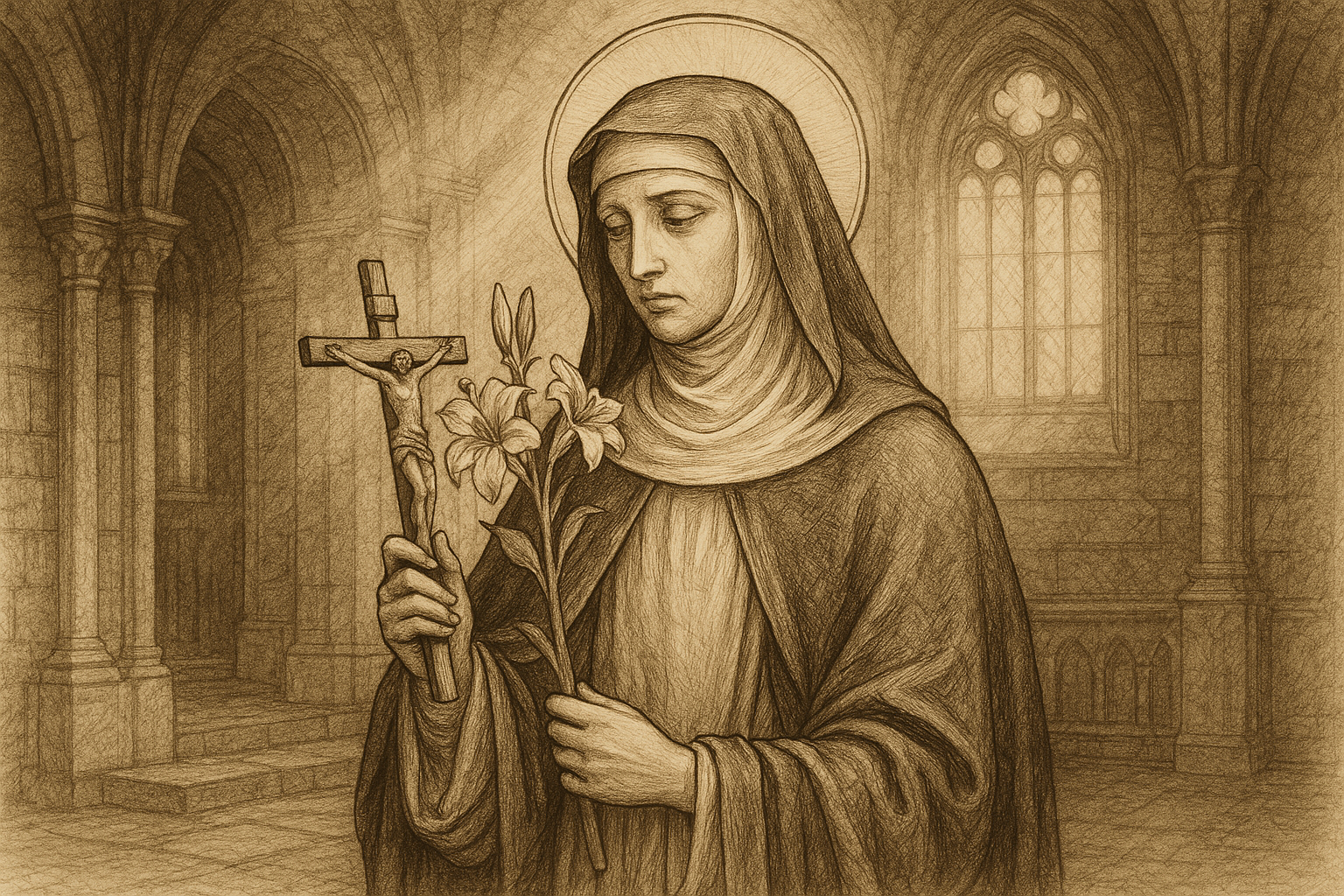
St. Catherine of Siena remains one of the clearest examples of St. Catherine of Siena Catholic inspiration because her life joined interior prayer, disciplined penance, and fearless action in service of Christ and his Church. She was not a saint of vague religious feeling. She was a woman of conviction who believed that holiness must be real enough to change how a person speaks, prays, suffers, and serves. That is part of why her witness still feels so immediate.
Born in Siena in 1347, Catherine Benincasa lived during a troubled age marked by plague, political conflict, and division within the Church. Yet she did not respond to instability with despair. From an early age she desired to belong wholly to God. She eventually joined the Dominican Third Order, remained in the world, and lived a life shaped by prayer, fasting, spiritual direction, and works of mercy. Her holiness did not come from distance. It came from closeness to Christ.
What makes St. Catherine so compelling is not only what she did, but how she understood the Christian life. For her, prayer was never a retreat from reality. It was the place where reality became clear. In prayer she learned to see sin honestly, to love the Church deeply, and to speak the truth without surrendering charity. That balance is rare in any age, and it is one reason her example remains so useful to Catholics today.
A saint formed by prayer, not by image management
Modern people are often tempted to present a polished version of themselves. Catherine offers a very different pattern. She became a saint by consenting to grace in a life that was hidden, disciplined, and often misunderstood. She practiced severe asceticism, but not as a spiritual performance. Her fasting and penance were ordered toward love of God, repentance, and freedom from self-will.
The Church has always taught that holiness involves conversion of the whole person. Scripture speaks plainly about this kind of transformation: present your bodies as a living sacrifice and take up his cross and follow me. Catherine took those words seriously. She did not separate devotion from discipline or prayer from sacrifice. In her life, the interior and exterior dimensions of faith belonged together.
Her prayer life also deepened into intimate union with Christ. She meditated often on the Passion, and her spiritual writings reflect a soul absorbed in the mercy of God. This is one reason she still speaks to Catholics who want prayer to be more than routine. Catherine shows that prayer can form courage, patience, and clarity. It can give a person the interior strength to remain faithful when the world becomes noisy or divided.
Love for the Church without illusions
Catherine is remembered not only for her prayer, but also for her bold defense of the Church. She loved the Church as the Body of Christ, even when its human members were weak, compromised, or fearful. This is a difficult love, and it is one of her greatest lessons for Catholics. She did not confuse love of the Church with approval of every action taken by churchmen. She loved the Church enough to plead for reform, repentance, and return to fidelity.
At a time when the papacy was in crisis and ecclesial life was wounded by division, Catherine wrote letters to political leaders and even to the pope. She urged peace, reform, and the restoration of moral courage. Her language could be direct, but her motive was not rebellion. It was zeal for the honor of Christ and the salvation of souls. She believed that the Church belonged to Jesus Christ, and therefore no one had the right to treat it lightly.
This is where her witness becomes especially valuable for contemporary Catholics. It is possible to become cynical about the Church, or defensive in a way that silences truth. Catherine offers a better way. She teaches that a Catholic can grieve corruption without losing reverence, and can seek renewal without abandoning communion. That is a mature ecclesial love, one rooted in faith rather than sentiment.
The saint does not deny the wounds of the Church. She brings those wounds into prayer and then speaks and acts under the judgment of Christ.
Catherine's conviction was not abstract. She believed that the salvation of souls mattered more than comfort, prestige, or social acceptance. That perspective gives her words a lasting edge. Catholics today still need witnesses who remember that the Church is holy because Christ is holy, even while her members require continual conversion.
The courage to speak truth in charity
One reason people return to Catherine is that she helps dissolve the false choice between being kind and being truthful. In her life, charity did not mean vagueness. She could be blunt, but her bluntness was meant to heal. She wanted people to come back to God. She wanted rulers to govern justly. She wanted clergy to live with integrity. Her sharpness came from love, not ego.
This is an especially important lesson for Catholics who live in a culture that rewards either silence or outrage. Catherine's way is different. She speaks as a friend of truth, but also as a daughter of the Church. The result is a kind of holiness that is neither timid nor cruel. It is steady, prayerful, and accountable before God.
Jesus himself speaks of truth and charity as inseparable. the truth will make you free and speaking the truth in love. Catherine embodied that pattern in a particularly vivid way. Her letters do not read like comfortable advice. They read like a soul on fire with concern for the good of others and the honor of God.
For Catholics trying to live faithfully in difficult conversations, her example is practical. It suggests that before speaking, one must pray. Before correcting, one must love. Before acting, one must ask whether the goal is victory or conversion. Those distinctions matter. Catherine understood them instinctively because her life was rooted in contemplation.
How her witness speaks to ordinary Catholic life
St. Catherine of Siena is often admired as a remarkable figure, but her witness is not reserved for exceptional people. In fact, much of her relevance lies in how ordinary Catholic life can be made holy through simple, consistent fidelity. She was not a priest, bishop, or scholar in an academic sense, yet she influenced the Church through prayer, counsel, and courage. That should encourage Catholics who wonder whether hidden faithfulness matters.
Her life suggests several concrete lessons:
- Prayer is not passive. It prepares the soul to see clearly and act decisively.
- Holiness is compatible with ordinary states of life. Catherine lived in the world, not in a cloister, and still pursued deep union with God.
- Love of the Church includes correction. Reverence and truth are not enemies.
- Suffering can become fruitful. Catherine offered her sacrifices for the good of souls and the renewal of the Church.
- Courage grows from communion with Christ. A soul anchored in God can speak without fear.
These lessons are not theoretical. They meet Catholics in daily realities such as family life, parish tension, workplace compromise, and personal weakness. Catherine reminds believers that sanctity is not about controlling every outcome. It is about consenting to God and remaining faithful in the place where he has put us.
She also helps reframe suffering. Catherine endured illness, misunderstanding, and the burden of intense spiritual work. Yet she did not see suffering as meaningless. United to Christ, suffering can become intercession, purification, and love. That is a deeply Catholic insight, one grounded in the Cross. I complete what is lacking in Christ's afflictions is not a denial of Christ's sufficiency, but a revelation that believers are invited to participate in his saving work. Catherine lived that mystery with striking seriousness.
Why her witness still matters now
St. Catherine of Siena matters now because Catholics still face many of the same inner battles she faced. There is still temptation to separate prayer from action, devotion from doctrine, and love from truth. There is still pressure to treat faith as private sentiment rather than public allegiance to Christ. Catherine resists all of that by her very existence.
She also matters because she shows that sanctity is not escapism. The saint does not flee from the world in order to ignore it. She belongs to Christ so completely that she can enter the world's pain without being swallowed by it. Catherine's voice was strong because her roots were deep. Her life was hidden in God, and therefore she could stand before the powers of her age with unusual freedom.
Her witness also honors the dignity of the laity. The Church canonized a woman who was not an officeholder but who still exercised profound influence through holiness. That is a hopeful sign. It means Catholic renewal does not depend only on public roles or visible authority. It begins wherever a soul is fully surrendered to God.
In the end, St. Catherine of Siena Catholic inspiration comes from the unity of her life. She prayed deeply, loved fiercely, spoke truthfully, and remained devoted to the Church of Christ. Her sanctity was not gentle in the modern sense of being undemanding. It was gentle in the Gospel sense: rooted in mercy, clarity, and self-gift. For Catholics seeking a model of integrated holiness, she remains a bright and bracing companion.
To remember St. Catherine is to remember that Christ can make a soul radiant even in a divided age. That possibility has never gone out of date.
Keep Reading on Lets Read The Bible
Frequently Asked Questions
Who was St. Catherine of Siena in Catholic history?
St. Catherine of Siena was a 14th century Dominican tertiary, mystic, writer, and peacemaker whose holiness and counsel greatly influenced the Church. She was known for her prayer, her devotion to Christ, and her efforts to promote reform and unity.
Why is St. Catherine of Siena important for Catholics today?
She shows that deep prayer and courageous action belong together. Catholics today can learn from her love for the Church, her willingness to speak truth in charity, and her conviction that holiness is possible in ordinary life.
What is one major spiritual lesson from St. Catherine of Siena?
One major lesson is that prayer must shape the whole person. Catherine teaches that a soul rooted in Christ can face suffering, correct error, and remain faithful without losing charity.