Saints and Witnesses
St. Dominic and the Quiet Fire of Preaching
A faithful look at the preacher who helped renew the Church through prayer, study, and a life ordered to the truth.
Site Admin | May 13, 2025 | 79 views
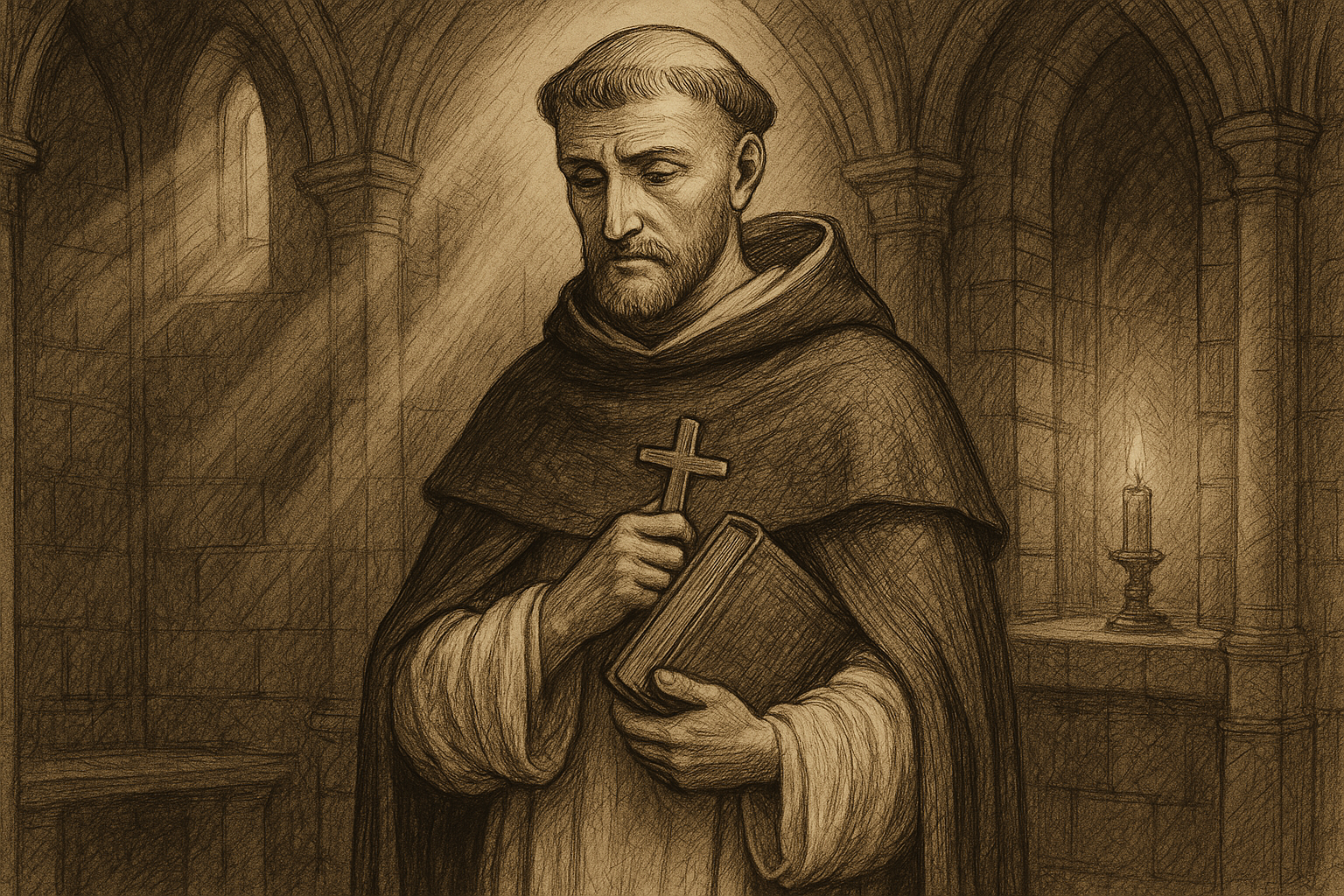
St. Dominic is often remembered as the founder of the Order of Preachers, the Dominicans, but his St. Dominic life was not built on a single dramatic moment. It was shaped by long fidelity: prayer, learning, poverty, mercy, and a steady desire to lead souls to Christ. He lived in a time of real confusion in the Church and in society, yet he responded not with bitterness or spectacle, but with truth spoken in charity.
That is part of what makes his witness so enduring. Dominic did not treat faith as an idea to admire from a distance. He gave himself to it with his whole life. He studied so that he could preach well. He prayed so that his words would come from friendship with God. He traveled, taught, listened, and wept for souls. In him, Catholics can see a pattern that still makes sense today: holiness is not less than doctrine, and doctrine is not less than love.
A Spanish priest formed by Scripture and charity
Dominic was born around 1170 in Caleruega, in present-day Spain. He was educated for the priesthood and came to serve as a canon at Osma. Even early in his life, he showed a serious devotion to prayer and a mind drawn to sacred study. Tradition remembers a young man willing to sell his books to help the poor during a famine. That gesture does not give us the whole of his biography, but it does reveal something important: for Dominic, truth was never meant to be separated from mercy.
As a canon and later as a preacher, he lived in an era when the Church faced both internal weakness and various errors spreading among the faithful. The most famous of these challenges involved the Cathars in southern France, a movement that denied or distorted central Christian truths about creation, the sacraments, and the goodness of the body. Dominic recognized that the response could not be mere argument. It needed preaching marked by holiness, patience, and clear witness to the Gospel.
Scripture offers the frame for this kind of work. The Lord sends out laborers into the harvest, but He also calls them to speak from the heart of prayer: The harvest is plentiful, but the laborers are few and Sanctify them in the truth; your word is truth. Dominic took that pattern seriously. He wanted men who would know the truth, love the truth, and hand it on without compromise.
Preaching as a way of life, not just a task
One of the most striking things about Dominic is that he did not treat preaching as a public performance. He understood it as a way of life. The preacher had to be formed by what he proclaimed. That is why prayer and study became central to Dominican life. The famous Dominican balance of contemplation and action did not begin as a slogan. It emerged from the kind of man Dominic was and the kind of mission the Church needed.
His preaching work in southern France led him to gather companions who could live simply, pray deeply, and preach credibly. This eventually became the Order of Preachers, approved by the Church in 1216. Unlike older monastic communities that were primarily stable and cloistered, Dominic's order was formed for itinerant preaching. Yet it remained profoundly ecclesial. The friars were not free agents with private messages. They were servants of the Church, sent to proclaim what the Church had received.
That order mattered because the Christian message was not only under attack by false teaching. It was also in danger of being reduced to habit without conviction. Dominic answered by forming men who could speak the faith intelligently and live it visibly. In that sense, he anticipated a need Catholics still feel: a world full of noise needs witnesses who can explain the faith clearly without losing its beauty.
Dominic's life reminds us that the Church does not renew herself through style alone, but through saints who know Christ, love souls, and speak the truth with humility.
Prayer, penance, and a heart for souls
Dominic's holiness was not polished or self-protective. The accounts of his life repeatedly show a man moved by compassion and engaged in serious penance. He prayed intensely, often at night. He fasted. He practiced poverty. He wept for sinners and for the salvation of those who were far from the Church. These details matter because they keep us from imagining him as merely a brilliant organizer. He was first a man of God.
In the Psalms, the righteous person delights in the law of the Lord and meditates on it day and night: His delight is in the law of the Lord, and on his law he meditates day and night. Dominic lived in that spirit. His preaching flowed from a life that had already been bent toward God in prayer. And because he believed conversion was real, he did not despair of difficult people or difficult times.
This is especially important for Catholics today. We often want practical results quickly. Dominic teaches a slower, deeper lesson. Prayer does not replace action, but it gives action its soul. Study does not replace charity, but it gives charity clarity. Penance does not earn grace, but it disposes the heart to receive and cooperate with it. Dominican spirituality puts these things together because the Christian life itself is meant to be whole.
Why the Dominican Order began to matter so widely
The Church approved the Dominican Order at a time when the needs of preaching, teaching, and theological formation were expanding. Dominic wanted his friars to be well formed in doctrine, faithful to the liturgy, and ready to serve wherever the Church sent them. Over time, the Dominicans would become known for study, teaching, and the defense of the faith, but their origin was simple: souls needed the Gospel proclaimed with intelligence and sanctity.
That emphasis on truth was not cold or narrow. On the contrary, it was deeply pastoral. False ideas about God do not remain abstract for long. They shape how people pray, how they suffer, how they hope, and how they view the human person. Dominic knew that if the mind is confused, the heart can be misled. He also knew that if the heart is hard, the mind will not remain open to grace. So he preached to both.
There is a lesson here for parents, teachers, catechists, and anyone who passes on the faith. We do not help others most by being clever, but by being faithful. We do not help others most by winning every debate, but by making Christ credible in our lives. Dominic's method was not flashy. It was disciplined, loving, and rooted in the Church.
What Catholics can learn from St. Dominic today
St. Dominic's life has much to say to Catholics who feel overwhelmed by confusion, lukewarmness, or discouragement. His example is not a call to imitate his vocation in every detail. Most of us will not found an order or preach across countries. But we can learn the shape of his sanctity.
- Take the faith seriously. Dominic believed truth mattered, especially when souls were at stake.
- Join study to prayer. Catholic learning should not feed pride. It should deepen love for God and neighbor.
- Practice mercy. Dominic's concern for the poor and for sinners was not an accessory to his holiness. It was part of it.
- Be patient with conversion. Real change often comes through quiet perseverance, not instant success.
- Let your words come from a holy life. Preaching, teaching, and even ordinary conversation bear fruit when they flow from prayer.
Dominic also challenges Catholics to think carefully about the witness of the Church in public life. He did not separate faith from the real questions of his day. Instead, he brought the Gospel into the places where truth was contested. That remains a Christian responsibility. The answer to confusion is not retreat, but deeper formation and more faithful witness.
His life also teaches something beautiful about joy. The Dominican tradition is sometimes associated with rigorous study and serious preaching, but Dominic himself was not dour. Holiness, when it is real, does not make a person grim. It makes him free. A heart set on God can speak plainly without becoming harsh. It can correct error without losing peace. That kind of freedom is rare, and it is worth asking for.
Remembering a saint who preached with his whole self
Dominic died in 1221, and the Church soon recognized the power of his witness. Yet the deepest reason he remains important is not because he was famous, but because he was faithful. He trusted that God could use a life offered without reserve. He believed the Gospel was worth studying, worth living, and worth proclaiming until it took root in others.
For Catholics who want to grow in discipleship, the St. Dominic life offers a clear path: pray with perseverance, study with humility, serve with compassion, and speak the truth in love. In a restless age, that is not a small thing. It is the quiet fire that still renews the Church.
Keep Reading on Lets Read The Bible
Frequently Asked Questions
Who was St. Dominic in the Catholic Church?
St. Dominic was a Spanish priest and preacher who founded the Order of Preachers, later known as the Dominicans. He is remembered for his devotion to prayer, study, poverty, and preaching the truth of the faith.
What made St. Dominic's approach to evangelization distinctive?
St. Dominic believed preaching should be grounded in prayer, strong doctrine, and a life of holiness. He formed companions who could teach clearly and live simply, so that their witness would be credible.
What can Catholics learn from St. Dominic's life today?
Catholics can learn to unite prayer and study, to love truth without harshness, to serve the poor, and to trust that patient, faithful witness can help lead others to Christ.