Saints and Witnesses
St. Francis de Sales and the Quiet Strength of Gentleness
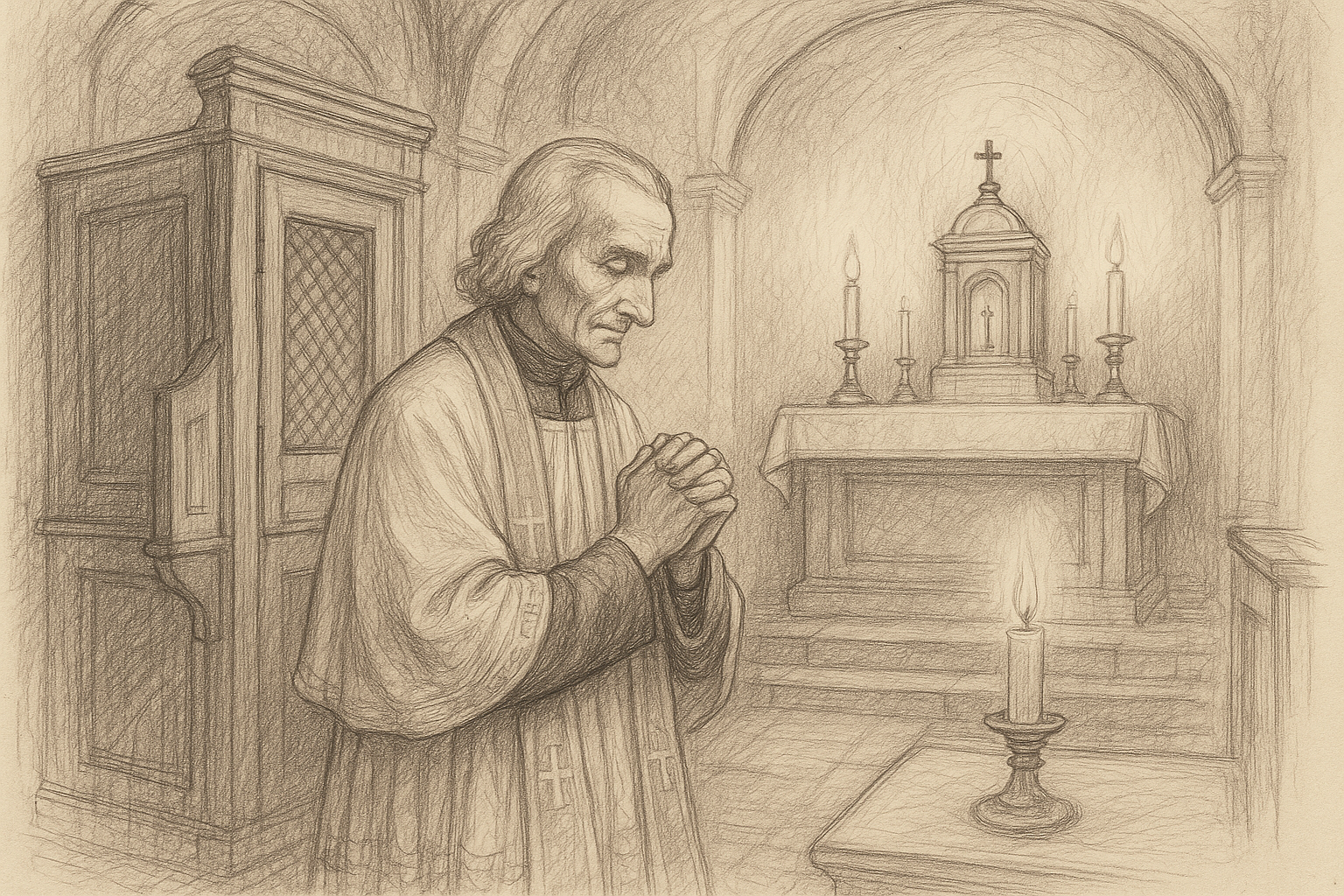
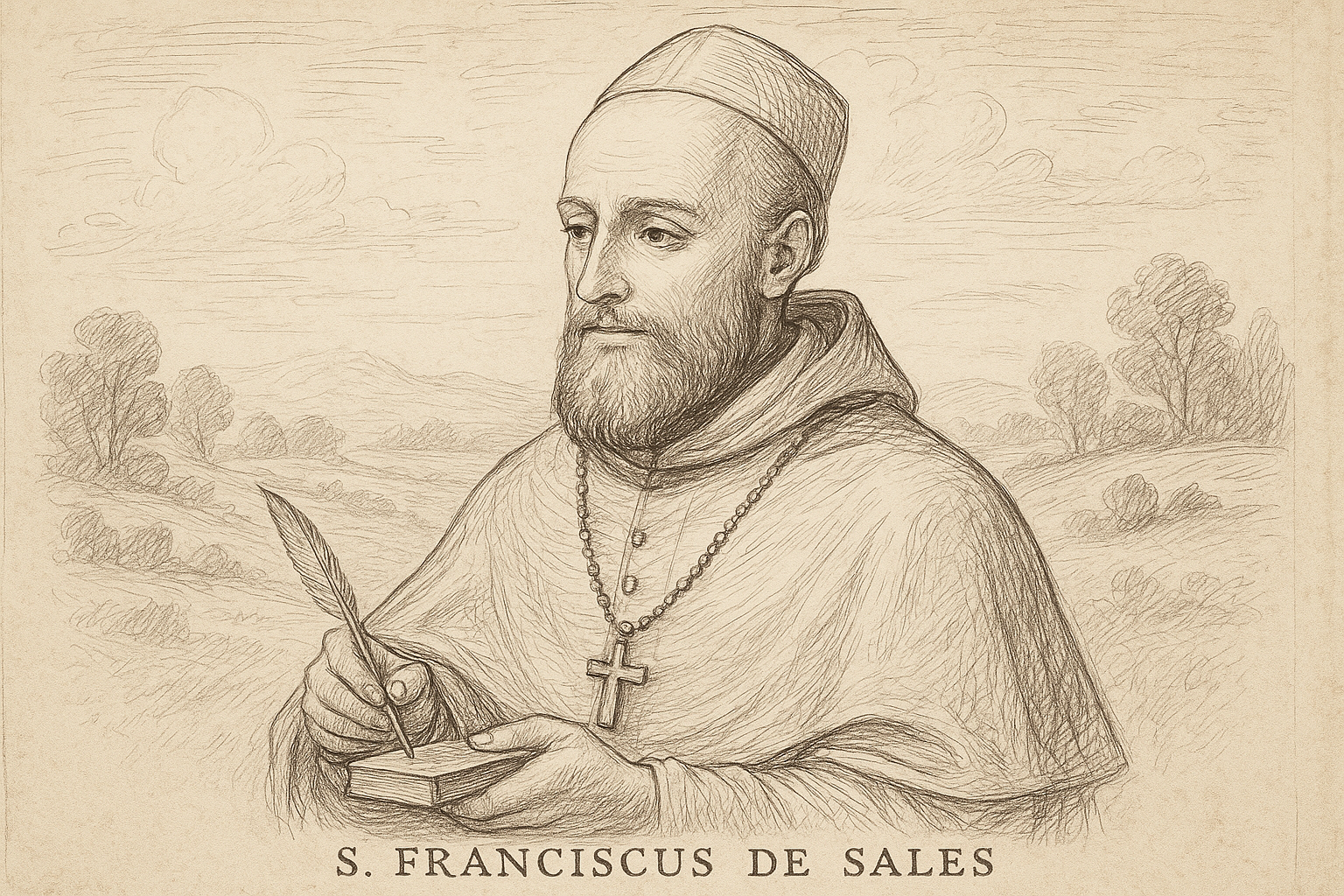
A faithful sketch of the bishop, writer, and spiritual guide who showed that holiness can be firm, clear, and remarkably gentle.
Site Admin | May 26, 2026 | 84 views
St. Francis de Sales is one of the Church's most beloved saints because he shows that holiness does not have to be loud to be strong. He was a bishop, a writer, a preacher, and a spiritual guide, but above all he was a man who learned to unite truth with gentleness. His life unfolded in a time of religious conflict, yet he became known for patience, clarity, and a calm confidence in God's grace.
For Catholics today, the St. Francis de Sales life is worth revisiting not because he was unusual, but because he was deeply human. He knew frustration, opposition, failure, and fear. He also knew how to pray, how to govern, how to teach, and how to lead souls without crushing them. In a world that often mistakes harshness for conviction, his witness feels especially timely.
Born for a demanding age
Francis de Sales was born in 1567 in the Duchy of Savoy, in what is now part of France, into a noble Catholic family. His parents gave him a careful education and expected him to prepare for a life of public service. He studied at the University of Padua, where he received solid training in law, theology, and the intellectual culture of his day. Even then, he was drawn to the spiritual life and wrestled with questions about God's will for him.
One of the best known turning points in his early life was a period of deep anxiety over predestination. He feared that he might be among the damned, and this trial tested him intensely. In prayer before the image of Our Lady, he surrendered himself to God's mercy. That act of trust became a lasting anchor in his spiritual life. It did not make him naive. It made him free.
Francis eventually chose the priesthood, even though his family had hoped for a career in civil service. He was ordained in 1593 and quickly showed a mind that could persuade without arrogance. His early ministry soon placed him in an especially difficult region.
A missionary among the divided
Francis was sent to the Chablais region, where many people had become Calvinist. This was not a comfortable assignment. The area was hostile, and Francis often faced rejection, danger, and practical obstacles. In some places he could not preach openly, so he used printed pamphlets to explain Catholic teaching clearly and patiently.
His method mattered. He did not merely repeat arguments. He listened, answered objections carefully, and trusted that truth spoken with charity could reach hearts that force could not. Over time, many returned to the Catholic faith. Francis's work in Chablais helped show that evangelical courage does not have to be aggressive. It can be steady, intelligent, and peaceable.
Gentleness is not weakness. In Francis de Sales, it became a form of spiritual strength disciplined by prayer and anchored in confidence that God alone changes hearts.
He was also a man of action. He traveled widely, preached missions, and cared for the concrete needs of the people entrusted to him. His life reminds Catholics that doctrine and charity belong together. A shepherd does not choose between truth and tenderness. He learns to hold them in the same hands.
Bishop, pastor, and teacher of souls
In 1602, Francis was appointed Bishop of Geneva, though political circumstances kept him from residing in the city itself. He lived and served from Annecy, where he became a model of bishoply government. He visited parishes, encouraged clergy, reconciled divided families, and remained close to ordinary Catholics. He did not treat pastoral work as a distant administration. He saw it as a living ministry of care.
What makes Francis especially memorable is the style of his spiritual teaching. He wrote not for specialists alone, but for lay people trying to live the faith in daily life. His classic works, including Introduction to the Devout Life and Treatise on the Love of God, helped Catholics understand that holiness is possible in the world, not only in monasteries. He taught that prayer, virtue, patience, and charity must shape ordinary responsibilities.
Francis had a remarkable gift for speaking to conscience without discouraging it. He did not minimize sin, but he also refused to treat the spiritual life as a constant performance of fear. He knew that souls grow by grace, through repeated acts of trust. His advice was practical, and often surprisingly gentle. He urged people to begin again, to avoid needless agitation, and to keep their eyes fixed on Christ.
A saint of accessible holiness
One reason so many Catholics continue to love Francis de Sales is that he made holiness seem accessible without making it easy. He never suggested that holiness was casual. Rather, he taught that the ordinary duties of life, carried out with love, can become a path to sanctity. A parent, a merchant, a student, a servant, or a widow could all belong fully to God.
This is one of his most enduring contributions to Catholic spirituality. He respected the varied states of life in the Church and insisted that all are called to live devoutly. That vision still helps counter the false idea that only a few exceptional people are meant to be holy.
His pastoral wisdom also had a psychological realism that modern readers often appreciate. He knew that people can become trapped by scrupulosity, impatience, and discouragement. He counseled persistence, peace, and trust rather than spiritual self-absorption. In this, he anticipated a great deal of sound pastoral wisdom about the human heart.
Friendship, cooperation, and the dignity of women
Francis de Sales is also remembered for his collaboration with St. Jane Frances de Chantal, with whom he founded the Visitation Order in 1610. Their friendship was marked by spiritual depth, mutual respect, and practical discernment. The Visitation was meant to offer women a religious life shaped by humility, charity, and accessibility rather than severe austerity.
This foundation was significant because it reflected Francis's understanding that holiness should be livable. He wanted a community where women could flourish in prayer and service without unnecessary rigidity. The order eventually became a source of wide spiritual fruit in the Church.
His friendship with Jane Frances de Chantal also shows something beautiful about Catholic sanctity: holy relationships can strengthen mission. Francis was not a solitary genius detached from others. He was a pastor who worked with collaborators and valued their gifts. That kind of humility is itself part of his witness.
What his gentleness really meant
It is easy to mistake gentleness for softness. Francis de Sales understood it differently. Gentleness was not avoidance of hard truths, nor was it a polite mask over fear. It was a disciplined, Christlike charity that refused to dominate others. It allowed him to correct without humiliating, to argue without contempt, and to teach without vanity.
His gentleness was rooted in spiritual confidence. A soul convinced of God's mercy does not need to grasp for control. Francis knew that grace works patiently. This is why his writings often breathe with calm rather than urgency. He wanted people to turn toward God with trust, not panic.
For Catholics today, this matters in very ordinary settings. Families can become more peaceful when correction is given with patience. Parishes can become more fruitful when zeal is guided by charity. Conversations about the faith can become more persuasive when the speaker remembers that the goal is conversion, not victory.
Lessons that still fit real life
- Start with prayer. Francis never treated spiritual work as merely strategic. He relied on grace before he relied on skill.
- Speak clearly, but kindly. He showed that truth is more credible when it is not wrapped in contempt.
- Do not despise ordinary duties. The path to holiness often runs through daily responsibilities done with love.
- Return to peace quickly. Francis taught that agitation can become its own obstacle to prayer and growth.
- Trust gradual conversion. He worked for real change, but he understood that God often acts slowly in souls.
These lessons are not sentimental. They are demanding. To live them requires self-command, humility, and a willingness to let grace reshape our habits. Francis de Sales did not preach a comfortable Christianity. He preached a Christianity where interior peace becomes the fruit of surrender.
His legacy in the Church
St. Francis de Sales died in 1622, and his influence only grew after his death. He was canonized in 1665 and later declared a Doctor of the Church. His spiritual writings became staples of Catholic devotion and formation, especially for lay Catholics and those seeking balance between prayer and action. He is also honored as patron saint of writers and journalists, fitting for a man who used the written word so effectively in service of the Gospel.
His legacy endures because the problems he addressed still remain with us. People still struggle with fear, harshness, impatience, and the temptation to think that holiness belongs to someone else. Francis answers these worries with a steady voice. He points to Christ, to the mercy of God, and to a way of life marked by patience and fidelity.
To read the St. Francis de Sales life is to meet a saint who did not need to dominate the world in order to serve it. He changed lives by teaching souls to trust God, love the Church, and practice virtue where they actually lived. That is why his witness continues to matter. He reminds Catholics that sanctity can be firm without being harsh, and tender without being weak.
If his example still speaks so clearly, it is because the Church never outgrows the need for pastors who know how to lead with charity. Francis de Sales remains one of those rare saints whose gentleness does not dilute the faith but makes it shine.
Keep Reading on Lets Read The Bible
Frequently Asked Questions
Who was St. Francis de Sales in the Catholic Church?
St. Francis de Sales was a bishop, missionary, spiritual writer, and Doctor of the Church. He is especially known for his gentle style of teaching and his classic works on the spiritual life.
What is St. Francis de Sales best known for?
He is best known for his missionary work in the Chablais region, his leadership as Bishop of Geneva, his spiritual writings, and his teaching that holiness is possible for people living ordinary lives.
Why is gentleness central to St. Francis de Sales?
Francis believed that charity and truth should always work together. His gentleness was not weakness, but a disciplined and Christlike way of correcting, teaching, and guiding souls.