Saints and Witnesses
A Soldier, a Discernment, and a Saint Who Still Finds Catholics at the Crossroads
How Ignatius of Loyola became a lasting witness to conversion, prayer, and the freedom to choose God more fully
Site Admin | June 7, 2025 | 71 views
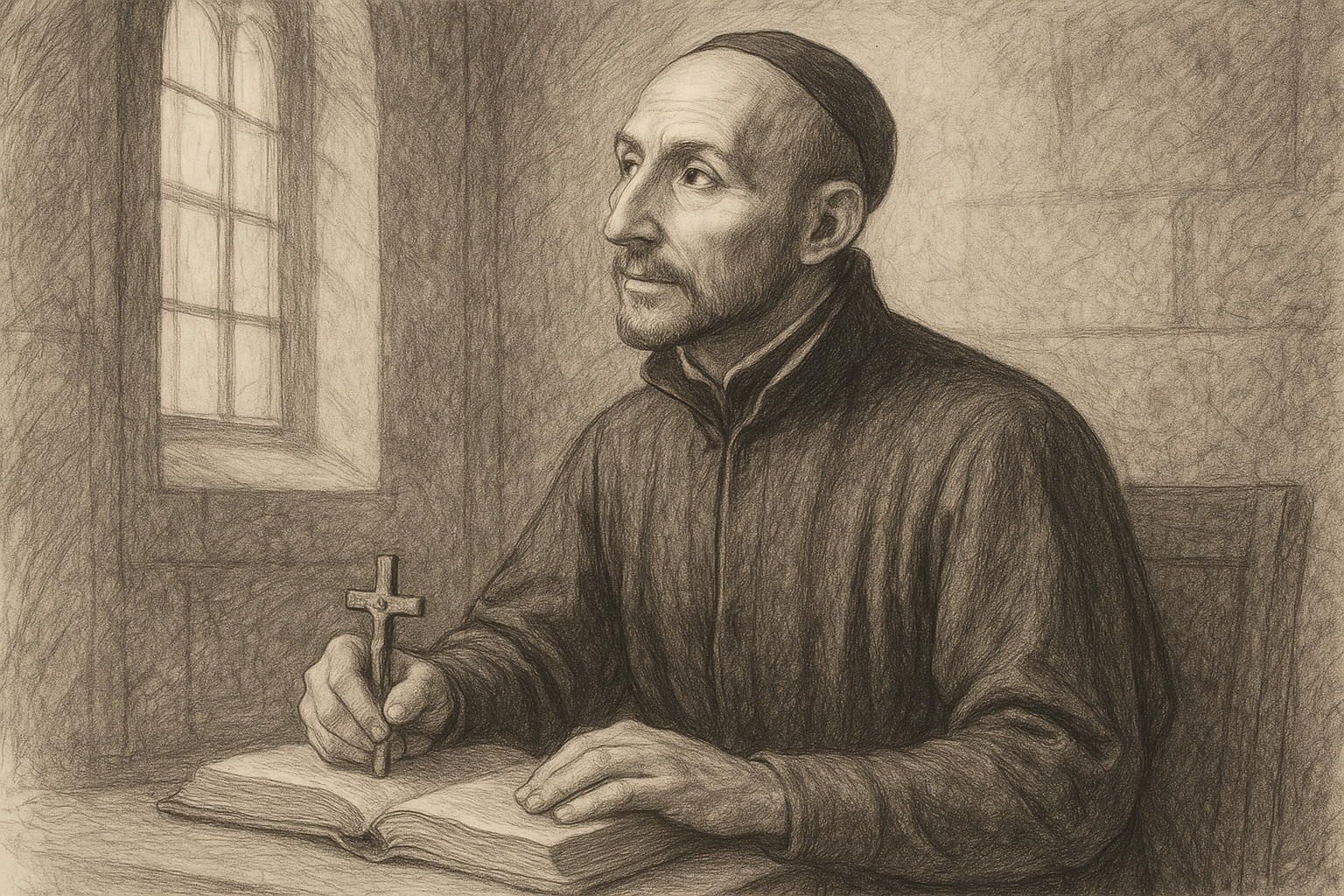
St. Ignatius of Loyola is one of those saints whose life feels both dramatic and familiar. He was a soldier, a courtly man, and a seeker of honor before grace interrupted his plans and slowly taught him a better freedom. His story is not only about a famous conversion. It is about the patient way God reorders a human life from the inside out.
For Catholics today, St. Ignatius of Loyola Catholic inspiration does not lie in nostalgia for a heroic past. It lies in his clear witness that the soul can be trained to listen, to choose, and to give itself more fully to God. In an age marked by distraction and noise, that is no small gift.
A life interrupted by grace
Ignatius was born in the Basque country of Spain in 1491 and entered adulthood as a man shaped by military ambition and the ideals of chivalry. During the defense of Pamplona in 1521, a cannonball shattered his leg and changed the course of his life. While recovering, he asked for books of romance and chivalric adventure, but the only reading available in his household was the life of Christ and the lives of the saints.
That detail matters. God often begins with what is at hand. Ignatius did not receive a spectacular vision that erased his personality or history. He received time, injury, silence, and words that slowly turned his imagination toward something greater than worldly acclaim.
He began to notice a difference between passing pleasures and lasting peace. The saints drew him with a desire for holiness. The old fantasies left him restless. That inner contrast became one of the foundations of his spiritual insight.
Discernment begins with honest attention
One of the reasons Ignatius remains so useful to Catholics is that he took the movements of the heart seriously. He noticed that not every desire leads to God, and not every good feeling is a reliable guide. Over time, he developed language for what he had experienced: consolation, desolation, peace, temptation, and confusion.
Scripture gives the Church the same seriousness about discernment. Test everything; hold fast to what is good. Ignatius lived that command with remarkable discipline. He did not trust himself simply because an impulse was strong. He learned to ask whether a thought, desire, or plan was moving him toward greater love of God or away from it.
That is still deeply practical. Many Catholics struggle less with knowing that God exists than with knowing how to recognize His invitations in ordinary life. Ignatius teaches that discernment is not magic. It is patient, prayerful attention shaped by truth.
The soul does not usually find God by rushing. It learns to find Him by noticing what leaves a trace of peace, humility, and charity.
The road from wound to witness
After his recovery, Ignatius undertook a pilgrimage and then lived for a time in radical penance and prayer. He spent years studying so that he could serve the Church well. His path was not smooth, and it was not always balanced. Yet even his early extremes show a sincere hunger for God. The Lord did not despise that hunger. He purified it.
Eventually, Ignatius gathered companions who would become the first Jesuits. Their way of life would help renew Catholic life through preaching, education, missionary zeal, and spiritual formation. The Society of Jesus was approved by Pope Paul III in 1540. That approval was not merely administrative. It confirmed that Ignatius had found a way to place his gifts at the service of the universal Church.
The Church has long recognized that saints are not all alike. Some are contemplative, some active, some hidden, some public. Ignatius belongs among those saints whose inner conversion overflows into lasting apostolic work. His life reminds us that holiness is not less than action, but it never begins with action alone.
The Spiritual Exercises and the shape of conversion
Ignatius is perhaps best known for the Spiritual Exercises, a method of prayer and discernment that has formed generations of Catholics. These exercises are not a book to be skimmed for inspiration and set aside. They are a school of the soul. They invite a person to contemplate sin, mercy, the life of Christ, and the call to choose God with freedom.
At the heart of the Exercises is a deeply Catholic conviction: grace does not eliminate human choice. It heals and elevates it. God does not coerce the soul. He draws it. He enlightens the mind, purifies desire, and strengthens the will so that a person can say yes in a truly free way.
This harmonizes with the Gospel. If anyone wishes to come after me, let him deny himself. Ignatius knew that self-denial is not empty severity. It is the path toward a more generous love. The point is not to become less human, but more fully available to God.
What makes the Ignatian approach enduring
- It assumes that God is active in ordinary life, not only in extraordinary moments.
- It teaches Catholics to examine motives rather than merely external behavior.
- It helps a person distinguish between fleeting impulse and durable peace.
- It places prayer, Scripture, and obedience to the Church within one unified spiritual life.
Why his witness still speaks now
Modern Catholics often live with pressure to decide quickly and prove themselves constantly. We are urged to curate identities, defend opinions, and move without pause. Ignatius offers a different pace. He suggests that important decisions should be made before God, not merely before an audience.
That matters in vocational discernment, but it also matters in marriage, parenting, ministry, work, and friendship. Many of the decisions that shape a life are not dramatic. They are repeated acts of fidelity. Ignatius helps Catholics ask whether their choices make them freer to serve or more captive to ego.
His witness is also important because it keeps discipline from becoming self-reliance. Prayer is not a self-help project. The point of discernment is not to become more efficient at managing life. The point is to become more responsive to grace.
In that sense, Ignatius is very close to a biblical pattern of surrender. Present your bodies as a living sacrifice. He would have recognized that as the shape of mature Christian life. The body, the mind, and the will all belong to God.
Holiness with intellectual seriousness
Another reason Ignatius continues to matter is that he joined prayer to the life of the mind. Catholic spirituality can sometimes be imagined as either deeply devout or intellectually serious. Ignatius refuses that division. He expected Catholics to think carefully, examine reality honestly, and submit their intelligence to the service of God.
This is one reason Jesuit education has had such lasting influence. The deeper goal was never prestige for its own sake. It was formation. A formed mind can resist confusion, and a formed conscience can serve the truth with courage. Ignatius understood that the Church needs both warm devotion and disciplined thought.
For ordinary Catholics, that balance is still important. A person who prays but never examines motives can remain spiritually superficial. A person who thinks but never prays can grow cold or self-assured. Ignatius points toward an integrated life in which prayer, study, and obedience support one another.
The humility hidden inside his strength
Ignatius may sound, at first glance, like a saint of strategy. He is often associated with methods, structure, and careful decision-making. But beneath that clarity is humility. He did not claim to be the source of his own transformation. He recognized that grace had found him in weakness.
That is essential to understanding his witness. Christian discernment is not a display of control. It begins with surrender. The soul learns to say, as Mary did, Let it be to me according to your word. Ignatius spent much of his life helping souls reach that same place of holy consent.
His witness is consoling because it tells the truth about change. Conversion is rarely instant. It often unfolds through setbacks, confusion, and repeated returns to prayer. God is patient with the soul, and the saint's own life shows that patience is part of the road.
How Catholics can receive his witness today
Ignatius does not ask every Catholic to join an order or imitate his exact path. He invites something simpler and more demanding: to live attentively before God. That can begin with small, concrete practices.
- Make time each day for quiet prayer without rushing to fill the silence.
- Examine not only what you did, but what you desired and why.
- Read Scripture slowly and ask where Christ is calling you to trust Him.
- Notice which choices bring deeper peace, humility, and charity.
- Bring difficult decisions to prayer before seeking confirmation in action.
None of this is glamorous, but it is fruitful. Ignatius reminds Catholics that sanctity is often built through repeated attentiveness rather than dramatic emotion. The soul becomes capable of fidelity by practicing fidelity.
His life still inspires because it shows that God can take a wounded man and make him into a guide for millions. He was not made holy by avoiding suffering. He was made holy by allowing suffering, study, prayer, and obedience to become instruments of grace. That is why his witness remains so steady and so human, and why Catholics still find in him a companion for the hard and beautiful work of choosing God.
Keep Reading on Lets Read The Bible
Frequently Asked Questions
Who was St. Ignatius of Loyola in the Catholic tradition?
St. Ignatius of Loyola was a 16th century Spanish saint, founder of the Society of Jesus, and author of the Spiritual Exercises. The Church honors him for his conversion, his missionary spirit, and his wisdom on discernment.
What is the main spiritual lesson Catholics can learn from Ignatius?
His main lesson is that discernment matters. Catholics can learn to notice what draws the soul toward God, what leads to peace, and what brings confusion or restlessness.
Why are the Spiritual Exercises important?
The Spiritual Exercises give Catholics a structured way to pray, examine their lives, and seek God's will more deeply. They have helped form generations of believers in prayer and discernment.