Saints and Witnesses
St. Teresa of Avila and the Grace of a Life Set in Prayer
From Carmelite reform to contemplative prayer, Teresa of Avila shows how God can transform a soul without removing its humanity.
Site Admin | May 19, 2025 | 80 views
A saint formed by prayer and reform
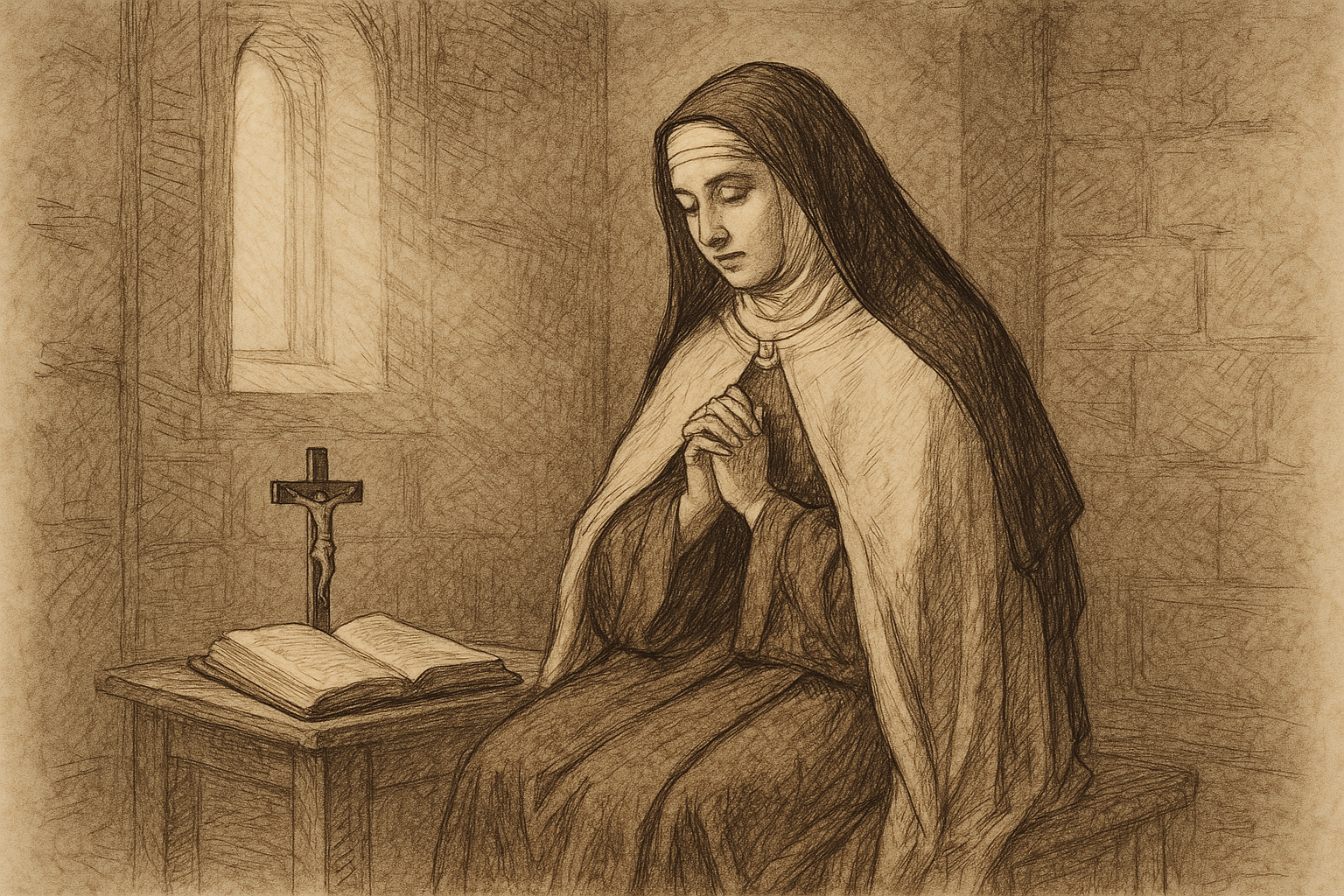
St. Teresa of Avila stands among the great Catholic witnesses because her life joined contemplation, realism, and action. She was not a distant mystic removed from daily burdens. She was a daughter, a Carmelite nun, a reformer, a writer, and a woman who knew both weakness and divine mercy. The story of the St. Teresa of Avila life is not simply the story of a holy person with an extraordinary interior experience. It is the story of a soul slowly opened by grace until her whole life belonged more fully to Christ.
Teresa was born in 1515 in Avila, Spain, into a devout family. From an early age she showed both piety and energy, and she was drawn to the lives of the saints. As a young woman she entered the Carmelite monastery of the Incarnation in Avila. Her early religious life, however, was marked by interior struggle, distractions, and a long and painful movement toward greater prayer. That detail matters. Teresa did not become a saint by never struggling. She became a saint by letting God work patiently in the very places where she was divided.
The long road from distraction to surrender
In her own writings, Teresa is frank about her weaknesses. She knew what it was like to be pulled by social expectations, illness, and spiritual inconsistency. For a time, she lived a divided life, wanting God yet not giving Him everything. Many Catholics recognize themselves in that tension. Teresa does not scold such souls from a distance. She speaks as someone who has been there.
A major turning point came through deeper conversion and increasingly serious prayer. She experienced a renewed commitment to interior life and began to understand more clearly that prayer is not mainly about performance or spiritual sentiment. It is about friendship with Christ. This emphasis remains one of her most lasting contributions. She taught that prayer is an intimate relationship, a steady turning toward the Lord who already knows the soul completely.
Teresa often described prayer as nothing less than time spent with the One who loves us. That simple insight still unsettles modern habits of hurry, because it asks for presence rather than speed.
Her health was never robust, and illness was a frequent companion throughout her life. Yet weakness did not silence her vocation. In fact, it seems to have sharpened her reliance on God. Teresa learned to move forward without waiting for ideal conditions. Catholics today can take courage from that. Holiness is not reserved for those with perfect energy, perfect peace, or perfect circumstances.
Reforming Carmel without losing the heart of contemplation
As Teresa matured spiritually, she became convinced that the Carmelite life needed reform. She wanted communities that returned to simplicity, poverty, recollection, and prayer. The Discalced Carmelite reform that she helped found did not arise from a desire for novelty. It arose from fidelity. Teresa believed that religious life should be visibly ordered toward God, not shaped mainly by comfort or reputation.
Her reform work was demanding. She faced misunderstanding, opposition, travel, and the heavy responsibilities of founding new houses. Still, she pressed on with remarkable steadiness. The same woman who spent long hours in prayer also organized, advised, wrote, negotiated, and endured. Her holiness was not sentimental. It was practical and tested.
Her collaboration with St. John of the Cross is one of the most famous parts of this period, though Teresa's reform was not dependent on any single figure. She founded monasteries for women and, later, houses for men, always with the aim of helping religious communities live more fully for God. In her mind, reform was not an abstract project. It was a concrete act of love for the Church.
Her writings: direct, discerning, and deeply Catholic
St. Teresa of Avila is also remembered as one of the Church's great writers. Her books include The Life of Teresa of Jesus, The Way of Perfection, and The Interior Castle. These are not dry theological manuals. They are spiritual works shaped by experience, careful discernment, and an intimate familiarity with prayer.
In The Interior Castle, Teresa describes the soul as a castle with many dwelling places, each one inviting deeper union with God. The image is memorable because it is both beautiful and exact. The Christian life is not static. The soul grows through purification, humility, and grace. Teresa's language helps Catholics understand that prayer is not escape from reality. It is a way of seeing reality more truthfully, with God at the center.
She was also a deeply obedient daughter of the Church. Though bold in spirit, she never treated private insight as superior to ecclesial life. Her teaching is marked by discernment, humility, and a concrete respect for authority. That balance is one reason her witness remains reliable. She did not seek spiritual independence from the Church. She sought greater fidelity within it.
What Teresa teaches about prayer
For many Catholics, St. Teresa's most enduring gift is her teaching on prayer. She insisted that prayer must be personal, regular, and honest. It is not merely a duty to be checked off. It is the place where the soul encounters Christ, listens, repents, and grows.
Her approach is very practical:
- Set aside real time for prayer, even if it begins poorly.
- Return to God when distracted instead of becoming discouraged.
- Value interior recollection over outward display.
- Trust that growth in prayer is usually gradual.
- Accept that dryness and struggle can be part of the path.
Teresa's teaching harmonizes well with the broader Christian call to abide in Christ. Scripture repeatedly shows that fruit comes from union with the Lord, not from self-reliance alone. I am the vine; you are the branches and Be still and know that I am God both resonate strongly with her spirit. She would have understood prayer as a living response to God's initiative, not a spiritual technique for mastering outcomes.
Her witness also reminds Catholics that prayer and action are not enemies. A life of contemplation should bear fruit in patience, courage, and service. Teresa's reforming energy came from the same source as her prayer: a heart steadily turned toward God.
A doctor of the Church with a very human voice
Teresa was declared a Doctor of the Church in 1970, a recognition of the lasting importance of her teaching. Yet what makes her especially compelling is that her brilliance never feels detached from ordinary human life. She writes with warmth, humor, urgency, and realism. She understands temperaments, weaknesses, and the temptation to delay conversion. She knows how easily good intentions can become excuses.
That human voice is part of her charm and part of her authority. Teresa does not speak like someone pretending that holiness is effortless. She knows the cost. She also knows the mercy of God. Her life invites Catholics to stop imagining that prayer belongs to a spiritual elite. Instead, she presents prayer as the daily atmosphere in which grace can reshape a person over time.
Her canonization and later recognition by the Church did not make her relevant. They confirmed what her life already showed: a soul can become radiant with God when it is willing to be led, corrected, and purified.
Lessons Catholics can carry into daily life
St. Teresa's life offers several clear lessons for Catholics trying to live faithfully now.
- Begin where you are. Teresa did not wait to become perfect before returning to deeper prayer.
- Be honest about distraction and weakness. Growth starts with truth, not appearance.
- Protect time with the Lord. Regular prayer slowly changes the heart.
- Value reform that begins within. Outer change matters, but it must be rooted in conversion.
- Keep going through dryness. Prayer is often faithful before it feels fruitful.
For families, students, religious, and parishioners alike, Teresa offers a steady reminder that God can sanctify ordinary life. The path may include fatigue, confusion, or long seasons of hidden labor. Yet grace is not absent in such places. Teresa herself lived through illness, responsibility, opposition, and interior testing, and she emerged with greater freedom for God.
Her feast continues to be a moment when the Church turns again to the beauty of contemplative prayer. But her witness does not belong only to monasteries. It belongs to every Catholic who wants a clearer conscience, a more faithful prayer life, and a deeper friendship with Christ. Teresa of Avila shows that the soul does not need to be dramatic to be transformed. It only needs to be available.
Keep Reading on Lets Read The Bible
Frequently Asked Questions
What is St. Teresa of Avila best known for?
She is best known for reforming the Carmelite order, writing influential works on prayer, and teaching the soul's growth toward union with God.
What makes St. Teresa of Avila important for Catholics today?
She offers a realistic and practical model of prayer, reform, and perseverance that speaks to ordinary Catholic life, not just religious communities.
Which book of St. Teresa should a beginner read first?
Many readers begin with The Way of Perfection or selected passages from The Interior Castle, since both are rich in prayerful instruction and accessible spiritual insight.