Saints and Witnesses
The Quiet Fire of St. Francis de Sales
A saint of gentleness, clarity, and steady courage for Catholics who want holiness to take root in ordinary life.
Site Admin | May 27, 2026 | 80 views
St. Francis de Sales remains one of the Church's most attractive saints because he seems to unite qualities that are often separated in the modern imagination. He was learned but approachable, firm in the faith but gentle in manner, and deeply committed to holiness without becoming severe. For many Catholics, St. Francis de Sales Catholic inspiration is found precisely in that balance. He reminds us that sanctity is not reserved for dramatic lives or extraordinary settings. It can grow in patient fidelity, thoughtful speech, and a heart that chooses charity again and again.
Born in 1567 in the Duchy of Savoy, Francis came from a noble family and received an excellent education. He studied law in Paris and Padua before discerning a call to the priesthood. His father had hoped for a civil career, but Francis eventually followed the path of the Church. That decision already tells us something important: his holiness was not an escape from the world, but a full offering of his gifts to Christ. He did not reject intelligence, public responsibility, or culture. He allowed them to be purified and put at the service of the Gospel.
A bishop formed by mission, not by prestige
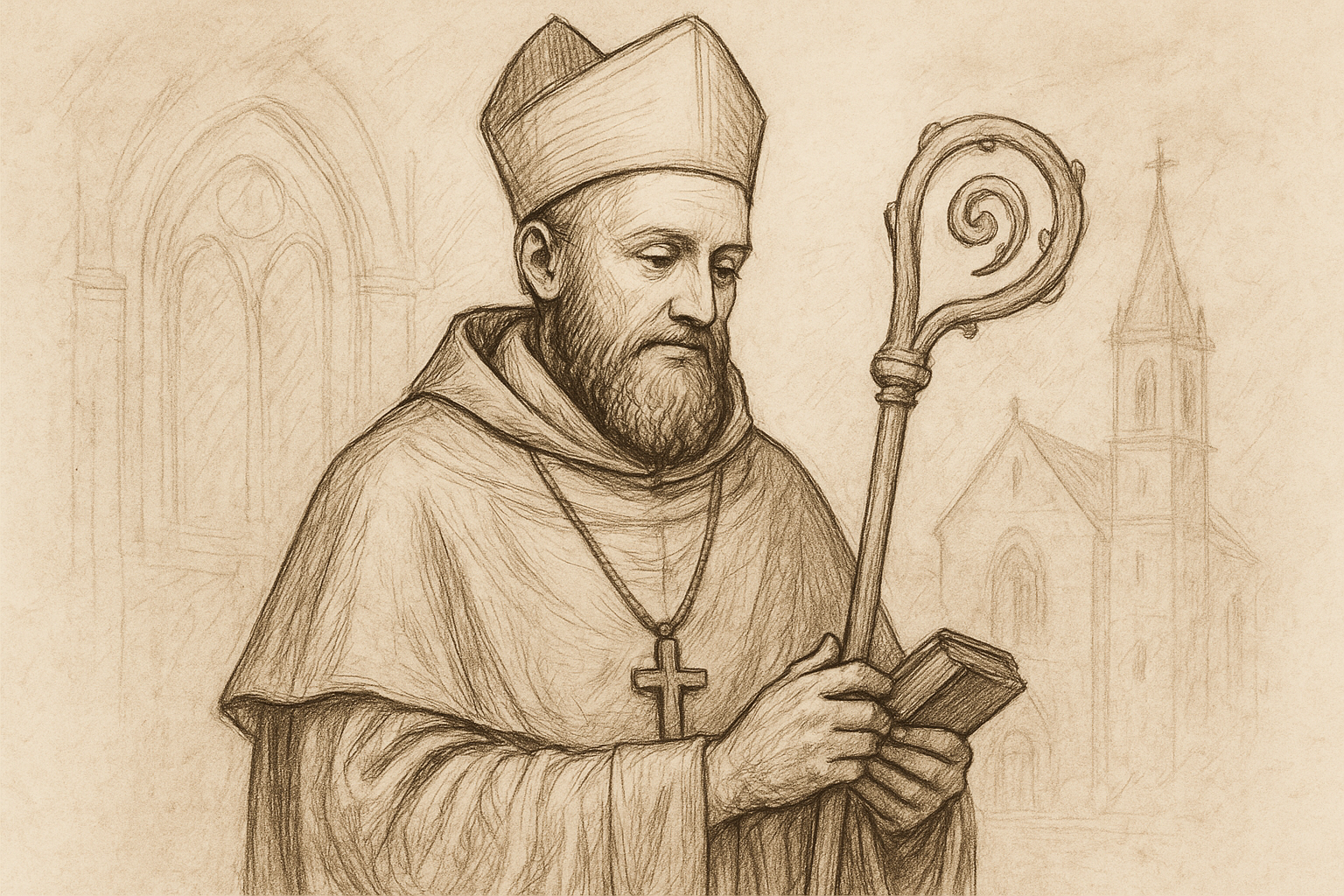
Francis became Bishop of Geneva in 1602, though the city itself was then under Protestant control and he often ministered from nearby Annecy. His appointment was not glamorous. It was demanding, politically complicated, and shaped by the pastoral needs of a divided region. Yet he embraced the work with calm determination. He preached, taught, visited, wrote, and guided souls with remarkable steadiness. His success did not depend on force of personality. It depended on trust in God's grace and a patient willingness to meet people where they were.
One of the most striking aspects of his ministry was his approach to controversy. In a period marked by religious conflict, Francis chose persuasion over harshness whenever possible. He did not compromise Catholic teaching, but he believed truth should be spoken in charity. His famous pastoral method was not weakness. It was strength disciplined by love. That is one reason his example still speaks so clearly to Catholics today, especially in an age where speech is often sharper than it needs to be and where argument can easily eclipse witness.
Gentleness is not the absence of conviction. In St. Francis de Sales, it is conviction governed by charity.
The holiness of ordinary fidelity
Francis de Sales is often remembered for his practical spirituality. He wrote for ordinary laypeople as well as clergy and religious, insisting that the call to holiness belongs to every baptized Christian. In his well-known teaching, he encouraged people to serve God in the state of life to which they were called. A mother, a merchant, a judge, a servant, or a pastor can all be holy if they love God sincerely and fulfill daily duties with humility. This was a profound correction to any tendency to imagine sanctity as something remote from daily life.
That perspective remains deeply useful for Catholics. Many believers want a more serious spiritual life, but they think holiness requires a dramatic change of circumstances first. Francis de Sales offers another way. Begin where you are. Be faithful in prayer, attentive in conscience, and charitable in speech. Do not wait for perfect conditions before cooperating with grace. The Gospel often unfolds in hidden fidelity. Scripture itself teaches this pattern: one who is faithful in very little is also faithful in much.
His approach is also liberating because it is realistic. Francis understood human weakness and did not expect people to become saints overnight. He urged steady conversion, not spiritual performance. That makes him especially helpful for Catholics who struggle with discouragement. The Christian life is not about presenting an image of holiness. It is about allowing Christ to shape us gradually, even through our limitations.
Gentleness as a distinctly Christian strength
Francis de Sales is inseparable from gentleness, but his gentleness should not be mistaken for passivity. In Christian terms, gentleness is strength that has surrendered to God. It is the refusal to dominate, humiliate, or react impulsively. It is the kind of meekness that can speak the truth without crushing the person who hears it. This quality is especially powerful because it reflects the manner of Christ, who is both meek and sovereign over all things. Take my yoke upon you, and learn from me; for I am gentle and lowly in heart
Francis also knew that the interior life matters. A person cannot give peace to others if he is ruled by impatience within. That is why his spiritual counsel often focuses on the heart, the habits of thought, and the discipline of self-command. Gentleness begins there. It grows through prayer, self-knowledge, and repeated acts of charity. It is not sentimental softness. It is moral and spiritual maturity.
For Catholics today, this matters in families, parishes, workplaces, and online conversations. Much damage is done when truth is separated from kindness. Francis de Sales teaches that the two belong together. A Catholic witness becomes more credible when it is marked by firmness without pride and compassion without confusion.
A doctor of the Church for the practical life of grace
Francis was later named a Doctor of the Church, a recognition of the enduring value of his teaching. His books, especially Introduction to the Devout Life and Treatise on the Love of God, have helped generations of Christians understand that devotion is not reserved for monasteries. He wrote with clarity and pastoral warmth, never losing sight of the fact that theology should serve souls.
His practical wisdom is one reason he remains so beloved. He understood that many people want to love God more but do not know how to begin. His answer was often wonderfully concrete: order your day around prayer, examine your conscience honestly, receive the sacraments faithfully, and carry out your responsibilities with peace. These are not flashy methods, but they are reliable paths to holiness.
- He helped Catholics see that holiness belongs to everyday life.
- He showed that doctrinal clarity and gentleness can belong together.
- He offered spiritual direction shaped by patience rather than pressure.
- He modeled a bishop's heart that was both pastoral and intellectually serious.
What his witness says to the modern Catholic heart
Many Catholics live with the sense that they are always behind spiritually. They compare themselves to idealized images of saints and conclude that they are too distracted, too ordinary, or too weak to grow in holiness. St. Francis de Sales answers that anxiety with serenity. He does not deny struggle, but he refuses despair. Grace is real, and grace works in human weakness when a soul keeps turning back to God.
He also helps correct another modern temptation: the belief that effectiveness requires urgency at all costs. Francis knew that souls are not won by agitation. Sometimes the most persuasive witness is a calm conscience, a generous word, or a patient silence. In a culture that rewards speed and intensity, his example feels almost countercultural. Yet it is deeply Gospel-shaped. The Kingdom of God often advances quietly, like seed hidden in soil before it bears fruit. The kingdom of God is as if a man should scatter seed upon the ground
This is one reason his witness continues to inspire Catholics. He shows that sanctity can be thoughtful without becoming detached, active without becoming restless, and compassionate without becoming vague. He invites believers to trust that the Holy Spirit works not only in great events, but in the steady formation of a Christian soul.
Learning from a saint of steady charity
When Catholics turn to St. Francis de Sales, they do not find a saint who glamorizes difficulty. They find a shepherd who believed that love can shape everything: words, choices, tone, and attention. His life asks a simple but searching question: am I allowing Christ to make me gentle enough to be trustworthy, and firm enough to be faithful?
That question can be brought into prayer, especially when life feels hurried or tense. Francis de Sales does not promise an easy road. He offers a humane one, illuminated by grace. His witness still speaks because it is rooted in the perennial rhythm of Catholic life: truth received in humility, mercy practiced in daily acts, and holiness pursued with peace.
In that sense, St. Francis de Sales Catholic inspiration is not limited to those who study saints or spiritual classics. It belongs to any Catholic who wants to grow in Christ without losing charity along the way. His life suggests that the Church still needs believers who are clear, calm, and faithful in little things. That kind of witness may not seem loud, but it endures.
Keep Reading on Lets Read The Bible
Frequently Asked Questions
Why is St. Francis de Sales associated with gentleness?
He consistently taught and practiced a pastoral style marked by patience, kindness, and respect for the person before him. His gentleness was not weak sentiment, but a disciplined charity that preserved truth while avoiding harshness.
What is St. Francis de Sales best known for?
He is best known for his practical spiritual writings, especially Introduction to the Devout Life, and for teaching that holiness is possible for ordinary laypeople living everyday responsibilities.
How can Catholics apply his example today?
Catholics can follow his example by growing in calm speech, faithful prayer, honest self-examination, and steady charity in family, work, and parish life. His witness encourages gradual, realistic growth in holiness.