Doctrine and Questions
The Rosary as Catholic Memory, Prayer, and Trust
A quiet look at why this prayer endures, what it asks of the heart, and how it draws Catholics closer to Christ.
Site Admin | June 26, 2025 | 76 views
A prayer that is simple, and never shallow
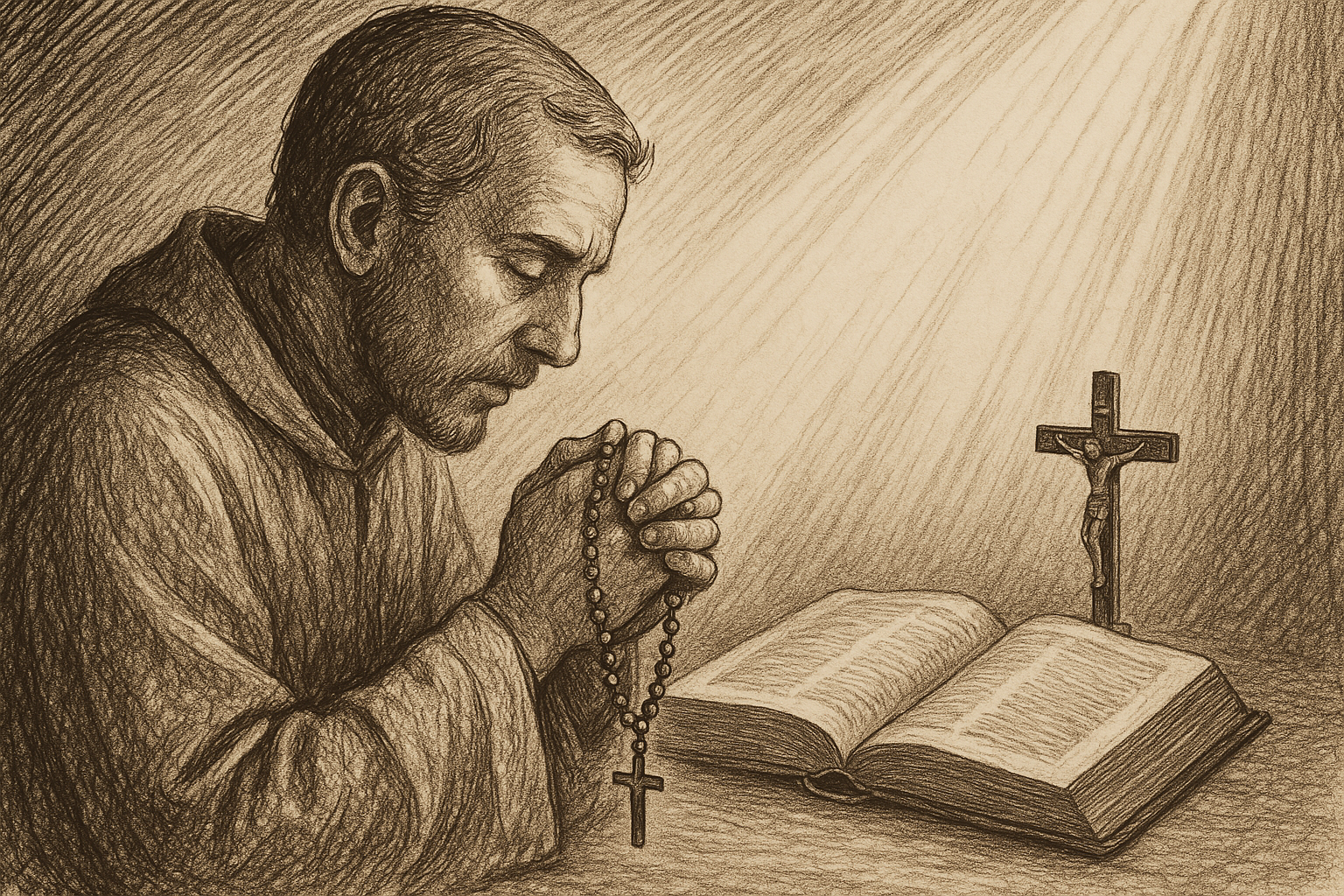
At first glance, the Rosary can look repetitive. The same prayers come again and again, bead after bead, decade after decade. Yet many Catholics have found that its very repetition is part of its gift. The Rosary does not ask the mind to go blank. It asks the heart to stay with Christ.
This is why Catholics pray the Rosary Catholic teaching teaches so steadily: it is a prayer rooted in the Gospel, ordered toward Jesus, and prayed with Mary as mother and companion. It is not a substitute for Scripture, the Mass, or the sacraments. Rather, it is a way of entering more deeply into the mysteries of salvation by praying with the Church across time.
In a world that often rewards speed and fragmentation, the Rosary offers a slower rhythm. It gathers attention. It invites silence between words. It helps the believer remember what matters most.
Christ remains at the center
The most important point about the Rosary is that it is Christ-centered. Every decade is tied to a mystery from the life of Jesus: his Incarnation, Passion, Resurrection, and the glory that follows. When Catholics pray the Rosary well, they are not merely reciting formulas. They are contemplating the saving work of Christ.
That connection to Scripture matters. The Rosary opens with words taken from the Gospel: the angel's greeting to Mary and Elizabeth's blessing. Hail, full of grace and Blessed are you among women are not added decorations. They are biblical foundations for the prayer. The central prayers also keep the believer within the basic language of Christian faith: the Our Father given by the Lord himself, and the Gloria that praises the Trinity.
Even the structure of the Rosary teaches something important. It places praise before petition. It begins with God, returns to God, and asks for grace in God's mercy. This is a very Catholic instinct. Prayer is not only about asking for favors. It is about adoration, memory, gratitude, and surrender.
Mary is not the goal, but the way Christ is loved more fully
Some people worry that praying the Rosary gives Mary too much attention. Catholics should take that concern seriously, because any true devotion to Mary must lead to Jesus. The Church has always insisted on this. Mary is not a rival to Christ. She is his mother, his first disciple, and a sign of what grace can do in a human life.
The Gospel itself shows Mary pointing beyond herself. At Cana she tells the servants, Do whatever he tells you. That sentence is the spirit of Marian devotion in miniature. Mary does not keep attention for herself. She directs it to her Son.
When Catholics pray the Rosary, they are asking Mary to pray with them and for them. That is not foreign to biblical Christianity. Christians ask one another for prayer all the time. The saints are not dead in Christ but alive to God, and the Church understands that those united with the Lord continue in loving communion. To ask Mary to intercede is to ask a mother in heaven to pray for her children on earth.
Her role is always subordinate to Christ's unique mediation. Catholics do not pray to Mary as if she were divine. They honor her as the Lord's servant, blessed among women, and especially close to the mysteries of his life.
The Rosary forms memory, and memory shapes faith
One reason Catholics pray the Rosary is that human beings need holy memory. We forget quickly. We are pulled by worries, responsibilities, temptations, and noise. The Rosary returns the mind again and again to the life of Jesus. It makes the mysteries of salvation familiar enough to sink into the soul.
This is not a small thing. Faith is not only an idea to agree with. It is a life to be formed. Repeated prayer can shape desire, attention, and even hope. The Rosary does this gently. It allows a person to move through the prayers while meditating on scenes from the Gospel: the Annunciation, the Nativity, the Carrying of the Cross, the Resurrection, and the glory of heaven.
In that sense, the Rosary is both contemplative and practical. It can be prayed in church, at home, during a commute, at a bedside, or in times of grief. Its portability has helped generations of Catholics pray through ordinary life. It does not require a special setting to become sacred. It brings sacred attention into ordinary moments.
The Rosary is not meant to hurry the soul. It is meant to steady it long enough to see Christ more clearly.
Scripture, tradition, and the logic of repeated prayer
Some objections to the Rosary focus on repetition itself. But Scripture does not condemn all repeated prayer. Jesus warns against empty babbling, not against prayers said more than once. In fact, he himself prayed the same words in Gethsemane. He prayed for the third time, saying the same words. In heaven, the angels and saints offer repeated praise before God. Holy, holy, holy is repeated worship, not vain speech.
The point is not whether words recur. The point is whether the heart is engaged. Repetition can be mechanical, but it can also be meditative. A person walking with a trusted friend may repeat simple phrases without boredom because the relationship matters. The Rosary works in a similar way. Its steady words create room for contemplation.
There is also a deeply biblical rhythm to pairing vocal prayer with meditation. The Psalms do this constantly. Israel remembered God's deeds by praying them aloud. Mary herself is presented in Luke as one who pondered the mysteries of her Son in her heart. The Rosary joins that biblical pattern of remembering, praising, and pondering.
The Rosary and the Catholic life of grace
Catholics pray the Rosary not because it magically replaces conversion, but because it disposes the heart to grace. Like any devotion, it bears fruit when it is prayed with faith, humility, and openness to God's will. The Rosary is powerful precisely because it keeps returning the believer to the ordinary means by which God saves: the life of Christ, the intercession of the saints, repentance, and trust.
It also has a penitential character. Many Catholics reach for the Rosary in moments of anxiety or sorrow because it gives form to feelings that are otherwise hard to speak. Its prayers place human weakness beside divine mercy. That is fitting, because Christian prayer is always a response to grace, never an attempt to control God.
When prayed faithfully, the Rosary can deepen a person's attachment to the sacraments. It can prepare the soul for Mass, confession, or Eucharistic adoration. It can also continue the prayer of the Church after those moments are over. In that way, it serves daily Christian life without replacing the liturgy at the center of Catholic worship.
What the Rosary is not
Clear teaching matters here, because misunderstandings about the Rosary are common. Catholics do not believe the Rosary is a magical object. The beads themselves do not save. Salvation comes from Christ alone, by his grace.
Catholics also do not pray the Rosary because they think Mary is a fourth person of the Trinity or because she can grant grace apart from God. Her greatness lies entirely in what God has done in her and through her. Every authentic Marian devotion is meant to sharpen, not blur, the Church's faith in Jesus.
Finally, the Rosary is not meant to be a burden. It is a gift. Some people pray it every day. Others pray one decade at a time. Some are drawn to it in youth, others in old age, and still others only after seasons of loss or conversion. The Church does not require every Catholic to pray the Rosary, but she has long recommended it as a wise and fruitful devotion.
Why it continues to help believers now
The Rosary endures because human beings still need what it offers: order, memory, Scripture, contemplation, and trust. It gathers the central events of salvation into a form that ordinary people can carry in their hands. It invites the believer to slow down and let Christ's life become personal.
For many Catholics, the Rosary becomes most precious not in moments of spiritual ease but in moments of need. It may be prayed for a sick child, for a troubled marriage, for peace in the heart, for the dead, or for strength to carry daily burdens. In those moments, the prayer does what the Church has always hoped it would do. It places a human life inside the mysteries of Christ.
That is why Catholics pray the Rosary Catholic teaching has handed down with such care. It is a prayer of remembrance and surrender, praise and petition, Scripture and love. It keeps the eyes of the heart fixed on Jesus, while asking Mary to help us say yes to him as she did.
And when the final beads are turned, the prayer does not really end. It continues in the quiet hope that Christ is near, that his mysteries are still at work, and that the soul, having remembered them, may learn to live them.
Keep Reading on Lets Read The Bible
Frequently Asked Questions
Do Catholics pray the Rosary instead of reading the Bible?
No. The Rosary draws directly from Scripture and is meant to support a life shaped by the Bible, not replace it. Many Catholics use the Rosary as a way of contemplating Gospel scenes more deeply.
Why do Catholics ask Mary to pray for them in the Rosary?
Because Catholics believe the saints live in communion with Christ and can intercede for the Church. Mary's role is always to lead people to her Son, never away from him.
Is the Rosary required for all Catholics?
No, the Rosary is a cherished devotion, but it is not required in the way the Mass or the sacraments are. The Church recommends it because it is a fruitful way to pray and meditate on the mysteries of Christ.