Family and Vocation
When Suffering Becomes a Place of Grace
A Catholic suffering reflection for ordinary family life, where pain, prayer, and hope often arrive together
Site Admin | November 6, 2025 | 85 views
Suffering is rarely welcome, but it is never far from real life
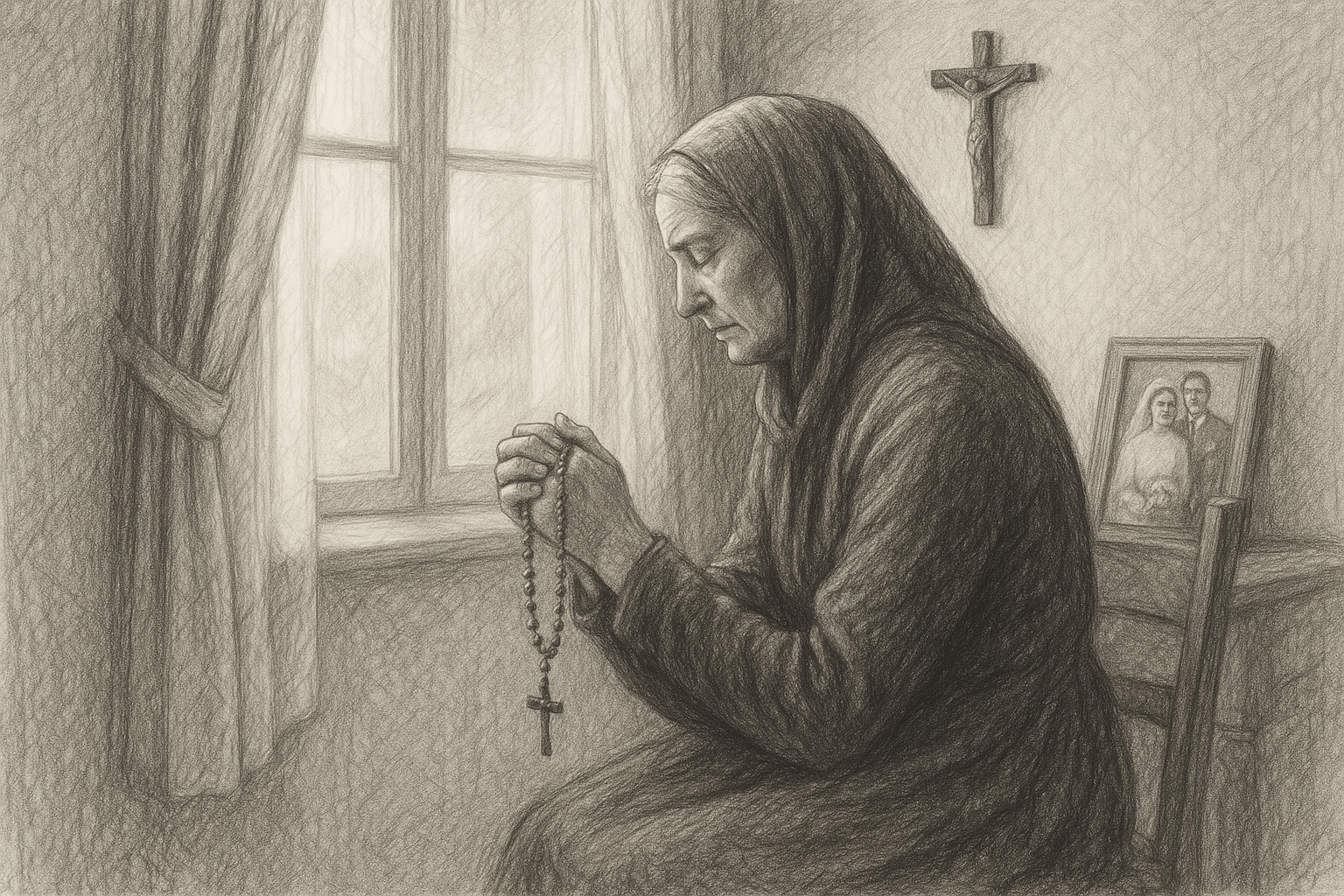
Every family eventually learns that suffering does not wait for a convenient season. It arrives through illness, disappointment, financial strain, misunderstanding, grief, or the quiet exhaustion that comes from carrying more than one heart can comfortably hold. In those moments, a suffering reflection can feel less like a devotional exercise and more like a necessity for survival.
The Catholic faith does not pretend that pain is small. It does not ask believers to smile through wounds or speak lightly about what is heavy. Instead, it places suffering before the Cross of Christ, where human pain is neither denied nor wasted. In Jesus, suffering is taken up, entered into, and transformed from within.
That does not mean suffering is good in itself. It means God is able to meet us there. For parents, spouses, children, and those discerning a vocation, this is a hard but vital truth: the Lord is not absent when life becomes difficult. He is often closest when words are few and strength is thin.
Scripture never hides the reality of pain
The Bible is honest about anguish. The Psalms speak with remarkable freedom: How long, O Lord? believers ask again and again. Job sits in ashes and refuses easy explanations. The prophets weep for a people who have wandered. Even Mary, in her hidden and holy way, stands near the suffering of her Son and receives into her own heart the sorrow of the Passion.
Saint Paul writes with equal realism. He does not present Christian life as a shield against hardship. Instead, he says, we also boast in our afflictions, knowing that affliction produces endurance, and endurance, proven character, and proven character, hope Romans 5:3-4. That line matters because it does not deny affliction. It places hope on the far side of endurance, not around it.
Paul also says that God comforts us in our affliction so that we may comfort others with the consolation we ourselves receive 2 Corinthians 1:3-4. This is a profound pattern for Catholic life. Suffering does not isolate us forever. When united to Christ, it can deepen compassion, making us gentler with the woundedness of others.
In the Gospels, Jesus does not stand at a distance from pain. He weeps at Lazarus' tomb John 11:35. He is moved with pity for the crowd. He sweats blood in Gethsemane. He carries the Cross. The Son of God does not merely explain suffering from above. He enters it from within.
The Cross gives suffering a new center
Catholic teaching has always held the Cross at the center of the Christian mystery. Not because suffering is itself holy in every form, but because Christ has joined Himself to it. Through His Passion, death, and Resurrection, He has opened a way for human suffering to become united with love.
This is one reason Catholics speak of offering up suffering. The phrase can be misunderstood when it sounds like passive resignation. In its best sense, however, it is an act of faith. It says, in effect, Lord, I do not choose this pain, but I place it in Your hands. Use it for love if You will.
That prayer is not about making light of evil. It is about refusing despair. It acknowledges that a sickbed, a lonely season, or a long struggle in family life can become a place where grace works quietly, even when nothing outward seems to change.
Saint John Paul II wrote movingly about the meaning of human suffering in light of the Cross, teaching that Christ has given suffering a redeeming power when it is united to Him. For ordinary Catholics, this means there is no wasted prayer, no hidden tear, no patient endurance that disappears from God's sight.
Suffering in family life often comes without announcement
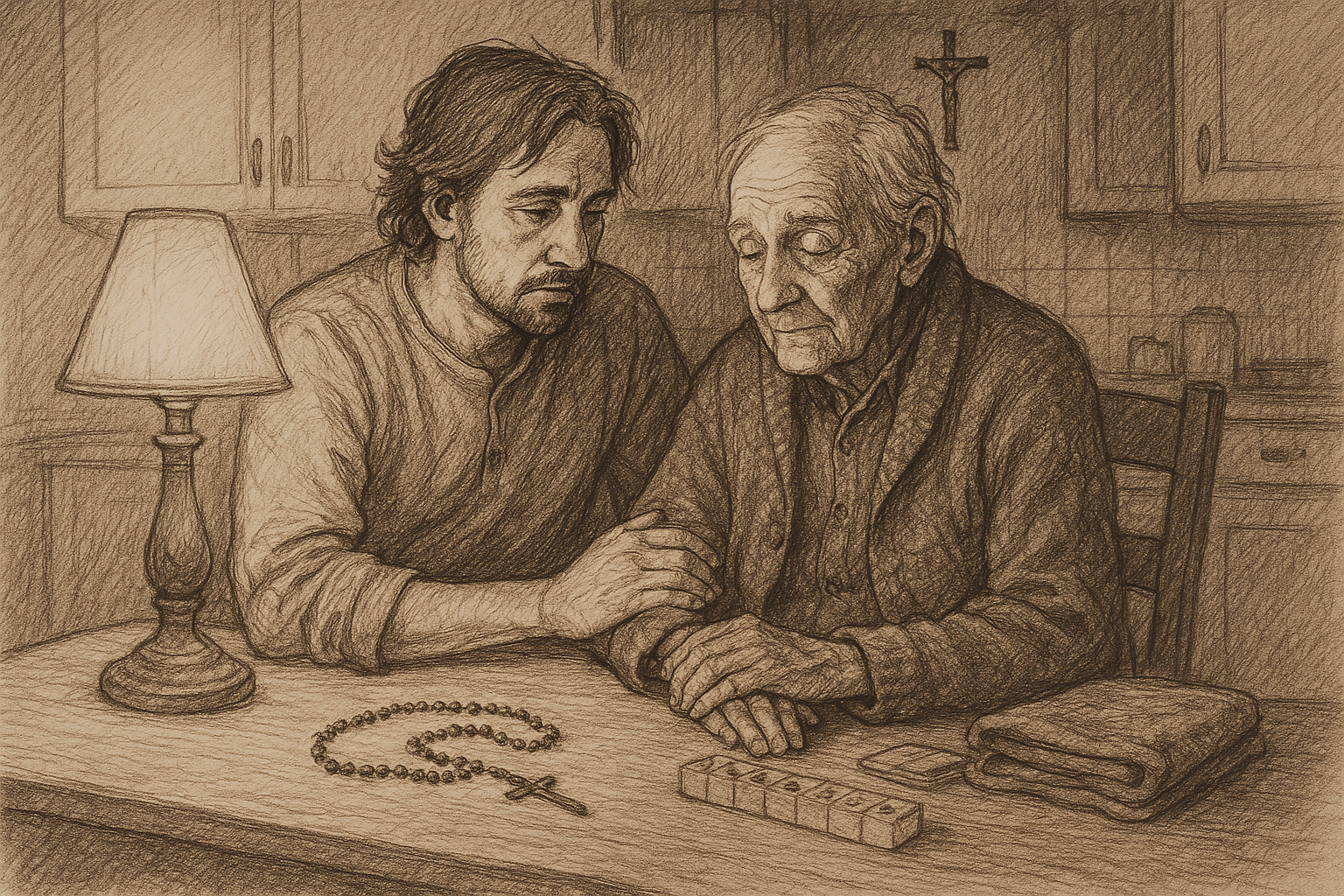
Many of the hardest sufferings are not dramatic. They are repetitive. A parent worries about a child. A spouse grieves a change in the person they love. A family member carries a chronic illness, and everyone adjusts around it. Sometimes the pain is not even physical. It can be the ache of division, the disappointment of unrealized hopes, or the long ache of caring for someone who does not seem to notice the sacrifice being made.
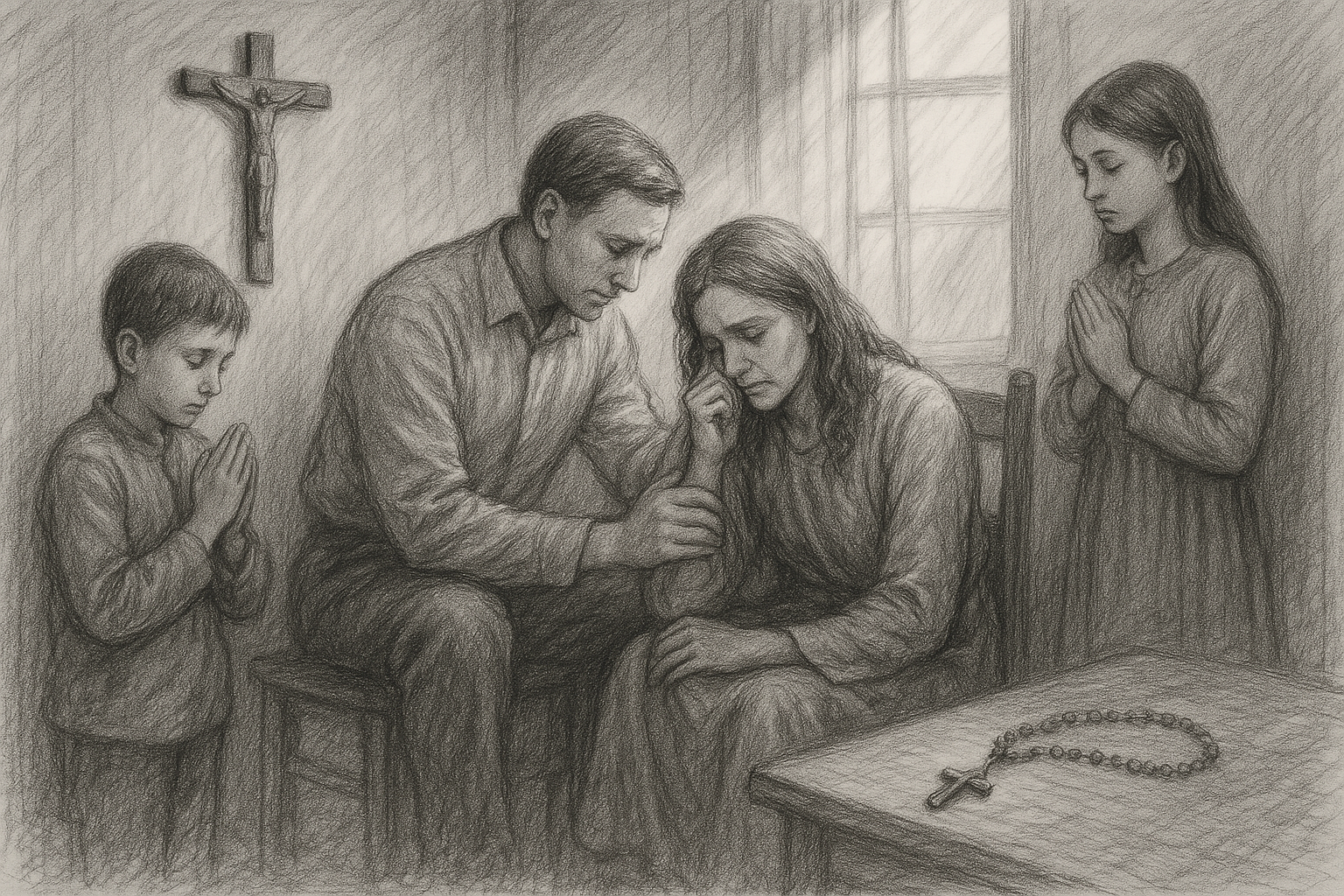
This is where Catholic realism is helpful. Family life is a vocation of love, and love is rarely painless. The daily yes required of marriage, parenthood, caregiving, and fidelity often involves giving up comfort, control, and certainty. Suffering, in this setting, is not just a private burden. It becomes part of the way love is tested and purified.
Scripture gives us images for this hidden labor. A mother remembers things in her heart. A father protects quietly. An elderly saint waits faithfully in the temple. A just man receives a difficult call and does not turn away. These are not carefree lives. They are lives marked by trust.
When suffering enters family life, it can reveal where our trust has been resting. We often discover that we have depended on plans, predictability, or our own competence more than we realized. Pain exposes these false supports. That exposure can be frightening, but it can also be healing if it leads us back to God.
Hope is not optimism, but communion with Christ
Christian hope is not the same as positive thinking. It does not insist that everything will work out according to our preferred outcome. It is deeper than that. Hope means that in Christ, God is already present in what we cannot fix. Hope means that the Resurrection is not a metaphor but a promise.
Saint Peter tells believers to be ready to give a reason for the hope that is within them 1 Peter 3:15. That hope becomes credible when it is visible in suffering. A patient mother, a faithful husband, a lonely widow, a sick child who still prays, a caregiver who continues to love, a priest who remains steady in trial, a young person who keeps turning toward God. These lives speak more loudly than many arguments.
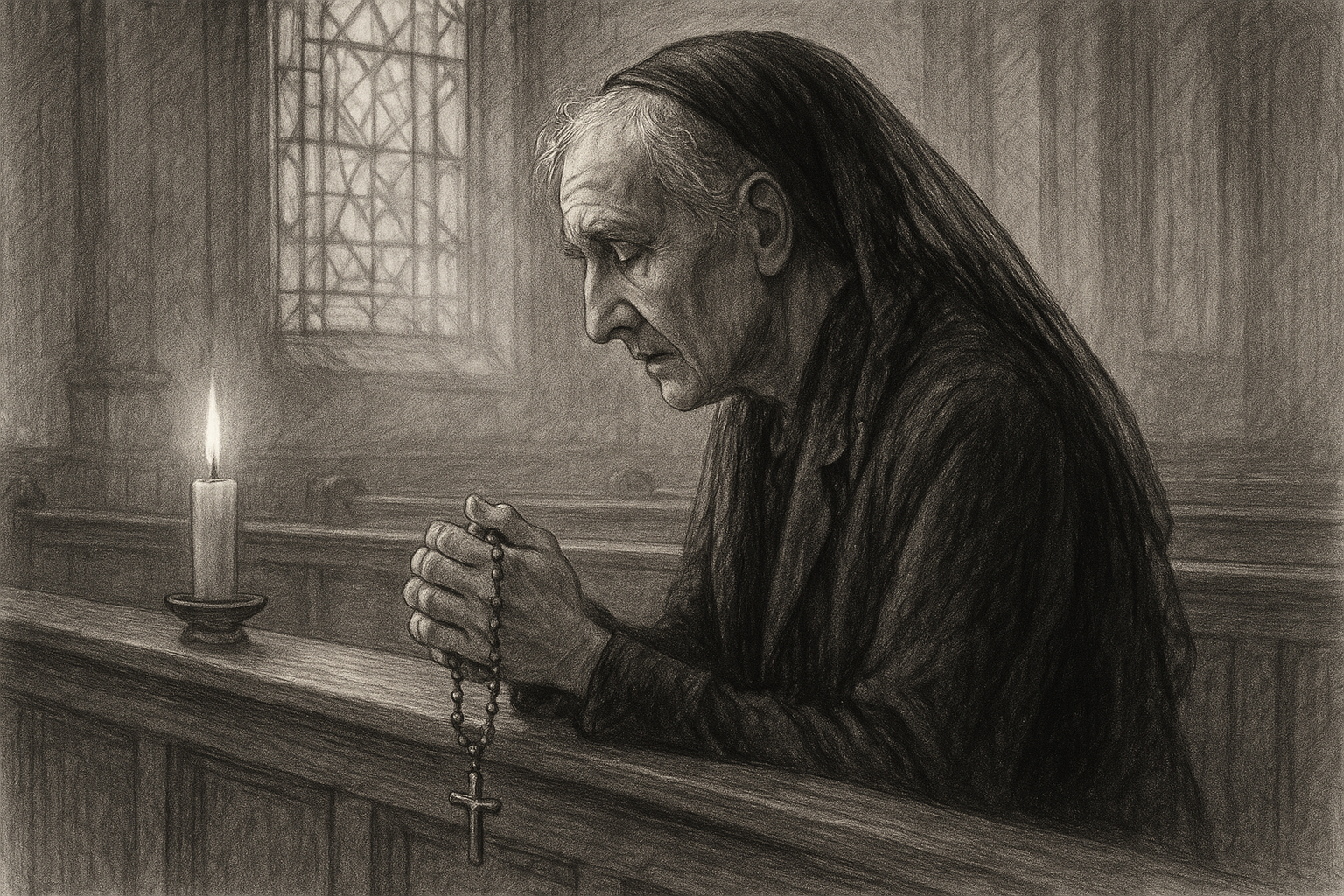
Hope does not erase tears. It changes their meaning. Tears can become prayer when they are offered to Christ. Groaning can become intercession. Waiting can become purification. The saints often understood this better than we do. They knew that grace does not always arrive as relief. Sometimes it arrives as courage.
Lord, teach us to trust that what is hidden in pain is not hidden from You.
Practical ways to pray through suffering
In times of distress, it helps to keep prayer simple. Suffering can make elaborate devotion feel impossible, but even the smallest acts of faith matter. Catholics do not have to manufacture perfect language before God. The heart can speak plainly.
- Begin the day with a short offering: Jesus, I unite this suffering to Your Cross.
- Pray one Psalm slowly, especially a Psalm of lament or trust.
- Ask for help from the Blessed Virgin Mary, who knows sorrow without despair.
- Receive the sacraments regularly, especially Confession and the Eucharist, which strengthen the soul in weakness.
- Offer a quiet act of patience for someone else who is also suffering.
These practices do not remove the cross, but they make room for grace to work in it. Often the most fruitful prayer in suffering is not eloquent. It is faithful.
It is also wise to seek help when suffering becomes overwhelming. Catholic spirituality does not oppose prudence or appropriate medical and emotional care. If grief, anxiety, depression, or pain becomes severe, asking for assistance can be an act of humility and stewardship. Grace does not replace human care; it deepens and supports it.
Mary shows us how to remain with God in sorrow
No meditation on suffering is complete without turning to Mary. She is not distant from the pain of believers. She stands beneath the Cross and keeps faith when everything visible seems to be failing. She does not understand everything in advance, but she remains.
That word, remains, is important. Many sufferings cannot be solved quickly. Sometimes the faithful response is not to fix but to remain with God. Mary teaches this kind of steadfastness. She does not flee from suffering or interpret it as proof that God has abandoned her. She keeps her place at the foot of the Cross.
For Catholics in family life, Mary's example is precious. She shows that quiet endurance is not weakness. It is strength purified by love. She teaches us that fidelity in sorrow can be one of the most powerful forms of discipleship.
When suffering feels meaningless, the Church remembers it is never alone
One of the worst features of suffering is the feeling of being cut off. Pain can make a person feel forgotten, useless, or spiritually inert. Catholic faith answers that loneliness with communion. No one suffers alone in the Mystical Body of Christ.
This is why the prayers of the Church matter so much. The Mass, the Psalms, the saints, the intercession of the Blessed Mother, the support of fellow believers, all of it says that your pain has a place within a larger story. The Body of Christ is large enough to hold your sorrow.
When you cannot explain what is happening, the Church can still pray. When you cannot see where this road leads, Christ still walks it with you. When your family life feels marked more by burden than blessing, the Lord is still forming something in you that may only become clear later.
Suffering is not the full story, but it is often part of the story. In Christ, it can become a place where love grows deeper, hope becomes sturdier, and faith learns to speak not only in joy but in tears. That is not a small thing. It is one of the great mercies of the Gospel.
Keep Reading on Lets Read The Bible
Frequently Asked Questions
How can Catholics offer suffering to God without becoming passive?
Offering suffering to God means uniting it to Christ in prayer, not refusing to act. Catholics should still seek help, use prudence, and pursue healing when possible. The offering is spiritual surrender, not resignation to avoidable harm.
What Scripture passage is especially helpful in a suffering reflection?
Romans 5:3-5, 2 Corinthians 1:3-4, and many Psalms of lament are especially helpful. They show that suffering can coexist with hope, endurance, and consolation in God.
Can suffering have meaning even if it never goes away?
Yes. Catholic faith teaches that suffering can be united to Christ and become spiritually fruitful even when it remains unresolved. Its meaning does not depend only on relief, but on communion with the Lord who suffers with us and redeems us.