Family and Vocation
Widowhood and the Quiet Work of Christian Hope
In grief, memory, and daily duty, the Church teaches widows and widowers to look for Christ who keeps every promise.
Site Admin | November 24, 2025 | 103 views
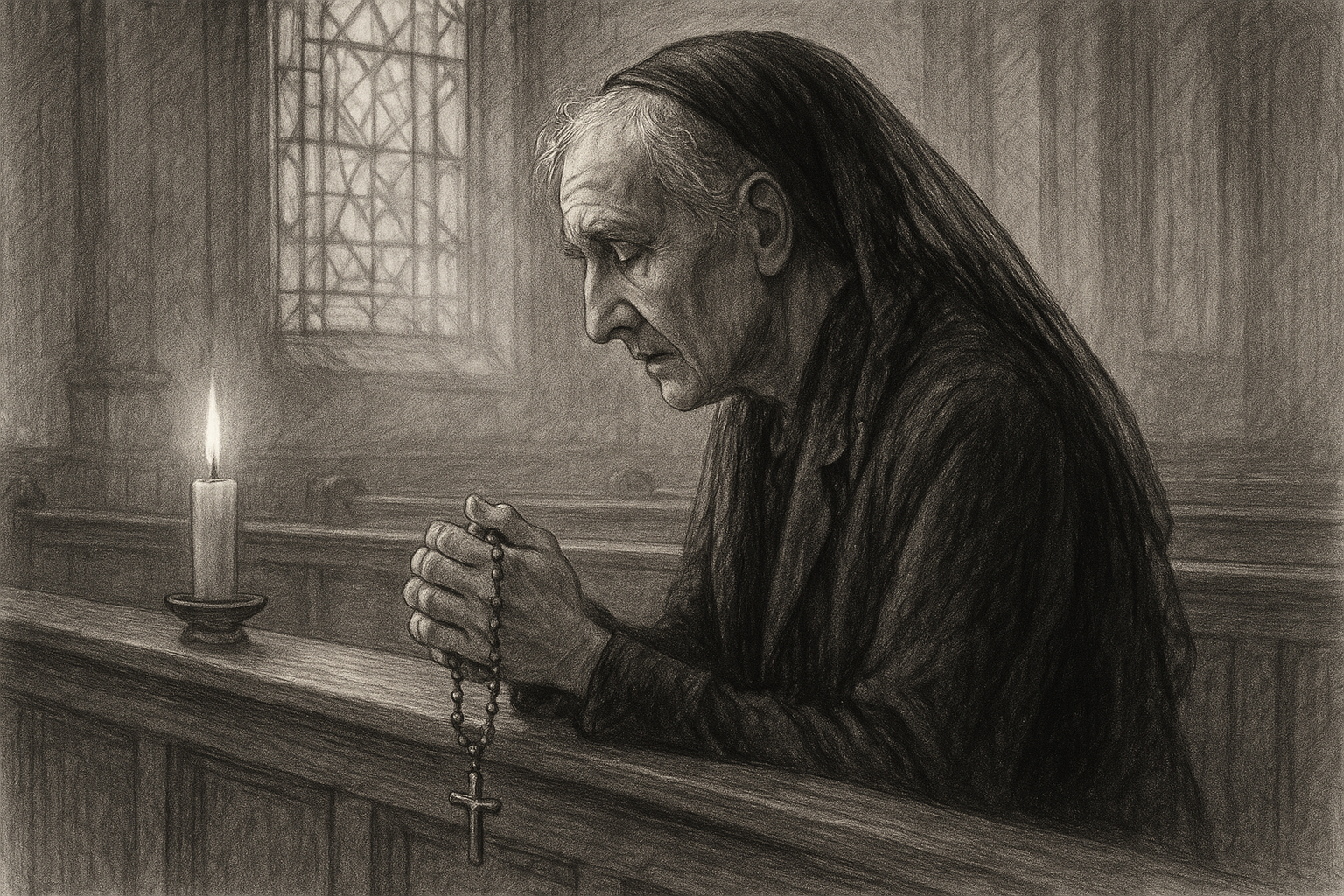
Widowhood changes more than a household. It changes the rhythm of meals, the shape of silence, the way a chair is left empty at table, and even the way one prays. The loss of a spouse can feel like the loss of a shared language, a companion in ordinary things, and a witness to one's own life. Yet the Christian does not grieve without hope. The Church speaks to widowhood not with sentimental language, but with the realism of the Cross and the promise of the Resurrection.
A widowhood and christian hope reflection begins here: not by denying sorrow, but by placing sorrow within the larger story of God's mercy. Christian hope does not tell the bereaved to pretend that death is small. It tells the bereaved that death is not final. Christ has entered the grave and returned victorious. That truth does not erase tears, but it gives them direction.
Widowhood in Scripture is never treated as invisible
Scripture pays close attention to widows. In the Old Testament, widows are repeatedly named among those whom God especially protects. Israel is warned not to oppress them, because the Lord hears their cry. This is not a minor social concern. It reveals something central about God's heart: He draws near to those whose support has been shaken.
The Book of Ruth gives one of the most tender portraits of widowhood in all of Scripture. Naomi loses her husband and sons and returns home saying, Do not call me Naomi. Her grief is honest, and it is not quickly resolved. Yet Ruth remains beside her, and God quietly weaves a future from what seems ruined. That does not mean Naomi's sorrow was unreal. It means the Lord was already at work within it.
In the New Testament, Jesus' attention to widows is just as striking. He sees the widow who gives two small coins, and He sees the widow of Nain whose only son has died. In both cases, Christ notices the person the world might overlook. He does not stand at a distance from human loss. He enters it, speaks into it, and in the case of Nain, brings life where death seemed to have the final word: Do not weep.
The Church has always read these passages as more than isolated stories. They show that the Lord does not forget those who mourn, and He never treats widowed life as spiritually second class. Even when a spouse has died, the person is not abandoned by God. The vocation changes, but grace remains.
Christian hope does not rush past grief
Many people imagine hope as a cheerful refusal to dwell on pain. But Christian hope is more serious than optimism. It does not say that everything will work out according to our preferences. It says that Jesus Christ is risen, and therefore every suffering person may entrust the future to Him. This hope is steady because it rests on a Person, not on feelings.
For the newly bereaved, that distinction matters. Some days the grief is sharp and immediate. On other days it is quieter, but no less real. Hope does not force the heart to grieve on a schedule. It gives the heart permission to lament honestly while still facing God. The Psalms teach this way of praying. They move from complaint to trust, sometimes in the same breath. That movement is deeply Catholic: it is not denial, but surrender.
Widowhood often involves a painful awareness of what can no longer be shared. Decisions that were once made together must now be made alone. Holidays become newly complicated. Simple errands can feel strangely heavy. Christian hope does not minimize those burdens. It asks a better question: where is Christ in the midst of them?
The answer is not always dramatic. Often Christ is present through the sacraments, the kindness of friends, the patience of parish life, and the strength to complete one small duty at a time. Hope is frequently quiet work. It is the grace to get out of bed, to pray a psalm, to answer a phone call, to eat when appetite is poor, to let someone help, to keep one's soul open to God when grief tempts it to close.
The Communion of Saints is not a metaphor
Catholic faith offers widows and widowers something the world often cannot: the Communion of Saints. The dead in Christ are not lost to nothingness. They belong to Him. Their love is no longer mediated by daily conversation or familiar routines, but it is not erased. We do not claim to understand the fullness of the state of the departed, yet we do affirm that those who die in Christ remain within the mystery of His Body.
This is why prayer for the dead belongs so naturally in a widowhood and christian hope reflection. Love does not end at the grave, and neither does prayer. To pray for a deceased spouse is not to live in refusal. It is to continue loving within the order of faith. It is to entrust the one who was cherished to the mercy of God, who judges justly and loves perfectly.
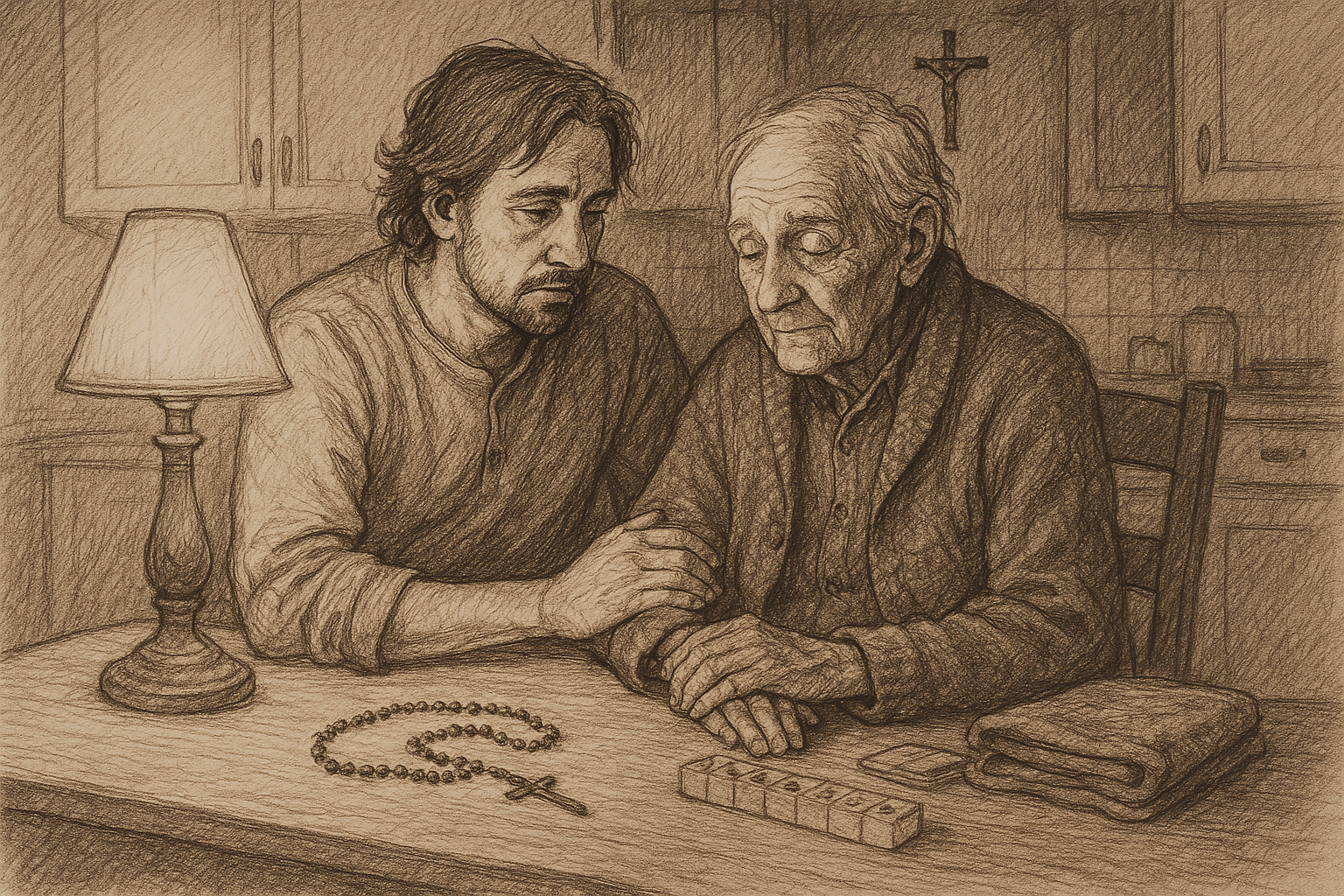
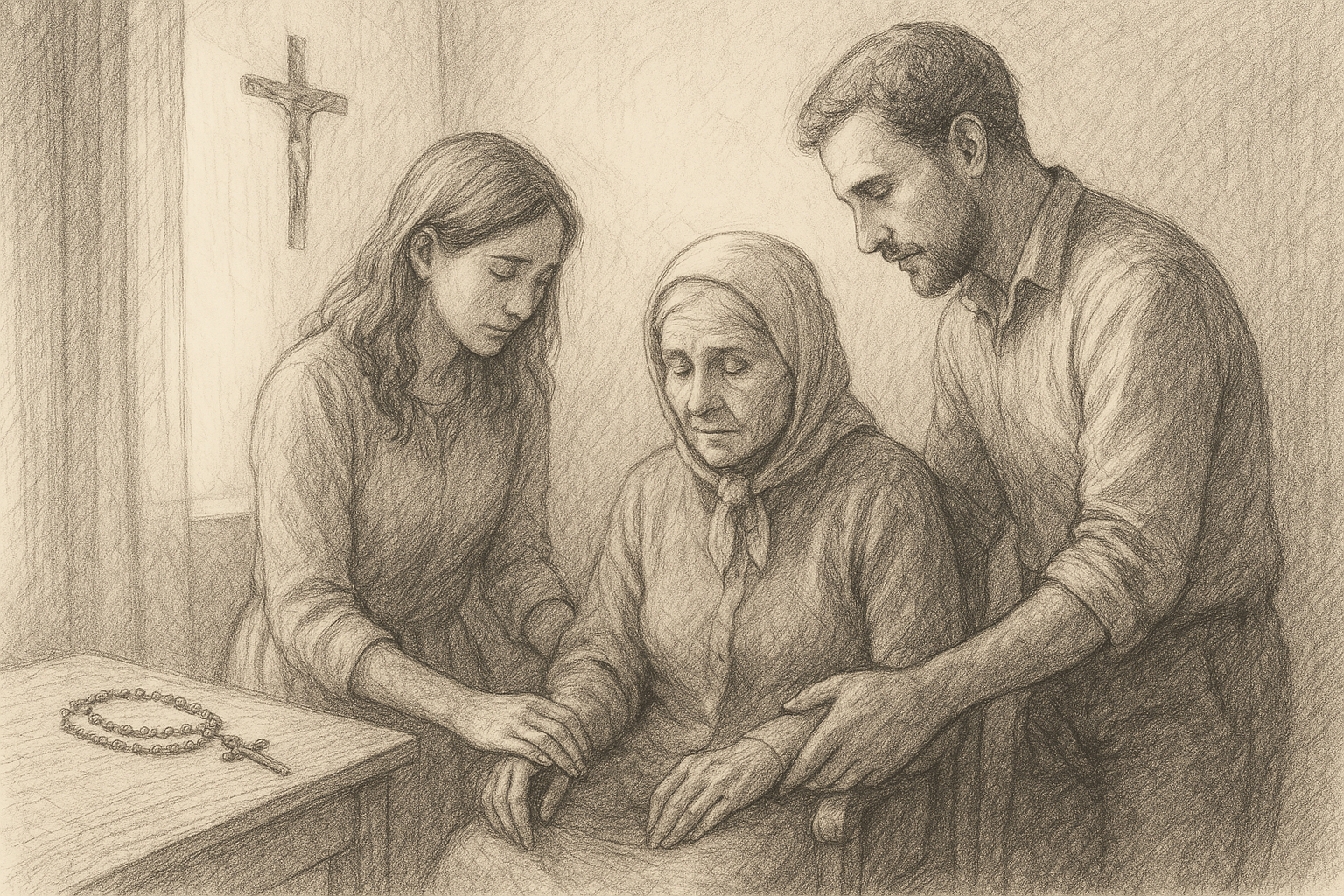
At the same time, the Communion of Saints also means the widow or widower is not isolated. The Church is a family, and the suffering member of that family should not be expected to carry the burden alone. Parish communities do well when they remember names, invite conversation, offer practical support, and allow grief to be present without embarrassment. A simple meal, a note, a Mass intention, or a steady presence can become a real act of charity.
Hope in Catholic life is not a denial of loss. It is the conviction that no loss is stronger than the mercy of Christ, and that love, purified by grace, will not be wasted.
Widowhood can become a hidden vocation
Every Christian state of life carries a call. Marriage is a vocation of mutual self-gift. Widowhood is not chosen in the same way, yet it can still become a place of discipleship. The Church has long recognized widows as women of prayer, service, and dignity. Saint Paul speaks with respect about widows in the life of the Church, especially those who give themselves to supplication and good works. That biblical witness reminds us that widowhood is not merely the end of a role. It can also be the beginning of a new way of belonging to God.
This does not mean that every widow must become publicly active or emotionally composed. It does mean that the Lord can sanctify this season. Some widows are called to a quiet hiddenness. Others find themselves caring for grandchildren, supporting adult children, volunteering, or deepening their prayer life in ways they never expected. Each path can be holy if it remains rooted in grace.
The danger is to measure worth only by usefulness. A person who has lost a spouse may feel less needed, less seen, or less essential. The Gospel corrects that falsehood. In Christ, every baptized person has a lasting dignity that death cannot remove. A widow does not cease to matter when the familiar role changes. Her life is still held by God, still fruitful in ways perhaps invisible to the world.
There can also be a deepening of tenderness. Many widows and widowers become more attentive to others who mourn. They know, from the inside, the loneliness of the first holiday, the awkwardness of meeting people who do not know what to say, and the strange fatigue that comes when grief lingers longer than others expect. Such experience can make a person more compassionate, not less. Suffering can widen the heart when it is surrendered to Christ.
Practical faith for ordinary days
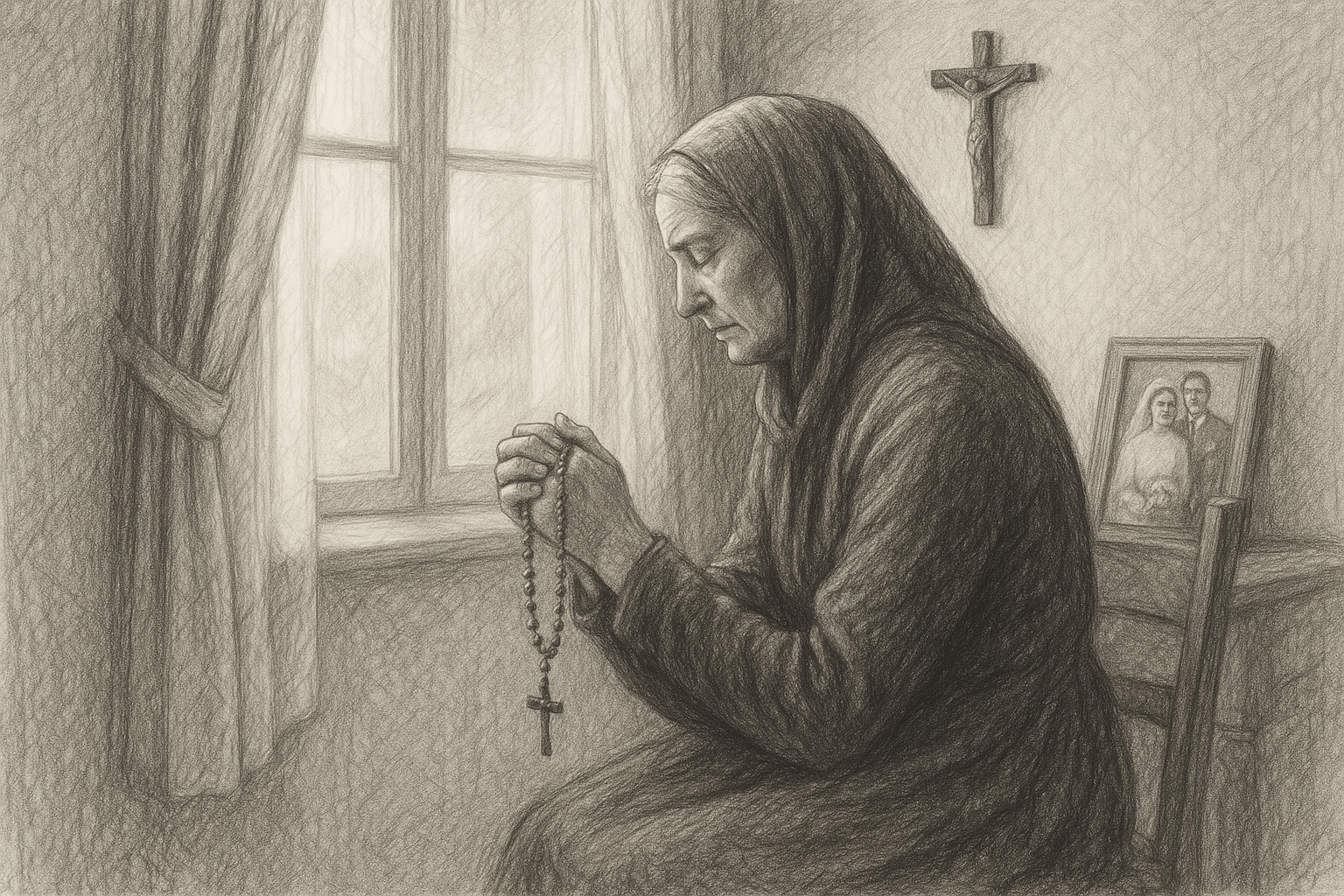
Christian hope is nourished in ordinary practices. For someone living through widowhood, the simplest acts of faith can matter enormously. Morning prayer, even brief prayer, can give shape to the day. Mass, when possible, gathers grief into worship. Confession can help the heart name not only sorrow but the temptations that sometimes accompany it, such as bitterness, despair, or the fear of moving forward. The Rosary can become a companion in long quiet hours.
It also helps to make room for memory without getting trapped in it. Photographs, anniversaries, familiar songs, and shared places may stir deep emotion. That is not a failure of faith. Love remembers. Still, memory becomes healing when it is offered to God. One may thank Him for the gift of the marriage, the years shared, the children raised, the faith transmitted, and the ordinary mercies that shaped a life together.
There may also be practical steps that protect the heart: asking for help with paperwork, allowing trusted family members to assist with decisions, keeping some daily routine, and saying yes to concrete support. Humility is not weakness. In seasons of loss, receiving help can be a form of trust.
At times, widows and widowers wonder whether joy is permitted. It is. Not a shallow or guilty joy, but the sober joy that comes from knowing God has not abandoned them. Laughter may return slowly. Peace may come in fragments. Gratitude may appear alongside tears. The heart does not betray the dead by healing. In fact, healing can become a testimony that love was real and that grace is stronger than despair.
The promise at the center of Christian hope
In the end, Christian hope rests on resurrection. Saint Paul speaks plainly: if Christ has not been raised, then our faith is empty. But Christ has been raised, and because He lives, death does not have the last word. That promise reaches into widowhood with special force. The one who mourns a spouse does not only look backward to what was lost. She is also invited to look forward to the day when God will wipe away every tear and gather His children into the fullness of life.
This hope does not flatten the uniqueness of marriage. A good marriage is a real gift, and its absence is real. But Christian hope places even a great earthly love under the greater mercy of God. What was given in time is not meaningless in eternity. What was faithful in this life is not forgotten by the Lord who remembers every sparrow and every tear.
For the widow or widower who feels the weight of another quiet evening, the Church has only to repeat what Christ has already said: do not be afraid. Not because grief is small, but because the Savior is near. Not because the road is easy, but because He walks it with His people. And not because everything is restored at once, but because the final restoration is sure.
Widowhood may change the house, the calendar, and the heart, but it cannot separate the baptized from the love of God in Christ Jesus. That is the steady center of every true widowhood and christian hope reflection. In sorrow, in memory, in prayer, and in daily duty, the Lord remains faithful.
Keep Reading on Lets Read The Bible
Frequently Asked Questions
How does Catholic teaching support widows and widowers in grief?
Catholic teaching supports widows and widowers by affirming the dignity of their suffering, encouraging prayer for the dead, and reminding them that the Church is a family that shares one another's burdens. The sacraments, parish support, and the hope of resurrection all help sustain the bereaved.
Is it wrong for a widow or widower to feel joy again?
No. In Catholic life, renewed joy is not a betrayal of the spouse who has died. Joy can return as a grace from God, often slowly and quietly, while love and memory remain intact.
What Scriptures are especially comforting in widowhood?
Passages about God's care for widows, the Book of Ruth, the raising of the widow's son at Nain, and the resurrection hope in Saint Paul are especially comforting. The Psalms also give words to lament and trust.