Family and Vocation
Widowhood in the Light of Christ: Hope That Holds When Love Has Changed
A Catholic meditation on grief, daily burdens, and the quiet grace that sustains widows and widowers.
Site Admin | November 23, 2025 | 103 views
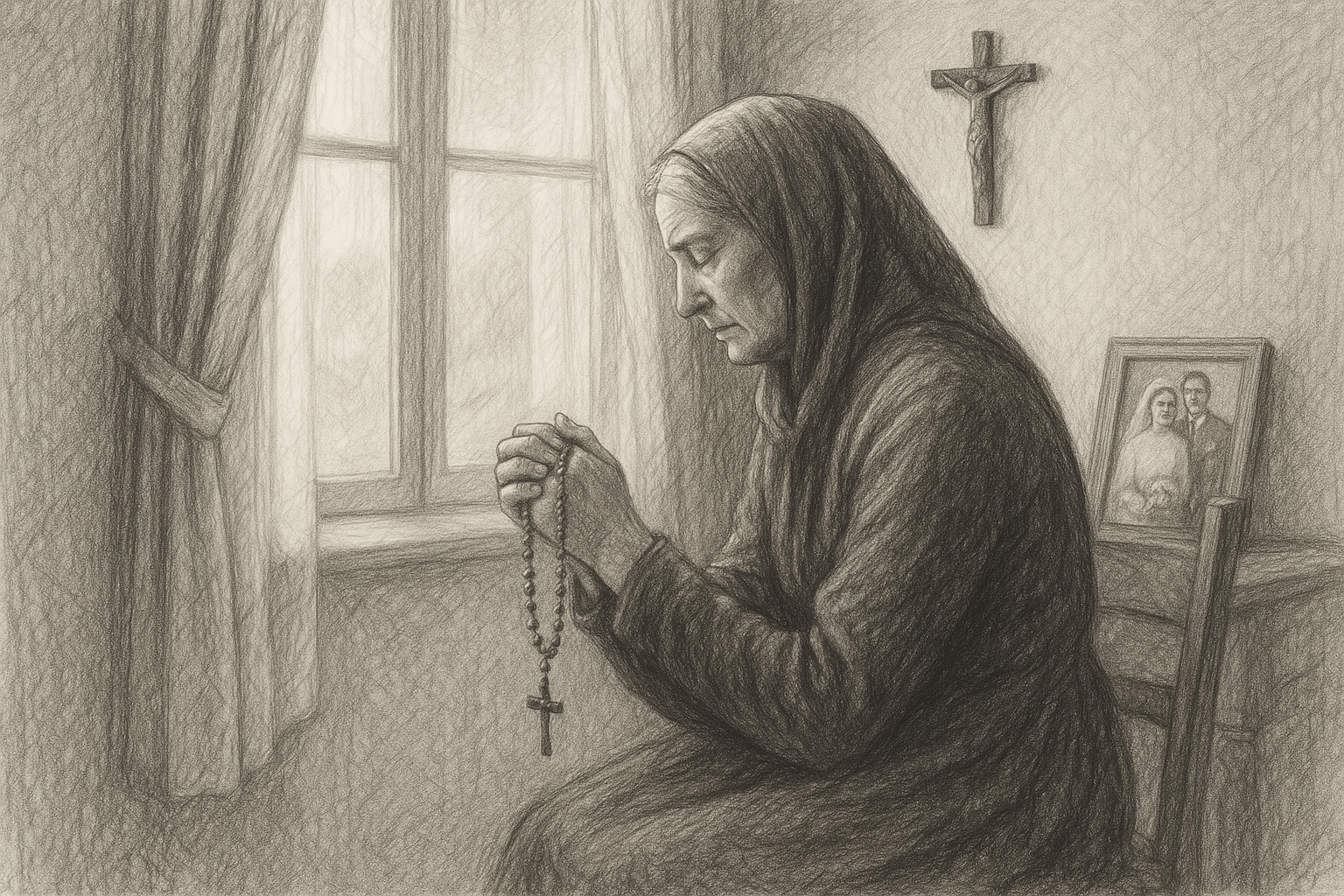
Widowhood is one of the most painful crossings a person can make in this life. It changes the shape of a home, the rhythm of a day, and the way the future is imagined. A chair remains empty. A habit of conversation vanishes. Ordinary tasks suddenly feel heavy because they now have to be carried alone.
The Catholic faith does not treat this suffering as something to explain away. It names death as an enemy, while also confessing that Christ has entered the grave and risen again. That is why widowhood and Christian hope Catholic perspective belong together. Hope does not erase sorrow, but it keeps sorrow from becoming despair.
The ache of absence is real
Scripture is not embarrassed by mourning. When Jesus stands before the tomb of Lazarus, He weeps even though He is about to raise him. That detail matters. It shows that divine power does not make human grief unreal. Love grieves because love has truly been given, and the loss of a spouse is not a minor wound.
The Psalms give words to that experience. Again and again, the prayer of Israel turns toward God with honesty: How long, O Lord? Why have you hidden your face? These are not signs of weak faith. They are signs of faith that refuses to pretend. A widow or widower may feel shock, numbness, anger, fatigue, or even guilt for moments of relief after long illness. None of these reactions cancel faith. They belong to the difficult landscape of mourning.
The Church, too, has long understood that the bond of marriage leaves a real mark. Marriage is a covenant of self-gift, and death brings that earthly union to an end. Yet it does not destroy love, nor does it erase the person who has died. Christian hope says that the dead are not lost to God. They are entrusted to His mercy and await the resurrection of the body.
Hope in the Christian sense is not denial
In everyday speech, hope can mean little more than wishing. In the Christian life, hope is stronger than that. It is a virtue rooted in God's promise. The believer entrusts the future to the Lord because Christ has already opened the way through death to life.
Saint Paul writes with striking confidence: if Christ has not been raised, your faith is futile. But because Christ has been raised, the grave is no longer the final word. This does not mean that bereavement feels light. It means that grief is no longer hopeless. A widow may still cry at Mass, still miss a hand to hold, still struggle to sleep. Yet beneath the tears there remains a real promise: the communion of saints, the mercy of God, and the resurrection to come.
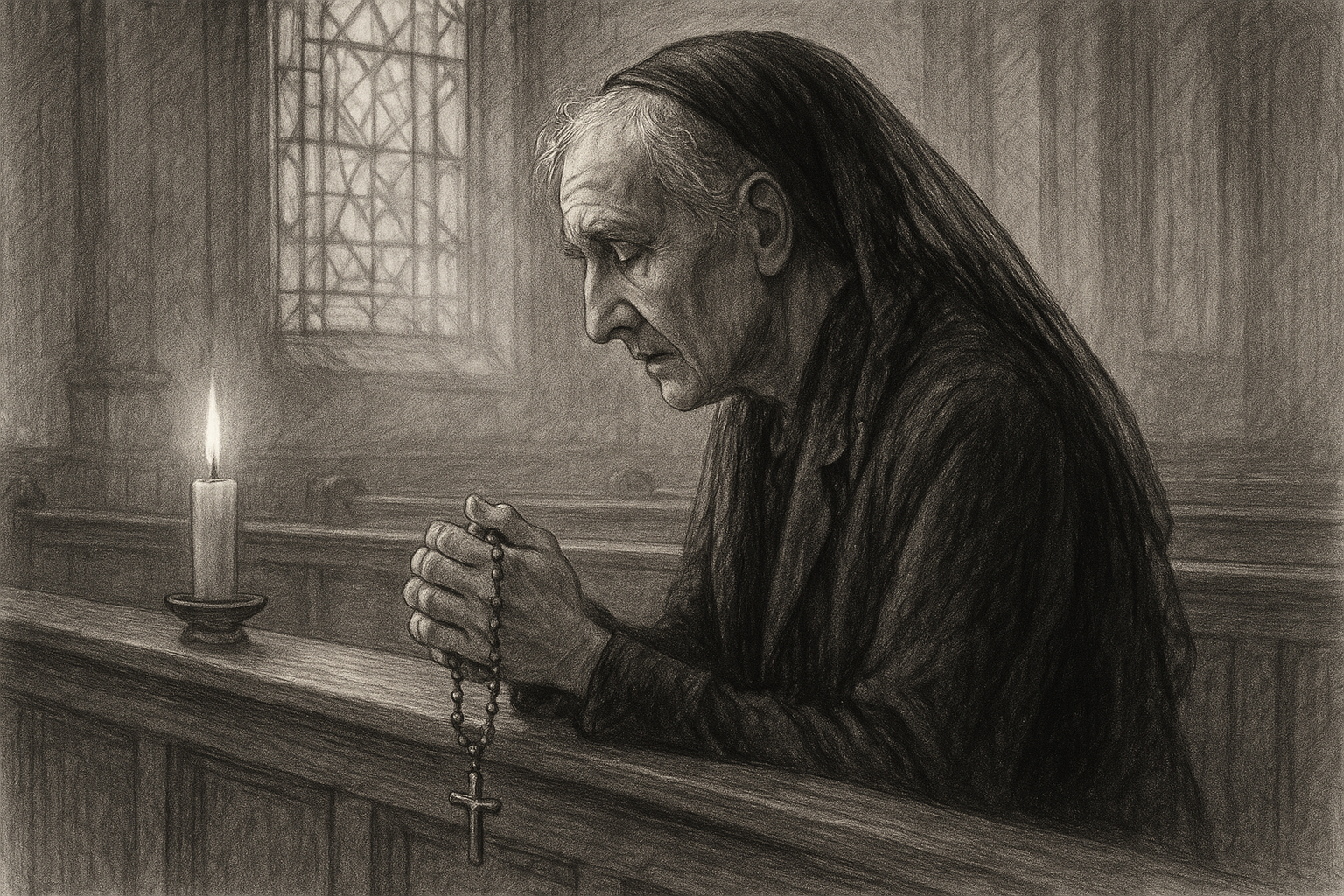
Catholic hope also includes prayer for the dead. Love does not end at the funeral. We continue to commend our spouses to God, asking the Lord to purify what remains and to receive them into His peace. This is not a sentimental gesture. It is an act of trust in the justice and mercy of God, who knows each soul perfectly.
Daily life after loss often feels strangely practical
Widowhood is not lived only in moments of deep emotion. It is also lived in small, demanding details. Bills must be paid. Meals must be planned. Home repairs, medical decisions, and legal papers may now fall on one set of shoulders. Social events can become painful because they remind the bereaved of what has been removed.
Many widows and widowers also discover that they have lost not only a spouse but a role. The one who handled finances, made phone calls, organized holidays, or remembered birthdays may be gone. Grief therefore includes learning new tasks while still carrying sorrow. That combination can be exhausting.
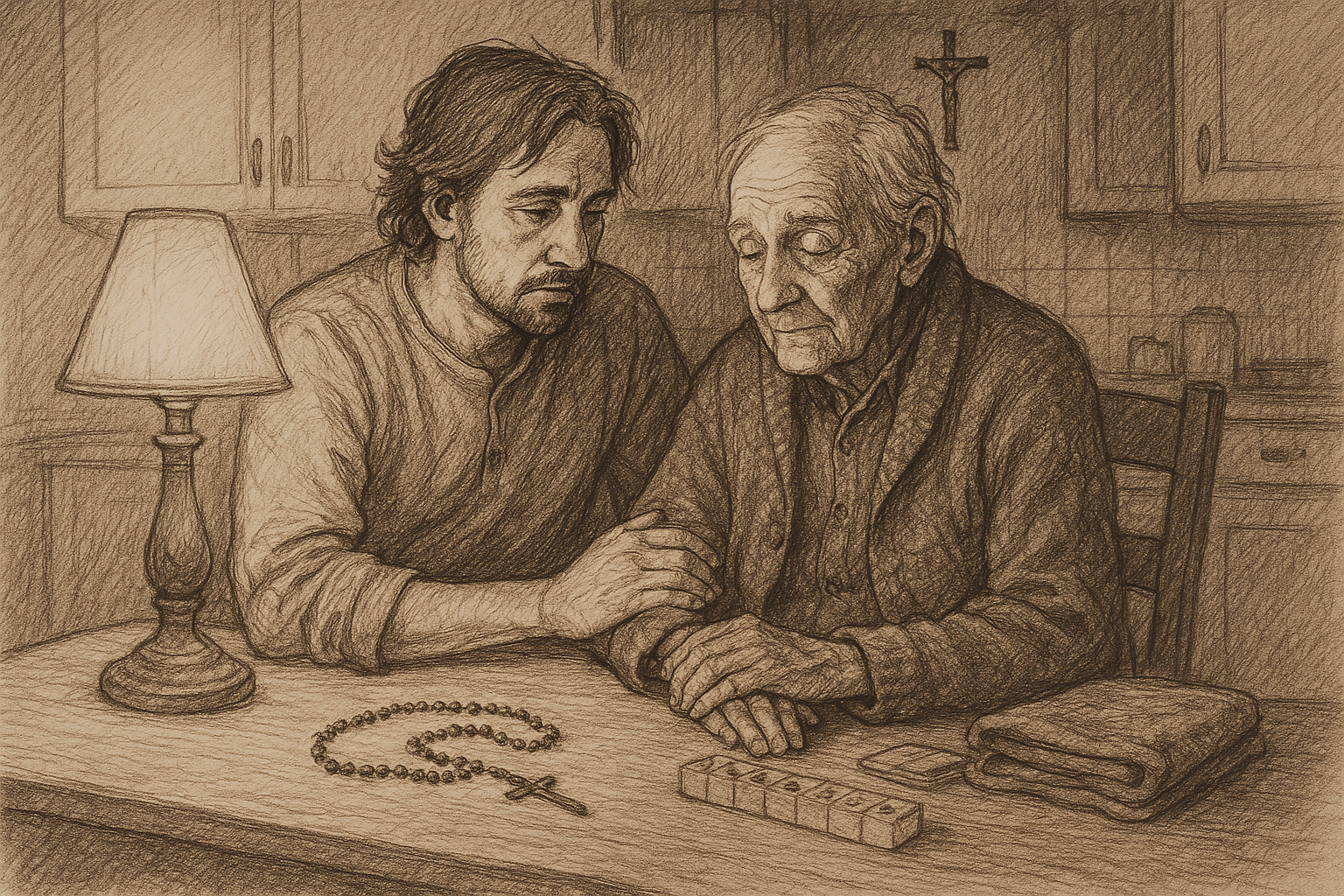
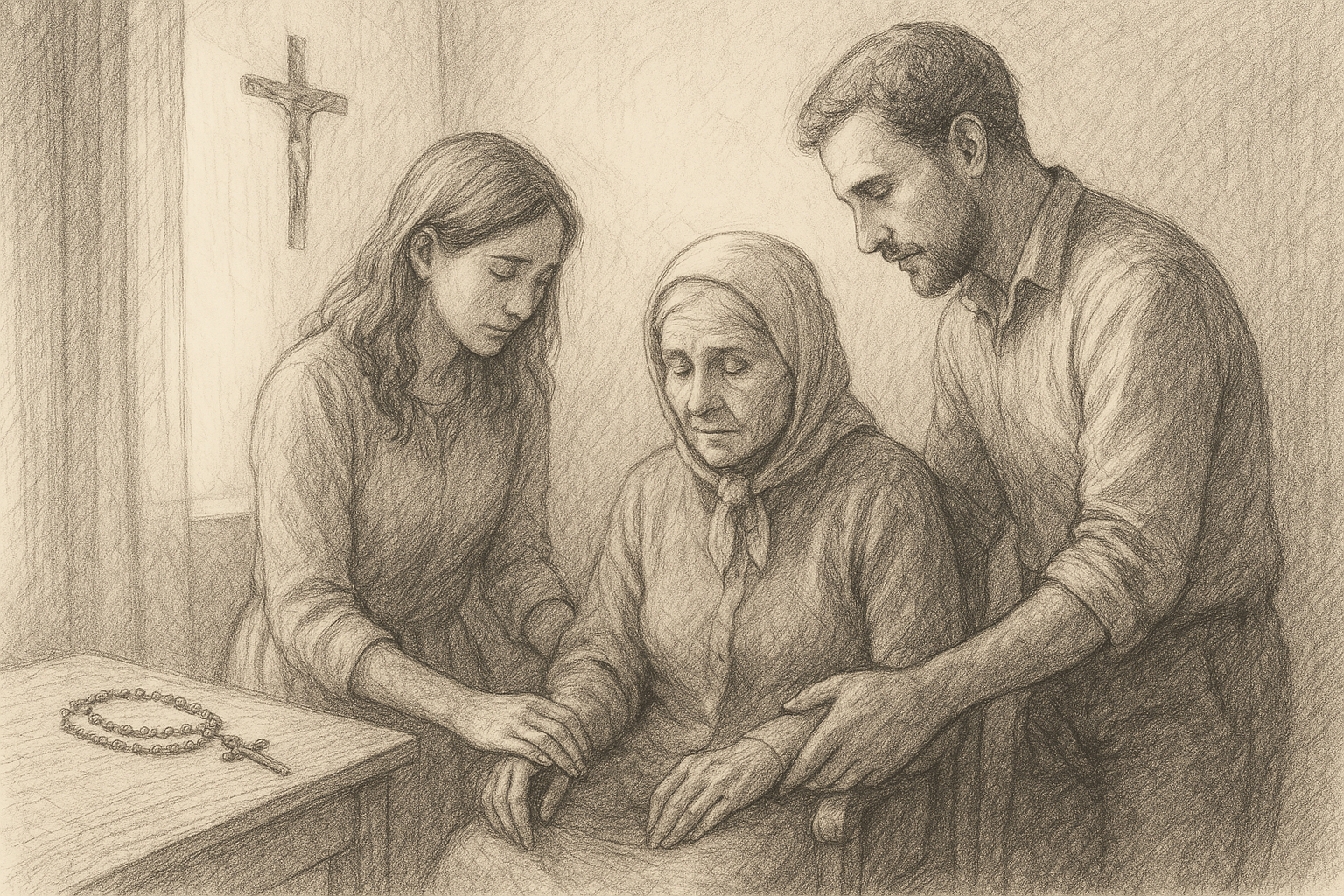
The Catholic perspective does not ask the bereaved to become self-sufficient in a worldly sense. It invites them to receive help. Grace often arrives through ordinary charity: a meal brought by a neighbor, a ride to church, help with paperwork, someone willing to listen without trying to fix everything. To accept support is not weakness. It is a form of humility, and humility is one of the places where grace grows quietly.
Some practical habits can help stabilize the days
- Keep a simple prayer routine, even if it is only a few minutes each morning.
- Ask one trusted person to check in regularly.
- Write down important appointments and decisions so they are not carried in memory alone.
- Remain close to the sacraments, especially the Eucharist and Reconciliation, when possible.
- Allow space for both solitude and human contact, since each has its proper place.
Grief changes, but love remains part of vocation
Marriage is a vocation, and widowhood is not the cancellation of that vocation so much as its painful transformation. A spouse who has died remains part of the story of the marriage, and the surviving spouse continues to live from what was given in that shared life. The years of fidelity, sacrifice, tenderness, patience, and forgiveness do not disappear. They continue to bear fruit.
For some, this fruit appears in service. A widow may become especially attentive to others who are lonely, sick, or newly bereaved. A widower may find that his own loss makes him more patient and compassionate. For others, the fruit is quieter: a deeper prayer life, a new detachment from clutter and vanity, a greater awareness of eternity. None of these are automatic. They are graces that may unfold slowly, often after a long season of tears.
The Church also recognizes that not every widow or widower will feel called to remarry. Some do, and the Church honors that path. Others remain single after the death of a spouse, either by choice or circumstance, and can live that state as a genuine Christian vocation. In either case, the central question is not whether life returns to what it was, but how this new life can be lived faithfully before God.
Mary and the saints can teach the bereaved how to remain open
Catholic devotion often gives particular comfort to those who mourn. Mary stood near the Cross and did not flee from suffering. She did not remove the pain of Calvary, but she remained present to it in faith. A widow may find in her a mother who understands sorrow, silence, and waiting.
The saints also remind us that holiness is not reserved for the strong or uninterrupted. Many saints endured bereavement, illness, disappointment, and loneliness. Their lives show that sanctity is often forged in hidden places, in days when a person simply keeps praying, keeps forgiving, keeps trusting, and keeps showing up for the duties of the day.
This is why the sacraments matter so much in grief. The Eucharist is not merely a consolation prize for the bereaved. It is Christ Himself, given as food for the journey. In Holy Communion, the Church receives the Lord who has passed through death and now lives forever. For the widow or widower, that encounter says more than words can say: you are not abandoned, and your story is still held within His.
There is room for memory, and room for the future
One of the hardest parts of widowhood is learning how to remember without being trapped by memory. Some belongings become too painful to touch at first. Some anniversaries feel unbearable. Some joys bring tears because they point to what has been lost. Yet over time, many discover that memory can become a place of prayer rather than only a place of sorrow.
It can help to speak the spouse's name, to tell good stories, to thank God for the gift that was received. Remembering is not disloyalty to the present. It is an act of truth. The marriage was real. The love was real. The pain is real. And God's mercy is real as well.
At the same time, Christian hope gently opens the future. It does not demand hurry. It does not shame tears. It simply reminds the heart that death is not the end of communion. The Church teaches us to look beyond the grave not with vague optimism, but with confidence in Christ. For the widow or widower, that confidence may be only a thread some days. Yet even a thread can hold when it is attached to the Lord.
The widow's path is not a path of forgetting, but of entrusting. What love gave, God remembers. What grief can no longer carry, Christ can bear.
In the end, widowhood and Christian hope are joined by the same mystery: love has been wounded, yet not destroyed. The cross tells the truth about loss. The resurrection tells the truth about destiny. And in the long middle between them, grace gives enough light for the next step, then the next, until the day when every tear is wiped away.
Keep Reading on Lets Read The Bible
Frequently Asked Questions
How does the Catholic faith comfort someone who has become a widow or widower?
The Catholic faith comforts the bereaved by placing grief within the larger promise of Christ's death and resurrection. It also offers the sacraments, prayer for the dead, the communion of saints, and the practical charity of the Church community.
Is it wrong for a widow or widower to struggle with loneliness or even anger at God?
No. Scripture gives many examples of lament, and honest grief is not the same as unbelief. A person can bring loneliness, anger, and confusion to God in prayer while still trusting His mercy.
Can a Catholic remarry after the death of a spouse?
Yes. After a spouse dies, the surviving spouse is free to discern whether remarriage is appropriate. Some remarry, while others remain single and live that state as a vocation of service, prayer, and fidelity.