Family and Vocation
Mercy at the Kitchen Table: Honoring Aging Parents in Ordinary Faithfulness
Caring for aging parents is rarely dramatic, but it can become one of the clearest places where Christian love is tested, purified, and made visible.
Site Admin | November 22, 2025 | 100 views
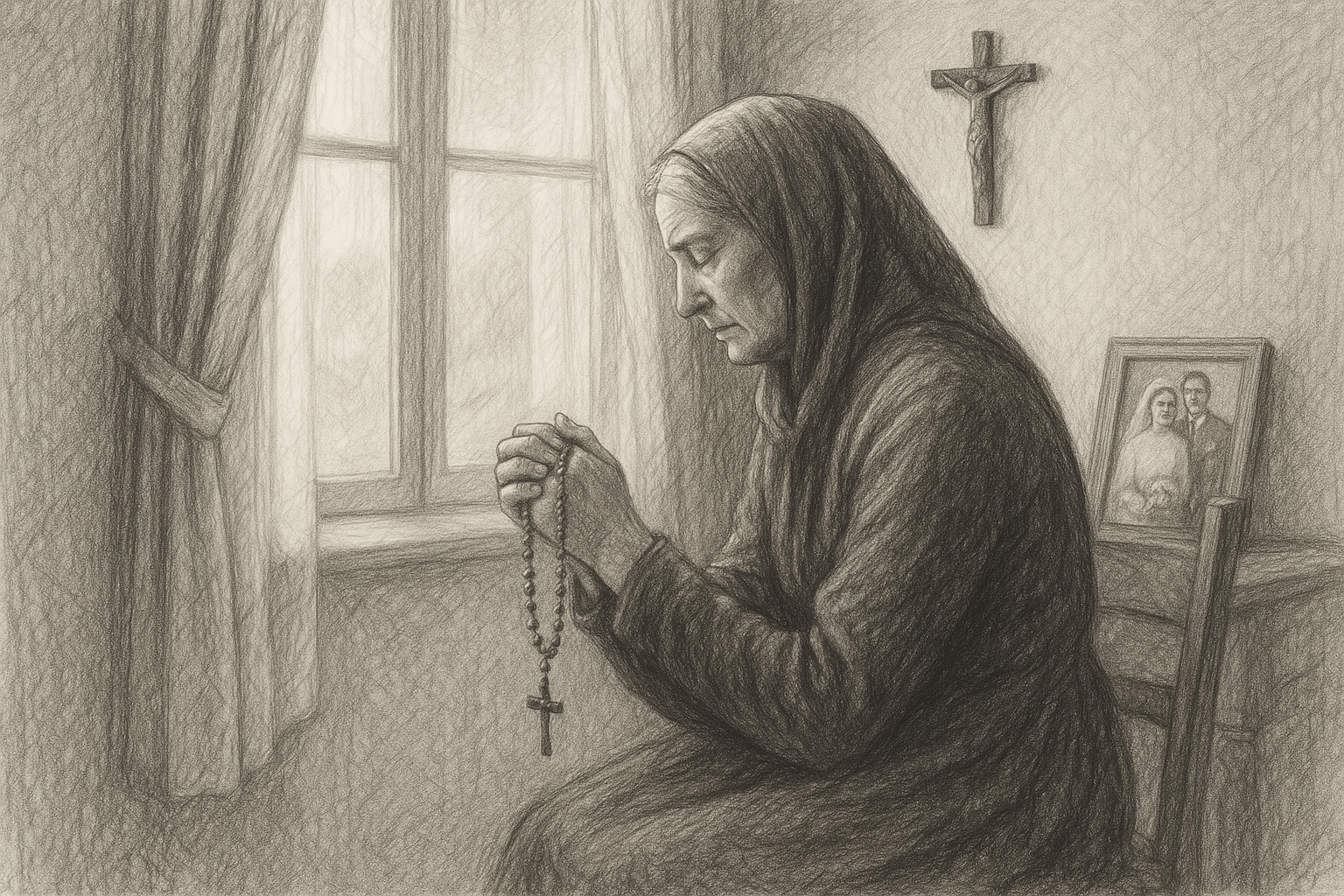
There is a special kind of holiness hidden in the ordinary work of caring for aging parents. It may look like driving to appointments, sorting medications, sitting through repeated stories, or learning how to listen when patience is thin. In a culture that prizes speed and independence, the slow demands of elder care can feel disruptive. Yet for many Catholics, caring for aging parents becomes a quiet school of mercy.
The command to honor father and mother does not expire when childhood ends. It changes shape, but it remains. When parents become vulnerable, honoring them may mean helping them bathe, paying bills, managing medicine, or simply making room in a crowded schedule to be present. These tasks are not glamorous, but they are deeply human. They ask us to see our parents not only as the people who raised us, but as men and women made in the image of God, now in need of the care they once gave to us.
The fifth commandment still speaks in later life
Scripture places honor for parents among the foundations of covenant life. The command is simple and demanding: honor your father and your mother. In the wisdom tradition, this duty is tied to blessing, peace, and a rightly ordered heart. Honor your father and your mother and [[VERSE|ephesians|6|2-3|Honor your father and your mother]].
For children, honor first means obedience and trust. In adulthood, it becomes something richer and more complex. We honor our parents by protecting their dignity, speaking truthfully, and serving their real needs without contempt. Honor does not require pretending that family life was perfect. Some parents are gentle, some are difficult, and some relationships carry wounds that need prayer and careful healing. Yet the commandment remains a call to reverence, not because parents are flawless, but because God entrusted us to them and asks us to love in return.
The Church has long taught that family life is a setting for mutual duty and communion. Children owe respect and gratitude to their parents, while parents owe care, instruction, and example to their children. When age and frailty reverse the flow of dependency, this mutuality becomes visible in a new way. Adult children are not called to erase the past, but to respond to the present with charity.
Mercy often begins with presence
Many people imagine caregiving as a series of large sacrifices. In reality, it is often built from smaller acts that require steady faithfulness. A phone call made when one is tired. A pharmacy run after work. A patient answer to the same question asked three times. A chair pulled close to the bedside. These acts seem plain, but mercy usually grows in plain soil.
Jesus does not measure love by spectacle. He notices the widow's mite, the cup of cold water, the hidden labor of those who serve without praise. In a similar spirit, caring for aging parents is often a form of love that no one applauds. It is work that can feel repetitive and unromantic, but it places us near the heart of the Gospel. As you did it to one of the least of these.
Presence matters because loneliness matters. Many elderly parents fear being forgotten more than they fear pain. They may be grieving lost abilities, diminished roles, or the slow shrinking of their world. A faithful child does not always need perfect words. Often the greatest gift is a patient presence that says, You are not abandoned.
Caregiving is not only about meeting needs. It is also about guarding dignity, especially when age makes a person feel small.
When gratitude and grief live side by side
Adult children who care for aging parents often carry mixed emotions. Gratitude rises up with sorrow. Love may sit beside old resentment. Compassion may be tangled with fatigue. This emotional complexity does not mean something is wrong. It means the heart is honest.
There can be grief in seeing a strong parent become dependent. The parent who once guided every step may now need help with the simplest tasks. That reversal can awaken tenderness, but it can also stir fear and sadness. Some children mourn what is being lost while the parent is still alive. Others wrestle with unresolved history and feel ashamed that duty comes with emotional strain. The Christian life does not ask us to deny these feelings. It asks us to bring them into the light of prayer.
The Psalms teach us how to pray when the heart is crowded. They make room for lament, trust, and hope. In caring for an aging mother or father, a child may need to pray not only for strength, but for purification of memory, patience of speech, and freedom from bitterness. The Lord can work even through complicated family love.
Catholic teaching on honoring the elderly
Catholic moral teaching is clear that the elderly have a dignity that does not diminish with frailty. Human life is sacred from conception to natural death, and every stage of life deserves reverence. The elderly are not burdens to be managed. They are persons to be served, accompanied, and protected.
This means that families should resist any habit of treating older relatives as inconvenient. Neglect, indifference, and emotional dismissal are not small sins. Even when practical limits require outside help, the family should not disappear from the picture. Love may involve home care, assisted living, medical decisions, or arranging support from others, but the child remains a child. The duty to honor does not end because professional care begins.
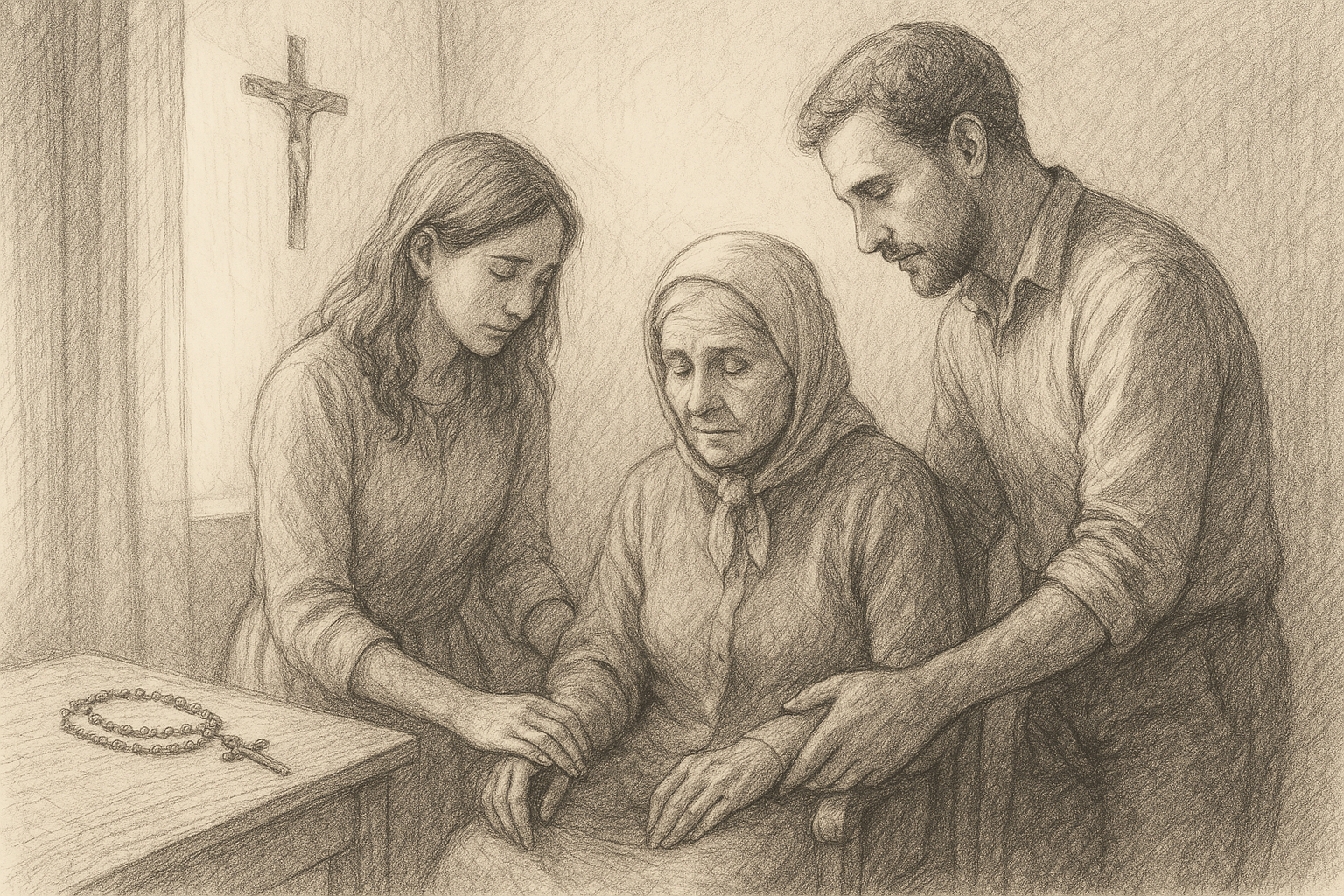
At the same time, Catholic teaching recognizes that caregiving must be wise as well as generous. Not every child can provide the same level of hands-on care. Some are near; some are far away. Some are healthy and single; others are raising children of their own or carrying demanding jobs. Prudence asks what can be done faithfully in a given state of life. A daughter who coordinates care from another city may be honoring her father as truly as a son who changes his bandages each afternoon. Love can take different forms without becoming less real.
A vocation shaped by hidden sacrifices
The Christian imagination often associates vocation with visible ministry, but family life is itself a vocation. In that light, caring for aging parents is not an interruption of discipleship. It is part of it. For some adults, it becomes one of the most demanding tests of fidelity they will ever face.
This vocation reshapes time. Appointments cannot always be planned far ahead. Meals may need to be prepared later than expected. Plans may have to be canceled when a parent is unwell. Such sacrifices can feel unfair, especially when one is already stretched. Yet they also reveal something true about love: real love is willing to be interrupted.
The Lord's own life was marked by interruptions. He stopped for the sick, the grieving, and the poor. He listened when others wanted him to move on. He allowed himself to be approached. Those who care for aging parents are often invited into that same slow, interruptible charity. The lesson is not that all sacrifice feels easy. It is that love becomes credible when it endures inconvenience for another's good.
Practical wisdom for ordinary households
Faithful caregiving does not eliminate the need for practical planning. Indeed, love is often more effective when it is concrete. A few habits can help families care well without being overwhelmed.
- Make a simple routine. Regular times for meals, medication, calls, and visits reduce confusion and help everyone know what to expect.
- Share information clearly. Keep track of doctor appointments, prescriptions, insurance details, and emergency contacts in one place.
- Ask for help early. Parish friends, relatives, neighbors, and local services can lighten the load before exhaustion sets in.
- Speak with respect. Even when a parent is confused or stubborn, a calm tone preserves dignity better than correction delivered in irritation.
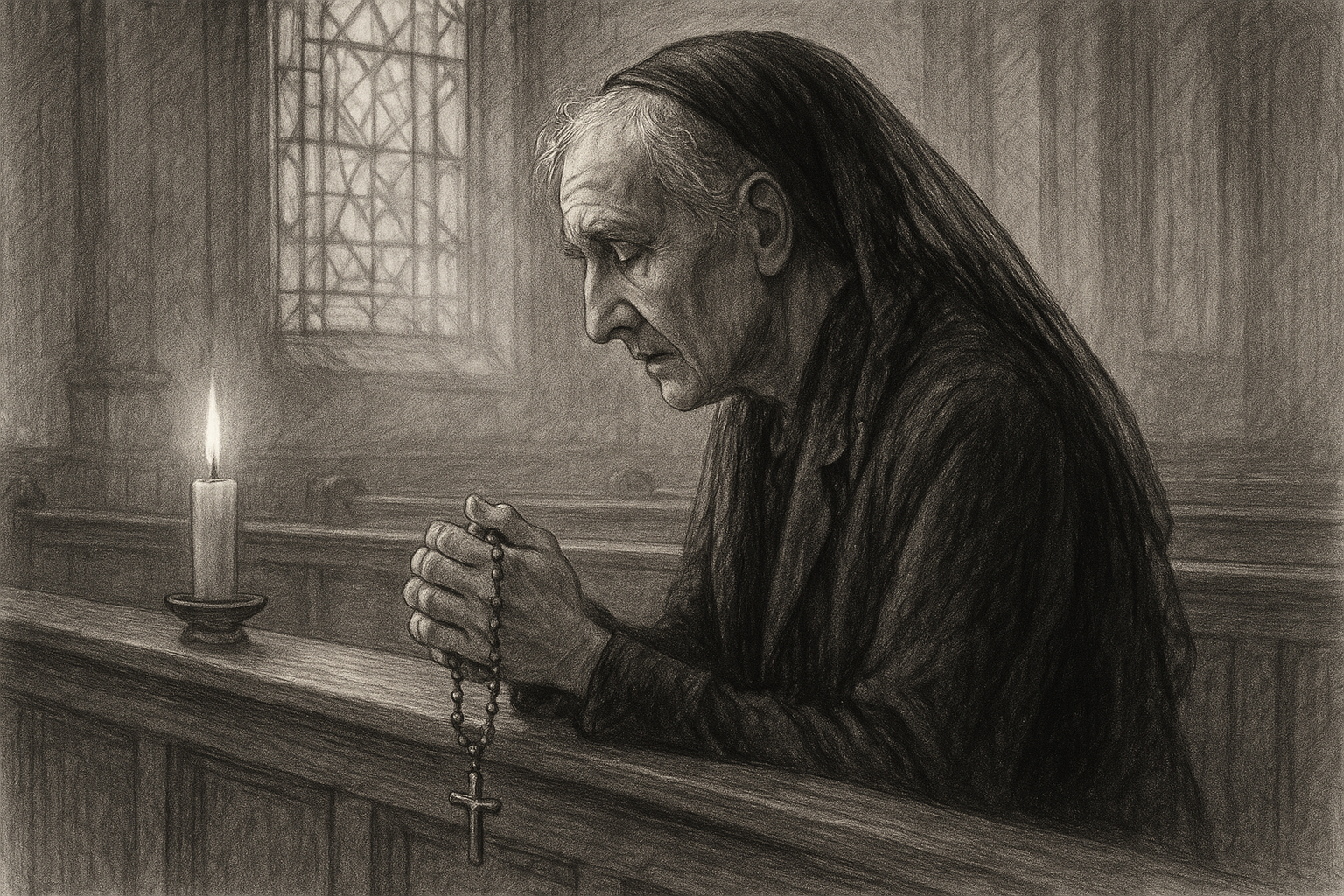
- Protect prayer time. A short daily prayer, even a single decade of the Rosary or a psalm, helps caregiving remain rooted in grace.
It is also wise to accept limits. Not every problem can be solved by one person. Some situations require doctors, social workers, clergy, or trained caregivers. Humility is not failure. Sometimes it is the most loving recognition that a family needs support.
When possible, siblings should speak candidly and charitably about responsibilities. Resentment often grows where communication is vague. A simple plan, even if imperfect, can prevent much bitterness. Families do best when they remember that the goal is not to win an argument about fairness, but to serve the parent in need.
Prayer changes the atmosphere of care
Caregiving becomes lighter, though not necessarily easier, when it is offered to God. Prayer can transform a weary task into an act of intercession. Before a difficult visit, a child might pray for gentleness. After a frustrating conversation, one might pray for forgiveness. In the middle of the night, when worry is strongest, one might entrust the parent to the mercy of Christ.
Prayer also helps us see our parents more truthfully. It reminds us that they are not only the people who shaped us. They are souls on pilgrimage, accountable to God, as we are. That awareness can deepen compassion. The child who once thought only in terms of duty may begin to see a parent through the lens of salvation history: a human being beloved by God, marked by weakness, and still capable of grace.
The saints understood this kind of fidelity. Their lives often contained small domestic acts hidden from public view. Meals served, wounds tended, patience practiced, and suffering borne with love all belong to the landscape of holiness. Many family caregivers will never see their work named in public, but heaven sees it. God is not indifferent to the hidden labor of mercy.
In a Christian home, care for the elderly is never only a social obligation. It is a witness that love remains possible when strength fades.
Learning to receive as well as give
One of the quieter gifts of caring for aging parents is learning how to receive from them in a new way. A frail parent may no longer offer advice or protection in the old form, but they can still give blessing, memory, tenderness, or even the deepened wisdom that comes from suffering. Children who stay close enough to notice may find that the parent is still teaching them how to live, how to surrender, and how to die in hope.
This mutual exchange becomes a holy mystery. The child gives practical care. The parent gives a living reminder of human fragility and dependence on God. Both are caught up in the same story of redemption. What began long ago in a nursery or kitchen now unfolds in hospital corridors, at dining tables, and in quiet rooms where the old and the young learn to love one another with greater truth.
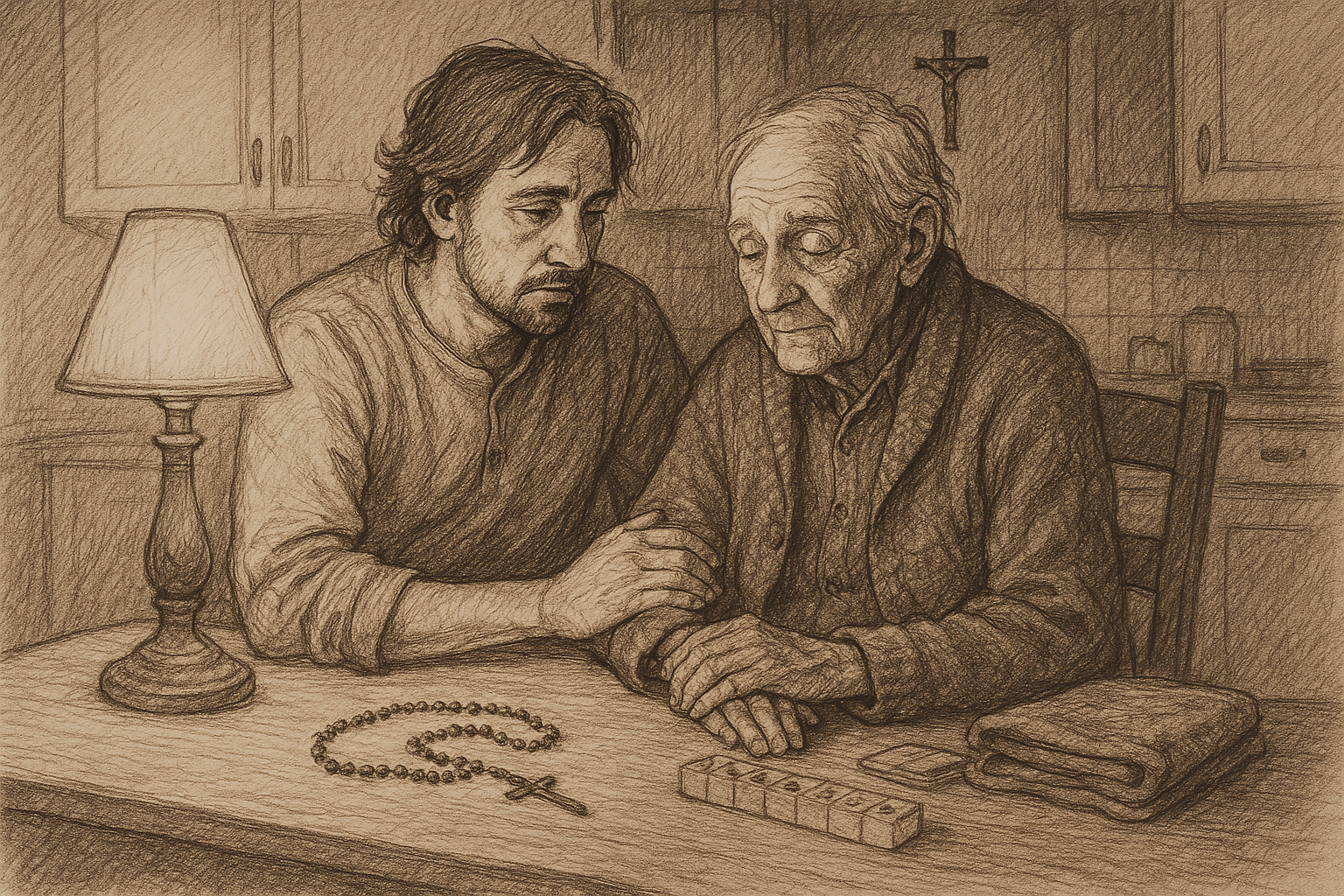
If you are in the midst of caring for aging parents, do not wait for the perfect mood, the perfect system, or the perfect words. Begin where you are. Offer the next helpful act with patience. Let Scripture shape your memory and mercy shape your response. In doing so, you may discover that the kitchen table, the bedside chair, and the daily errand become places where God is quietly making your love more like his.
Keep Reading on Lets Read The Bible
Frequently Asked Questions
How can I honor aging parents if our relationship has been difficult?
Honoring difficult parents does not require pretending the past was painless. It does mean treating them with dignity, avoiding cruelty, and meeting their real needs as faithfully as you can. In some cases, boundaries and outside help are necessary, but charity should still guide your speech and decisions.
What if I cannot provide full-time care for my parents?
Not every child can be the primary caregiver. Catholic charity asks for fidelity, not impossible expectations. You can still honor your parents by coordinating care, contributing financially if able, visiting, calling, praying, and staying involved in important decisions.
What Scripture passages are helpful when caring for aging parents?
Many passages speak well to this situation, especially the command to honor father and mother in [[VERSE|exodus|20|12|Exodus 20:12]] and [[VERSE|ephesians|6|2-3|Ephesians 6:2-3]], as well as Jesus' words in [[VERSE|matthew|25|40|Matthew 25:40]] about serving him in the least of his brothers and sisters.