Family and Vocation
When the Roles Reverse: Caring for Aging Parents with Faith and Mercy
A Catholic reflection on the duties, burdens, and hidden graces that come with caring for aging parents.
Site Admin | November 21, 2025 | 100 views
When care becomes part of love
For many adults, there comes a season when the people who once carried them now need to be carried. The change can be slow or sudden. A parent who was always decisive may become forgetful. A mother who once managed every detail may now need help dressing, driving, or remembering medications. A father who seemed indestructible may grow frail. In that moment, family life takes on a new shape.
The Catholic perspective on caring for aging parents begins with a simple but demanding truth: love is not only a feeling, but a gift given in action. The commandment to honor father and mother does not expire when parents grow old. If anything, the command becomes more visible, because honor now includes patience, practical help, and the willingness to bear another's weakness without contempt. Scripture places this duty close to the center of faithful life: Honor your father and your mother.
Yet this call can feel heavy. Adult children may be raising their own children, working long hours, managing finances, and trying to hold together a household already stretched thin. Some live near their parents, while others are separated by distance. Some have warm family memories; others carry old wounds. Caring for aging parents is rarely simple. It often asks for both tenderness and structure, both sacrifice and prudence.
Honor that grows more concrete with age
In Scripture, honor is not vague admiration. It is a lived response. The Book of Sirach speaks plainly about the duties owed to parents and warns against scorning them in old age. Even when a parent becomes weak or dependent, the child is not free to dismiss the dignity that remains. Every human person retains the image of God, and this is especially important to remember when illness, dementia, or frailty begin to strip away the outward signs of strength.
The Church's moral teaching has long seen filial care as part of justice and charity. Parents gave life, protected it, taught it, and sustained it through years of hidden labor. Children do not repay that gift as though they were settling a bill, because love cannot be reduced to accounting. But gratitude should shape the way we respond. A parent who once woke in the night for a child deserves, as far as possible, the compassion of a child who now wakes in the night for a parent.
This is where the Catholic perspective on caring for aging parents becomes more than a family ethic. It becomes a small participation in the mystery of Christ. The Son of God accepted dependence, grew in a human home, and entrusted his mother to the beloved disciple from the Cross: Woman, behold your son, Behold, your mother. Even at the height of his saving work, Jesus did not neglect ordinary family responsibility. He revealed that love is measured not only in grand gestures, but in faithful concern for the people placed closest to us.
The burdens that do not fit neatly into pious language
Anyone who has tried to care for an aging parent knows that the work can expose tensions that polite speech often hides. There may be disagreements about money, medical choices, driving, living arrangements, or in-home care. Siblings may divide responsibilities unevenly. One child may live nearby and carry most of the burden, while another offers advice from a distance. Guilt can build quickly. So can resentment.
There is also the sorrow of watching a parent lose abilities that once defined him or her. The first time a parent cannot remember a grandchild's name, the heart may ache in ways that are hard to explain. The first time a parent needs help bathing or feeding, the relationship can feel both intimate and painfully exposed. Some adult children grieve the loss before death has arrived. Others are surprised by the emotional strain of repeating the same instructions, handling the same paperwork, or answering the same anxious questions day after day.
The Catholic tradition does not ask us to pretend that this is easy. Mercy is not sentimentality. It does not deny frustration, exhaustion, or grief. Instead, mercy gives those burdens a place before God. The Psalms are full of honest prayer, and so is the life of faith. We are permitted to say, in effect, Lord, I am tired. Lord, I do not know how to do this well. Lord, help me remain gentle when I feel depleted.
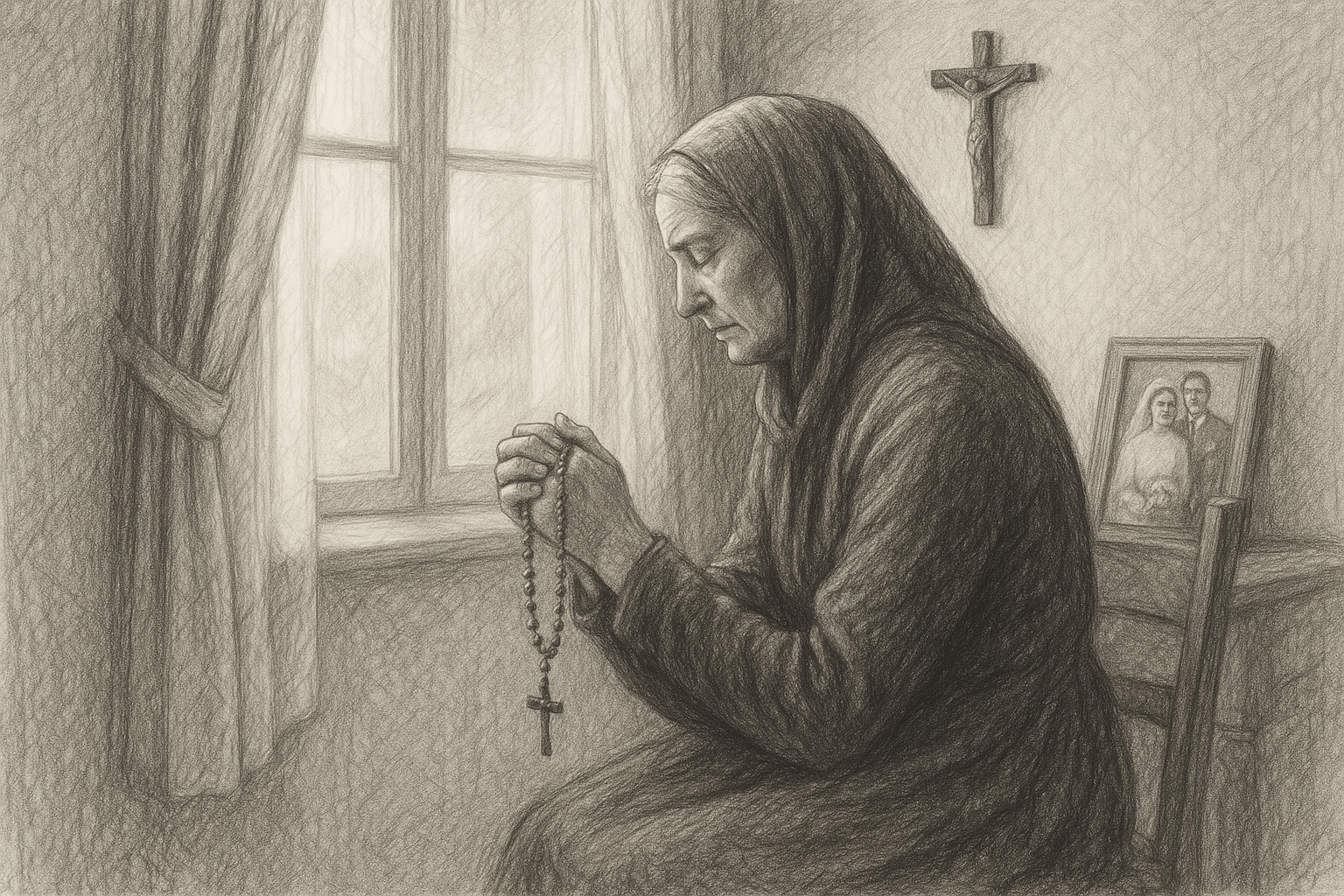
Prayer does not remove the hard parts of caregiving, but it changes the heart that enters them.
Practical charity is part of holiness
Caring for aging parents is not only spiritual in an interior sense. It involves real choices and organized love. A Catholic approach should welcome practical wisdom, because grace does not replace prudence. It strengthens it.
Some of the most important acts are ordinary:
- Making sure medical appointments are scheduled and attended.
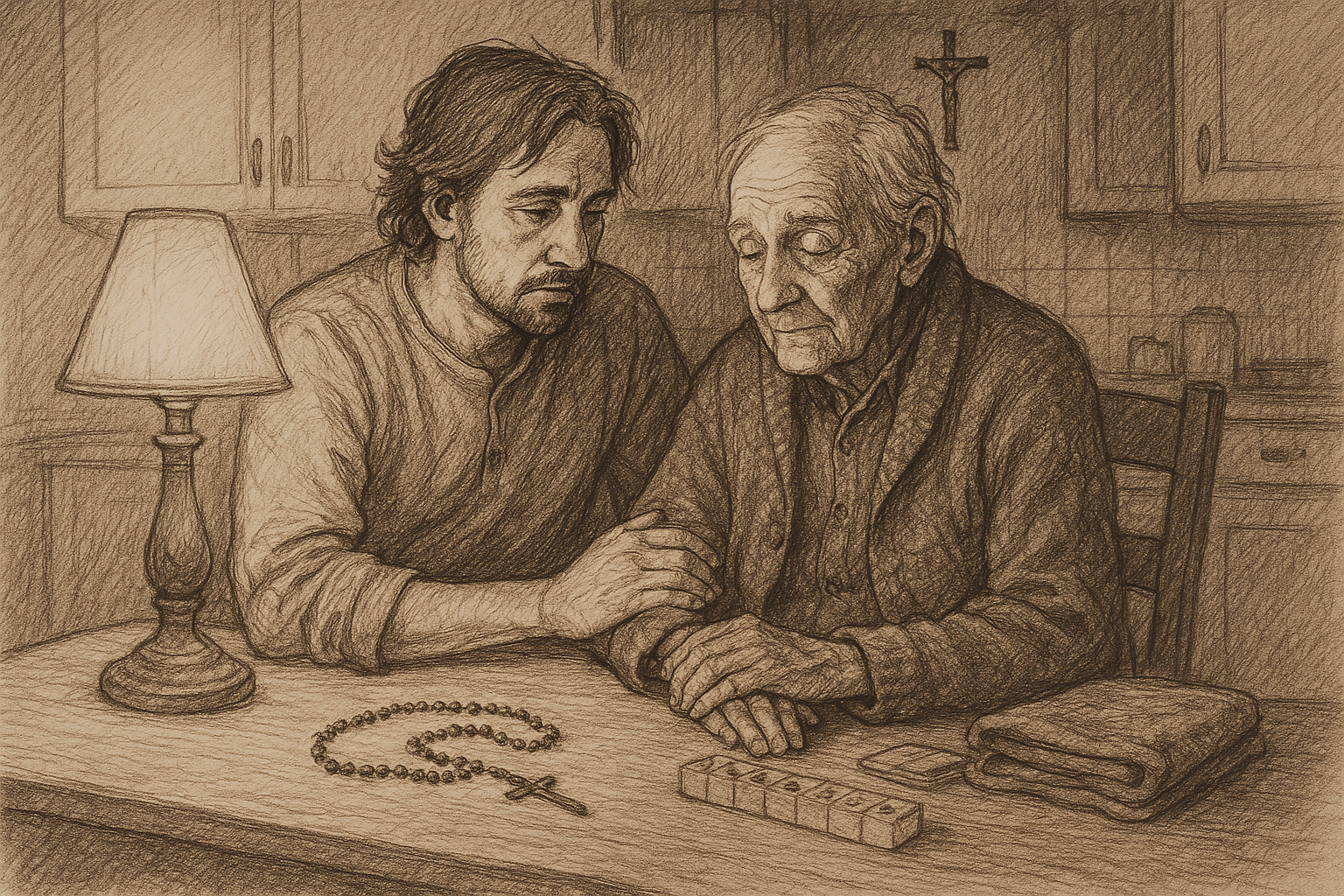
- Keeping track of medications, diagnoses, and emergency contacts.
- Helping with meals, transportation, household chores, and clean clothing.
- Watching for signs that living arrangements need to change.
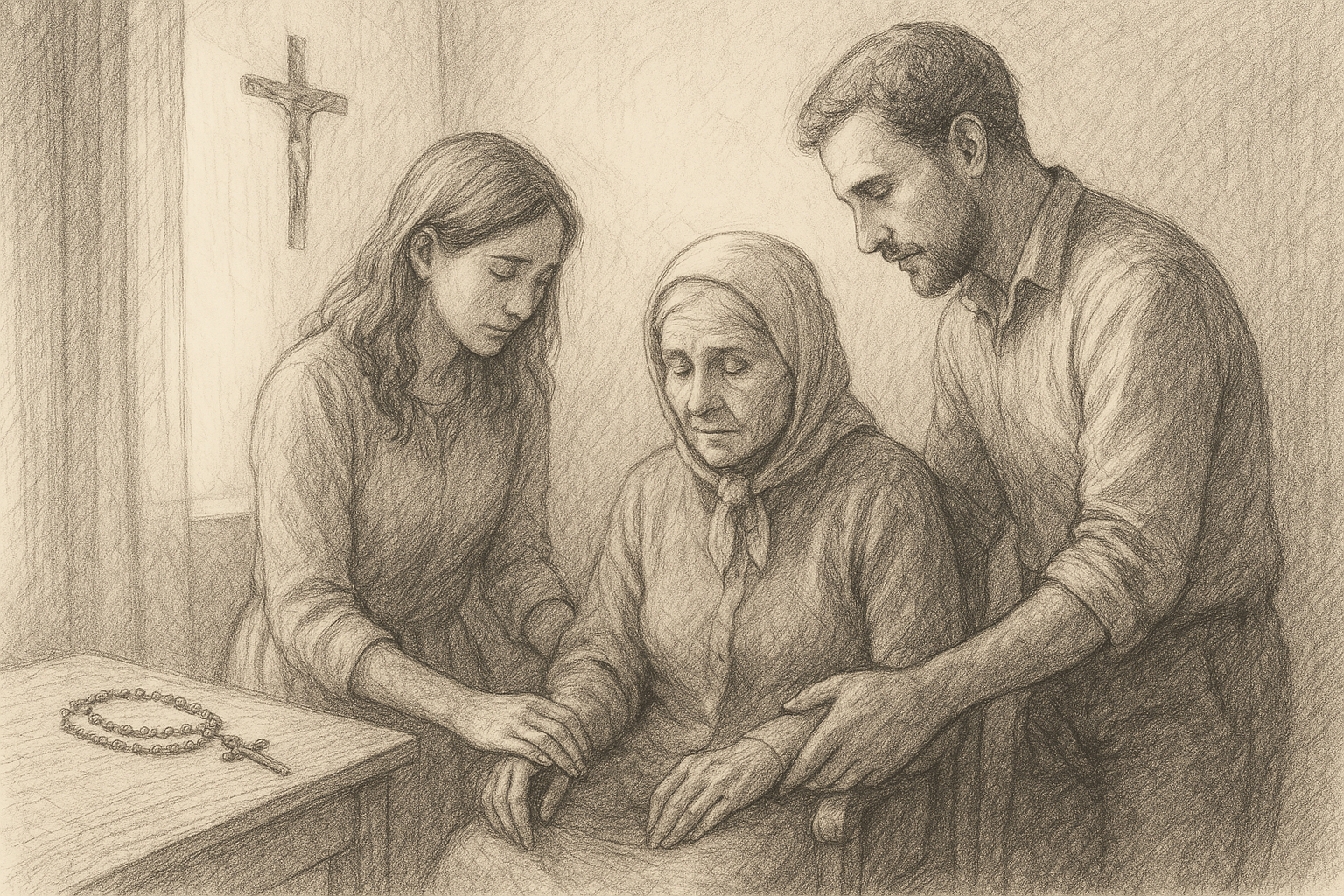
- Asking for assistance from siblings, parish friends, or professional caregivers when needed.
These tasks may seem mundane, but they carry moral weight. A parent's dignity is served when care is thoughtful, consistent, and respectful. At the same time, the child who provides care must be realistic about limits. Not every family can do everything alone. Sometimes the most loving choice is to seek outside help, whether through home health care, assisted living, parish support, or local community resources. That is not failure. It is stewardship.
There is also a place for honest conversation while parents are still able to speak clearly. These are often difficult talks, but they can spare later confusion. Questions about healthcare wishes, finances, powers of attorney, and end-of-life decisions are not signs of morbid thinking. They are acts of foresight. In a Catholic household, such planning can be part of reverence for life, because it helps avoid chaos and protects the vulnerable when they are least able to advocate for themselves.
When the old wounds resurface
Many people assume that caregiving will naturally bring a family closer together. Sometimes it does. But often the old story of the family rises again with new force. A difficult childhood, a controlling parent, addiction, neglect, or years of silence can make care feel complicated. Some adult children feel trapped between their duty and their pain. Others wrestle with the fear that tending a parent will reopen harm that never fully healed.
The Catholic perspective on caring for aging parents does not require denial of real injury. Honoring a parent does not always mean trusting that parent with everything, nor does it mean abandoning wise boundaries. If there has been abuse or serious dysfunction, it may be necessary to seek guidance from a priest, counselor, trusted family member, or care professional. Mercy does not demand naivety. It asks us to act justly while refusing hatred to rule the heart.
This distinction matters because some adult children imagine that holiness means becoming endlessly available, even to destructive patterns. But charity is not the same as enabling. A parent with dementia may need supervision, but a parent who manipulates or harms others may require firmer boundaries. The goal is not to punish. The goal is to protect life and preserve what is possible of relationship without compromising truth.
In difficult families, it may help to remember that honoring parents can sometimes be quiet and restrained. It may mean ensuring safe care, speaking respectfully, or refusing to answer cruelty with cruelty. It may mean praying for a parent one cannot fully reconcile with. That kind of love is hidden, but God sees it.
The cross hidden in ordinary routines
Caregiving can feel repetitive. Wash, prepare, remind, drive, listen, repeat. The repetition can make the work seem small, but faith teaches otherwise. Much of Christian life is made up of hidden fidelity. A mother changes a diaper. A son drives to another town for a doctor's visit. A daughter fills pillboxes on Sunday night. A spouse makes soup again because chewing has become difficult. None of this looks glamorous. All of it can become an offering.
This is where the Cross becomes more than an image. It becomes a pattern for love. Christ did not redeem the world by refusing human weakness. He entered it. He carried it. He transformed suffering from within. When a child cares for an aging parent, there is often a share in that mystery, however imperfectly. Not every moment will feel sacred. Some will feel tedious, and others heartbreaking. Yet even there, grace can work quietly.
Staying present when it would be easier to withdraw is one form of fidelity. Speaking gently when the same question is asked for the fifth time is another. Choosing dignity over impatience, or patience over self-importance, is a real sacrifice. The Church has always known that holiness is made not only in visible heroism, but in daily obedience to love.
Receiving as well as giving
One of the hidden lessons of caring for aging parents is that the child is not only giving. The child is also receiving, though this is not always obvious at first. Time with an aging parent can bring a surprising clarity about who that parent really is. The masks of earlier years may fall away. Stories surface. Regrets are voiced. Gratitude appears in places where it had seemed absent.
There can be a gift in this final season, even amid sorrow. Adult children may come to see their parents less as the authority figures of childhood and more as fragile human beings who also struggled, feared, hoped, and prayed. This does not erase responsibility, but it can soften hardness. Compassion often deepens when we recognize that our parents, too, are creatures before God.
At the same time, receiving care from a parent can happen in another sense. A parent nearing the end of life may offer a different kind of witness: patience in suffering, gratitude for small things, or a renewed trust in God's mercy. A son or daughter may be evangelized by the quiet faith of an aging mother. A family may rediscover prayer at the bedside. A grandfather's rosary, a mother's blessing, or a father's simple act of surrender can become an inheritance stronger than money.
The Catholic perspective on caring for aging parents is not that every case will be peaceful or emotionally satisfying. It is that no act of faithful love is wasted. What looks like burden may also become encounter. What feels like duty may become communion.
Grace for the long middle
Most caregiving does not happen in dramatic moments. It happens in the long middle, where nobody else is watching and nothing seems resolved. That is where grace is needed most. Families need the grace to ask for help. They need the grace to speak truth without cruelty. They need the grace to forgive old injuries when forgiveness is possible, and the grace to endure what cannot yet be healed. They need the grace to keep seeing the person in front of them, not just the list of needs.
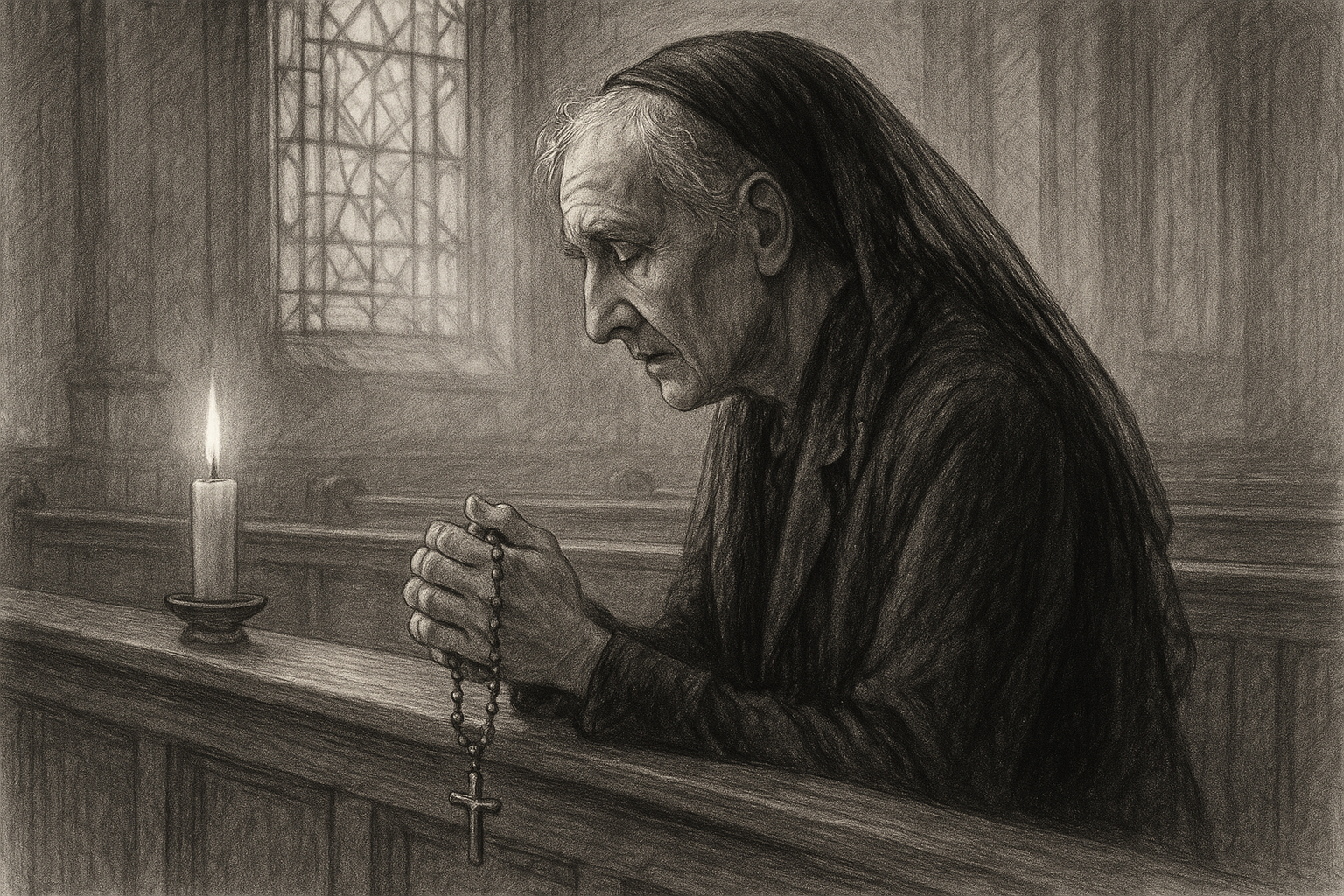
Prayer can steady this work. The Rosary prayed in traffic on the way to an appointment. A whispered Hail Mary while waiting for a test result. A brief offering of the day before beginning the morning routine. A visit to Mass when schedules allow. These small practices do not remove the responsibilities, but they place them in God's hands. That matters because no caregiver can be everywhere at once, and no human love can carry the whole burden without help.
In the end, caring for aging parents is one of the places where Christian life becomes visible in domestic form. It asks whether we believe that every stage of life is worthy of reverence. It asks whether honor can survive inconvenience. It asks whether mercy can remain steady when the returns are no longer immediate. And it asks whether we can recognize Christ, quietly and unexpectedly, in the face of a parent who now needs what once was freely given.
When that answer is yes, even imperfectly, the home becomes a place where grace is not merely discussed but practiced.
Keep Reading on Lets Read The Bible
Frequently Asked Questions
What does the Catholic Church teach about caring for aging parents?
The Catholic tradition teaches that children should honor their parents with gratitude, respect, and practical help. This includes care that protects dignity, seeks the common good of the family, and responds to real needs with charity and prudence.
Does honoring parents mean I have to do everything myself?
No. Honoring parents does not require one person to carry every burden alone. It is often wise and loving to ask siblings, parish friends, or professional caregivers for help, especially when health, finances, or safety require it.
What if my relationship with a parent is painful or broken?
The duty to honor a parent does not erase real harm. In difficult or abusive situations, boundaries may be necessary. A Catholic response can still include prayer, respectful conduct, and practical care when possible, while also seeking wise support and protection.