Family and Vocation
When the Last Door Opens: Learning to Meet Death with Christian Hope
A Catholic reflection on mortality, mercy, and the quiet confidence Christ gives to every believer.
Site Admin | November 10, 2025 | 84 views
Facing death without surrendering hope
Most people avoid thinking about death until it comes close. We turn our attention to work, family plans, health concerns, and the routines that fill a day. Yet Scripture never lets us forget that human life is brief and that our days are a gift. Moses prays, Teach us to number our days, and the prayer is not meant to make us anxious. It is meant to make us wise. To number our days is to live each one as something entrusted by God.
A death and Christian hope reflection begins here: Christian hope is not denial. The Church does not ask believers to pretend that death is gentle or small. Death is a wound in creation, a bitter sign that sin has touched the world. But the Gospel speaks a deeper word than fear. Christ has entered death itself, and by His Resurrection He has changed its final meaning for those who belong to Him.
Saint Paul writes with striking confidence, The last enemy to be destroyed is death. He does not call death an illusion. He calls it an enemy. And then he announces that this enemy will not have the last word. That is the center of Christian hope: not that death is natural in the sense of being harmless, but that it has been met, judged, and conquered by Jesus Christ.
Christ does not stand at a distance from our fear
It matters that Jesus wept at the tomb of Lazarus. The shortest verse in the Gospel is one of the most revealing: Jesus wept. Before He calls Lazarus from the grave, He stands before death with human tears. This means that Christian hope is never cold. It never mocks sorrow or shames the grieving heart.
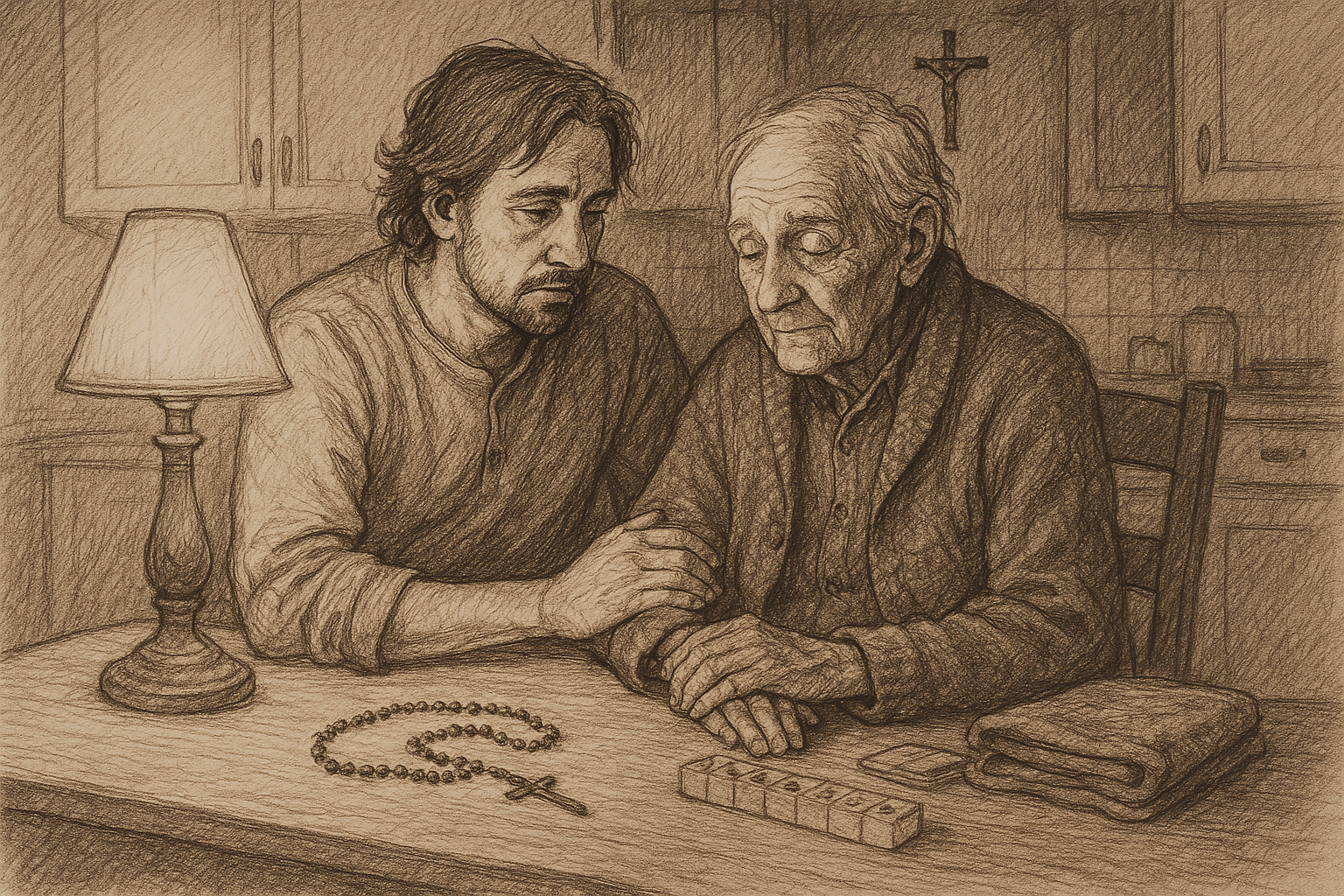
In the mystery of the Incarnation, the Son of God entered every part of our condition except sin. He knew hunger, weariness, rejection, pain, and the anguish of Gethsemane. When believers face a dying parent, a spouse, a child, a friend, or their own frailty, they are not bringing their fear to a distant ruler. They are bringing it to One who has already entered the valley.
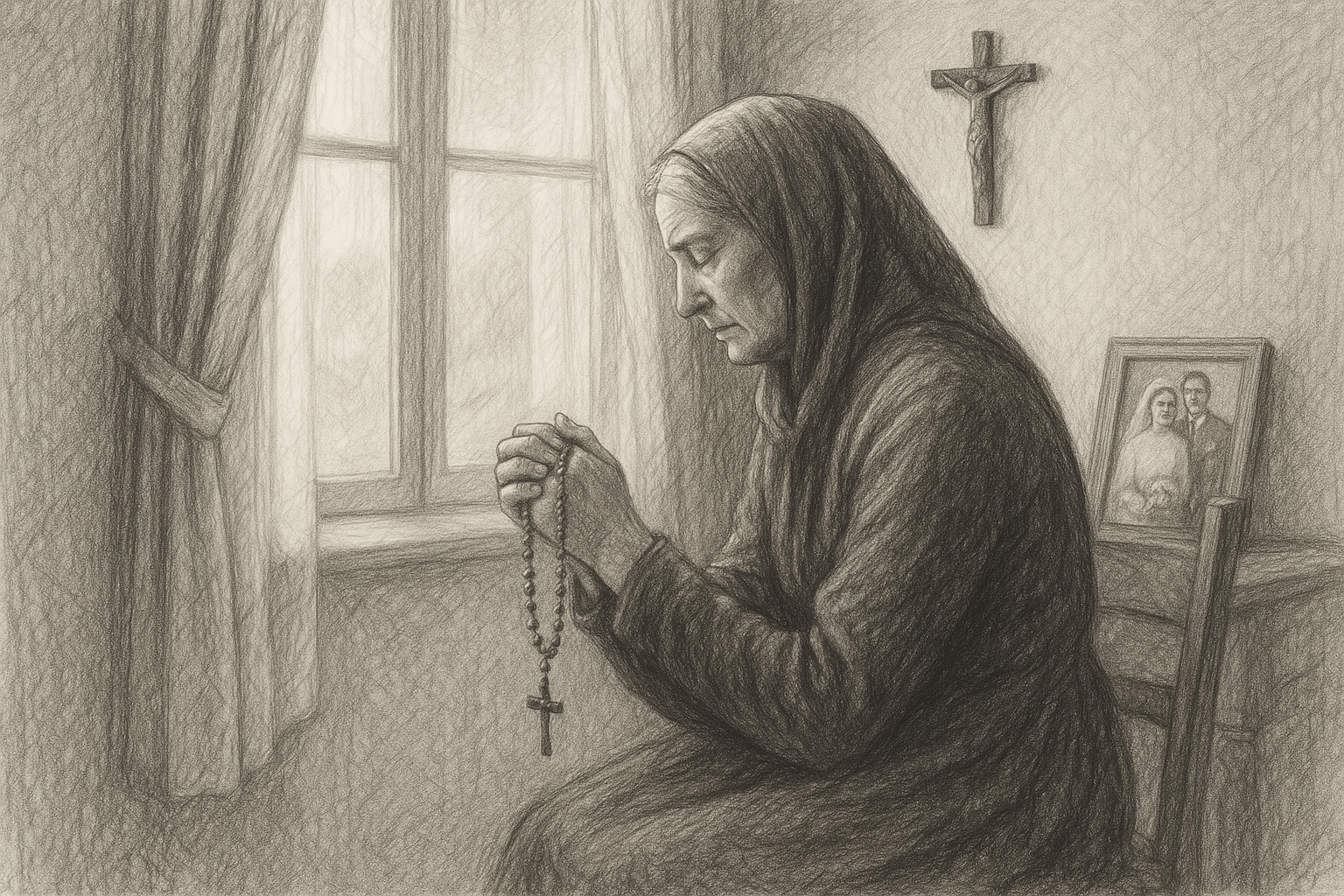
This is why the Church prays with such realism for the dying and the dead. The Christian does not need to force a cheerful face on loss. Instead, the Church teaches us to bring death into the presence of Christ. There, even the most painful farewell can become an act of entrustment. As the Psalm says, Even though I walk through the valley of the shadow of death, we are not alone, because the Shepherd walks with us.
Hope in Catholic life is personal, sacramental, and communal
Catholic hope is not only an inward feeling. It is formed by grace, nourished by the sacraments, and shared by the whole Body of Christ. When death approaches, the Church does not leave us with words alone. She gives us sacramental signs that speak of mercy.
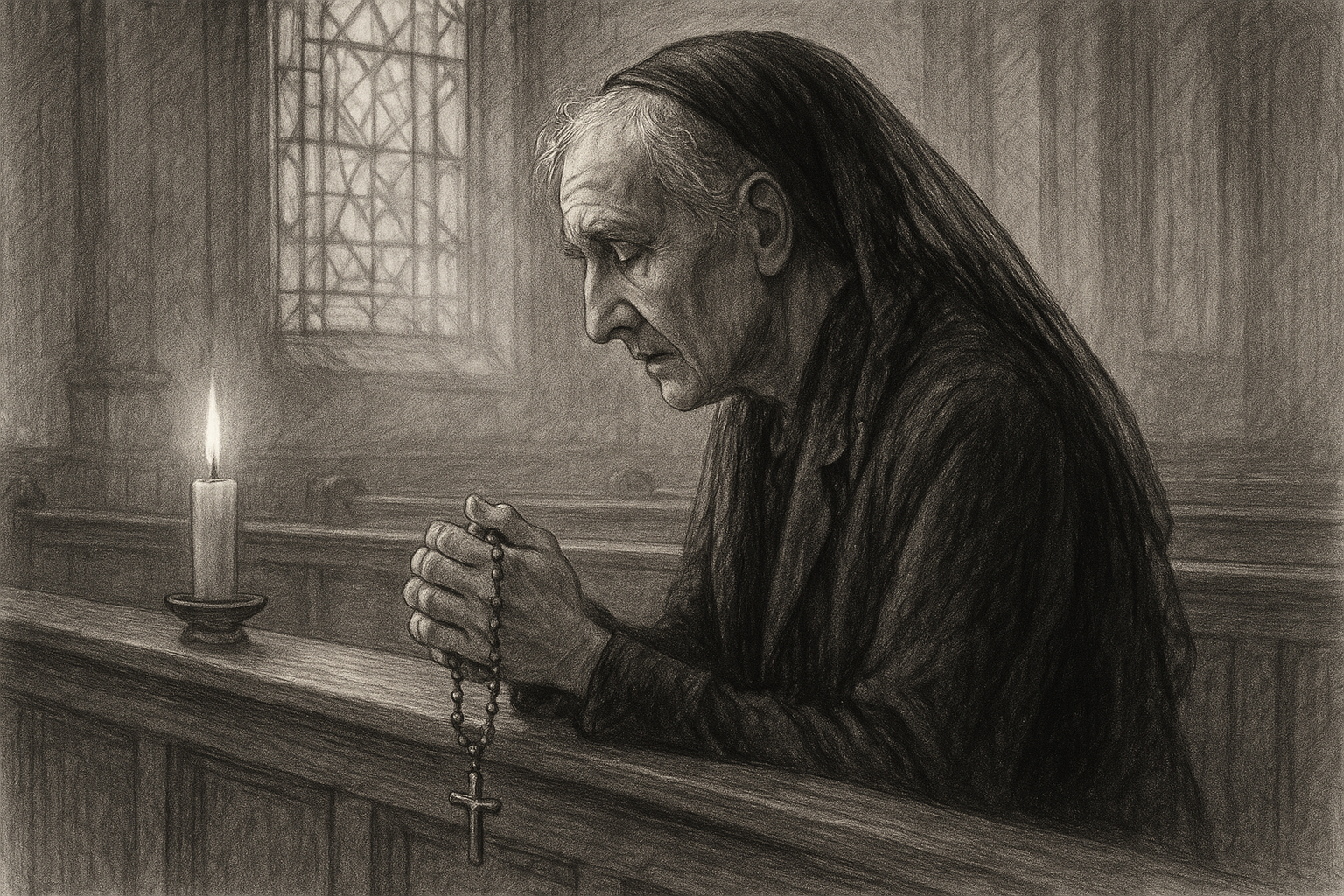
The Anointing of the Sick reminds the faithful that suffering and death do not separate us from Christ. The Eucharist received as Viaticum is described by the Church as food for the journey, a sacred provision for passage into eternal life. Confession, too, is deeply linked to this hope, because one who seeks mercy sincerely need not fear death as condemnation. The Lord desires to meet the soul in peace.
This sacramental life matters long before the final hour. A person who has learned to confess sins honestly, to receive the Eucharist devoutly, and to pray regularly begins to see death differently. It becomes less like a thief in the dark and more like a door we will one day open in faith, because Christ stands on the other side.
The communion of saints also shapes Christian hope. We do not die into isolation. We belong to a family that stretches beyond the visible world. Those who have died in Christ remain united to the Church, and the living continue to pray for the dead. The ancient practice of praying for the departed is not a sentimental custom. It is a work of charity grounded in the belief that mercy continues to purify and heal the soul.
Scripture teaches both seriousness and confidence
The Bible speaks of death with sober honesty. It reminds us that life is vapor-like and that human power is limited. Yet it also teaches that God is faithful beyond the grave. Jesus says, In my Father's house are many rooms. This promise was spoken to troubled disciples, and it still speaks to troubled hearts. The Lord does not promise a life without separation, but He does promise a home prepared by divine love.
Saint Paul gives another essential line for Christian hope: Whether we live or whether we die, we are the Lord's. That sentence gathers up the whole of a Catholic view of life and death. If we belong to the Lord in life, we belong to the Lord in death. Nothing escapes His claim of love. No illness, no aging body, no hospital room, no grave can take a baptized person beyond the reach of Christ.
At the same time, Scripture refuses superstition. Christian hope is not vague optimism or a denial that our choices matter. The New Testament repeatedly calls believers to vigilance, repentance, and perseverance. Stay awake, Jesus says. This is not meant to make us nervous every day. It is meant to keep our hearts awake to what lasts.
When death is viewed in this light, ordinary life changes. Family conversations become more honest. Prayer becomes less performative and more real. We begin to see that forgiving someone quickly, making peace while there is time, and serving quietly in love are not small things. They are part of preparing for eternity.
The home is often where hope is learned first
For many people, the first place they learn how to face death is the family home. Children notice how adults speak when someone dies. They notice whether grief is hidden in silence or met with prayer. They notice whether the dead are remembered with charity and whether faith has room for tears.
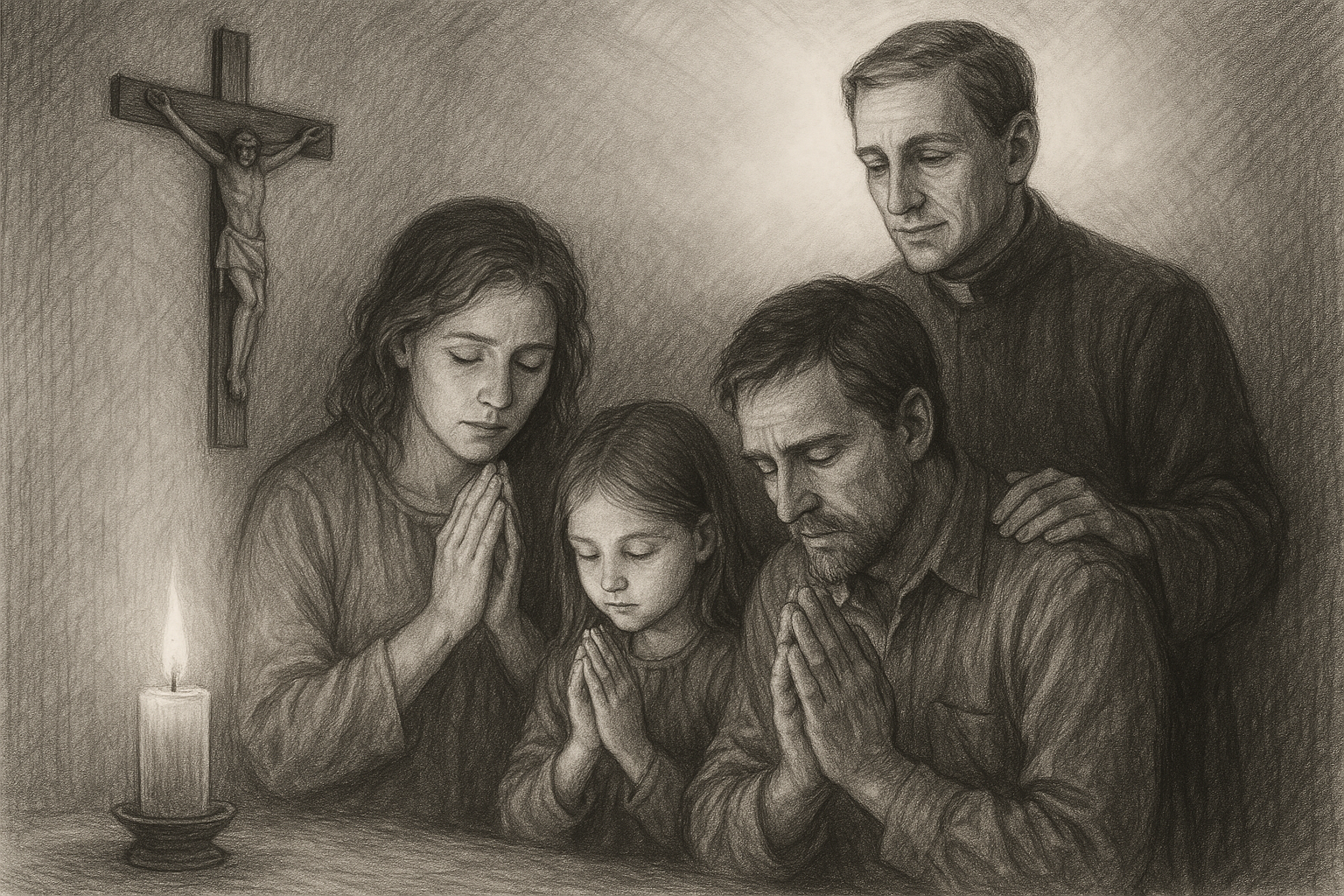
Catholic households can teach something precious by the way they mark loss. A crucifix in the home, a prayer for the dead, a Mass offered for a loved one, and a simple talk about heaven can help children understand that death is real, but not ultimate. Families do not need polished speeches. They need truth spoken with tenderness.
There is also a vocational dimension here. Every Christian vocation, whether in marriage, priesthood, religious life, or single life, is lived under the horizon of eternity. We are not only preparing for careers or retirement. We are preparing to meet God. A husband and wife, for example, love one another not only for the years they have on earth but in a way that points beyond them. Parents do the same for their children when they teach them to pray, to hope, and to trust in God's mercy.
In this sense, death and Christian hope reflection is not a theme reserved for funerals or hospital rooms. It belongs to ordinary discipleship. It belongs to the way we speak at the dinner table, visit the sick, reconcile after arguments, and remember that every person in front of us is eternal.
Practical ways Catholics can prepare for a holy death
The Church has long encouraged the faithful to prepare for death not through fear, but through fidelity. That preparation can be simple and steady.
- Go to Confession regularly. A clean conscience is a great gift when illness or sudden death comes.
- Receive the Eucharist with devotion. The Body of Christ strengthens the soul for every trial, including the final one.
- Pray for the dead. This habit trains the heart to think beyond the present moment and to trust in God's mercy.
- Make peace quickly. Do not let resentments harden into a habit. Reconciliation is a form of preparation.
- Speak of eternal life naturally. Children and adults alike need to hear that heaven is real and that Christ has opened the way.
These practices are not dramatic, but they are deeply Catholic. They create a life shaped by hope instead of panic. They remind us that death is not something we master, but something we surrender to Christ through trust.
The saints show what hope looks like at the end
The saints do not all die in the same way, but many of them teach a common lesson: the closer they came to death, the more clearly they saw Christ. Some faced martyrdom. Some endured long illness. Some died quietly in obscurity. But in each case, their hope rested not in their own strength, but in the mercy of God.
Saint Francis of Assisi called death sister, not because death is pleasant, but because it had lost its terror before the Lord he loved. Saint Theresese of Lisieux, in her own hidden suffering, trusted the mercy of God with childlike confidence. Countless ordinary Catholics have died the same way, holding a crucifix, asking for prayers, and entrusting their souls to Jesus, Mary, and Joseph.
This is what Christian hope finally looks like: not triumphal noise, but peaceful surrender. Not control, but trust. Not the refusal to grieve, but the conviction that grief will not have the final say.
Death remains a solemn mystery. Yet in Christ, it is no longer a sealed wall. It is a passage into the hands of the Father who made us, redeemed us, and calls us home. The believer who learns this can live more freely now, love more generously now, and face the end with a steadier heart, because the Lord who conquered the tomb is already waiting on the other side of every earthly farewell.
Keep Reading on Lets Read The Bible
Frequently Asked Questions
How does Catholic teaching help believers face death with hope?
Catholic teaching grounds hope in Christ's Resurrection, the sacraments, prayer for the dead, and the communion of saints. Death is still a real enemy, but it is no longer the final word for those who belong to the Lord.
What should a Catholic do to prepare spiritually for death?
Regular Confession, faithful participation in the Eucharist, prayer, reconciliation with others, and trust in God's mercy are all central ways to prepare for a holy death.
Why do Catholics pray for the dead if they believe in heaven?
Catholics pray for the dead because God's mercy can continue to purify the soul. Prayer for the departed is an act of charity and a sign that the Church remains united across death.