Family and Vocation
Holding Loss in the Light of Christ: A Catholic Reflection on Grief
Grief does not erase faith. In Christ, sorrow can become a place of prayer, remembrance, and patient hope.
Site Admin | November 8, 2025 | 92 views
Grief arrives in many forms. Sometimes it enters through the death of someone we love. Sometimes it comes through illness, separation, disappointment, or the slow ache of life changing beyond recognition. However it comes, grief can make even ordinary tasks feel heavy. A meal, a school pickup, a quiet evening at home, or a familiar church pew can suddenly seem filled with absence. In those moments, a Catholic grief reflection begins with honesty: sorrow is real, love is real, and faith does not require us to pretend otherwise.
The Christian response to grief is not denial. It is communion. We do not grieve as people with no hope, but neither do we grieve as people who already see the full answer. We stand between loss and promise, between tears and resurrection. That space can feel painfully wide. Yet it is also where Christ meets us, not as a distant observer, but as the One who wept at the tomb of Lazarus and entered death Himself to break its power.
Grief has a place in the life of faith
Many Catholics are surprised by how much mourning appears in Scripture. The Bible does not treat grief as a failure of trust. It gives us lament, tears, silence, fasting, and psalms that speak from the depth of the human heart. The Lord does not rush His people past sorrow. He receives it. He gives words to it when we cannot find our own.
The Book of Lamentations is a witness to this truth. So is the prayer of the psalmist, who cries out, "How long, O Lord?" and "Out of the depths I cry to you, O Lord" Out of the depths I cry to you, O Lord. These are not polished prayers. They are honest ones. They remind us that faithful people can weep, question, and ache without stepping outside the life of grace.
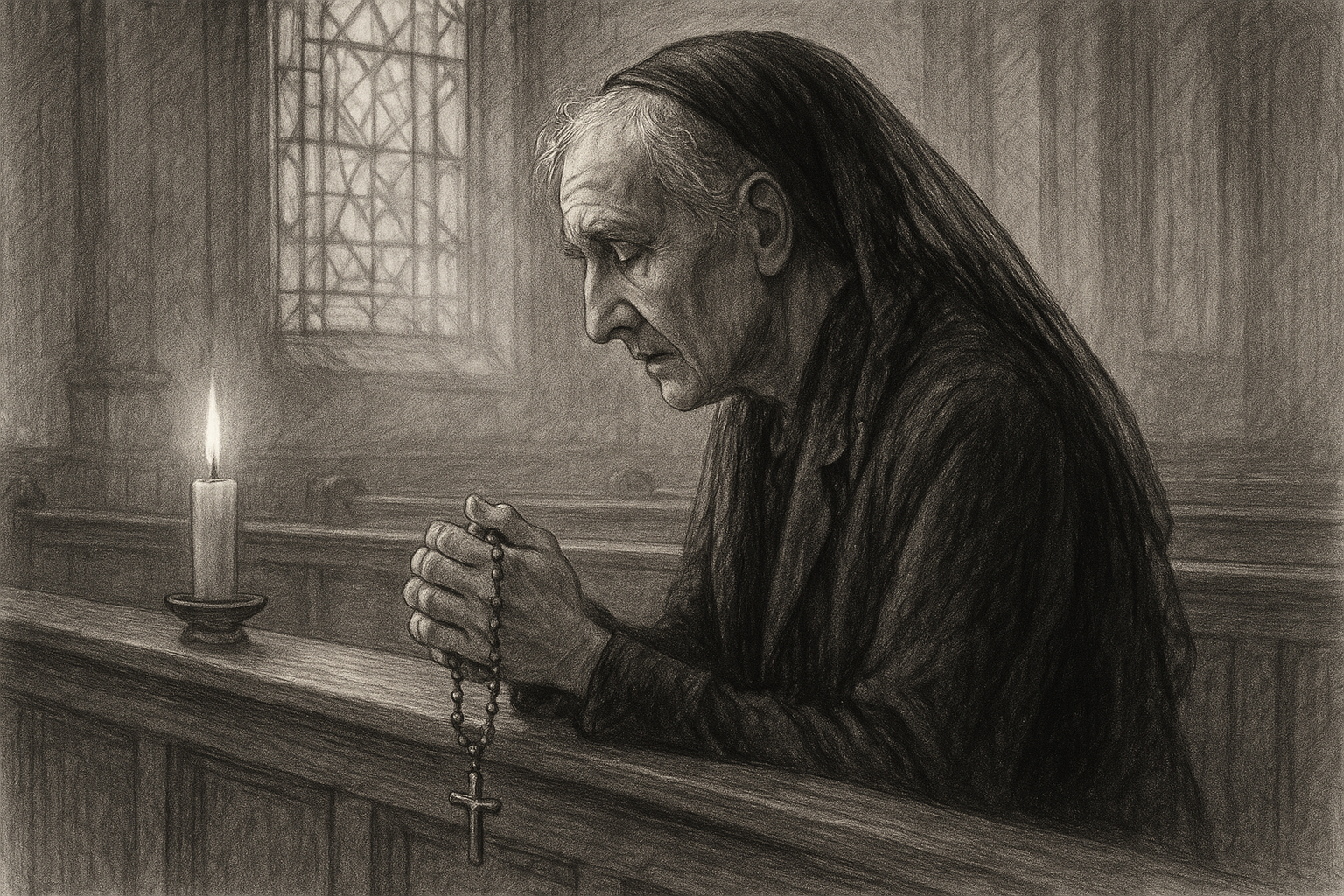
In Catholic life, grief also has a liturgical home. The Mass itself remembers the dead. We pray for the repose of souls because love does not end at the grave. The Church teaches us to bring the departed before God with confidence and humility, trusting in His mercy. This is one reason grief in a Catholic family often becomes communal. We do not carry the burden alone. We pray for one another, offer Masses, light candles, keep anniversaries, and remember names aloud.
Christ does not stand apart from mourning
The shortest verse in the Gospel is also one of the most revealing: Jesus wept Jesus wept. He knew He would raise Lazarus. He knew the end of the story. Yet He still wept with Martha and Mary. That detail matters. It tells us that divine power does not cancel human sorrow. Christ is not embarrassed by tears. He enters them.
At the tomb of Lazarus, Jesus shows both compassion and authority. He laments with the family, and then He commands life into the grave. That pattern still speaks to us. In grief, we often want one of those things more than the other. We want comfort without delay, or a miracle without the long waiting. But the Lord usually gives both in His own order: first His presence, then His promise, and in time, the deeper healing that only He can give.
The Passion also reveals what grief means to God. Christ was abandoned, mocked, wounded, and crucified. He knows the agony of helplessness and the sorrow of entrusting Himself to the Father in darkness. When we bring our grief to Him, we are not bringing it to a stranger. We are bringing it to One who has entered human suffering from the inside.
Family grief changes the home
When grief enters a family, it changes the atmosphere of the house. Some families become quieter. Others become more easily irritated. Some members withdraw while others need constant conversation. None of this is unusual. Grief reveals how much a home has been shaped by the one who is missing, and it exposes how differently each person loves and mourns.
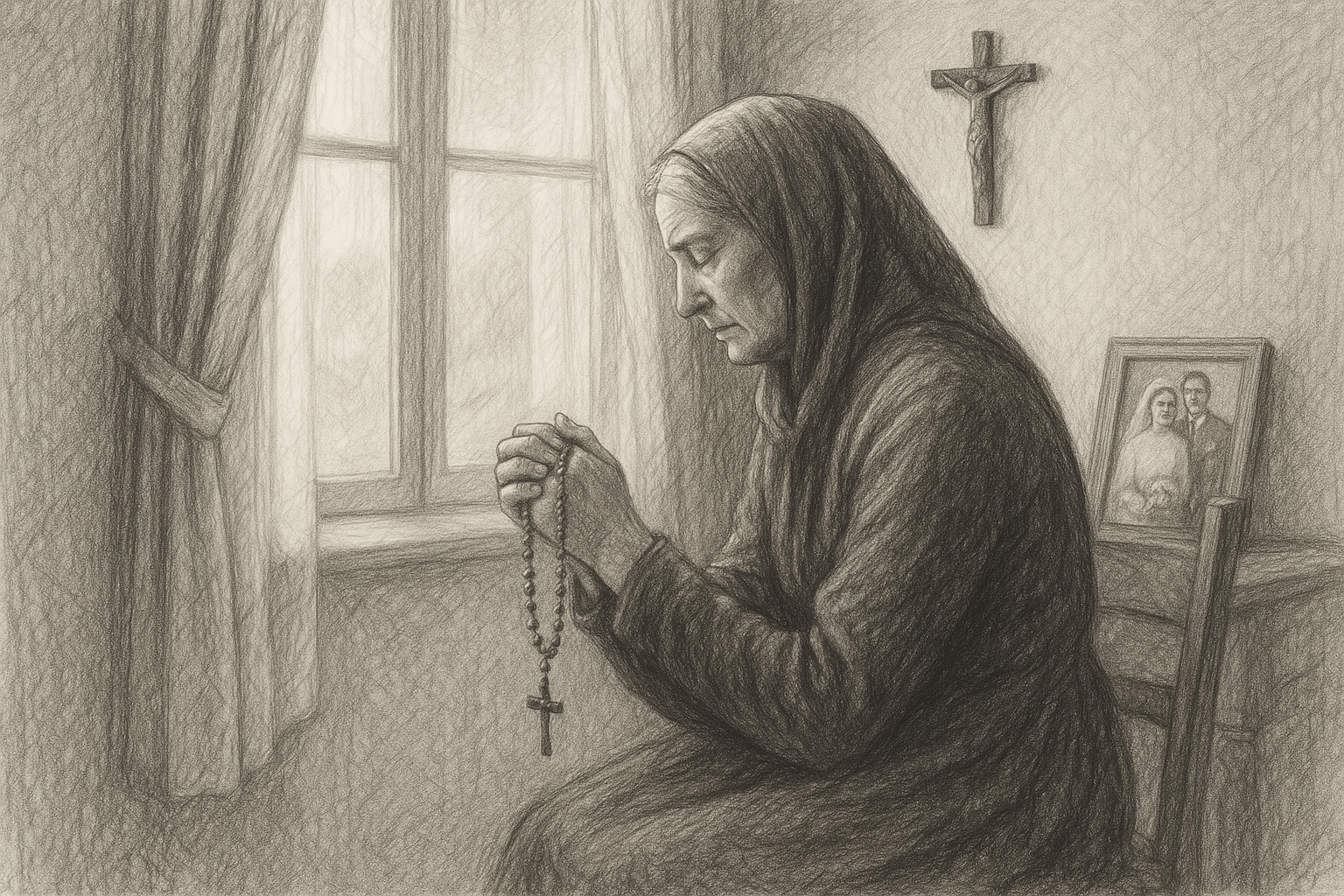
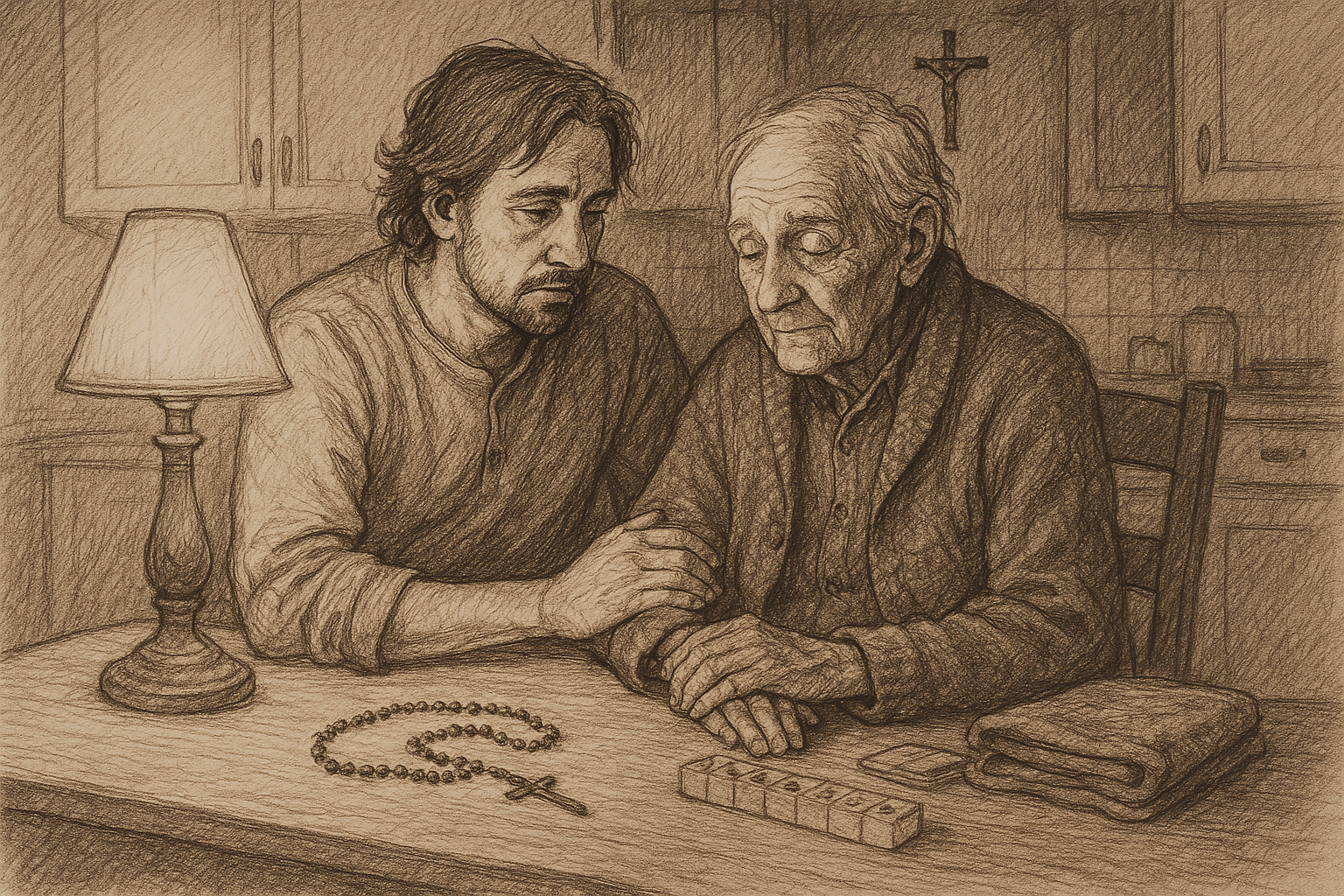
In a Catholic understanding of family life, this matters because a household is not merely a place of shared schedules. It is a place of vocation, sacrifice, and mutual sanctification. Grief can make that vocation feel harder, but it does not cancel it. Parents may still need to care for children. Spouses may still need patience. Adult children may need to honor aging parents while carrying sorrow of their own. In each case, charity often looks very small and very ordinary: making soup, answering a text, sitting quietly, praying one decade of the Rosary, or going to Mass when one does not feel like moving.
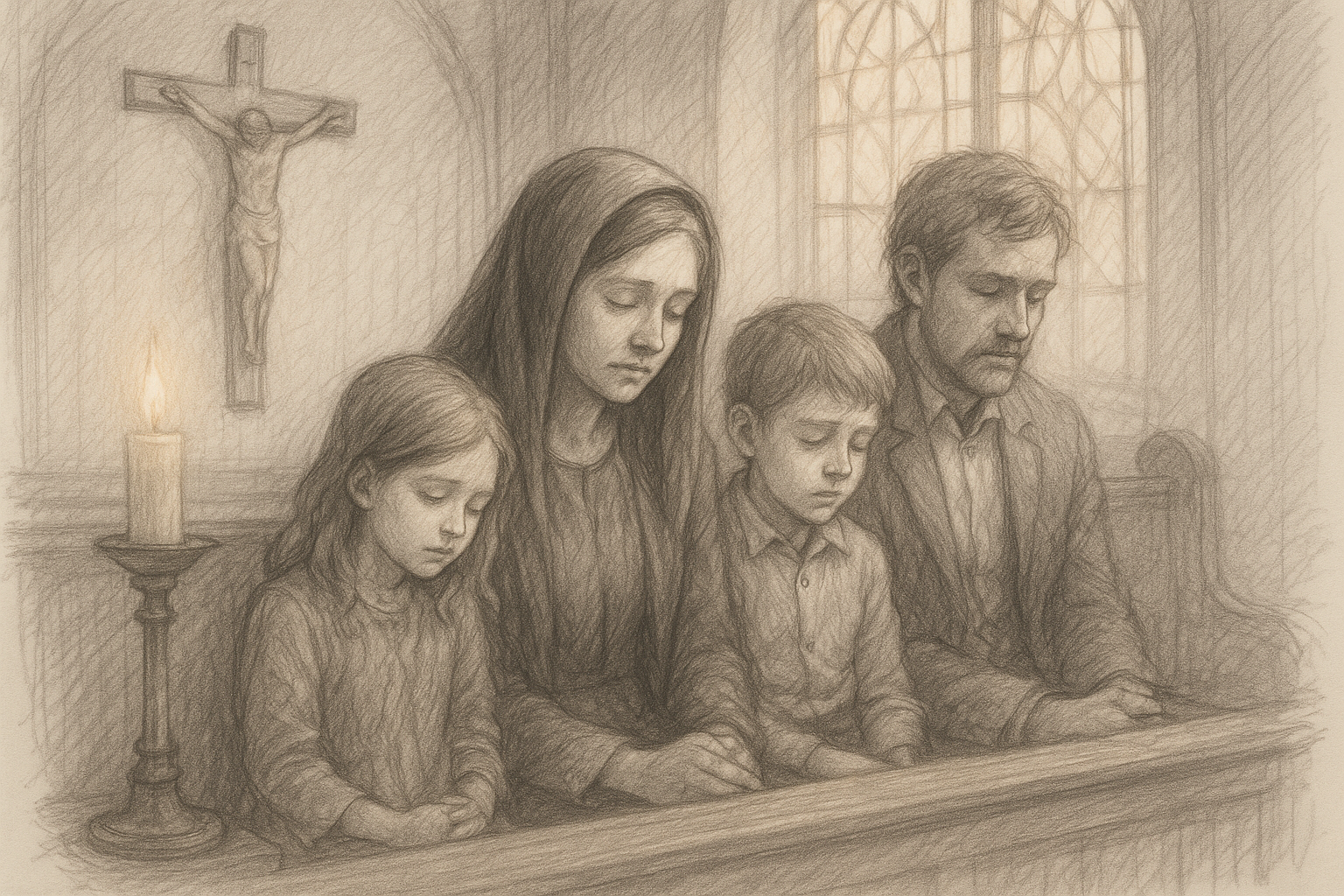
There is also a special tenderness in grieving together as a family. Children do not need vague assurances that erase loss. They need truth spoken gently. They need to know that sadness is not shameful, that tears are allowed, and that the Church prays for the dead. A child who hears adults pray for the deceased learns that love continues beyond visible presence. That lesson can become one of the most lasting gifts a family receives in sorrow.
Scripture gives grief a language of hope
Catholic hope is not wishful thinking. It rests on the resurrection of Christ. That is why Scripture can speak so honestly about death while refusing despair. St. Paul writes, "If Christ has not been raised, your faith is futile" If Christ has not been raised, your faith is futile, and then he proclaims the victory of the risen Lord. The Christian does not deny the sting of death, but neither does he treat death as final.
This is why the Church prays for the dead and commends them to God. We trust in His mercy, but we also remember that love desires purification, completion, and peace. For the bereaved, this can be a consolation. To pray for the dead is to remain united in charity. It is a way of saying that the bond of love has not been severed by death, even though it has been changed.
The Psalms are especially important in grief because they help us pray when our own words fail. A person who cannot manage a full prayer can still say, Lord, have mercy. A person who cannot explain the sorrow can still pray a psalm slowly, one line at a time. In that sense, Scripture becomes a companion. It does not flatter grief, but it gives it shape.
"The Lord is near to the brokenhearted, and saves the crushed in spirit" The Lord is near to the brokenhearted.
Practical ways to live a Catholic grief reflection
Faithful reflection on grief is not only something we think about. It is something we practice. In seasons of mourning, simple habits can become lifelines. They will not remove sorrow, but they can keep sorrow from becoming isolation.
- Pray briefly and consistently. A single Our Father, Hail Mary, or Psalm verse prayed every day can carry more weight than a long prayer that never begins.
- Attend Mass when possible. Even if attention is scattered, the liturgy places grief within Christ's sacrifice and resurrection.
- Offer intentions for the dead. Requesting a Mass, visiting a cemetery, or praying for the departed keeps love active.
- Speak the person's name. Remembering the dead aloud helps families honor reality instead of pretending silence is healing.
- Accept practical help. In grief, simple assistance with meals, transportation, or childcare can be an act of mercy.
It is also wise to allow grief to move at its own pace. Some people experience sharp sorrow immediately, while others feel numb for a long time. Some grieve in waves. Others discover that a birthday, holiday, or ordinary smell opens the wound again months later. There is no neat timetable that applies to all hearts. The Christian moral life includes patience with one's own process and compassion for the different pace of others.
When grief feels spiritually dry, it can help to keep one anchor practice. Sit before the Blessed Sacrament if you can. Place a crucifix where you will see it. Read a psalm each night. Write down memories of the person you lost. These acts are small, but small acts can become steady forms of fidelity. In grief, fidelity often matters more than emotional intensity.
The saints teach us how to mourn with hope
The saints are not people who never suffered. They are witnesses to grace in suffering. Many knew deep loss, and their lives show that holiness does not depend on feeling strong. St. Monica endured long sorrow and prayer for her son. St. Joseph is revered as a silent guardian who lived with sacrifice and hidden labor. Mary, the Mother of Sorrows, stood near the Cross and did not flee from the sight of her Son's suffering.
Mary is especially close to those who grieve. She knew what it meant to hold a promise and still watch pain unfold. Her faith was not sentimental. It was steady. At Cana she noticed a need. At Calvary she remained. In the Upper Room, she was present with the apostles as they waited in uncertain hope. Her life teaches that grief does not prevent holiness, and holiness does not erase grief. Rather, grace helps us remain open to God even when our hearts are wounded.
That is why a Catholic grief reflection often ends not with a solved problem, but with a surrendered heart. We may not understand why one life was cut short or why a certain loss came when it did. We may not see how the Lord is arranging all things for good. But we can still pray, Into your hands, Lord, I commend this person I love, and I commend my own heart as well.
Hope does not cancel tears
The resurrection is not a command to smile through suffering. It is the announcement that death has been defeated, even though its pain remains for now. Christian hope allows us to mourn honestly because it places mourning inside a larger story. The grave is real, but it is not ultimate. Separation is painful, but it is not permanent for those united to Christ. That truth does not make grief easy. It makes grief bearable in a deeper way.
In many families, grief slowly becomes memory, and memory becomes prayer. A favorite chair, a recipe, a habit of saying grace, a laugh that still echoes in the mind, these things are not trivial. They are signs that love leaves traces. When offered to God, they can become part of a living faith. The dead are not erased from the heart of the Church. They are entrusted to God's mercy and remembered in love.
If you are grieving today, do not measure your faith by your tears. Measure it by the One to whom you bring them. Christ is not diminished by sorrow. He is present in it. And when your strength is gone, the Church continues to pray with you, for you, and for those you miss. That is one of the quiet mercies of Catholic life: grief is never the last word, because love has already been claimed by the risen Lord.
Keep Reading on Lets Read The Bible
Frequently Asked Questions
How can Catholics pray when grief feels overwhelming?
Start with very short prayers. A single Hail Mary, an Our Father, or one line from a psalm can be enough. In Catholic life, faithful prayer does not need to be long to be real.
Is it appropriate for Catholics to grieve openly?
Yes. Scripture shows that lament and tears belong to faithful prayer. Jesus Himself wept, so open grief is not a lack of faith when it is brought honestly before God.
What is one concrete Catholic practice for someone in mourning?
Have a Mass offered for the deceased and pray for them regularly. This keeps love active, places the person in God's mercy, and helps the bereaved remain united to the Church's prayer.