Family and Vocation
When Grief Enters the House, Grace Does Not Leave
A Catholic reflection on sorrow, memory, prayer, and the quiet ways God carries families through loss
Site Admin | November 7, 2025 | 72 views
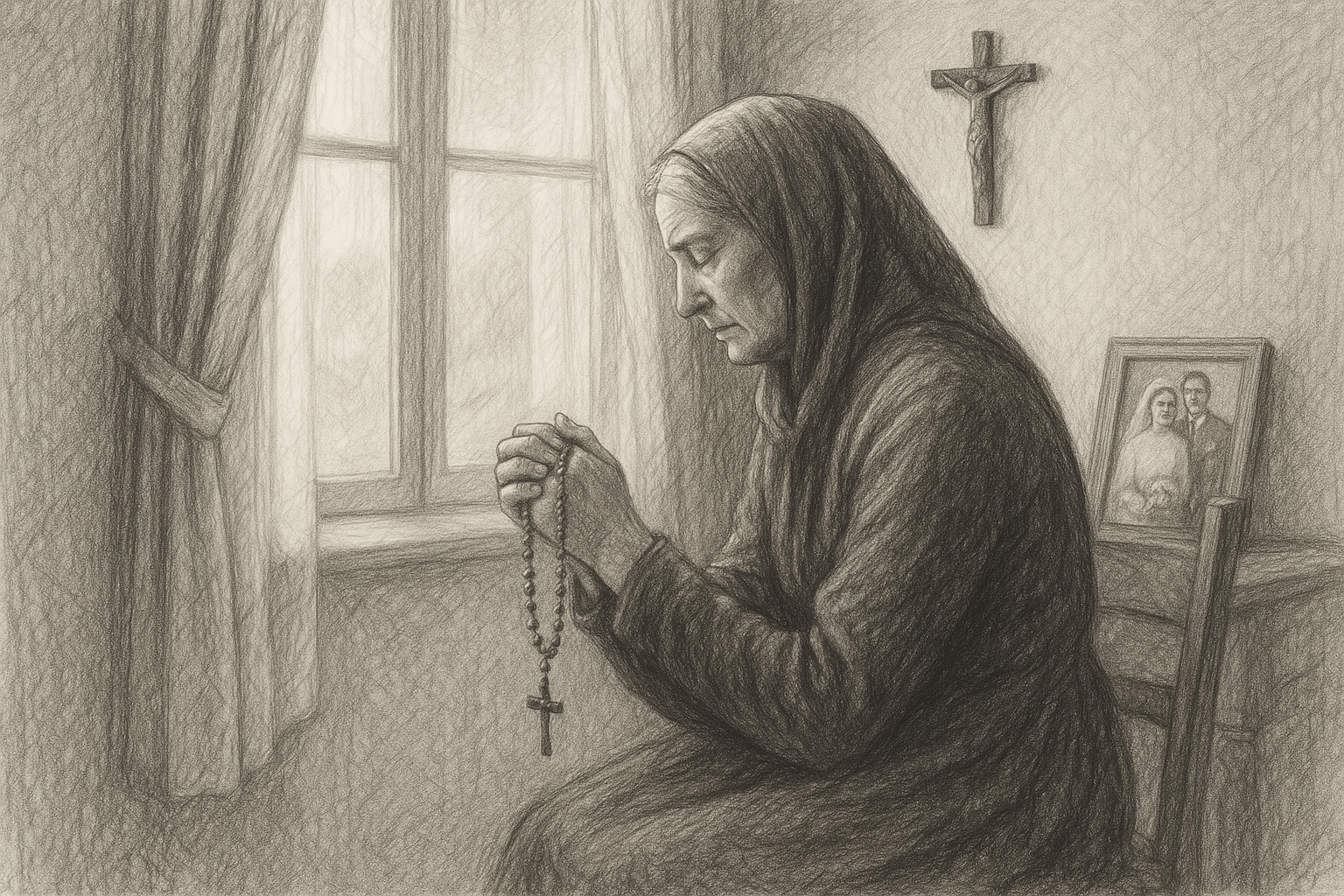
Grief changes the feel of a house. It changes the sound of a phone, the meaning of a chair at the table, the way a morning begins. Even ordinary tasks can become heavy when loss enters the family. In those moments, the Church does not offer polished phrases or spiritual shortcuts. She offers something more honest and more enduring: the sorrowful Christ, the companionship of the saints, the prayers of the faithful, and the hope that death does not have the last word.
A grief Catholic perspective begins with this simple truth: sorrow is not a sign of weak faith. Jesus Himself wept at the tomb of Lazarus, even though He knew He would call him back to life. Jesus wept The Son of God did not stand apart from human mourning. He entered it. That matters for every family that has watched a loved one suffer, died, or been taken suddenly. Christ is not distant from grief. He is present within it.
Grief is not the opposite of faith
Some people imagine that mature faith should make loss easier, as if holiness means not feeling the wound. But Scripture tells a different story. The psalms are full of tears, complaint, pleading, and remembrance. They show that prayer can sound like sorrow without becoming unbelief. The Lord is close to the brokenhearted is not a slogan. It is a promise for the aching heart.
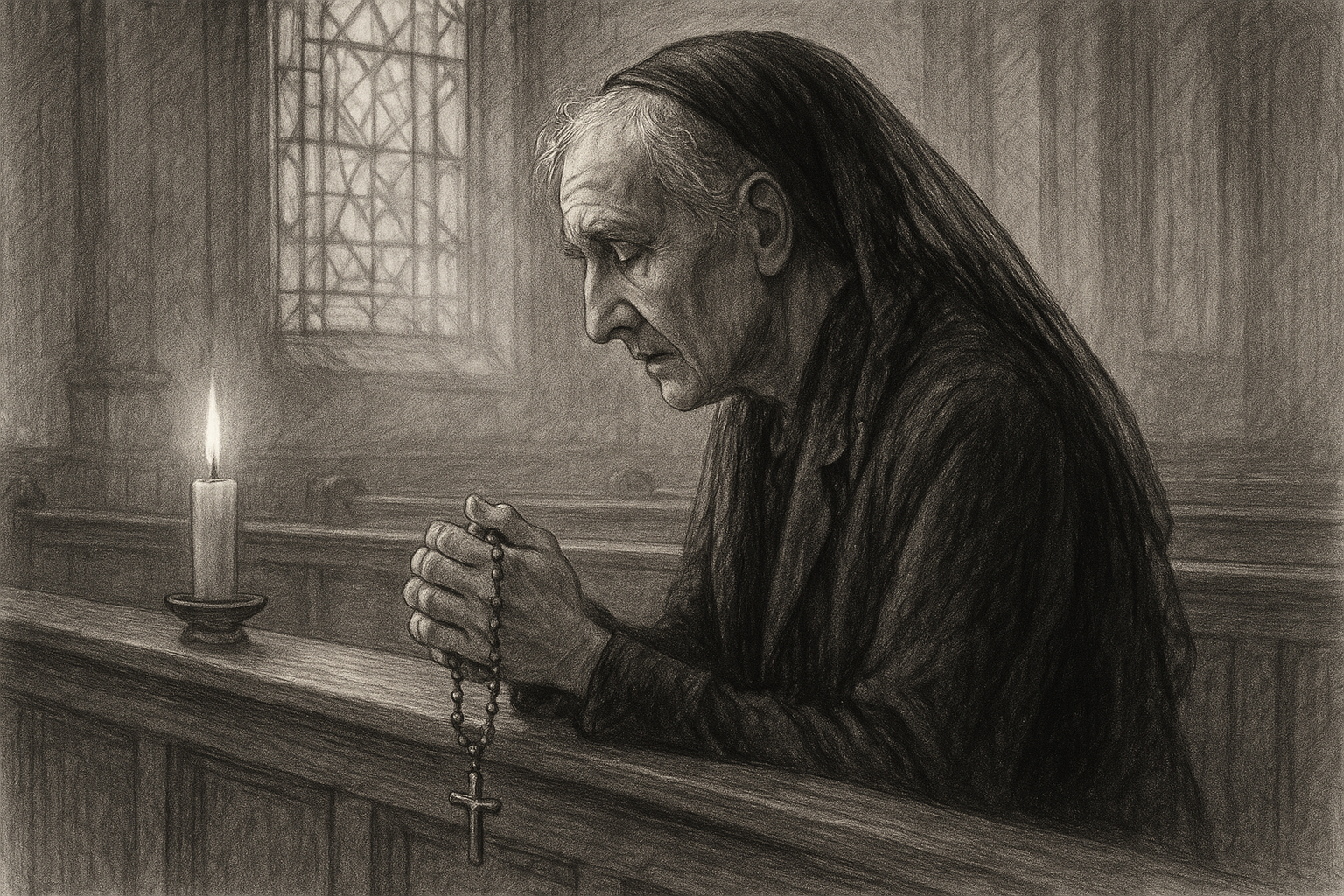
In Catholic life, grief is often misunderstood because many people confuse trust in God with emotional control. Yet trust is not denial. It is the decision to keep turning toward God even when the soul is exhausted. The grieving person may pray with fear, numbness, anger, or exhaustion. All of that can be offered. A family member may sit in church and hear the prayers without being able to answer them interiorly. That too can be a form of prayer.
The Church makes room for tears because Christ made room for tears. She also makes room for the long road of mourning, which is rarely tidy. Grief often arrives in waves. It may be sharp one hour and strangely quiet the next. It can return through a smell, a song, a feast day, or a familiar corner of the home. None of this means the person is failing to heal. It means love has memory.
The family feels grief in different ways
When a death affects a household, no two people grieve in the same manner. A spouse may feel the loss as silence and disorientation. A child may feel abandonment or confusion. An elderly parent may grieve while carrying the burden of many other memories. Even within one family, people can be out of sync. One person wants to speak; another cannot bear another conversation. One needs ritual; another needs quiet. These differences can create tension just when mutual gentleness is most needed.
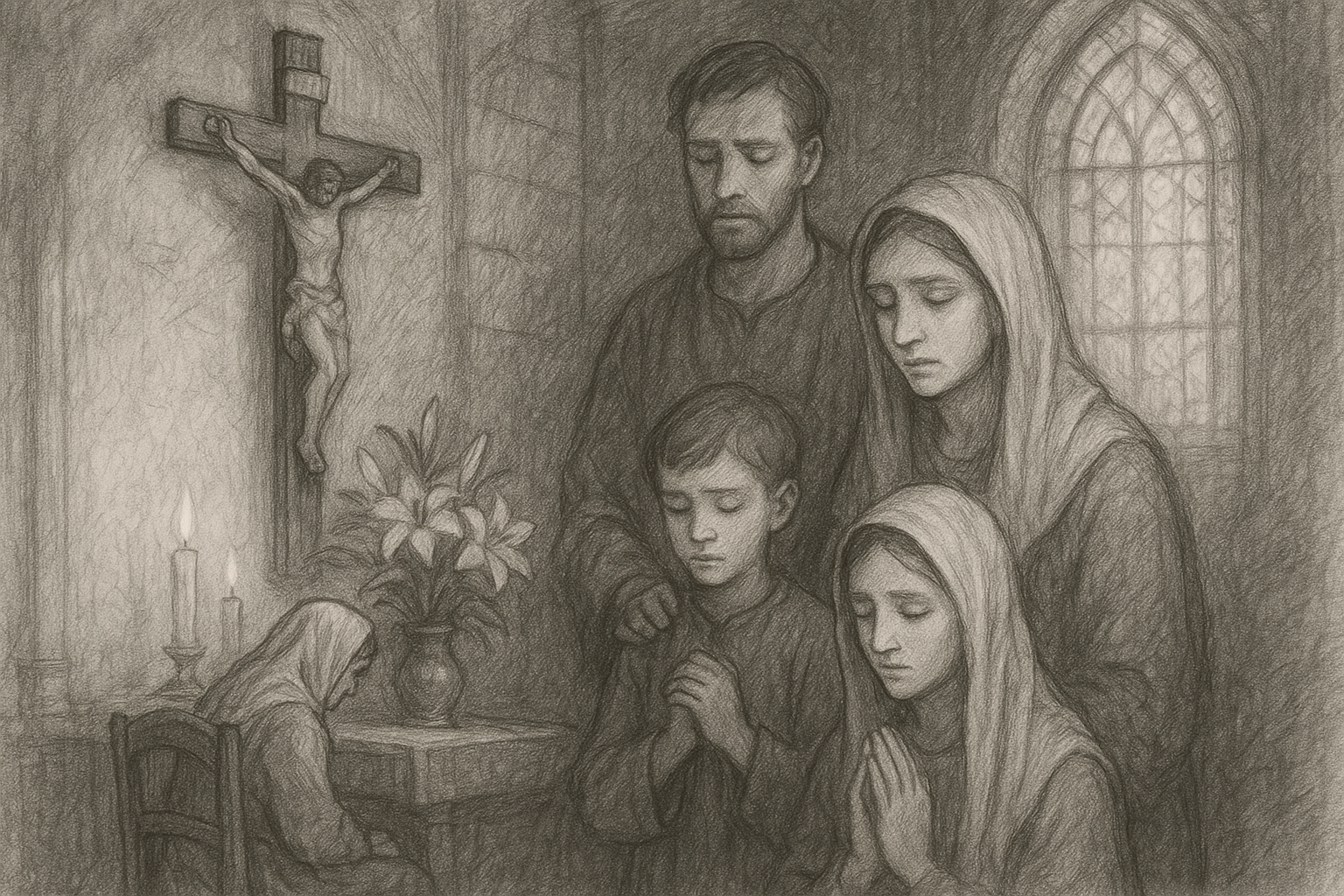
Here the Catholic understanding of family is especially important. A family is not only a private unit of emotion. It is a communion of persons called to carry one another. That does not mean everyone feels the same thing. It means each person can be met with patience. A family under grief needs less judgment and more mercy. It needs practical help, meal trains, childcare, transportation, and people who know when to speak and when to be silent.
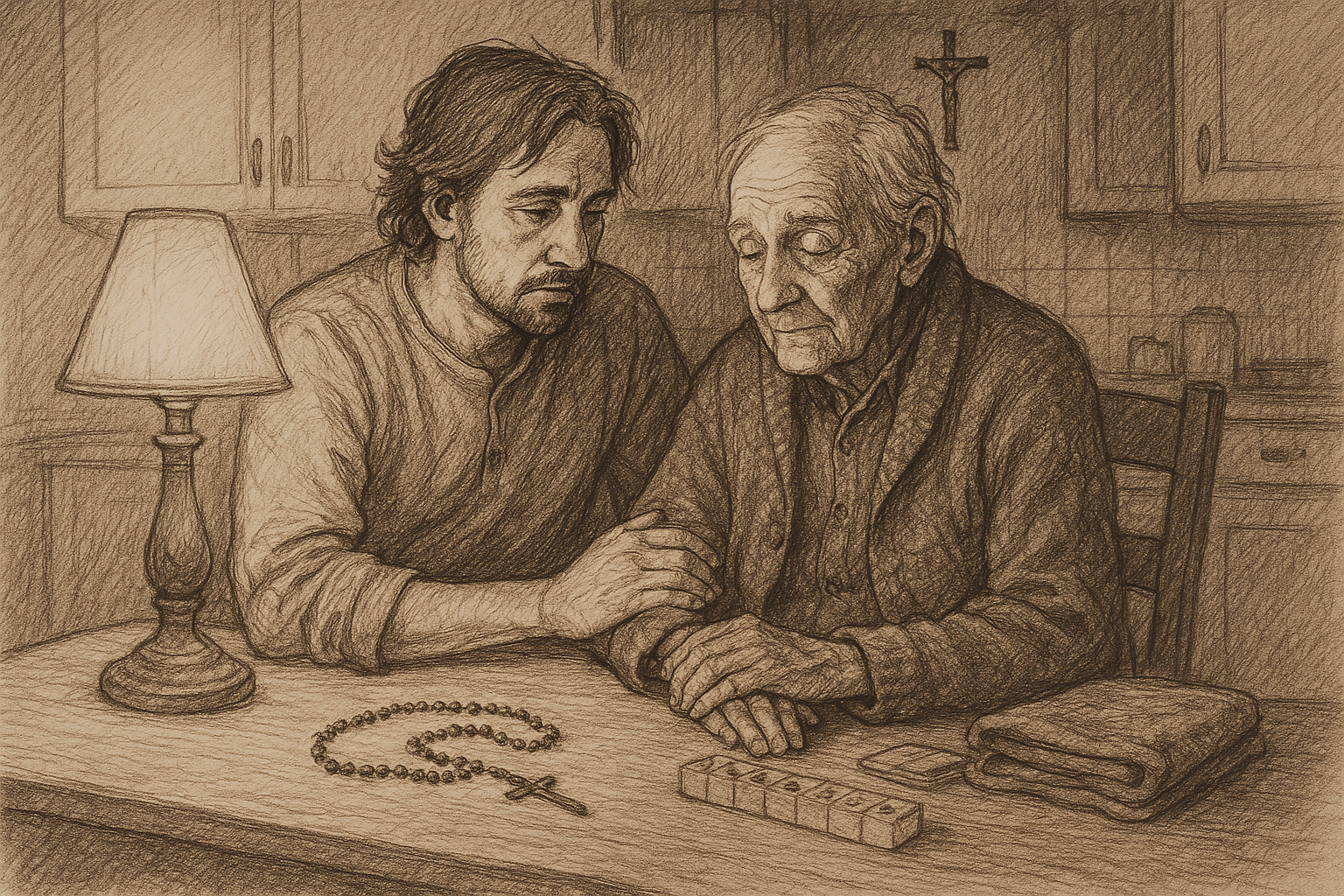
The works of mercy take on fresh meaning in mourning. To comfort the sorrowful is not merely to say the right words. It is to stand near, to pray, to remember anniversaries, to bring a meal, to sit at a wake, to help with paperwork, to listen without fixing. Family love in grief often looks ordinary. In the economy of grace, ordinary things matter greatly.
Christ meets us in the place of loss
The Gospels do not present Jesus as someone who avoids suffering. He walks toward it. He enters the sorrow of others and then carries the world through His own Cross and Resurrection. That is why Catholics do not speak of grief as if the final word were healing alone. We speak of redemption.
On Good Friday, the disciples scattered, and Mary stood near the Cross. The scene is a school of sorrow. There is loss, silence, fear, and waiting. Yet the Cross is not the end of the story. The Resurrection does not erase the wounds of Christ; it transforms them into signs of victory. This is deeply consoling for mourners. God does not waste suffering. He can gather even what seems broken beyond repair and make it part of salvation.
Still, that hope is usually not experienced all at once. At first, it may only be possible to cling to a tiny act of faith: making the sign of the cross, whispering a Hail Mary, or asking the Lord for help before getting out of bed. Grace often arrives in small doses. It gives enough light for the next step, not always for the whole path.
St. Paul blesses God as the Father of mercies and the God of all consolation. That word consolation is important. It does not mean sentimental reassurance. It means being strengthened, steadied, and held. Catholic prayer in grief is often less about explanation and more about being consoled by a presence that is real even when words fail.
What grace looks like in daily grieving
Grace rarely announces itself with drama. More often, it appears as perseverance. A grieving parent gets the children to school. A widow makes coffee and answers one difficult phone call. A son returns to Mass after weeks of absence. A daughter forgives herself for not doing everything perfectly. These small acts are not insignificant. They are evidence that God is at work in the middle of sorrow.
Several habits can help a family receive grace while mourning:
- Pray briefly and honestly. A short prayer said with a tired heart can be enough for the moment.
- Keep the sacraments close. Mass, Confession, and the Anointing of the Sick, when appropriate, anchor grief in Christ rather than isolation.
- Let memory become prayer. Offer a loved one to God by name, especially on anniversaries and birthdays.
- Accept help without embarrassment. Receiving care is part of Christian humility.
- Allow time for the body to catch up. Grief affects sleep, appetite, concentration, and energy.
Many families are surprised by how physically exhausting sorrow can be. The mind becomes foggy. Routine tasks take twice as long. Sometimes grief brings guilt, because the grieving person is not functioning at their usual level. But human beings are not machines. We are body and soul. When one suffers, the whole person suffers. Patience with oneself can therefore be an act of faith.
It is also wise to remember that grief can stir up older wounds. A present loss may reopen past losses. A funeral may awaken a childhood memory. A family conflict may be made sharper by death. These layers do not mean something is wrong. They mean the heart is deep, and God knows how to meet us there.
The saints teach us how to mourn
Catholic tradition offers many companions for grief. Mary is especially close to the sorrowing because she stood beneath the Cross and kept faith when all seemed lost. Her strength was not loud. It was faithful. She did not understand everything, but she remained.
The saints also remind us that hope in eternal life is not vague optimism. It is rooted in the risen Christ. When the Church prays for the dead, she expresses both charity and trust. We do not pretend that death is harmless. We ask God to purify, receive, and perfect those who have died in His friendship. We also entrust our own pain to Him, because love does not end at the grave.
This is why Catholic funeral prayer has such depth. It is not only a ceremony for the living. It is a reverent act of mercy for the dead and a source of strength for the living. In the funeral rites, the Church names death honestly, prays for the departed, and proclaims resurrection. That balance guards us from both despair and denial.
When grief becomes a vocation of love
Not every season of grief ends quickly. Some losses remain a companion for years. A parent may carry the death of a child forever. A spouse may never stop missing a husband or wife. A family may continue to live with changed patterns, new responsibilities, and a quiet absence that cannot be replaced. In such cases, grief becomes part of vocation itself. The person learns to love in a new key.
This is difficult, but not barren. Love after loss can deepen tenderness, patience, and gratitude. It can soften harsh judgments. It can open the soul to the suffering of others. A person who has walked through grief often becomes more attentive to the sorrow hidden in other homes. That is one of the mysterious fruits of suffering sanctified by grace. The wounded heart can become more compassionate.
And yet Christians do not romanticize pain. We do not say that loss is good in itself. We say that God is able to bring good from what is not good. There is a difference. The Cross remains a Cross. But because Christ has entered it, no grief is ever abandoned to emptiness.
For the family in mourning, that truth can be held quietly. It may be enough to light a candle, read a psalm, attend Mass, or speak the name of the dead with love. It may be enough to let another person pray for you when you cannot pray much yourself. In grief, faith often looks like receiving what one cannot produce alone.
The grieving heart is not asked to pretend. It is asked to stay near Christ. There, in the place where love remembers and tears are not wasted, grace keeps working, gently and faithfully, until even sorrow is drawn into the mercy of God.
Keep Reading on Lets Read The Bible
Frequently Asked Questions
What does the Church say about grieving after a death?
The Church teaches that grief is a natural response to loss and does not contradict faith. Christ Himself wept, and Catholic prayer invites the sorrowing to bring their pain to God, to the sacraments, and to the hope of eternal life.
How can a Catholic family pray when grief makes words difficult?
Short prayers are often enough. A family can pray a psalm, the Hail Mary, the Our Father, or simply say the loved one's name before God. Silence, tears, and presence can also be part of prayer.
Why is remembering the dead important in Catholic life?
Remembering the dead is an act of love and charity. Catholics pray for the departed, especially at Mass, trusting God's mercy and affirming that death does not erase communion in Christ.