Family and Vocation
Motherhood in the Light of Grace: A Catholic View of Daily Love and Sacrifice
A Catholic reflection on the vocation of motherhood, the burdens it can carry, and the grace that sustains it in ordinary life.
Site Admin | November 19, 2025 | 94 views
Motherhood is often spoken about in simple terms, but lived in far more complicated ones. It includes joy and fatigue, tenderness and worry, hope and sacrifice. It can be marked by long days, interrupted sleep, hidden labor, and love that is poured out without much recognition. The motherhood Catholic perspective begins by taking all of that seriously. The Church does not treat motherhood as a sentimental ideal or a social role alone. She sees it as a vocation, a real and holy calling through which a woman can cooperate with God's creative and redeeming work.
That does not mean every mother's experience looks the same. Some mothers are raising many children, some are caring for one child, and some are mothering through adoption, foster care, or spiritual accompaniment. Some are in stable homes, while others carry the weight of grief, poverty, illness, or isolation. Catholic faith does not flatten those differences. Instead, it places them before Christ, who knows the quiet sacrifices of hidden love and gives grace for each day's burdens.
Motherhood as a vocation, not only a role
In Catholic life, a vocation is a call from God that shapes the way a person loves, serves, and sanctifies others. Marriage is a vocation. Holy Orders is a vocation. Consecrated life is a vocation. Motherhood, within marriage or lived in other circumstances of care and responsibility, is also a vocation in the sense that it becomes a path by which a woman is invited to give herself in love.
This is important because culture often measures motherhood by productivity, image, or visible success. The Church measures it differently. A mother is not first a manager of schedules or a curator of appearances. She is a woman entrusted with lives, hearts, and often countless unseen tasks. Her work matters not only because it is useful, but because love matters. The daily feeding, teaching, comforting, correcting, listening, and praying are all part of a holy offering when united to God.
Scripture presents motherhood with dignity and realism. Eve is called the mother of all the living, even after the sorrow of sin enters the world. Sarah, Hannah, Elizabeth, and Mary each reveal something of God's tenderness toward women who receive life as gift. Hannah's prayer in 1 Samuel 1:27 shows that a child is not an entitlement but a blessing entrusted by God. Elizabeth's joy in Luke 1:42 reminds us that motherhood is also surrounded by praise when God acts in unexpected ways. And Mary's consent in Luke 1:38 stands at the center of Christian motherhood, because she receives God's word with trust before she understands the road ahead.
Mary as the pattern of receptive love
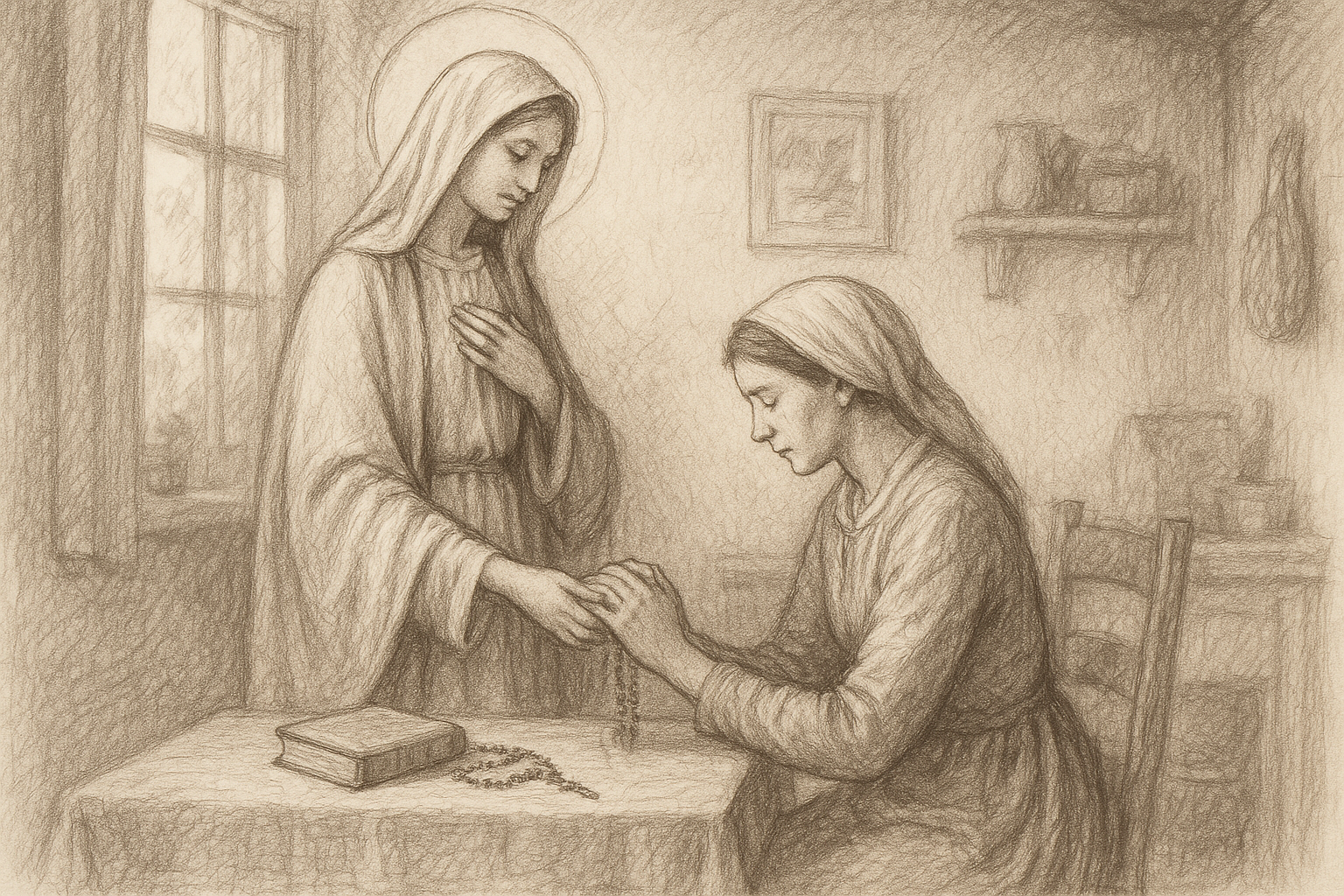
No Catholic reflection on motherhood can ignore the Blessed Virgin Mary. She is not only an example of faith in general, but a mother whose life reveals the deepest shape of Christian motherhood. Mary does not begin with control. She begins with surrender. Her fiat, her yes, is not passive resignation. It is courageous cooperation with the will of God.
Mary's motherhood is not presented in Scripture as glamorous. She gives birth in poverty, flees danger, searches anxiously for her son, and stands near the Cross. She treasures things in her heart, which suggests a life of contemplation amid ordinary work and deep sorrow. In Mary's motherhood, Catholic tradition sees both tenderness and strength. She receives, protects, remembers, and follows.
For many mothers, this is deeply consoling. They know what it is to love while tired, to pray while confused, to keep going when the outcome is unclear. Mary reminds them that holiness is not found in dramatic visibility. It is found in fidelity. Her life shows that motherhood can be a school of trust, where love learns to wait, endure, and hope.
The dignity of ordinary, hidden labor
Much of motherhood takes place in the hidden places of life. Meals are prepared and eaten. Laundry is folded and unfolded. Small injuries are kissed. Tears are wiped away. Children are taught to say thank you, to tell the truth, to pray, and to begin again. None of this is small in the eyes of God.
Jesus himself lived within a family. He was subject to Mary and Joseph, as Luke 2:51 tells us. The Son of God entered a home where obedience, daily routine, and the ordinary rhythms of family life mattered. That is a striking sign of God's esteem for domestic life. The hidden years of Nazareth reveal that holiness is compatible with repetition, labor, and domestic responsibility.
Catholic teaching has long insisted that the family is the domestic church, the first place where faith is learned and lived. Motherhood often stands at the center of that daily formation. A mother may not always feel that she is accomplishing much, yet she may be shaping her children's first experience of mercy, stability, and prayer. The way she responds to frustration, the way she speaks of God, the way she forgives, and the way she begins again all become part of her children's memory of love.
This hidden labor can be exhausting, especially when it is misunderstood or overlooked. Catholic wisdom does not deny that. Rather, it places value where the world may not. In God's economy, hidden service is not wasted. It is often the very place where charity is most real.
Motherhood and sacrifice
Every true vocation includes sacrifice, and motherhood is no exception. Sacrifice does not mean misery is good in itself. It means that love gives itself away for another's good. A mother constantly meets moments where her time, energy, plans, and comfort must yield to the needs of her children. Sometimes that surrender is freely chosen and even joyful. Sometimes it feels costly, confusing, or beyond her strength.
Catholic faith does not romanticize this. The Cross stands at the center of Christian life, and motherhood is drawn into its light. A mother may sacrifice sleep, privacy, career advancement, social ease, and personal control. She may also sacrifice through worry, through bearing a child's illness, through loneliness, through the ache of watching a child struggle. These are not minor offerings. They are real forms of self-gift.
At the same time, sacrifice does not erase a mother's own dignity or interior life. She remains a person loved by God, not only a giver to others. That balance matters. A Catholic view of motherhood calls for generous love, but not self-erasure. It honors service while remembering that mothers also need rest, prayer, friendship, and the support of the Church.
True sacrifice in motherhood is not the loss of the self, but the offering of the self in love, so that another may live and flourish.
Grace in the hard and ordinary moments
Grace is not an abstract religious idea. It is God's own life at work in the soul, strengthening what human effort cannot sustain alone. For mothers, grace often appears in very practical forms. It gives patience when patience has run thin. It softens words that might have become sharp. It steadies a frightened heart. It helps a mother begin again after a difficult morning or a discouraging day.
This is where a motherhood Catholic perspective becomes especially realistic. The Church knows that loving children well is not possible by willpower alone. Some days are marked by tenderness. Other days are marked by frustration, guilt, distraction, or tears. Grace does not eliminate those struggles, but it changes how they are carried. A mother can bring her weakness to God instead of pretending she is enough on her own.
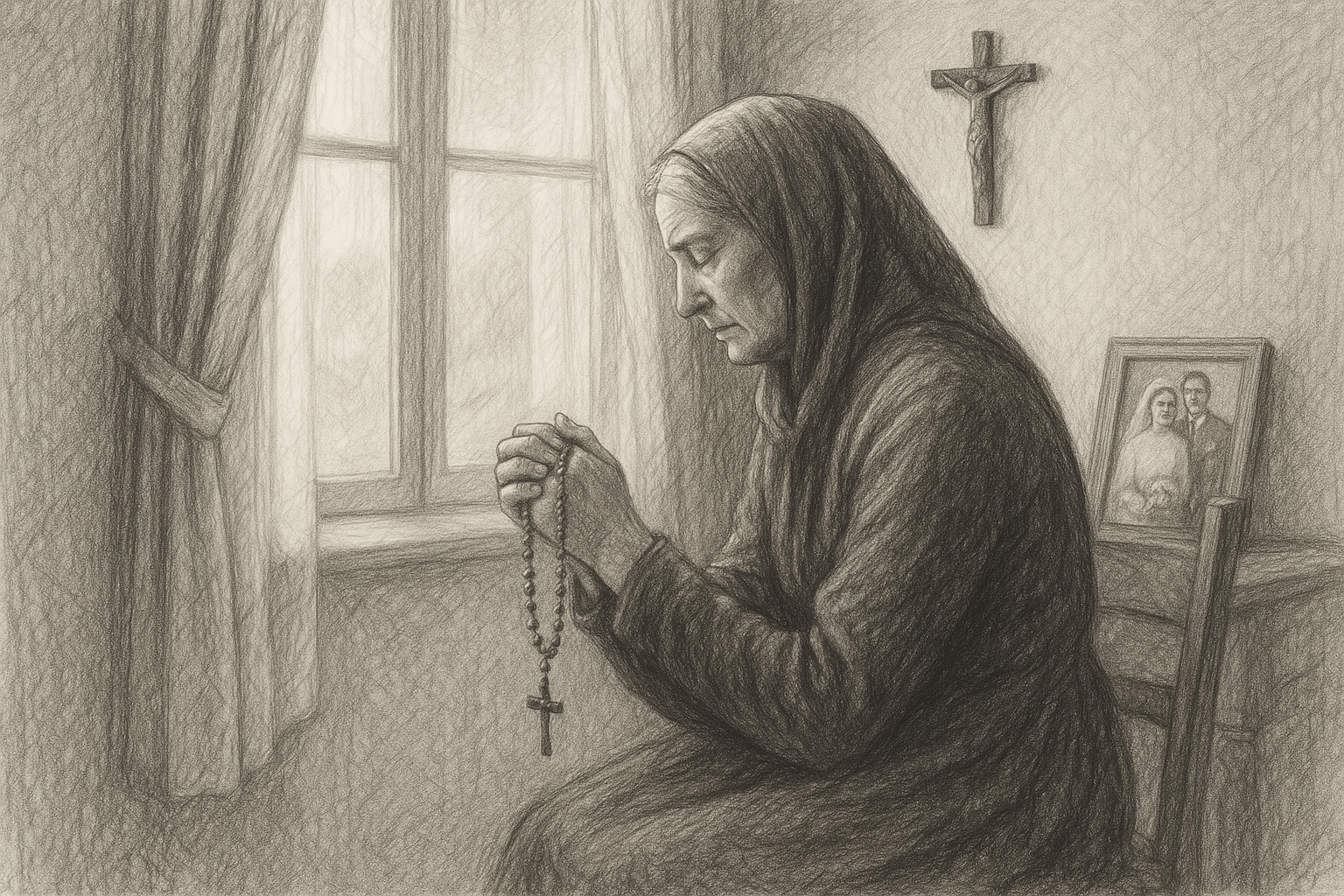
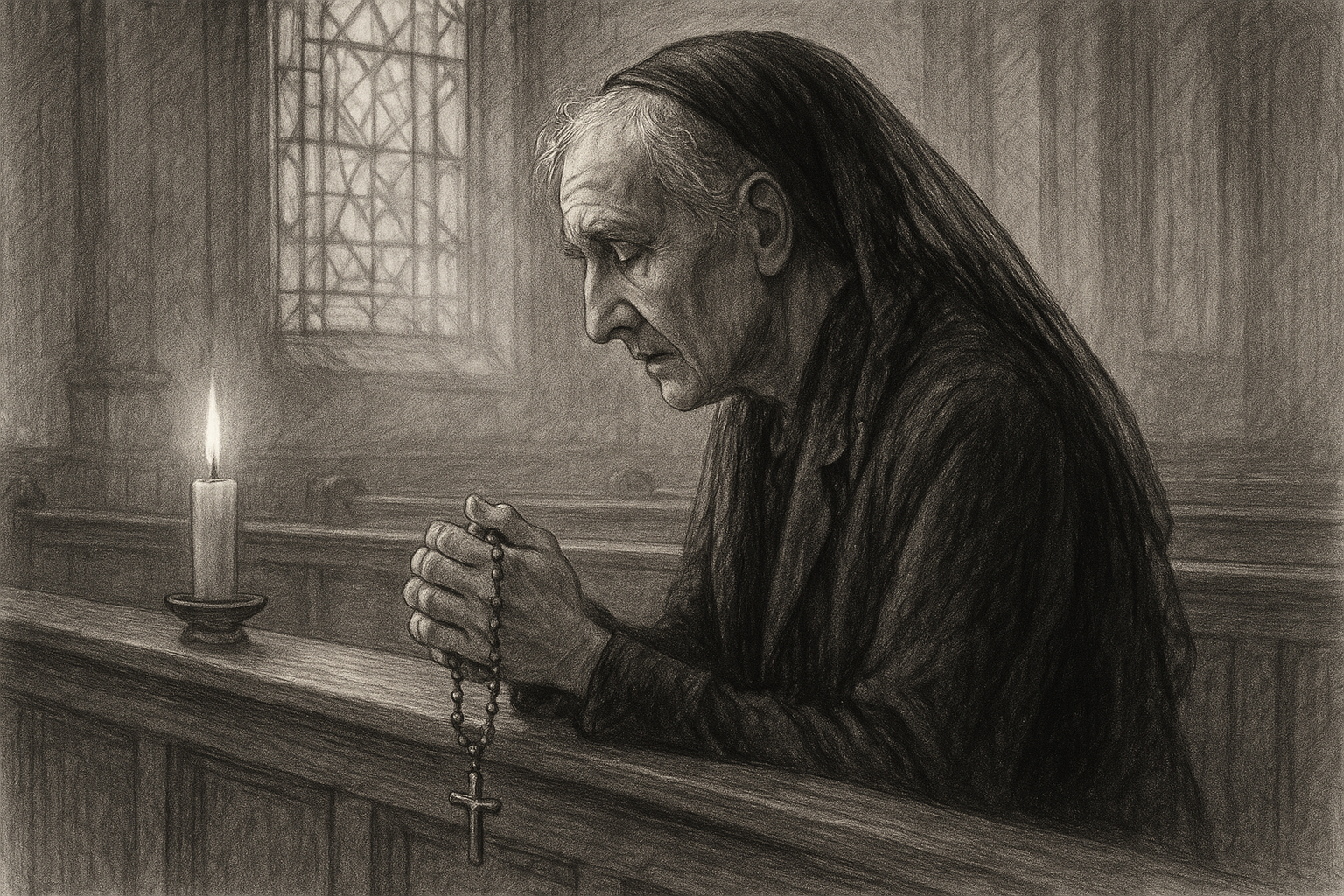
The sacraments are a great support here. The Eucharist nourishes love with Christ's own self-gift. Confession restores peace when a mother has failed, lost her temper, or grown weary of trying. Prayer, even when brief, opens the day to God. A decade of the Rosary while washing dishes, a Psalm whispered in the car, or a simple request for help before waking the children can become real acts of trust.
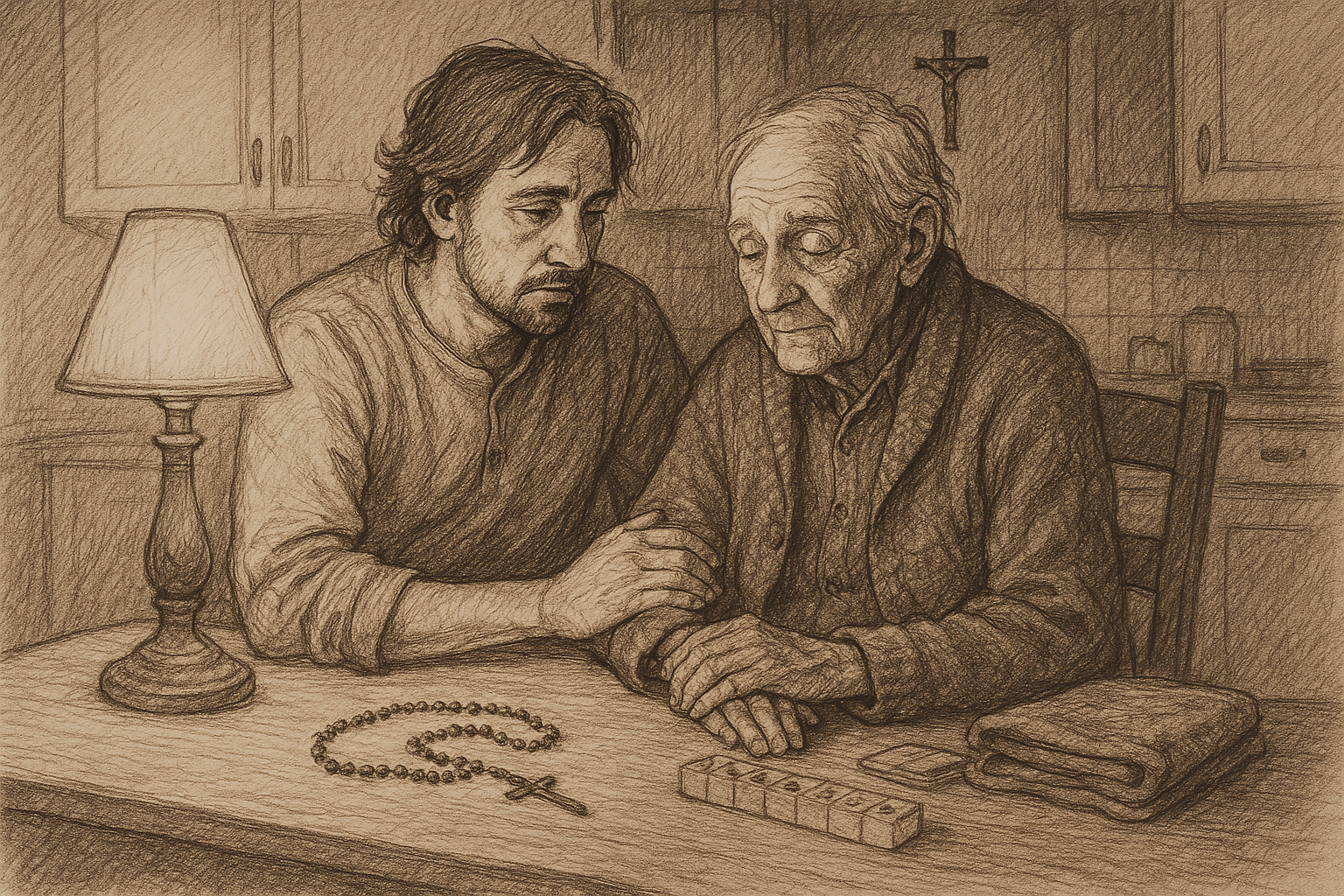
Grace also works through community. Mothers were never meant to carry everything alone. Catholic life is communal by nature. Parish support, friendships, extended family, and the witness of other faithful women can help a mother persevere. Sometimes the most healing words are not polished advice but quiet companionship: I see you, I will pray for you, you are not alone.
When motherhood feels heavy or complicated
Many women love their children deeply and still feel overwhelmed by motherhood. Others experience infertility, miscarriage, postpartum depression, or the pain of strained family relationships. Some mothers carry wounds from their own upbringing and fear repeating what they received. Some are raising children without much support. A Catholic article about motherhood must speak honestly here: love does not remove suffering.
Yet suffering does not make motherhood meaningless. Christ enters human suffering from the inside. He is not distant from family pain. He knows the sorrow of loss, the ache of misunderstanding, and the cost of obedience. A mother who cries in the kitchen, who prays through worry, or who feels she has little left to give can still be walking with God. Sometimes fidelity looks less like confidence and more like endurance.
It is also important to say that asking for help is not failure. A mother may need medical care, counseling, spiritual direction, rest, or practical assistance. Catholic compassion includes truth and care. It is not holy to pretend strength one does not have. It is holy to receive help with humility and to keep one's heart open to grace.
Motherhood and the formation of souls
One of the most profound realities of motherhood is that it helps shape a child's vision of God. Children often learn the meaning of trust, mercy, discipline, and tenderness first through the people who care for them. This places a deep responsibility on mothers, but it also reveals the quiet power of everyday love.
Teaching children to pray, to repent, to forgive, and to serve the poor is not only instruction. It is formation. A mother who takes her child to Mass, who blesses the day with prayer, who speaks respectfully about the faith, and who lives with integrity is helping build an interior foundation. Children remember the tone of love as much as the words.
Still, Catholic faith refuses to reduce children to projects. They are persons with freedom, and mothers cannot control every outcome. That is another place where grace is needed. A mother plants, waters, and waits, while God gives the growth. Her task is faithfulness, not mastery. That truth can be humbling, but it can also be freeing.
A daily yes
Motherhood is rarely lived in a single great gesture. It is lived in many small yeses. Yes to another bedtime story. Yes to another apology. Yes to another prayer when the child is sick. Yes to another meal, another errand, another round of patience, another chance to begin again.
In the end, the Catholic view of motherhood is not mainly about achievement. It is about love made visible through service, sustained by grace, and purified by sacrifice. Mary shows that the deepest fruitfulness often begins in surrender to God. The Church shows that the ordinary home can become a place of holiness. And mothers, in their weakness and strength, reveal that faithful love still changes the world one day at a time.
For every mother who wonders whether the hidden work matters, the answer of faith is quiet but firm: it does. When offered to God, even the smallest act of love becomes part of His saving work in the world.
Keep Reading on Lets Read The Bible
Frequently Asked Questions
How does the Catholic Church view motherhood?
The Catholic Church views motherhood as a real vocation and a profound form of self-gift. It is honored as a way of cooperating with God's creative work and forming children in faith, virtue, and love.
Why is Mary so important in a Catholic reflection on motherhood?
Mary is important because her yes to God shows the receptive, faithful, and courageous heart of Christian motherhood. She is a model of trust, hidden service, and steadfast love, especially in suffering.
What should a Catholic mother do when she feels overwhelmed?
She should bring her need to God through prayer, the sacraments, and honest support from others. Seeking help, resting when possible, and asking for grace are part of faithful living, not signs of failure.