Family and Vocation
Mary's Way of Motherhood in the Ordinary Hours
A Catholic look at how the Blessed Virgin teaches patience, courage, and trust in the hidden work of family life.
Site Admin | November 1, 2025 | 100 views
Mary and the hidden shape of motherhood
When Catholics look to the Blessed Virgin Mary, we do not look for a sentimental image of motherhood. We look to a woman who said yes to God before she could see the whole path ahead. Her life was marked by trust, tenderness, sorrow, and endurance. That makes her a powerful guide for mothers, and for all who love and support them.
The motherhood and the example of Mary Catholic perspective begins with the Annunciation. Mary receives the word of the angel and answers, "Behold, I am the handmaid of the Lord; let it be to me according to your word" Luke 1:38. Her response is brief, but it reveals the heart of discipleship. Mary does not grasp for control. She entrusts herself to God, even though the promise will unfold through uncertainty, suffering, and hidden labor.
For many mothers, that hidden labor is the most familiar part of life. Meals are prepared and forgotten. Worry is carried silently. Needs appear before they can be named. Children ask for patience at the very moment patience feels exhausted. In those ordinary pressures, Mary is not simply an inspiring figure from the past. She is a companion in the life of faith.
Mary's yes was not easy, but it was faithful
It is easy to imagine Mary's fiat as serene in a way that ordinary human life is not. Yet Scripture does not present her as untouched by fear or confusion. She asks the angel how this can be Luke 1:34. She ponders what she hears Luke 2:19. She does not receive the full explanation in advance. What she receives is grace for the next step.
That is one reason the Blessed Virgin speaks so clearly to Catholic motherhood. The vocation of a mother is often lived one day at a time. A mother may not know how a difficult season will resolve. She may not know how to balance work, family, finances, illness, infertility, or grief. She may be carrying more than anyone realizes. Mary shows that holiness is not the absence of these burdens. Holiness is trusting God within them.
In Catholic teaching, Mary is honored not because she replaces Christ, but because she points to him with perfect clarity. Her whole life says, Do whatever he tells you John 2:5. This is the deepest wisdom she offers mothers. She does not direct attention to herself. She directs it to her Son.
The domestic life of Nazareth
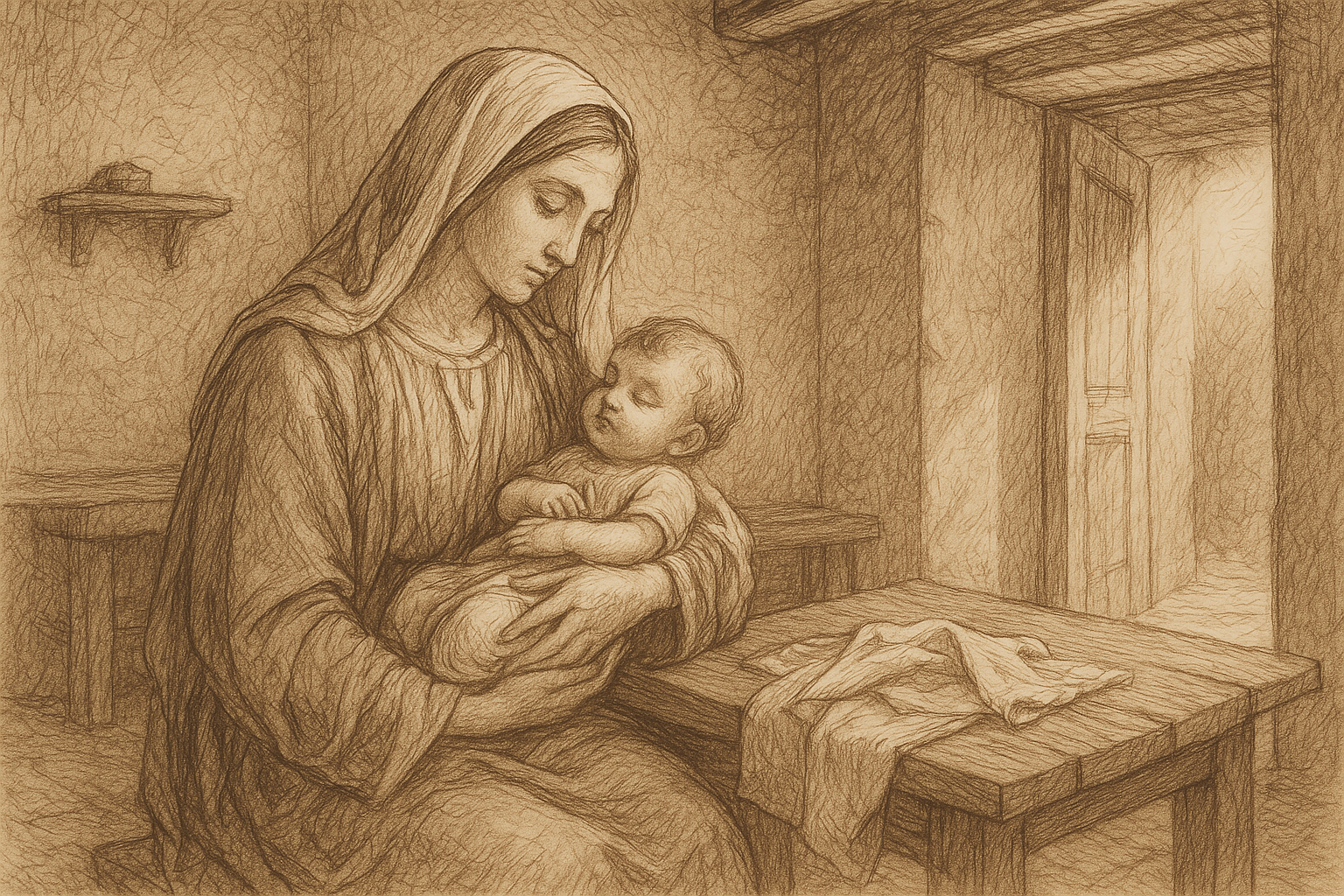
Much of Mary's life was hidden. The Gospels do not linger over her daily routines, but they do give us enough to see that she lived a real family life. She carried Jesus, nursed him, raised him, searched for him, and accompanied him as he grew. The home at Nazareth was not a place apart from ordinary duties. It was a place where ordinary duties became holy through love.
Catholics sometimes speak of the family as a domestic church, and Mary belongs at the center of that vision. She is present in the household life that forms faith through repetition, sacrifice, and prayer. She knows what it means to hold a child close and also to release him to the Father's will. She knows what it means to treasure moments that no outsider would call impressive.
For mothers today, this matters because so much of motherhood can feel invisible. The work is repetitive. The progress is slow. The fruits are often delayed. Mary teaches that hidden fidelity is not wasted fidelity. In God's sight, the unseen years matter deeply.
"And his mother kept all these things in her heart" Luke 2:51
That line is one of the most moving descriptions of motherhood in all Scripture. Mary does not merely observe events. She receives them, remembers them, and carries them before God. Her heart becomes a place of reverence and reflection. Mothers often do something similar when they hold family joys and sorrows together, praying through what cannot yet be solved.
Mary and the pain mothers know
Mary's motherhood was not free from suffering. Simeon told her that a sword would pierce her soul Luke 2:35. That prophecy is fulfilled in the sorrow she endures as she stands near the Cross John 19:25. The Mother of Jesus knows grief, helplessness, and the ache of watching a beloved child suffer.
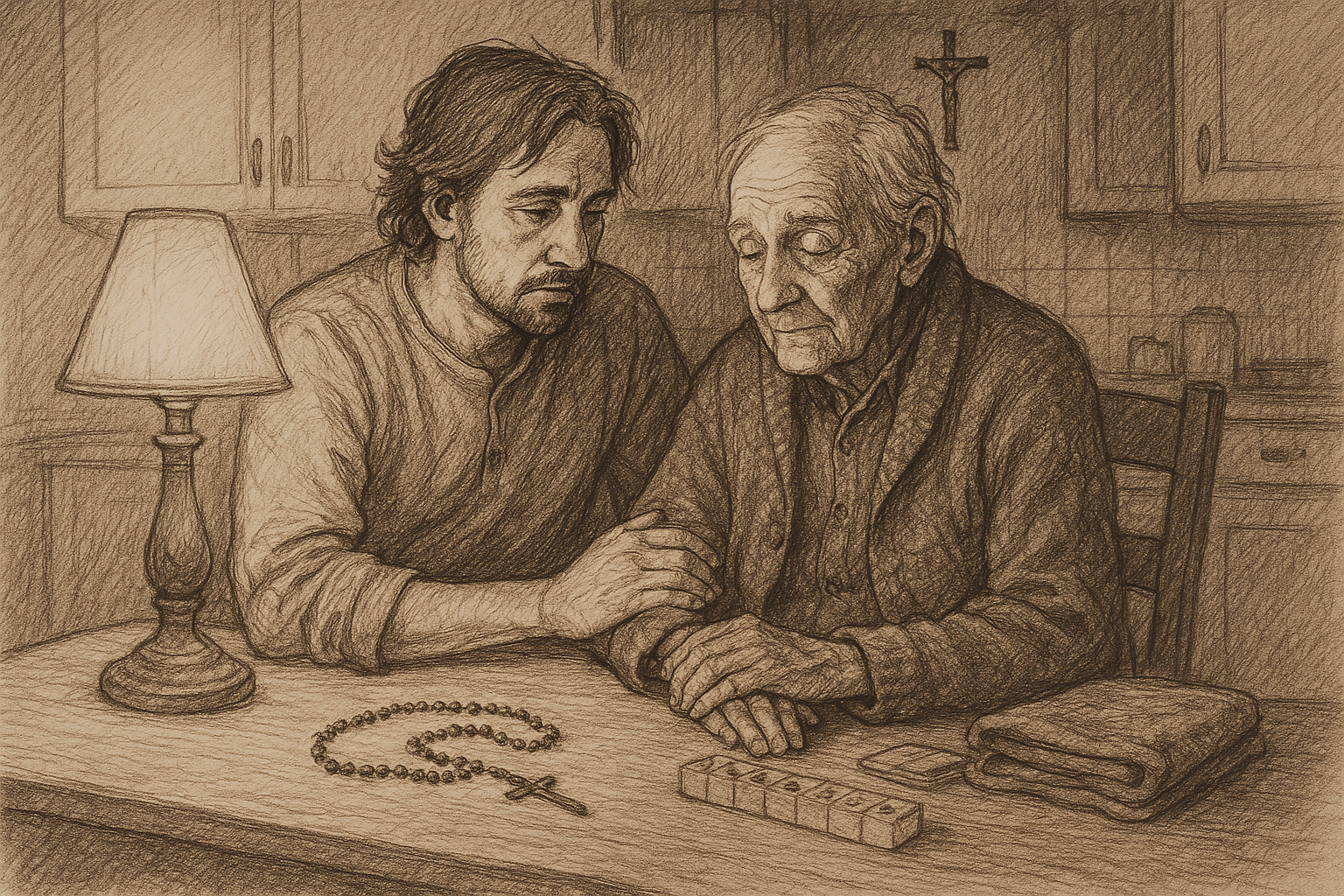
This is essential for a Catholic reflection on motherhood. The Church does not ask mothers to pretend that love makes life painless. Love opens the heart, and an open heart can be wounded. There are mothers who grieve children who are sick, far away, estranged, struggling in faith, or even lost to death. There are mothers who feel they have failed, and mothers who have done their best and still face heartbreak they did not choose.
Mary does not erase these sorrows. She stands within them with quiet strength. At Cana, she notices a need before others do John 2:3. At Calvary, she remains when fleeing would be easier. In both places, she shows maternal love as attentive presence. She is not loud. She is faithful.
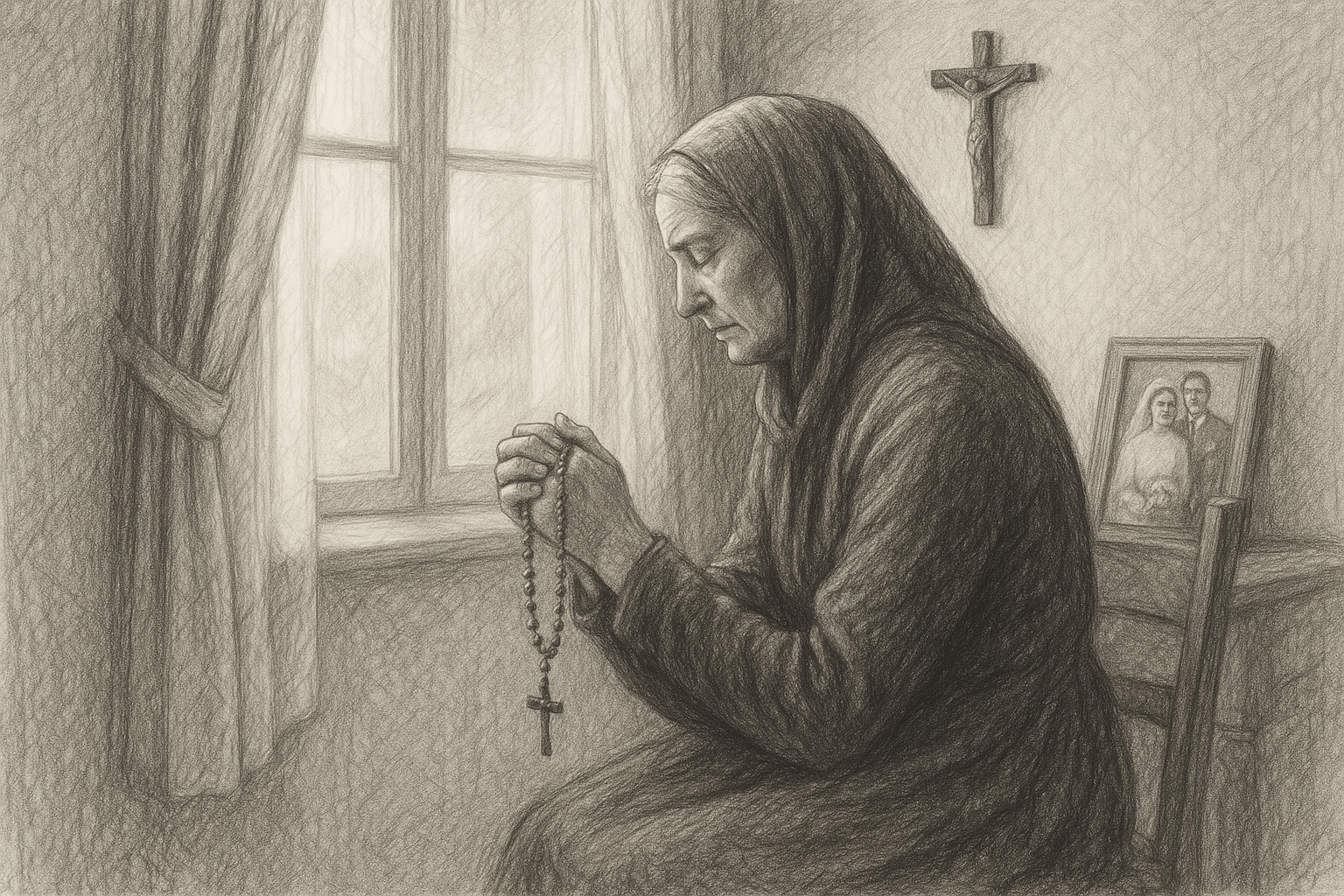
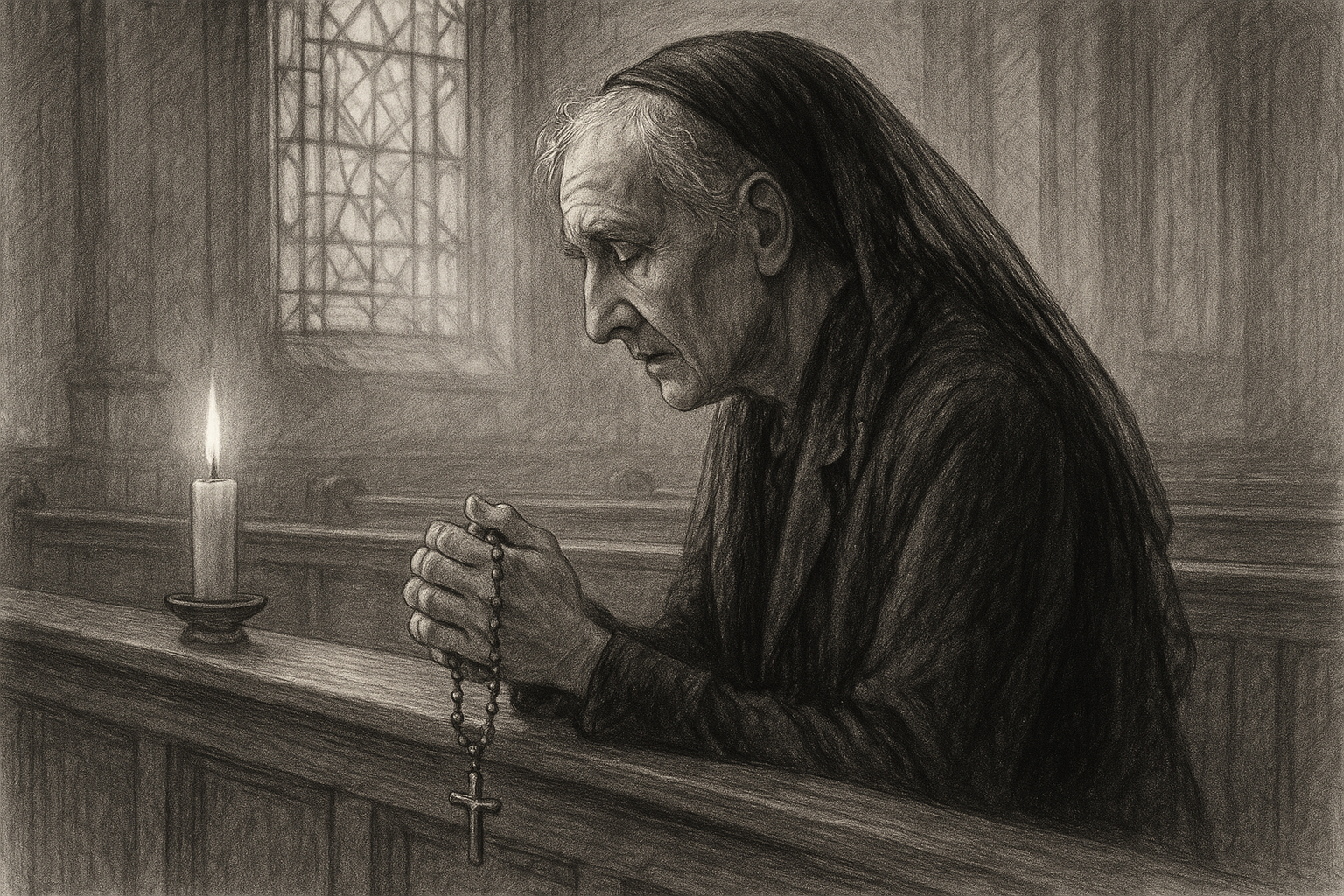
For Catholic mothers, this is a source of consolation. Pain does not mean God has abandoned the home. Sometimes the holiest thing a mother can do is remain present, pray, and offer her suffering in union with Christ. Mary teaches that such hidden sacrifice can become prayer.
Grace does not remove daily life, it sanctifies it
Catholic life is sacramental, which means God uses visible, ordinary realities to give invisible grace. Motherhood is full of those realities. A hug, a correction, a shared meal, a bedtime prayer, a patient cleanup after a hard day, a quiet apology, a blessing before school, a phone call to an adult child. None of these may seem remarkable, yet all of them can become channels of love.
Mary's example helps mothers see that grace is not reserved for dramatic moments. She was blessed in a singular way, yet she lived the common textures of family life. Her greatness did not come from escaping human life. It came from receiving God's life within it.
That truth can be freeing for mothers who feel they must do everything perfectly. Catholic teaching does not ask for perfectionism. It asks for holiness, which is different. Holiness means openness to God's grace, repentance when we fail, and persistence in love. A mother may lose her patience, forget an appointment, or feel overwhelmed by competing demands. These failures do not define her vocation. What matters is returning to Christ again and again.
The sacraments help here. Confession reminds a mother that mercy is real. The Eucharist feeds her with Christ's own life. Prayer, even when brief and imperfect, keeps the heart turned toward God. Mary points toward this pattern with serene consistency: receive, trust, surrender, and begin again.
Practical ways to follow Mary's example
The example of Mary is not meant to stay in the realm of sentiment. It can shape real habits in family life.
- Begin the day with a small act of surrender. A simple prayer such as, Lord, let this day belong to you, can echo Mary's yes.
- Keep a steady rhythm of prayer. Even a decade of the Rosary, a psalm, or a brief morning offering can help a mother remember that she does not carry the day alone.
- Practice attentive listening. Mary listens before she acts. Mothers often need this same quiet discernment when children, spouses, or circumstances demand a response.
- Accept hidden tasks as part of love. Small duties, repeated faithfully, can become acts of worship when joined to Christ.
- Bring sorrow to the Lord instead of carrying it alone. Mary knew suffering, but she did not despair. Catholics can imitate that trust by praying honestly in the midst of grief.
These practices are simple, but simplicity is not weakness. In family life, small acts repeated with love often matter more than grand gestures. Mary's life itself was full of such acts.
Mary speaks to mothers in every season
Not every woman experiences motherhood in the same way. Some are raising children now. Some are waiting in hope. Some have lost children. Some have spiritual or adoptive maternal callings. Some carry the ache of infertility or the sorrow of a life that never unfolded as expected. The motherhood and the example of Mary Catholic perspective can speak to all of these lives because Mary herself knew both joy and sorrow, promise and loss.
She is Mother of the Church, and that maternal role extends her care beyond one household without diminishing the uniqueness of her love for Jesus. In her, Catholics see that motherhood is not only biological, though it often is. It is also a form of self-giving, protection, encouragement, and prayerful presence.
Mary's example is especially comforting when motherhood feels unnoticed. The world may celebrate achievement, speed, and visible success. Mary reveals another measure. God sees the mother who keeps going, the one who prays over a sick child, the one who chooses gentleness when she is tired, the one who rises after failure and starts again. Nothing offered in love is too small for God.
For that reason, devotion to Mary should never turn into unrealistic comparison. She is not given to mothers as a standard for guilt. She is given as a motherly companion who leads them to Christ. When Catholics ask for her intercession, they are asking a mother to pray with them and for them, so that their homes may be more open to grace.
In the end, Mary's life teaches that motherhood is not measured by ease but by fidelity. She welcomed God's word, guarded it in her heart, stood near the Cross, and remained with the disciples in prayer Acts 1:14. That same quiet faith can steady Catholic mothers today, one ordinary hour at a time.
Keep Reading on Lets Read The Bible
Frequently Asked Questions
Why do Catholics look to Mary as a model for mothers?
Catholics honor Mary because she received God's word with faith, cared for Jesus with hidden fidelity, and remained steadfast through suffering. Her motherhood reveals how grace can shape ordinary family life.
Does Mary's example mean Catholic mothers should never struggle?
No. Mary herself knew fear, confusion, sorrow, and loss. Her example shows that holiness is not the absence of struggle, but trust in God while carrying it.
How can a busy mother imitate Mary in daily life?
She can begin with small acts of prayer, patient listening, and surrender to God. Even brief moments of faithful presence, offered with love, can become part of a motherly vocation.