Family and Vocation
Marys Hidden Lessons for the Daily Work of Motherhood
A Catholic reflection on how the Blessed Virgin's faith, patience, and yes to God can steady mothers in ordinary life.
Site Admin | November 2, 2025 | 81 views
Mary and the Shape of Catholic Motherhood
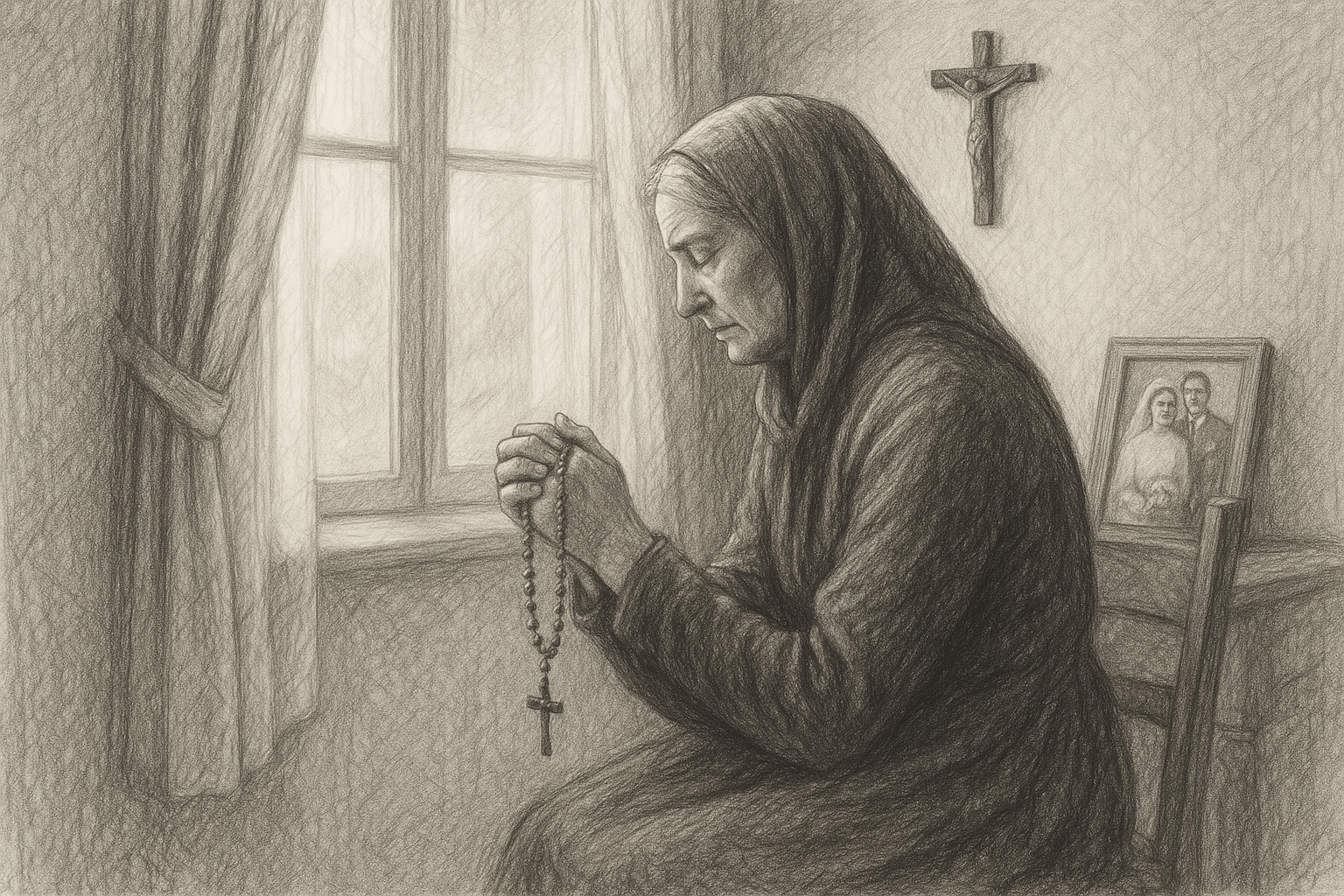
When Catholics reflect on motherhood and the example of Mary, it is easy to begin with the great mysteries: the Annunciation, the Nativity, the Cross, and the joy of the Resurrection. Yet Mary is not only present in the high moments of salvation history. She also belongs to the hidden rhythm of family life, where love is repeated in ordinary acts and where faith is tested in patience.
Mary receives her vocation with a simple and world changing reply: let it be done to me according to your word Luke 1:38. That response does not remove difficulty. It opens the door to grace. For mothers, and for anyone who loves and serves within a family, Mary's yes shows that holiness often begins not with control, but with surrender.
The Church honors Mary as the Mother of God because the child she bore is truly the eternal Son made man. That truth places motherhood in a luminous place within Catholic life. Motherhood is not a private side note to faith. It is one of the ways God teaches the world what self-giving love looks like.
Mary in Scripture: Faith That Stays Close
The Gospel scenes involving Mary are brief, but they reveal a great deal. She listens. She keeps. She follows. At Cana, she notices the need before others do and brings it to Jesus: They have no wine John 2:3. Her words are few, but her faith is clear. She turns attention away from herself and toward her Son: Do whatever he tells you John 2:5.
That sentence is one of the most practical Marian lessons in Scripture. A mother often sees need before it is spoken. A mother may be the first to notice fear, hunger, fatigue, discouragement, or tension in a home. Mary does not use that awareness to control others. She uses it to direct hearts toward Christ.
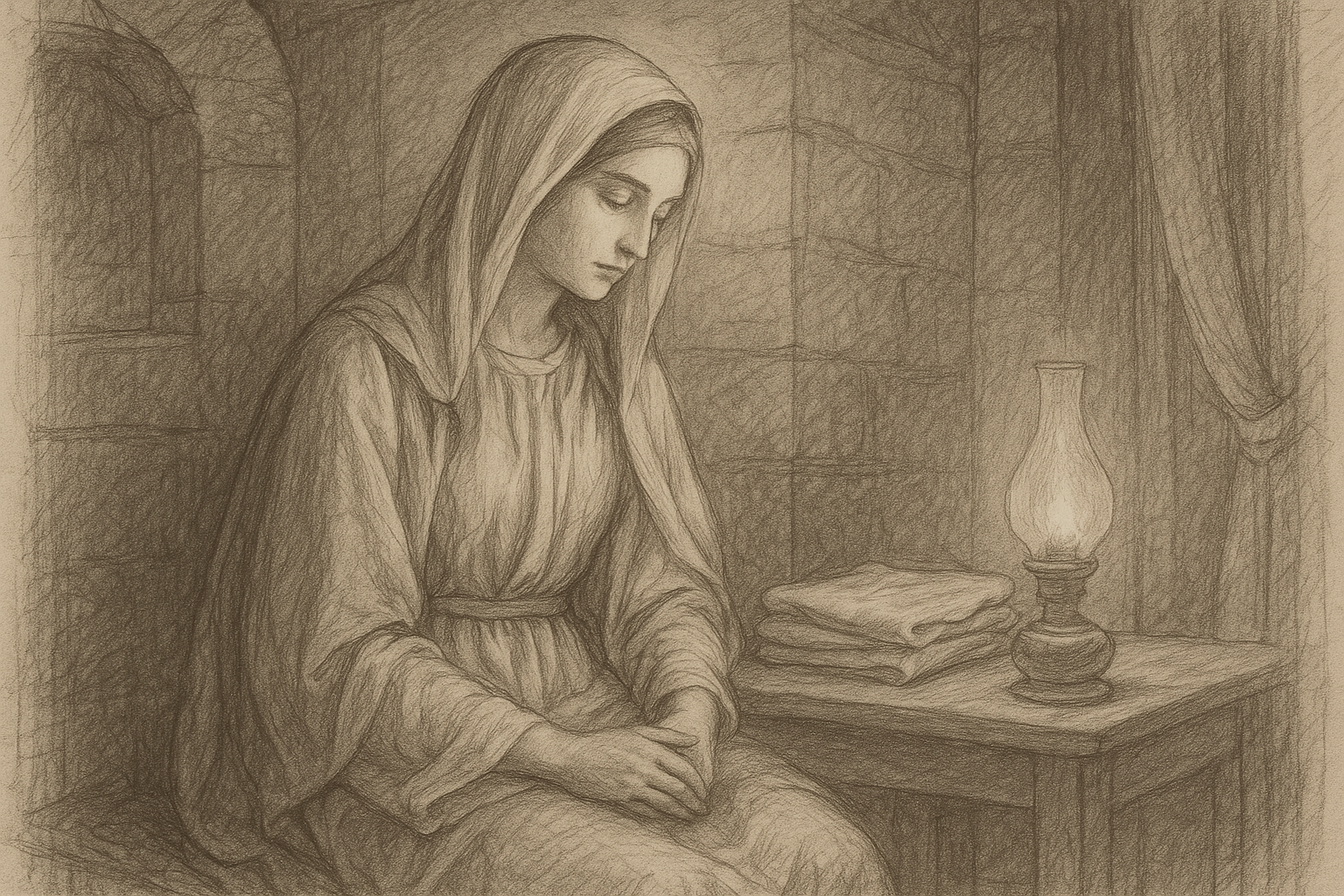
Another Gospel image is just as important. Luke tells us that Mary kept all these things, pondering them in her heart Luke 2:19. This is not passive forgetting. It is prayerful memory. Mary does not rush to explain every event. She receives what is given, holds it before God, and continues walking in faith even when understanding is incomplete.
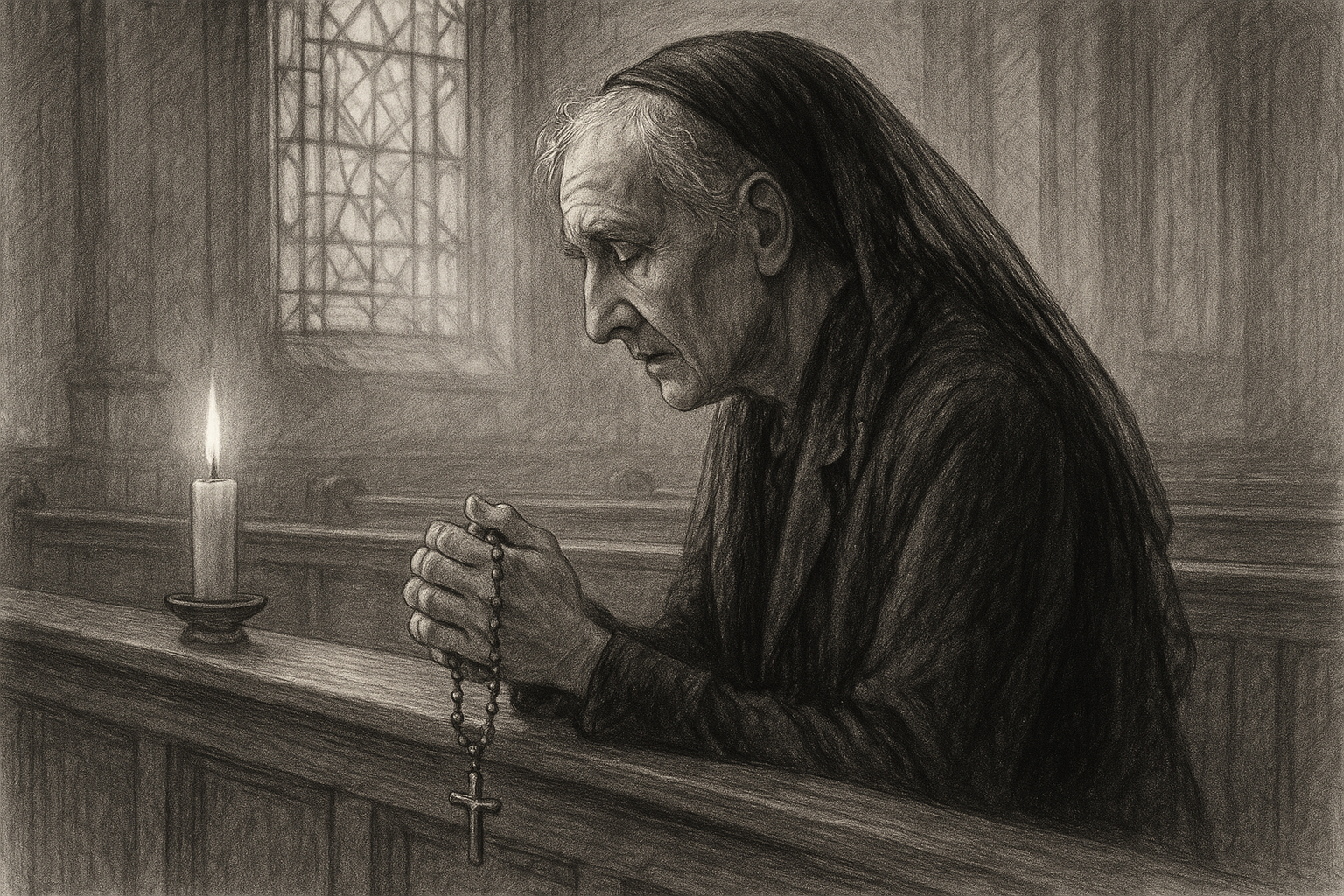
For mothers, that kind of inward life matters. There are days when answers do not come quickly and when love must continue before clarity arrives. Mary teaches that contemplation and action are not opposites. A heart can be busy and still be interior. A life can be full and still remain open to God.
The Annunciation and the Courage to Receive
The Annunciation is not only about Mary's consent. It is also about God's tenderness. The angel's greeting, Hail, full of grace, the Lord is with you Luke 1:28, reveals that Mary's vocation begins in divine favor, not human achievement. She is loved before she does anything. She is chosen before she proves anything.
That is an important truth for mothers who feel measured by performance. Many women carry quiet burdens: worries about being patient enough, organized enough, calm enough, or selfless enough. Mary reminds the Church that vocation is first a gift. Grace comes before effort. God does not call a mother because she is already sufficient. He supplies what he asks of her.
At the same time, Mary's yes is real cooperation. Catholic faith never treats grace as a substitute for human freedom. Mary responds freely, and her freedom becomes fruitful. In family life, this is a steadying pattern. Love is not simply a feeling that arrives and stays. It is a daily consent to serve, forgive, begin again, and remain faithful when the work is repetitive.
Mary's example can be especially consoling when motherhood feels hidden. Much of a mother's labor has no public audience. Meals are made and forgotten. Tears are wiped away. Routines are repeated. Bedrooms are tidied. Children are comforted in the middle of the night. Mary lived years of obscurity before any public ministry of Christ began. The hidden life is not wasted life.
Mary at Cana, Mary at the Cross
Mary's motherhood is not sentimental. She stands near suffering as well as joy. At Cana she intercedes with confidence. At Calvary she remains with Christ when the cost of love becomes unmistakable. John tells us that near the cross stood the mother of Jesus John 19:25. There, Jesus entrusts her to the beloved disciple and the disciple to her care John 19:26 John 19:27.
This scene is not only about John's personal devotion. It also shows that Mary's motherhood has a spiritual breadth. She becomes a mother in the order of grace to those who belong to Christ. The Church has long understood this as part of her maternal role. Mary is not distant from believers. She is given to the Church so that maternal care may be seen in a holy and perfected way.
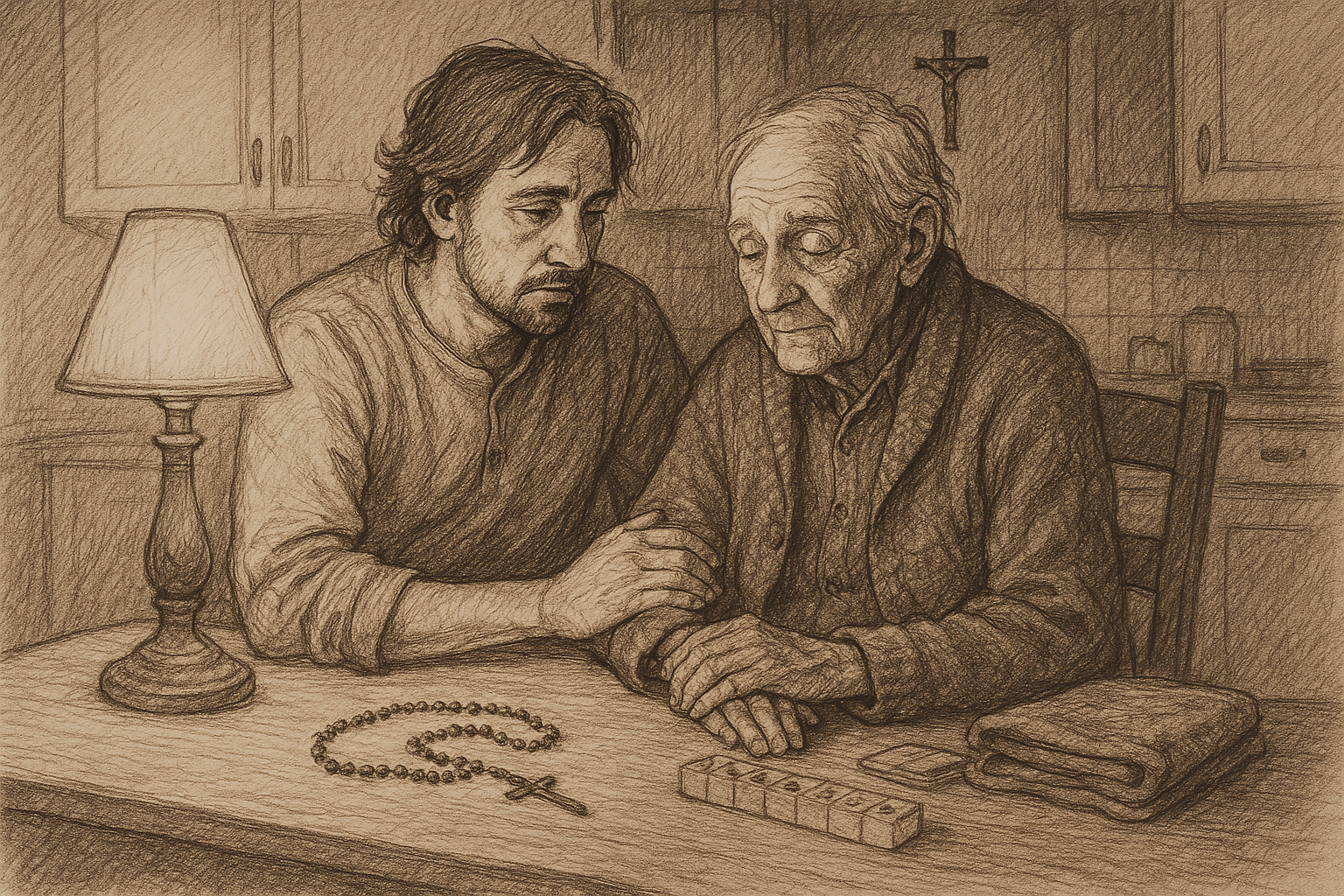
For mothers, the Cross is a sobering companion. There are moments when love cannot fix everything. A child may suffer. A family may be divided. Health may fail. Prayer may feel painfully silent. Mary does not offer escape from these realities. She offers companionship within them. She teaches that faithful presence can remain when outcomes are beyond our power.
That is one of the deepest wisdoms Catholic mothers need. Love is not measured only by what can be controlled. Love is also measured by steadfast presence, trustful prayer, and the willingness to remain before God with what cannot be solved.
What the Church Teaches About Mary and Mothers
Catholic teaching about Mary is always ordered toward Christ. She is honored because of him, not instead of him. Her greatness does not compete with the Lord's unique mediation. Rather, it displays what divine grace can accomplish in a human life fully surrendered to God. Mary's holiness is a sign of what God desires to do in the Church.
The Church also presents Mary as a maternal figure for believers. This does not replace natural motherhood. Instead, it illuminates it. Physical motherhood is real, sacrificial, and beautiful. It participates in God's creative work. When a mother nourishes, teaches, disciplines, and consoles, she images something true about God's own care.
At the same time, Catholic life recognizes that motherhood takes many forms. Some women are mothers by birth. Others mother through adoption, spiritual care, teaching, service, or patient friendship. Some long for children and carry that longing as a cross. Some mothers grieve children they have lost. Some feel uncertain about whether they are doing enough. Mary can be near all of them. Her life makes room for sorrow, hope, and trust.
A mother does not have to imitate Mary's life in external details. No one else will live the same history. But every Christian mother can learn from Mary's habits of heart: receptivity to God, courage in trial, attentiveness to others, and fidelity in hidden work.
Practical Ways to Follow Mary's Example
Mary's example is not abstract. It can be translated into concrete habits that strengthen family life and help a home become more prayerful.
- Begin the day with surrender. A short prayer such as
Keep Reading on Lets Read The Bible
Frequently Asked Questions
How does Mary help Catholics think about motherhood?
Mary shows that motherhood is shaped by faith, surrender, and attentive love. She receives God's call, keeps her heart open in prayer, and stays close to Christ in both joy and sorrow.
What Scripture passages are most helpful for a reflection on Mary and motherhood?
Luke 1:26 to 38, Luke 1:46 to 55, Luke 2:19, John 2:1 to 11, and John 19:25 to 27 are especially rich for meditation on Mary's faith, intercession, and maternal presence.
Can women who are not biological mothers still learn from Mary's example?
Yes. Mary's maternal care speaks to spiritual motherhood, adoption, teaching, mentoring, and any form of self-giving love that nourishes others in Christ.