Doctrine and Questions
The Smallest Hands, the Same Baptismal Gift
How the Church understands infant baptism as grace before achievement, promise before memory, and belonging before explanation.
Site Admin | June 21, 2026 | 80 views
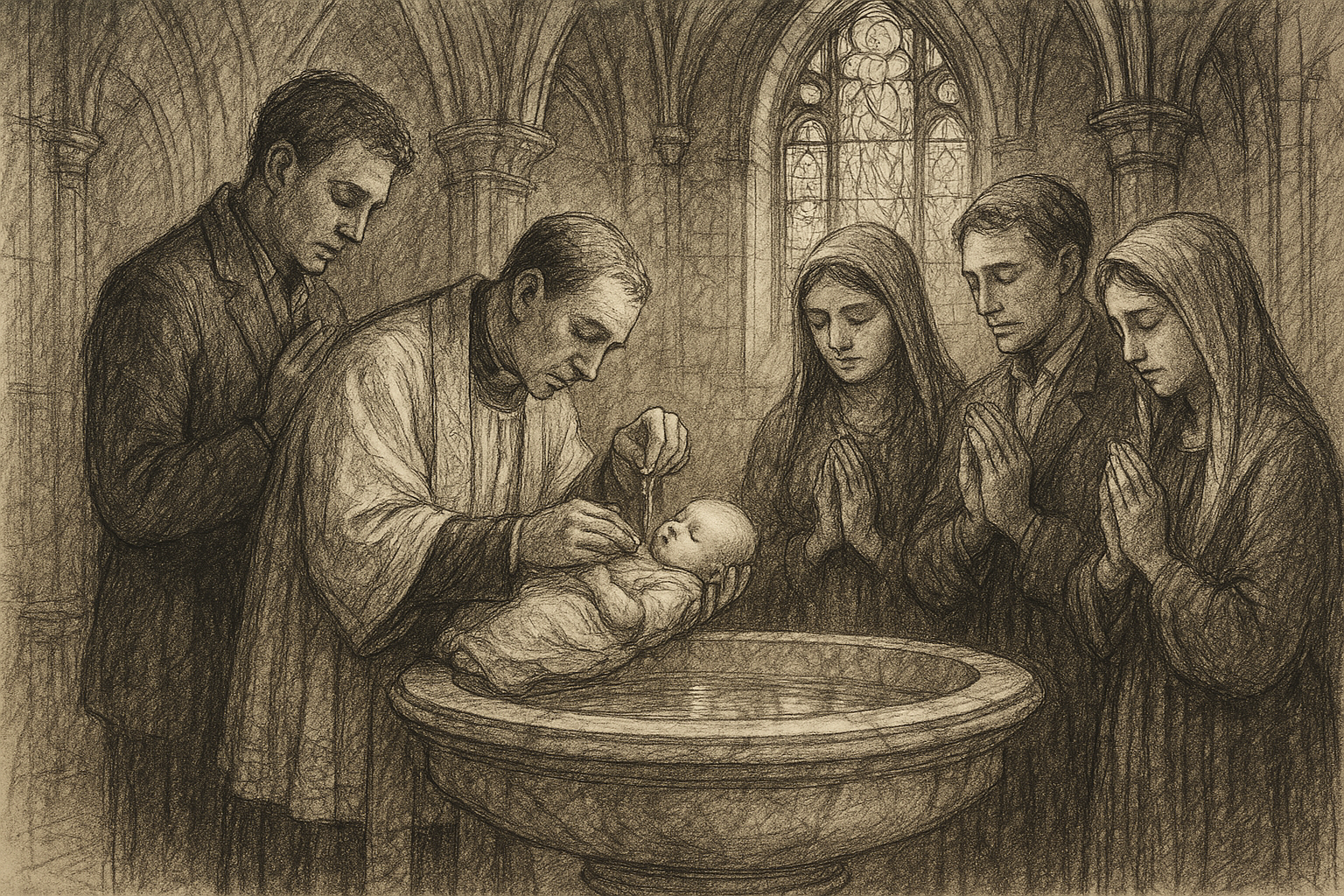
Infant baptism often raises sincere questions, even among faithful Catholics. Why baptize a child who cannot yet speak for himself? What does the Church mean when she baptizes infants, and how can that be consistent with personal faith? The answers are rooted in the Catholic understanding of grace: God acts first, and He does so with tenderness, not delay.
In infant baptism Catholic teaching, the sacrament is not treated as a symbol of a human achievement. It is a saving gift from Christ, who commands His Church to make disciples of all nations and to baptize them in the name of the Father, and of the Son, and of the Holy Spirit Matthew 28:19. The Church has always heard that command as wide enough to embrace whole households, children included, because the covenant of God has never been narrow or delayed until a person can first explain himself.
Baptism begins with God, not with our performance
Catholic teaching on baptism begins with the Lord's initiative. Baptism cleanses from sin, incorporates a person into Christ, and makes one a member of the Church. None of that depends on human eloquence or spiritual maturity. Even the strongest adult faith is still a response to grace already at work.
That is one reason infant baptism makes theological sense. A baby does not earn life, and he does not earn spiritual rebirth either. He receives both. The sacrament shows visibly that salvation is gift before it is task. In this way, an infant is not a problem for baptism. He is almost the purest sign of what baptism means.
Scripture often presents God acting before human ability catches up. John the Baptist leapt in his mother's womb at the presence of Christ Luke 1:41. Jeremiah was known by God before he was formed in the womb Jeremiah 1:5. The Lord's care begins earlier than our awareness. That pattern does not by itself prove infant baptism, but it fits the Catholic instinct that God's grace precedes our understanding.
The household pattern in Scripture
In the Acts of the Apostles, baptism is repeatedly linked with households. Lydia is baptized, and her household with hers Acts 16:15. The jailer at Philippi is baptized, he and all his family, after the apostolic preaching Acts 16:33. Paul also speaks of baptizing the household of Stephanas 1 Corinthians 1:16. Scripture does not pause to list the ages of each household member, but the repeated household pattern matters. The Gospel reaches families as families, not merely isolated individuals.
Some readers object that the New Testament stresses repentance and faith before baptism. That is true, especially where the gospel is first being preached to adults. The Church fully agrees that adults should come to baptism with personal faith and repentance. But infants are not adults. They cannot repent or profess faith in the adult sense, so the Church acts as mother and offers what the child cannot yet request for himself.
That is not an exception to the Gospel. It is the Gospel at work in a different stage of human life.
The Church baptizes infants because she believes in covenant life
Many Catholic explanations become clearer when viewed through the lens of covenant. In the Old Testament, God's covenant signs were given not only to believing adults but to their children as well. Circumcision was received on the eighth day Genesis 17:12. It marked entrance into the covenant community before a child could consciously choose it for himself. Baptism fulfills and surpasses that sign, not by shrinking God's welcome, but by deepening it in Christ.
St. Paul draws the connection between circumcision and baptism when he speaks of being buried with Christ in baptism and raised with Him through faith Colossians 2:11-12. The sacrament is no mere private badge. It is entry into a people, into a new birth, into a life that begins in mercy.
The Church therefore does not imagine the infant as spiritually self-sufficient. She sees the child as belonging to the family of faith, entrusted to the prayers, promises, and witness of parents and godparents. The Church believes those promises matter. The adults speak on behalf of the child, not because the child has no dignity, but because he has not yet learned to speak for himself.
Faith is personal, but it is not solitary
One of the most common misunderstandings about infant baptism is the idea that the sacrament somehow removes the need for later personal faith. Catholic teaching says the opposite. Infant baptism begins a life of faith; it does not replace the child's future response.
A baptized child must still grow, learn, repent, and believe with his own heart. The grace of baptism calls for cooperation over time. This is why the Church asks parents and godparents to take seriously their obligation to raise the child in the faith. The baptismal promise is not a decorative ritual. It is a commitment to help the child live what the sacrament has begun.
That responsibility is beautiful and sobering. A child learns the faith from prayer at home, from Mass, from Scripture, from the sacraments, and from the example of those who love him. In that sense, infant baptism reminds us that the Christian life is always received within a communion. No one baptizes himself. No one becomes a Christian alone.
What infant baptism does and does not mean
Catholics are careful to say what baptism is, and also what it is not. Baptism does not mean that the child will never need conversion. It does not mean he will automatically live a holy life without free choices. It does not remove the need for later catechesis, First Reconciliation, Confirmation, or a lived relationship with Christ.
But baptism does mean something very real. It truly unites the child to Christ's death and resurrection, washes away original sin, and makes him a member of the Church. This is why the Church treats baptism with reverence and urgency. The sacrament is not a decoration waiting for a future religious preference. It is a real beginning in the life of grace.
Some object that a child cannot consent. Yet every child receives many life-giving gifts before he can consent to them: language, food, shelter, and protection. Parents do not wait until a child can request nourishment before feeding him. They provide what he needs because they love him. In the same way, Catholic parents bring their children to baptism because they believe supernatural life is even more necessary than natural life.
Christ's welcome to the little ones
The Lord's own words about children are hard to miss. Jesus says, Let the children come to me, and do not hinder them Matthew 19:14. He does not say,
Keep Reading on Lets Read The Bible
Frequently Asked Questions
Does infant baptism save the child automatically?
Baptism truly gives grace, forgives sin, and incorporates the child into Christ, but the child must still grow in faith and be formed in the life of the Church. Catholic teaching does not treat baptism as a substitute for lifelong conversion.
Why baptize a baby who cannot believe for himself?
The Church baptizes infants because baptism is first a gift from God, not a human accomplishment. Parents and godparents profess the faith on the child's behalf, and the child later grows into the promises made at baptism.
Where does Scripture support infant baptism?
The New Testament shows baptism linked with households, and the wider biblical pattern of covenant life includes children within God's people. Catholic teaching also sees baptism as the fulfillment of circumcision and a sign of belonging to the covenant community.