Doctrine and Questions
Infant Baptism and the Quiet Logic of Grace
Why the Church baptizes children before they can speak for themselves, and what that reveals about God
Site Admin | June 22, 2026 | 91 views
Few Catholic practices are more tender, or more misunderstood, than infant baptism. To some observers it looks unnecessary, even strange, because a baby cannot yet explain faith, repent of sin, or recite a creed. Yet the Church has always treated baptism as a gift before it is a task. That is why infant baptism explained in Catholic terms begins not with human readiness, but with divine mercy.
In the sacrament of Baptism, God acts first. He cleanses from sin, brings new birth, incorporates a person into Christ, and makes that person a member of the Church. The child does not earn these gifts. No one does. Baptism is grace, and grace is received before it is managed, analyzed, or deserved. This is precisely why the Church baptizes infants: because children, like adults, are in need of salvation, and because Christ did not place age limits on His command to baptize.
The biblical pattern behind infant baptism
When Catholics speak about infant baptism, they are not working from a later invention with no scriptural roots. The New Testament presents baptism as the ordinary doorway into the life of Christ. On Pentecost, Peter preached repentance and baptism for the forgiveness of sins, and then added a promise that reaches beyond the crowd standing before him: The promise is for you and your children. That detail matters. The apostolic proclamation does not shrink the covenant down to adult believers only. It opens wide enough for families.
We also read of entire households being baptized. The Acts of the Apostles and the letters of Saint Paul mention the baptism of households without pausing to carve out exceptions for infants or young children. The Church has long seen in this pattern a sign that the gospel comes to the domestic sphere, not just to isolated individuals. Salvation is personal, but it is never merely private. God gathers families, not only solitary decision-makers.
At the end of Matthew's Gospel, Jesus sends the apostles to make disciples of all nations, baptizing them in the name of the Father, and of the Son, and of the Holy Spirit: Baptize them in the name of the Father, and of the Son, and of the Holy Spirit. The command is universal. It does not exclude infants. The earliest Christians therefore did not treat the age of the recipient as the deciding issue. What mattered was Christ's command, the Church's faith, and the grace being given.
Jesus' own regard for children also points in the same direction. He welcomed them, blessed them, and warned His disciples not to obstruct them. In the Gospel accounts, children are not treated as spiritually irrelevant until they reach a certain level of reasoning. They are seen as capable of being brought near to the Lord. That is very close to the logic of infant baptism: the child is received, not because the child has mastered belief, but because Christ is good and His promise is generous.
What the Church means when she baptizes a baby
The Catholic Church teaches that Baptism is necessary for salvation in the ordinary order established by Christ, while also affirming that God is not bound by the sacraments He established. Still, the sacrament remains the normal and sure means by which a person is reborn in Christ. In an infant, Baptism truly does what it signifies. The child is washed, claimed, adopted, and made a child of God.
This is why the Church does not say that Baptism is only a symbol of what a person later decides. Symbols matter, but Baptism is more than a sign. It is a sacrament, which means it is an outward rite used by Christ to give inward grace. The water is not magic, and the Church does not imagine the child understands every effect. Yet God can work before a child can reason. A newborn can be fed before she can say thank you. She can be named before she can write her name. In the same way, she can be brought into the life of grace before she can speak for herself.
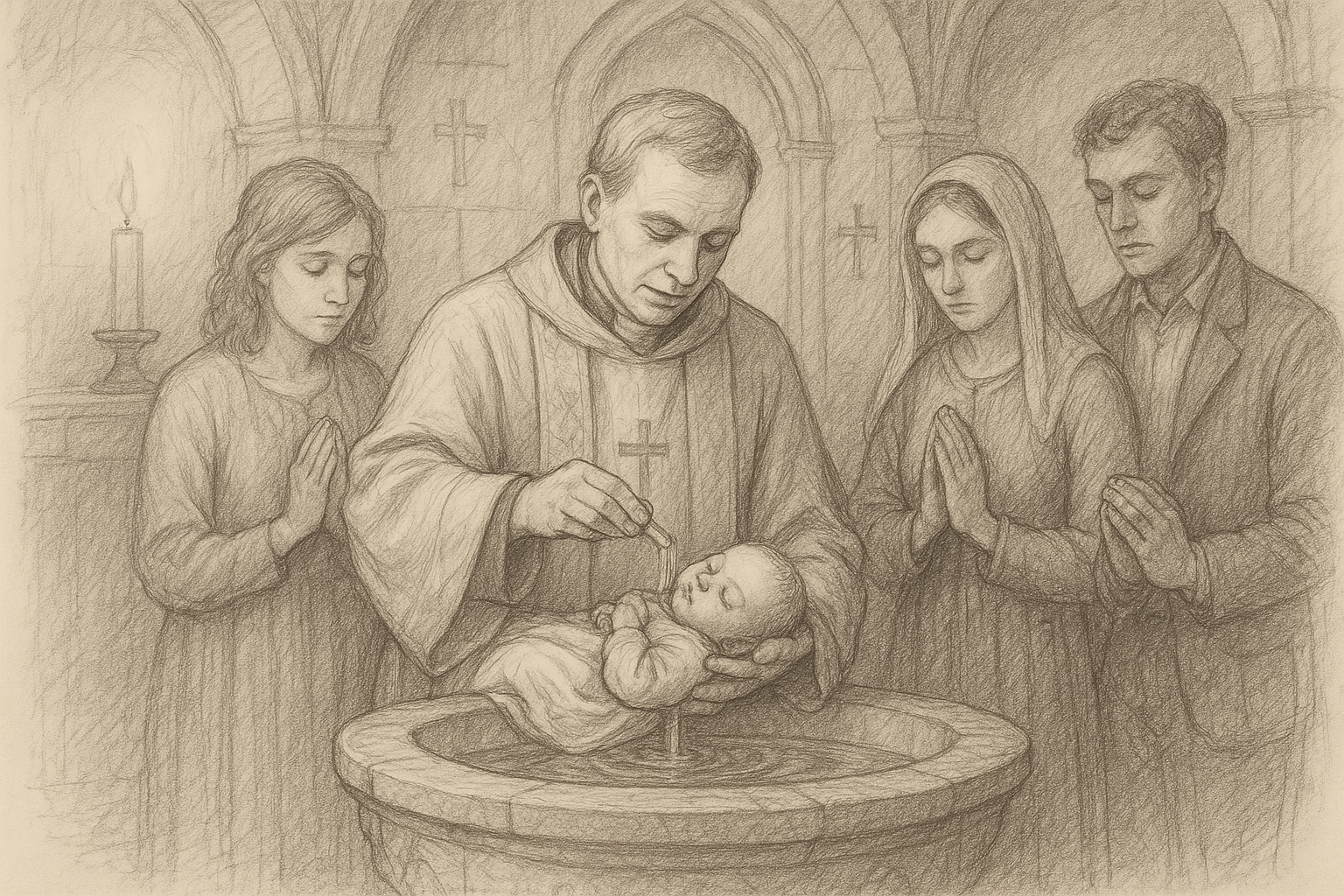
In Catholic life, infant baptism also points toward the Church as mother. A mother does not wait for a child to be self-sufficient before feeding, protecting, and receiving the child into the household. She acts for the child's good. Likewise, the Church acts in hope and charity. Parents and godparents answer the baptismal promises because the child is being entrusted to the household of faith.
In Baptism, the Church does not deny the child's future freedom. She prepares it by giving the child the first and greatest gift: life in Christ.
Why original sin matters here
One of the most important Catholic reasons for infant baptism is the doctrine of original sin. This teaching does not mean that a baby has committed personal sins. It means that every human being is born into a wounded condition, separated from sanctifying grace, needing redemption from the start. The wound is real even before moral choice begins.
That is why the sacrament is not postponed until the child can perform religious acts. If a child were expected to wait until later to receive grace, the child would be left in need unnecessarily. The Church, as a good mother, refuses to withhold the remedy Christ instituted. Baptism removes original sin and brings the person into the state of grace. It is therefore an act of mercy, not pressure.
This also helps explain why Catholic parents present infants for baptism as soon as they reasonably can. The Church sees no virtue in spiritual delay. Of course, proper preparation is necessary, and parents and godparents must understand what the sacrament asks of them. But the child should not be deprived of grace because adults are still learning how to live what they profess.
Faith, family, and the role of the parents
Some people object that a baby cannot have faith, and therefore cannot be baptized. Catholic teaching answers carefully: the sacrament is not denied because the child's faith is not yet personal and explicit. The Church's faith surrounds the child. Parents and godparents profess the creed, renounce Satan, and promise to raise the child in the practice of the faith. Their faith is not a substitute for the child's lifelong response, but it is the environment into which grace is planted.
This is not as unusual as it first sounds. Human life is always received within the faith of others. A child learns language, morals, and trust from parents long before he can articulate a theory about them. Faith, too, is ordinarily learned in a household. Infant baptism acknowledges that the Christian life is communal before it is individualistic.
The Church does not pretend that baptism eliminates the need for conversion later. Quite the opposite. Baptism begins a journey. The baptized child will one day need catechesis, personal prayer, moral formation, and eventually a mature act of faith. Infant baptism does not replace conversion; it plants the seed of a life that must grow.
That is why the promises made at baptism are so serious. Parents and godparents are not signing a religious formality. They are accepting a responsibility to raise the child in a way that makes the grace of baptism visible. If a child is baptized but never taught the faith, the gift is not erased, but it is neglected. The sacrament calls for a home in which Christ is spoken of naturally, Sunday Mass is normal, and the child learns that belonging to Jesus is not a decorative label but a way of life.
How infant baptism shapes ordinary Catholic life
When Catholics think about infant baptism, they sometimes focus only on the ceremony itself. But the sacrament reaches much farther than the baptismal font. It marks the beginning of a person's identity in Christ. The baptized child is already someone who belongs to the Lord, someone who can be raised to pray, to worship, and to recognize the Church as home.
In ordinary Catholic life, this changes the way families think about their children. A baptized child is not being groomed for religion as an optional accessory. He or she is being raised as one already claimed by grace. That affects how parents speak, how they choose a parish, how they approach confession and Mass, and how they explain suffering and obedience in the household. Baptism gives a Christian name to the daily work of forming a soul.
It also reminds adults that grace does not begin with self-improvement. Many people carry the hidden thought that they must become worthy before God will receive them. Infant baptism contradicts that idea from the start. The child is received before performance, before achievement, before merit. This is a lesson adults need as much as children do. We all begin as beggars before God. We all live by gift.
There is also a pastoral comfort here for Catholic parents who mourn or fear for their children. The Church's practice of infant baptism reveals a God who takes the weak seriously. He is not waiting at a distance for children to qualify. He comes near. He blesses. He claims. He saves. This is why the sacrament has always been surrounded by prayer and joy.
Common misunderstandings worth clearing up
One misunderstanding is that infant baptism is merely a family tradition without theological weight. In truth, it is a sacramental act rooted in the Church's faith in Christ's command and in the saving power of grace. Another misunderstanding is that a baptized infant is somehow forced into belief. But Baptism does not violate freedom. It gives life, and life can later be rejected or embraced. The Church baptizes in hope that the child will grow into the grace already given.
Another confusion is the idea that Baptism alone guarantees a life of holiness regardless of later choices. The Catholic Church does not teach that. Baptism is a real beginning, but it does not eliminate the need for perseverance, repentance, and ongoing conversion. The baptized person must still cooperate with grace. That is true for every Christian, whether baptized as an infant or as an adult.
It is also worth saying that infant baptism does not mean Catholic parents should become casual about the faith. Quite the opposite. Because Baptism is so serious, parents should prepare thoughtfully, ask good questions, and remain committed afterward. The sacrament is not a finish line. It is the first pledge of a lifelong communion.
The grace given before words
There is something deeply fitting about infant baptism. Before the child can explain anything, God already speaks. Before the child can promise anything, God already promises. Before the child can understand being loved, God already places a visible sign of that love upon the soul.
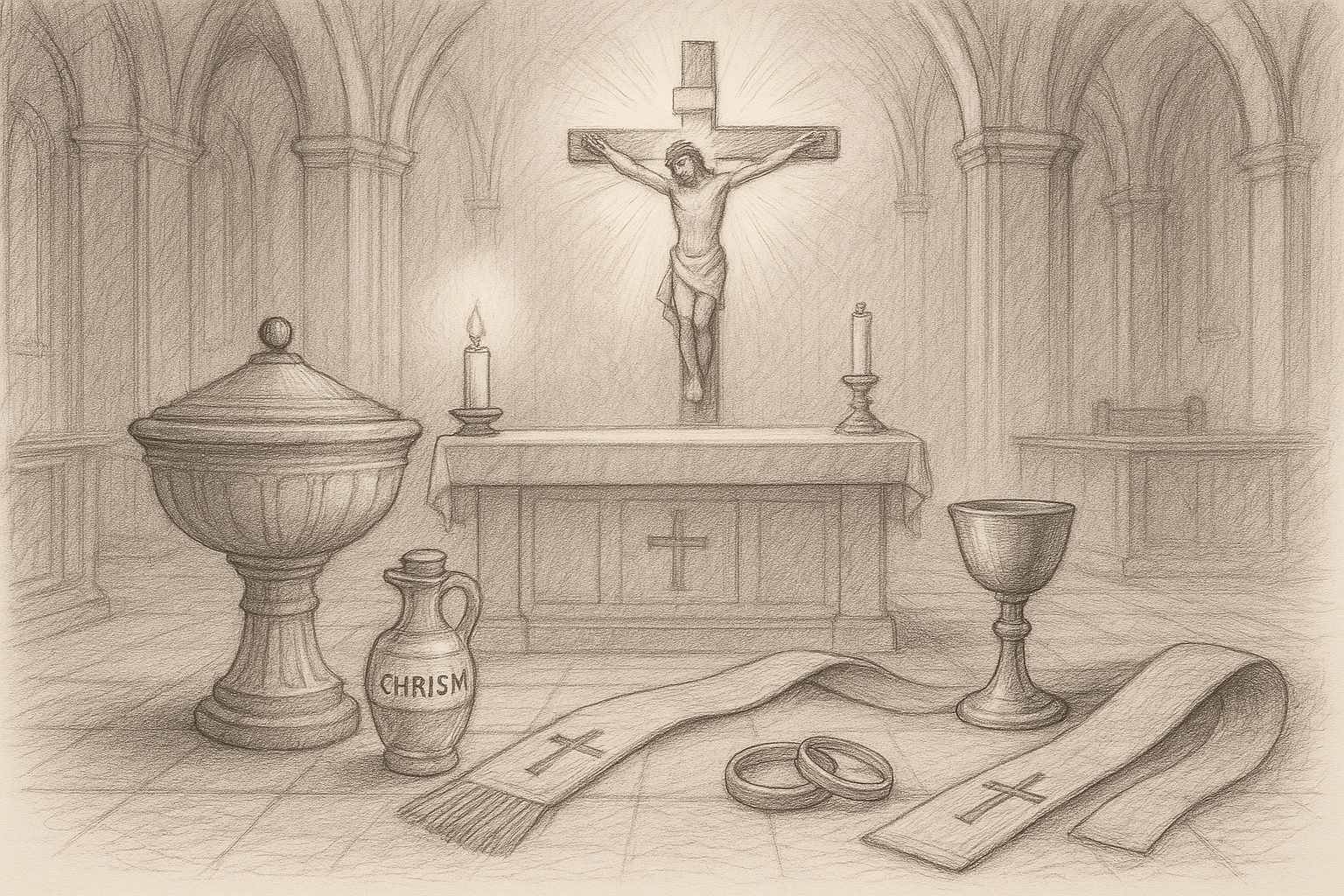
This is the quiet logic of grace. God does not wait for human beings to become interesting enough, wise enough, or articulate enough. He comes first. He gives first. He claims first. Infant baptism makes that truth visible in water, oil, white garment, and candlelight. It is one of the Church's clearest declarations that salvation begins in mercy and that children are not outside the horizon of Christ's care.
For Catholic families, this sacrament is not simply about the first day of a child's spiritual life. It is about the whole shape of that life. It says that the child belongs to Christ from the beginning and that the family, the parish, and the whole Church are responsible for helping that child grow into the gift already received. The water dries, but the grace remains, quietly asking to be nurtured, remembered, and lived.
Keep Reading on Lets Read The Bible
Frequently Asked Questions
Does the Catholic Church require infant baptism?
The Church strongly urges infant baptism because Baptism is the ordinary means Christ gave for new birth in grace. Parents are asked to bring their children for baptism as soon as reasonably possible, provided there is a founded hope that the child will be raised in the faith.
How can a baby have faith at baptism?
In infant baptism, the faith professed at the font is the faith of the Church, especially as lived and promised by the parents and godparents. The child later comes to make that faith personal through catechesis, prayer, and a mature Christian life.
What happens if a baptized child grows up and leaves the faith?
Baptism leaves a lasting sacramental character and truly gives grace, but it does not force lifelong fidelity. A baptized person can later drift or reject the faith, which is why ongoing formation, prayer, confession, and conversion remain essential.