Social Teaching
Where Love Learns Its First Words
The home is not only a place of shelter. In Catholic life, it is the first school where persons learn how to receive, give, forgive, and belong.
Site Admin | October 14, 2025 | 80 views
The family as the first place where love becomes real
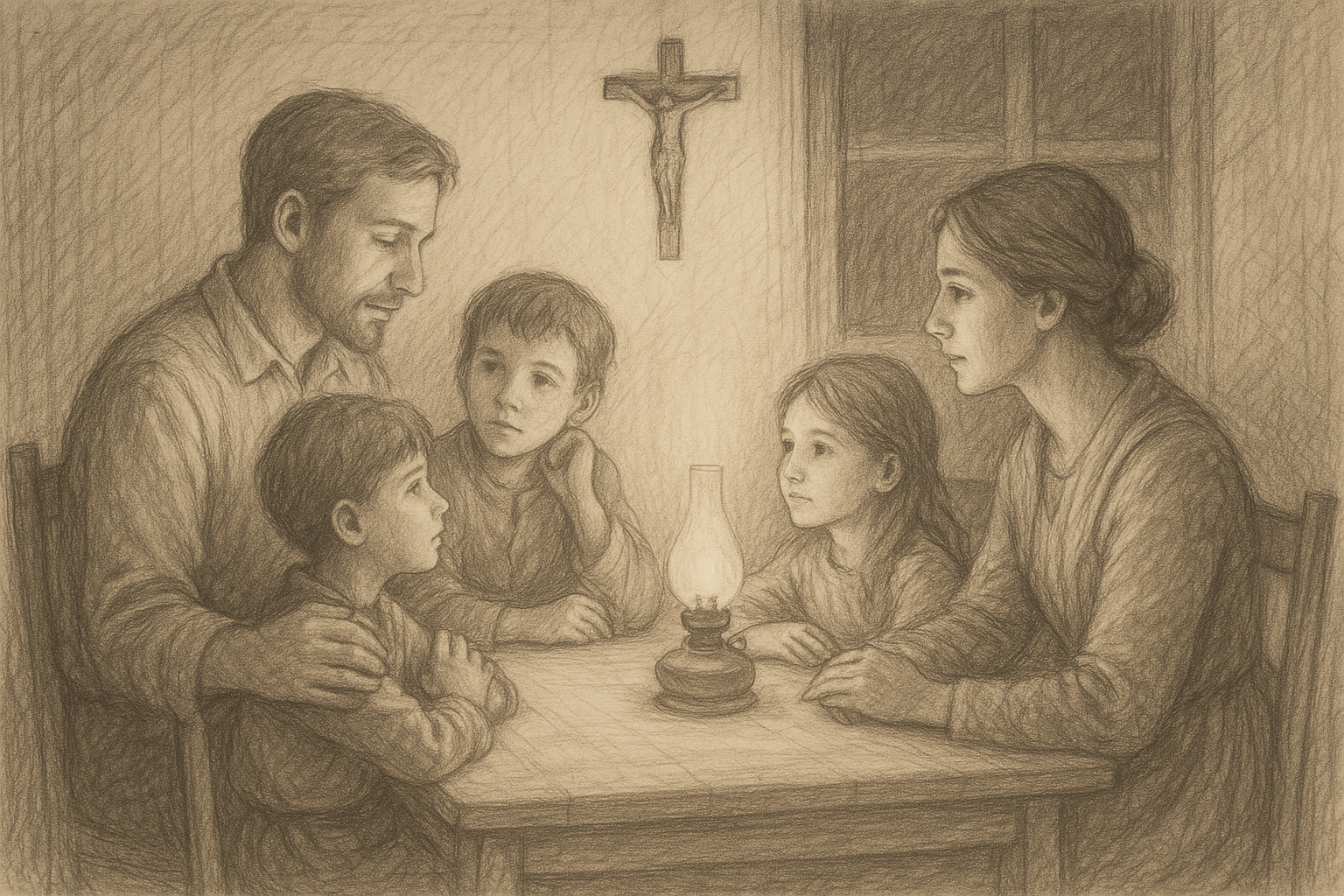
Catholic teaching speaks of the family with particular warmth because the family is not simply one social unit among many. It is the first and most ordinary setting where a person learns what it means to live with others in truth and charity. Before a child can explain justice, mercy, or self gift, the child begins to encounter them in the home. A father and mother who care, grandparents who bless, siblings who share, and caregivers who patiently repeat the same lessons day after day are all helping form the heart.
This is why the family is often called the first school of love in Catholic teaching. The phrase is simple, but the reality behind it is deep. Love is not learned first as an idea. It is learned as a way of life. In the home, a person discovers whether life is a gift, whether others are to be welcomed rather than used, and whether sacrifice is possible without resentment. These are not small lessons. They are the foundations of a mature moral life.
Scripture presents the household as a place where faith is handed on through daily life. The command to love God and neighbor is not reserved for public worship alone. It is also taught at home, where parents and children live in proximity, patience, and dependence. The book of Deuteronomy links love of God with ordinary conversation and memory, saying, [[VERSE|deuteronomy|6|6-7|these words] ]. In the home, repetition is not boring routine. It is formation.
What Catholic social teaching sees in the family
Catholic social teaching does not treat the family as a sentimental ideal. It sees the family as a real social good with a proper dignity and mission. The family is the natural community in which human beings are received, nurtured, and taught. It is where persons come to know that they are loved before they can earn love, and that they are responsible for others before they can fully understand responsibility.
This matters because the Church sees the human person as created in the image of God. Human dignity is not achieved by status, productivity, or power. It is given by God. In a healthy family, children first encounter that dignity through being welcomed, protected, and corrected with care. Parents, too, are formed by the demands of love. They learn that authority is meant to serve, not dominate. The home therefore becomes a place where the logic of Christian discipleship begins to take shape.
The Catechism describes the family as the domestic church, a phrase that reminds Catholics that the household is meant to be a small but real place of prayer, virtue, and witness. This does not mean every Catholic family must be perfect or outwardly impressive. It means that ordinary family life can be sanctified by grace. Meals, chores, bedtime prayers, apologies, work, and welcome are all part of a hidden but powerful school of holiness.
In this sense, the family prepares people for the wider demands of social life. A society that hopes for peace cannot build it only through laws and institutions. It also needs citizens who have learned self control, reverence, and mutual care in the home. A person who has never learned to listen, wait, forgive, or serve will struggle to sustain the common good. The family is where these habits are first rehearsed.
Love in the home is learned through sacrifice
One reason the family is such a demanding school is that love there is not abstract. It is concrete, repetitive, and often inconvenient. Parents sacrifice sleep, time, comfort, and money. Children sacrifice selfish impulses when they are asked to share, to obey, or to consider a sibling's needs. Even small acts, such as helping clear the table or visiting an elderly relative, teach that freedom is not the same as self indulgence.
Catholic tradition never presents sacrifice as mere loss. In the light of Christ, sacrifice becomes a path to communion. The Lord himself shows that love gives itself away. The family, in a quieter way, mirrors this pattern. A mother who comforts a frightened child, a father who works steadily to provide, an older brother who slows down for the younger one, and a spouse who continues to remain faithful in difficulty all bear witness to love that endures.
Saint Paul describes love in terms that are unmistakably communal: it is patient, kind, not self seeking, and rejoices in the truth. [[VERSE|1-corinthians|13|4-7|Love is patient and kind]] is not only a passage for weddings. It is a daily standard for household life. Families do not become schools of love because they are never marked by conflict. They become schools of love because, with God's help, conflict can be met with forgiveness, truth, and renewed commitment.
This is one reason the sacrament of marriage matters so much in Catholic life. When a husband and wife give themselves to one another in lifelong covenant, they are not only making a promise to each other. They are creating the stable environment in which children can grow and where love can be learned as faithful self gift. Marriage is not the whole of family life, but it is a vital foundation for it, and the Church treasures it for the sake of spouses, children, and society alike.
The home teaches the habits that make society humane
Catholic social teaching often speaks about the common good, solidarity, and subsidiarity. These principles can sound abstract, but the family gives them a human face. The common good is first encountered when family members learn that the needs of one affect the whole. Solidarity begins when a child notices a sibling in distress and chooses compassion. Subsidiarity is lived when parents exercise their proper responsibility and when larger institutions respect the role of the family rather than replacing it.
In other words, the family does not merely contribute to society from the outside. It forms society from within. The virtues learned at home shape how people later act at school, at work, in parish life, and in civic life. A home marked by honesty tends to produce honesty elsewhere. A home where apologies are normal tends to create adults who can repair damage rather than deny it. A home where the weak are protected teaches that strength is for service.
This is also why the Church insists that the family deserves real support. Families cannot thrive if economic pressure, social isolation, and cultural confusion make it harder to love faithfully. Catholic teaching does not romanticize family life. It recognizes the burdens that parents carry and the suffering present in many homes. Yet precisely because the family is so important, the wider community has duties toward it. Just policies, decent wages, respect for life, and a culture that honors commitment all matter because they help families do their work.
The family is the first school of love not because it is private and separate from the world, but because it equips persons to live rightly in the world. The child who learns to say
Keep Reading on Lets Read The Bible
Frequently Asked Questions
What does Catholic teaching mean by calling the family the first school of love?
It means that the family is the first ordinary place where people learn to love in practice. In the home, children and adults learn care, sacrifice, forgiveness, patience, and respect for human dignity.
How does the family relate to Catholic social teaching?
Catholic social teaching sees the family as the basic community where the human person is welcomed and formed. The family supports human dignity, solidarity, the common good, and the habits needed for a healthy society.
What can families do if they feel far from this ideal?
The Church does not expect perfect families. It calls families to grow in grace step by step through prayer, forgiveness, honest conversation, and sacramental life. Even small acts of faithful love matter greatly.