Sacraments and Liturgy
A Quiet Sign of Belonging: Living the Brown Scapular with Devotion
A small garment, a long Carmelite tradition, and a daily invitation to belong more fully to Christ through Mary
Site Admin | September 28, 2025 | 90 views
The brown scapular has a way of speaking softly. It is not flashy, and it does not announce itself with ceremony after the first reception. Many Catholics wear it tucked beneath their clothing, almost hidden, and that hiddenness is part of its beauty. The scapular is meant to become less a religious accessory than a daily reminder of a life entrusted to Christ through the maternal care of the Blessed Virgin Mary.
For anyone looking for a practical the brown scapular Catholic guide, the first thing to say is simple: the scapular is not magic. It is a sacramental, not a sacrament. It does not work apart from faith, prayer, repentance, and the sacraments themselves. Yet it can be a powerful help, because it gives shape to a Catholic's ordinary days. It quietly says, every morning and evening, that we belong to the Lord.
Where the Brown Scapular Comes From
The brown scapular is tied to the Carmelite Order, whose spiritual life has long centered on prayer, contemplation, and devotion to Our Lady. The word scapular originally referred to a garment worn over the shoulders, like an apron or a work habit. In religious life, it became part of the habit of monks and nuns, a sign of service and consecration. Over time, a smaller version was given to lay people as a sign that they too wished to share in the spiritual family of Carmel.
The Carmelite tradition connects the scapular with the Virgin Mary and with a life of fidelity to Christ. According to long-standing Carmelite devotion, Mary promised her special help to those who would wear the scapular with devotion and seek to live in grace. Catholics should be careful here. The Church does not teach that a piece of cloth saves a person by itself. The scapular is a sign of a relationship, not a shortcut around discipleship.
That distinction matters. Catholic devotion is always healthiest when it is joined to the life of the Church. The scapular points to baptismal grace, to conversion of heart, and to perseverance in prayer. It is most meaningful when it is received with reverence and worn by someone who desires to grow in holiness, not merely to collect spiritual protections.
What the Scapular Means
To wear the brown scapular is to accept a visible reminder of invisible promises. It says that a Catholic wants to belong to Mary in order to belong more fully to Jesus. This is entirely in harmony with Catholic faith. Mary never replaces Christ. She leads to him. Her greatness is precisely that she says, Do whatever he tells you John 2:5.
The scapular also reminds us that holiness is not reserved for priests, religious, or a few unusually fervent souls. The Church has always taught that ordinary Christians are called to sanctity. A small devotional sign can help keep that call before us while we work, care for family, travel, struggle, rest, and begin again. It can become a daily summons to prayer in the middle of ordinary life.
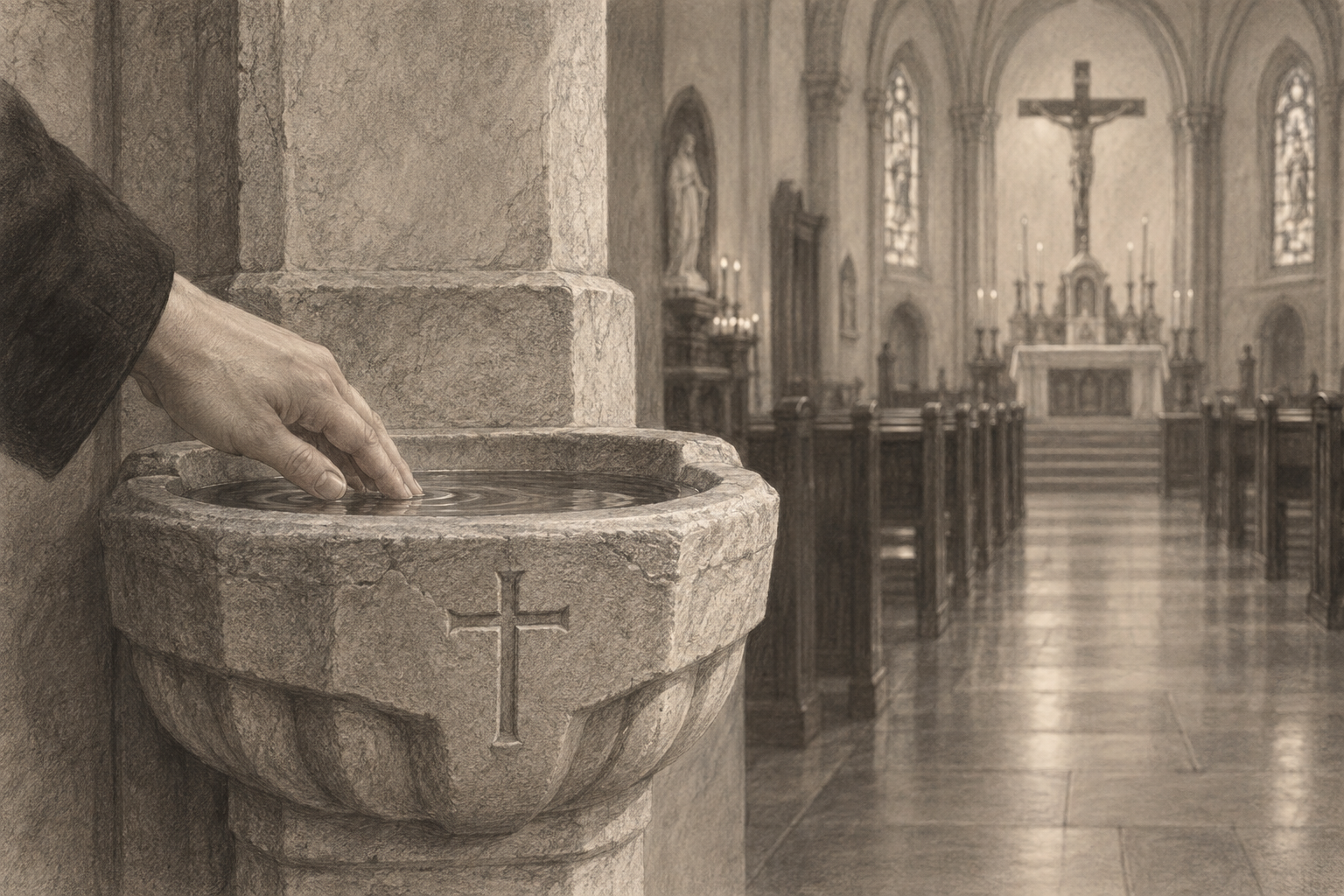
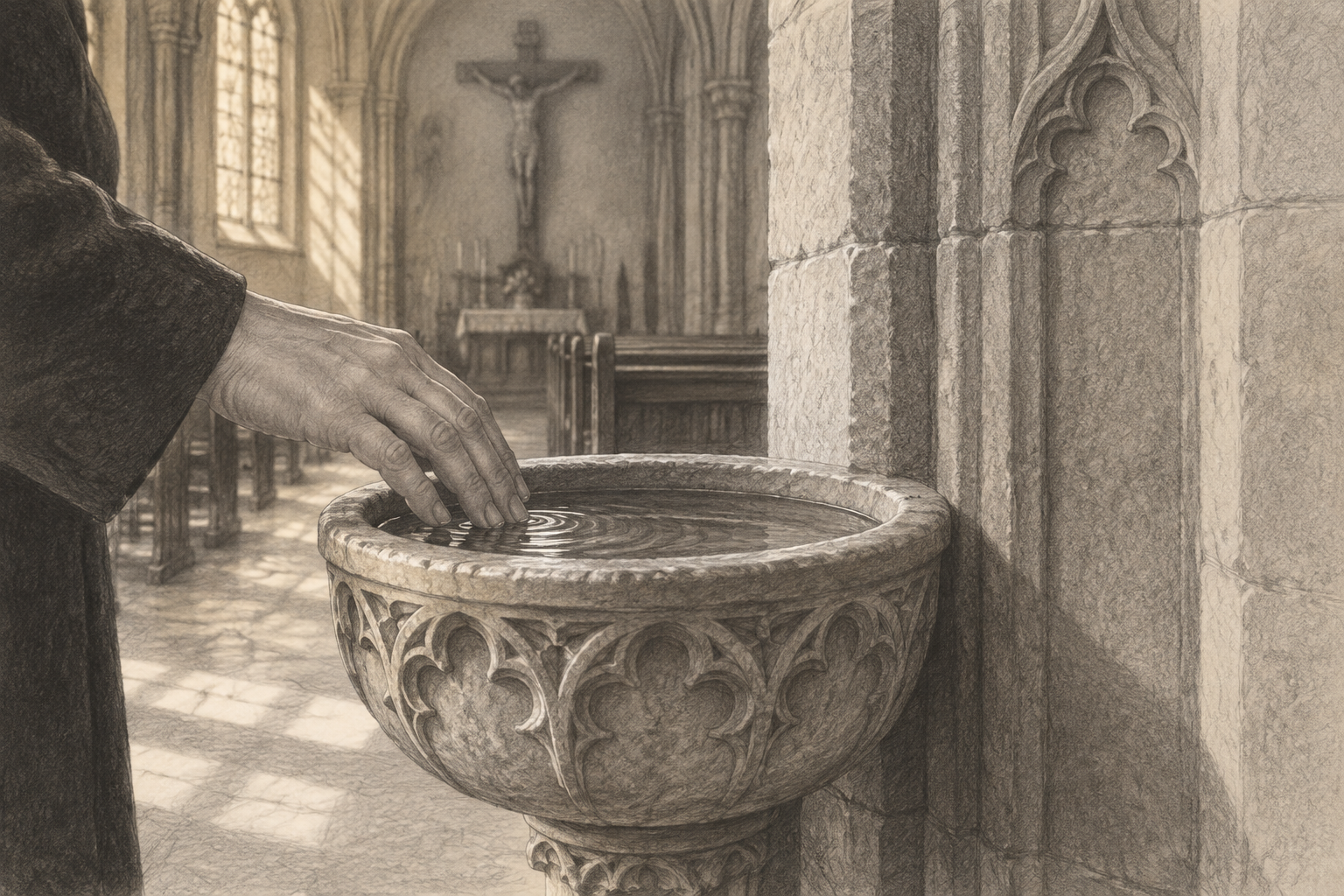
In that sense, the scapular is beautifully Catholic. It honors matter without treating it as magical. It honors the body without reducing faith to external gestures. It honors devotion without separating devotion from moral life. Like holy water, medals, candles, and rosaries, it belongs to the Church's sacramental imagination: God uses humble signs to awaken grace in human hearts.
How the Brown Scapular Is Worn and Received
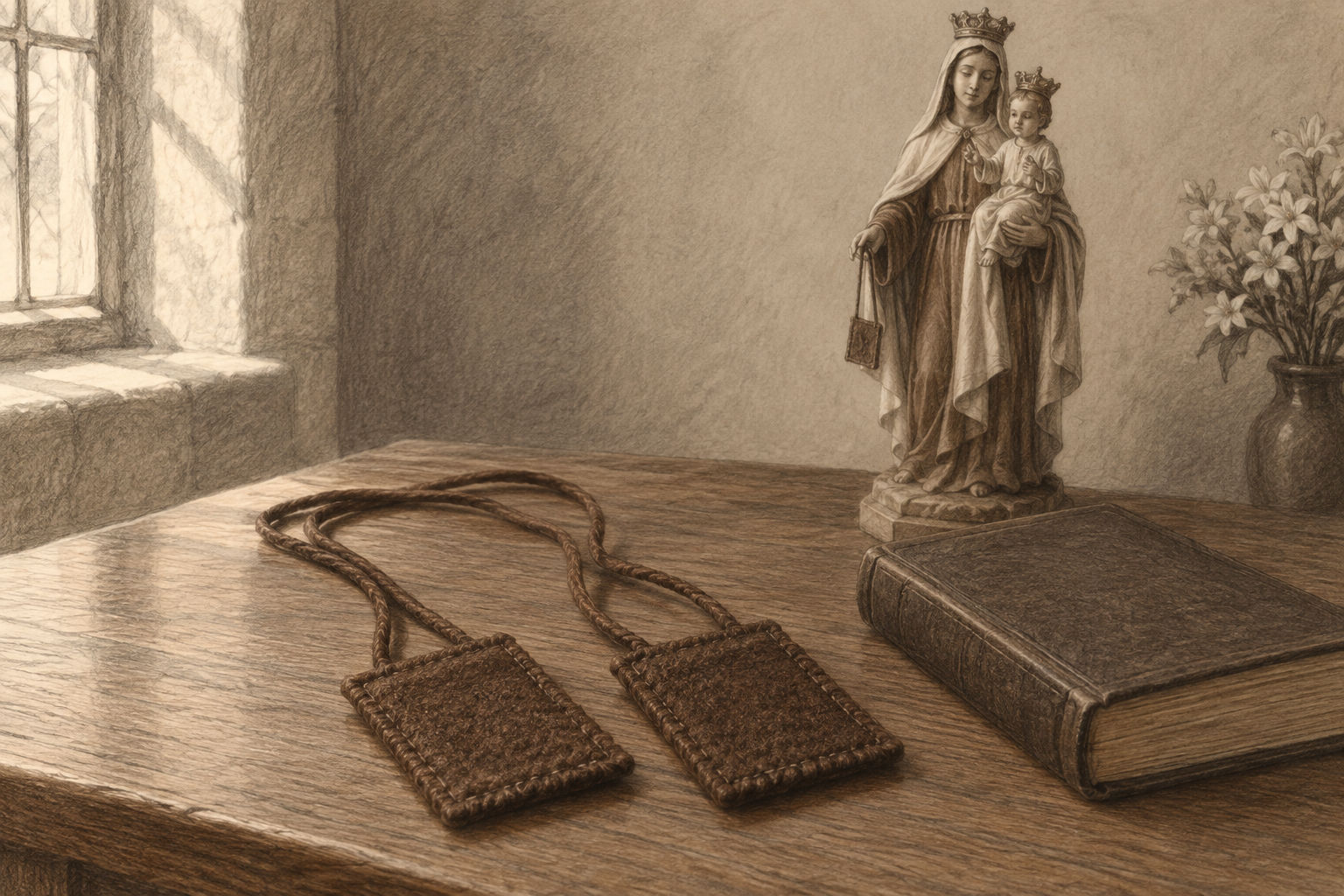
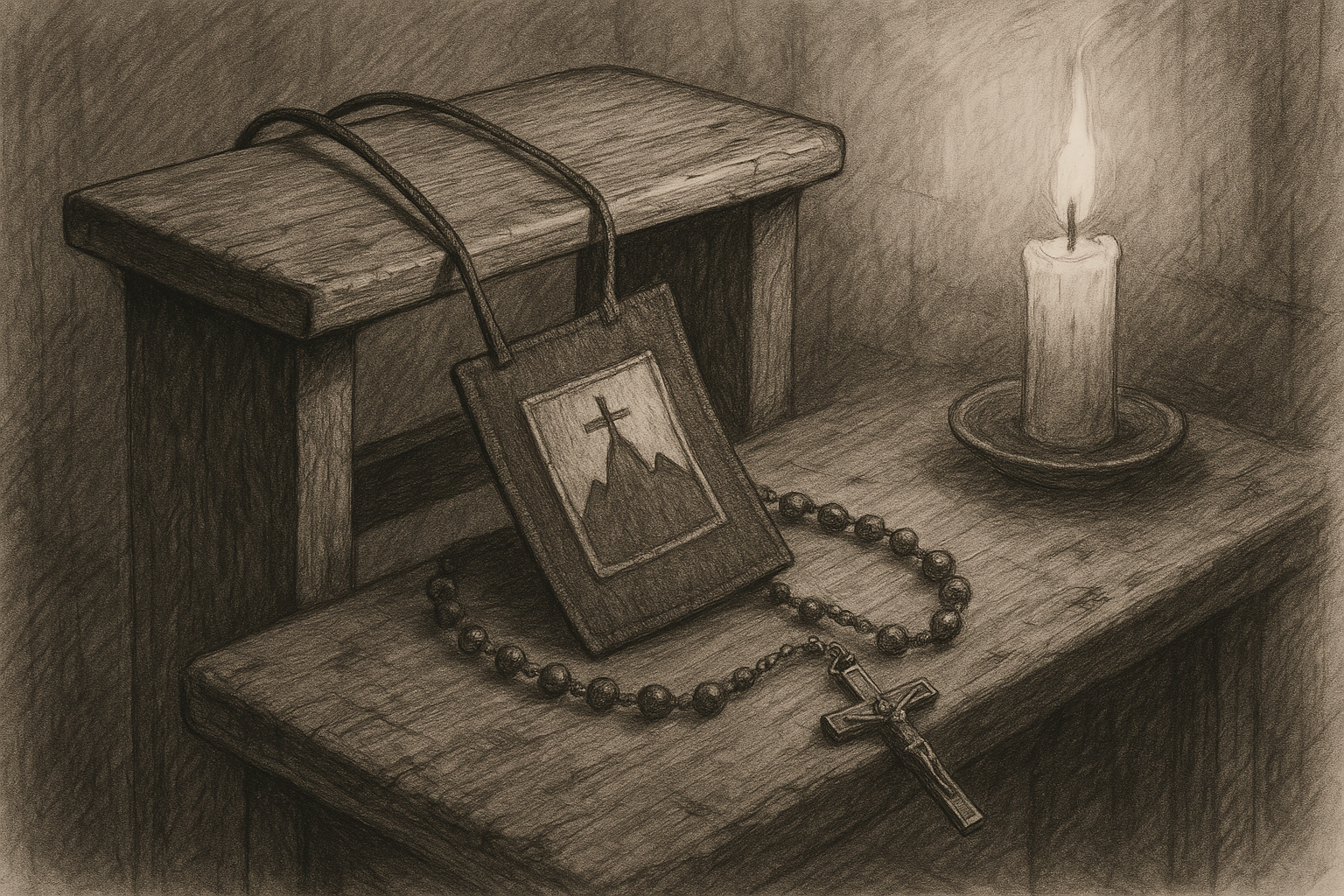
The brown scapular is usually a small woolen devotional garment consisting of two brown pieces connected by strings, worn one piece on the chest and one on the back. Many Catholics later replace it with a scapular medal for practical reasons, though the wool scapular remains the traditional form. The key point is not the material alone, but the devotion and the intention behind it.
Traditionally, the scapular is enrolled by a priest or deacon who has the faculty to do so. This enrollment places the person into the scapular confraternity or shares them spiritually in the Carmelite family. Enrollment is not a private self-initiation. It is a Church act, which is fitting because Catholic devotion is never merely private invention. It belongs to the communion of the faithful.
Those who are enrolled are commonly encouraged to live according to the spirit of the scapular. This has often included prayer, especially Marian prayer, and a serious effort to remain in the state of grace. Different devotional customs have developed over time, and Catholics should follow the guidance they receive from a priest or Carmelite source rather than treating every pious detail as if it were a universal law. The essentials are fidelity, prayer, and trust.
Marys Care and the Life of Grace
The brown scapular cannot be separated from the life of grace. That is the heart of the matter. A Catholic who wears the scapular but ignores prayer, confession, charity, and the commandments has misunderstood it. Mary leads us toward conversion, not complacency. She helps us treasure the things of God, as she did when she pondered them in her heart Luke 2:19.
The scapular can be a daily reminder to remain close to the sacraments, especially the Eucharist and Penance. It can also encourage a pattern of interior recollection. A person wearing the scapular may ask: Am I living as one who belongs to Christ? Am I speaking, choosing, forgiving, and serving as a disciple? These questions are not burdensome when they are answered in grace. They are signs of a living friendship with God.
The Christian life is not built on anxiety. It is built on trust. The scapular, properly understood, can help form that trust. It asks a Catholic to rest under Mary's care while keeping one's eyes fixed on her Son. That is why so many faithful Catholics have found comfort in it over generations. It is a small reminder that we do not walk alone.
Common Misunderstandings to Avoid
Because the scapular is popular, it is also misunderstood. Some people think it guarantees salvation in a mechanical way. Others dismiss it as superstition. Both reactions miss the truth. Catholic sacramentals are real signs of faith, but they are not substitutes for grace. They do not operate like charms. They dispose us to receive what God freely gives.
It is also mistaken to imagine that devotion to the scapular is only for a certain kind of Catholic. In fact, its simplicity makes it accessible to many people. Parents, students, workers, retirees, the sick, and the homebound may all find in it a gentle companion. What matters is not spiritual image management but a sincere desire to live close to Jesus through Mary.
Another misunderstanding is to treat external devotion as if it were enough on its own. The Church has always resisted such reduction. Jesus warned against religious behavior that remains on the surface while the heart stays unchanged. Catholic devotion, at its best, forms the whole person. The scapular should draw us toward humility, purity of heart, and charity toward others.
Living the Brown Scapular More Deeply
If you already wear the scapular, one of the best ways to renew the devotion is to give it a clear place in your day. Many Catholics begin with a morning offering and an Our Father, Hail Mary, and Glory Be. Others add a decade of the Rosary, the Angelus, or a simple prayer of consecration to Mary. The exact pattern matters less than the habit of turning toward God deliberately.
It also helps to connect the scapular to the liturgical life of the Church. Sunday Mass should remain central. Frequent confession and regular Eucharistic devotion will keep the scapular from becoming sentimental. Marian devotion flourishes when it is rooted in the Church's worship, because Mary always leads us to the mysteries of her Son's life, death, and resurrection.
For those who are considering the scapular for the first time, the best approach is not to rush. Speak with a priest, ask to be enrolled properly, and learn the prayerful meaning of the devotion. Then wear it with reverence. Let it become a reminder to pray before work, to be patient in traffic, to speak gently at home, and to return quickly to God after failure.
That last point is important. The scapular is not for people who never fall. It is for sinners who need mercy. Its hidden presence can be an invitation to begin again. When a Catholic reaches for the sacrament of confession, receives the Eucharist in faith, and asks Mary's help with sincerity, the scapular becomes what it was always meant to be: a humble sign of belonging and a daily school of perseverance.
Wear it not as a token of self-confidence, but as a sign that you have placed yourself, again and again, in the hands of Christ through his Mother.
A Devotion for Ordinary Fidelity
The beauty of the brown scapular is that it sanctifies the ordinary. It does not remove us from daily life. It accompanies daily life and asks to be lived inside it. That is a deeply Catholic instinct. Grace does not only visit the dramatic moments. It also shapes the quiet repetition of waking, working, praying, repenting, and loving.
For many believers, the brown scapular has become a lifelong companion because it keeps one simple truth close at hand: we are not our own. We belong to Christ, and we receive Mary's help as we follow him. In a noisy and distracted age, that little garment can still call the heart back to what matters most, one hidden act of fidelity at a time.
Keep Reading on Lets Read The Bible
Frequently Asked Questions
Is the brown scapular a sacrament or a sacramental?
It is a sacramental, not a sacrament. That means it is a holy sign the Church uses to dispose us to grace, but it does not confer grace in the same way the sacraments do.
Do I have to wear the brown scapular all the time once I am enrolled?
The devotion is meant to be lived consistently, but Catholics should follow the instruction they receive from a priest or Carmelite source. If a scapular wears out or needs replacement, that is normal and does not require a new enrollment in the usual case.
Can the brown scapular replace prayer, Mass, or confession?
No. The scapular should lead a Catholic deeper into prayer, the sacraments, and a life of conversion. It is most fruitful when it supports, rather than replaces, the ordinary life of grace.